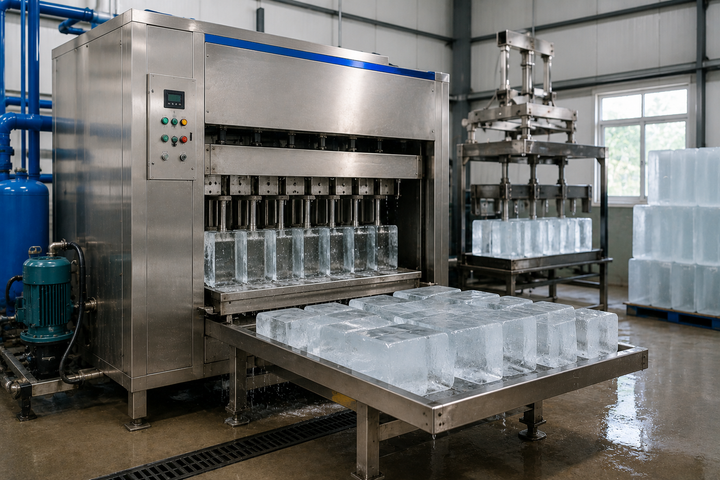
Industrial Ice Block Machines: Equipment, Applications and Insights
Industrial ice block machines play an important role in industries that require large quantities of ice for cooling, preservation, transportation, and manufacturing processes.
Unlike smaller ice-making equipment, these machines are designed to produce large ice blocks continuously and efficiently.
Ice blocks are widely used in fisheries, food processing facilities, cold storage operations, agriculture, construction projects, and emergency cooling applications. Modern industrial ice block machines incorporate advanced refrigeration technologies, automated controls, and energy-efficient designs to support consistent ice production.
As demand for reliable cooling solutions continues to grow, industrial ice block machines remain an important part of cold-chain infrastructure and industrial refrigeration systems.
Quick Facts Table
| Topic | Purpose | Key Components | Main Benefits | Common Applications |
|---|---|---|---|---|
| Industrial Ice Block Machines | Produce large ice blocks for cooling and preservation | Refrigeration systems, evaporators, condensers, ice molds, control systems | Efficient ice production, reliable cooling, large-volume output | Fisheries, food processing, cold storage, agriculture, construction |
What Are Industrial Ice Block Machines?
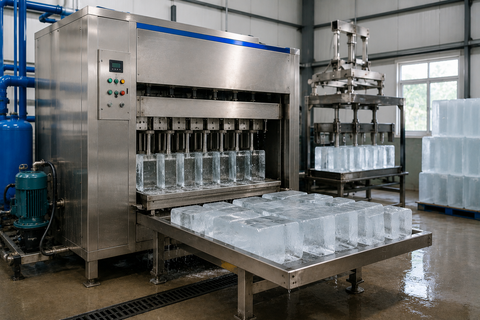
Industrial ice block machines are specialized refrigeration systems designed to produce large solid blocks of ice. These machines freeze water inside molds or containers until the desired block size is achieved.
The resulting ice blocks can be transported, stored, or used directly in various industrial and commercial environments where long-lasting cooling is required.
Why Are Industrial Ice Block Machines Important?
Many industries depend on stable cooling solutions to preserve products, maintain quality, and support operational processes. Ice blocks melt more slowly than smaller ice forms, making them useful for long-duration cooling applications.
Their importance includes:
- Supporting cold-chain operations
- Preserving perishable products
- Maintaining product quality
- Providing long-lasting cooling
- Supporting remote cooling requirements
- Reducing temperature fluctuations
- Improving storage efficiency
- Supporting industrial refrigeration operations
Industry Trends
- Energy-efficient refrigeration systems are becoming more common.
- Automated monitoring technologies are improving operational control.
- Smart sensors are enhancing equipment performance tracking.
- Industrial refrigeration infrastructure continues to modernize.
- Sustainable cooling technologies are receiving greater attention.
- Advanced insulation materials are improving ice preservation.
- Digital monitoring platforms are increasing operational visibility.
Understanding the Concept
Industrial ice block machines operate by removing heat from water until it freezes into large blocks. Refrigeration systems circulate refrigerants through evaporators, which absorb heat and gradually freeze the water.
The freezing process may take several hours depending on block size, water temperature, refrigeration capacity, and environmental conditions. Once freezing is complete, the ice blocks are removed and prepared for storage or transportation.
Industrial Ice Block Machine Facts
- Large ice blocks typically remain frozen longer than smaller ice forms.
- Industrial refrigeration systems are designed for continuous operation.
- Automated control technologies improve production consistency.
- Modern equipment focuses on energy efficiency and reliability.
- Ice blocks are commonly used where extended cooling periods are required.
- Advanced monitoring systems support operational optimization.
Major Components of Industrial Ice Block Machines
- Refrigeration Compressors
- Evaporators
- Condensers
- Ice Molds
- Water Tanks
- Refrigerant Circulation Systems
- Control Panels
- Pumps
- Temperature Sensors
- Monitoring Systems
- Insulation Systems
- Ice Harvesting Equipment
Equipment Categories Table
| Equipment Category | Examples |
|---|---|
| Refrigeration Systems | Compressors, Evaporators |
| Heat Transfer Systems | Condensers, Heat Exchangers |
| Ice Production Systems | Ice Molds, Freezing Tanks |
| Water Management Systems | Pumps, Water Storage Tanks |
| Control Systems | Monitoring Platforms, Controllers |
| Automation Systems | Sensors, Automated Controls |
| Insulation Systems | Thermal Insulation Components |
Key Features and Core Components
Modern industrial ice block machines often include:
- High-capacity refrigeration systems
- Automated controls
- Digital monitoring platforms
- Temperature management systems
- Energy-efficient compressors
- Advanced insulation technologies
- Water circulation systems
- Operational safety features
- Intelligent monitoring systems
- Production management controls
Main Types of Industrial Ice Block Machines
Direct Cooling Ice Block Machines
Direct cooling systems freeze water using refrigerant lines that directly contact ice molds. These systems often improve efficiency and reduce freezing times.
Brine-Based Ice Block Machines
Brine systems use a chilled saltwater solution surrounding ice molds to facilitate freezing. These systems are commonly used in large-scale operations.
Automated Ice Block Machines
Automated systems utilize sensors, control platforms, and automated harvesting technologies to improve production consistency.
Containerized Ice Block Systems
Containerized solutions integrate ice production equipment into transportable units suitable for remote locations.
Machine Types Comparison Table
| Machine Type | Freezing Method | Production Efficiency | Common Application |
|---|---|---|---|
| Direct Cooling | Refrigerant Contact | High | Industrial Facilities |
| Brine System | Chilled Brine Solution | Medium | Fisheries |
| Automated System | Automated Refrigeration | High | Food Processing |
| Containerized Unit | Integrated Cooling System | Medium | Remote Operations |
What Is Industrial Refrigeration?
Industrial refrigeration refers to large-scale cooling systems used to preserve products, maintain temperatures, and support industrial processes.
What Is a Refrigeration Compressor?
A refrigeration compressor circulates refrigerant through the cooling system and plays a central role in the refrigeration cycle.
What Is an Evaporator?
An evaporator absorbs heat from water or surrounding environments, allowing freezing and cooling processes to occur.
What Is a Condenser?
A condenser releases heat removed during refrigeration and helps maintain system efficiency.
How Industrial Ice Block Machines Work
- Water is filled into ice molds or freezing containers.
- Refrigeration compressors circulate refrigerant through the system.
- Evaporators absorb heat from the water.
- Water temperature gradually decreases until freezing begins.
- Ice blocks continue forming until the desired size is reached.
- Monitoring systems track temperature and production conditions.
- Ice blocks are harvested and prepared for storage or transportation.
- The cycle repeats for continuous production.
Industrial Ice Production Architecture
A typical ice production process follows this sequence:
Water Supply → Ice Mold System → Refrigeration Unit → Freezing Process → Ice Harvesting → Storage → Distribution
Architecture Explanation
Water enters the freezing system and is cooled through refrigeration equipment. As heat is removed, ice forms inside molds. After freezing is complete, ice blocks are harvested, stored, and prepared for transportation or use.
Benefits and Advantages
Industrial ice block machines provide several benefits:
- Reliable ice production
- Long-lasting cooling capability
- Improved product preservation
- Enhanced operational efficiency
- Consistent production output
- Support for cold-chain logistics
- Reduced temperature fluctuations
- Large-volume production capacity
- Improved storage performance
- Better process control
Industry Applications
Fisheries
Ice blocks help preserve seafood during transportation and storage.
Food Processing Facilities
Food products often require temperature-controlled handling and storage.
Cold Storage Facilities
Large ice blocks support temperature management within storage environments.
Agriculture
Cooling solutions help preserve harvested products and agricultural materials.
Construction Projects
Ice may be used for temperature control in specialized construction activities.
Beverage Production
Industrial cooling infrastructure supports production and storage processes.
Transportation and Logistics
Cold-chain operations frequently utilize industrial ice production technologies.
Emergency Cooling Operations
Ice blocks can provide temporary cooling support in various situations.
Real-World Examples and Applications
Example: Seafood Preservation
A fishing operation uses industrial ice block machines to produce ice that keeps seafood cool during transportation from ports to processing facilities.
Example: Agricultural Product Storage
Agricultural producers utilize ice blocks to help maintain suitable temperatures for harvested products.
Example: Food Distribution Centers
Distribution facilities use large ice blocks to support temperature management during storage and transportation.
Example: Remote Community Operations
Containerized ice production systems provide cooling support in remote locations where refrigeration infrastructure may be limited.
Automation and Monitoring Systems
Modern industrial ice production facilities increasingly use automation technologies.
Smart Sensors
Sensors continuously monitor temperature, pressure, and system performance.
Automated Controls
Controllers regulate refrigeration cycles and production schedules.
Predictive Maintenance Platforms
Monitoring technologies help identify equipment issues before failures occur.
Digital Monitoring Systems
Operators receive real-time visibility into production conditions and equipment performance.
Maintenance Approaches
Preventive Maintenance
Routine inspections and servicing performed at scheduled intervals.
Predictive Maintenance
Data-driven monitoring identifies potential equipment issues early.
Condition-Based Maintenance
Maintenance activities are based on actual equipment condition.
Reliability-Centered Maintenance
Resources focus on critical equipment that directly impacts production.
Important Factors to Consider
When evaluating industrial ice block machines, consider:
- Production capacity
- Energy efficiency
- Refrigeration performance
- Water quality requirements
- Environmental conditions
- Maintenance needs
- Automation capabilities
- Facility space requirements
- Operational reliability
- Scalability requirements
Common Challenges and Solutions
| Challenge | Impact | Solution |
|---|---|---|
| High Energy Consumption | Reduced Efficiency | Energy-Efficient Refrigeration |
| Equipment Downtime | Production Delays | Predictive Maintenance |
| Inconsistent Ice Quality | Operational Issues | Automated Controls |
| Water Quality Problems | Ice Defects | Water Treatment Systems |
| Temperature Variations | Reduced Performance | Continuous Monitoring |
Future Trends and Industry Insights
Several technologies are shaping the future of industrial ice production.
Smart Refrigeration Systems
Intelligent controls are improving operational efficiency and performance.
Energy-Efficient Compressors
Advanced compressor technologies help reduce energy consumption.
Automation Technologies
Automated production and monitoring systems improve consistency.
Digital Monitoring Platforms
Real-time performance tracking enhances operational visibility.
Sustainable Refrigeration Technologies
Environmentally conscious cooling technologies continue to evolve.
Advanced Analytics
Data-driven insights support maintenance planning and equipment optimization.
Expert Insights
Industrial ice block machines remain essential components of cold-chain infrastructure and industrial refrigeration systems. Modern equipment increasingly incorporates automation, monitoring technologies, and energy-efficient refrigeration designs that improve performance and operational reliability.
As industries continue to prioritize product preservation, temperature management, and operational efficiency, advanced ice production technologies will play an increasingly important role in supporting cooling requirements across multiple sectors.
Key Takeaways
- Industrial ice block machines produce large ice blocks for cooling applications.
- Refrigeration systems form the foundation of ice production equipment.
- Compressors, evaporators, and condensers are critical components.
- Automation technologies improve production consistency.
- Predictive maintenance enhances equipment reliability.
- Industrial ice supports fisheries, agriculture, logistics, and food processing.
- Digital monitoring improves operational visibility.
- Future systems will emphasize efficiency and automation.
Frequently Asked Questions (FAQ)
What is an industrial ice block machine?
An industrial ice block machine is equipment designed to produce large blocks of ice for industrial and commercial applications.
How do industrial ice block machines work?
They remove heat from water using refrigeration systems until ice blocks are formed.
What industries use industrial ice block machines?
Fisheries, food processing, agriculture, logistics, cold storage, and manufacturing industries commonly use them.
What is a refrigeration compressor?
A refrigeration compressor circulates refrigerant throughout the cooling system.
What is an evaporator?
An evaporator absorbs heat and supports the freezing process.
What is a condenser?
A condenser releases heat removed during refrigeration.
What is direct cooling technology?
Direct cooling systems freeze water through refrigerant lines that directly cool ice molds.
Why are ice blocks used in cold-chain operations?
Ice blocks provide long-lasting cooling and temperature stability.
What factors affect ice production?
Production capacity, refrigeration performance, water quality, and environmental conditions influence output.
What is predictive maintenance?
Predictive maintenance uses monitoring data to identify potential equipment issues before failures occur.
What are automated ice block machines?
Automated systems use sensors and controls to improve production efficiency and consistency.
What is industrial refrigeration?
Industrial refrigeration refers to large-scale cooling systems used in industrial operations.
Why is water quality important?
Water quality affects ice clarity, consistency, and overall production quality.
What are containerized ice production systems?
These are transportable ice production units designed for remote or mobile applications.
What is the future of industrial ice block machines?
Future systems will increasingly utilize automation, smart monitoring, advanced analytics, and energy-efficient refrigeration technologies.
Conclusion
Industrial ice block machines are essential components of modern cooling infrastructure, supporting industries that depend on reliable temperature management and product preservation. Through refrigeration systems, automation technologies, and intelligent monitoring platforms, these machines provide efficient large-scale ice production for diverse applications.
As industrial refrigeration technologies continue to advance, future ice production systems are expected to become more efficient, automated, and data-driven. Understanding industrial ice block machines provides valuable insight into the technologies that support cold-chain operations, industrial cooling, and temperature-controlled logistics worldwide.