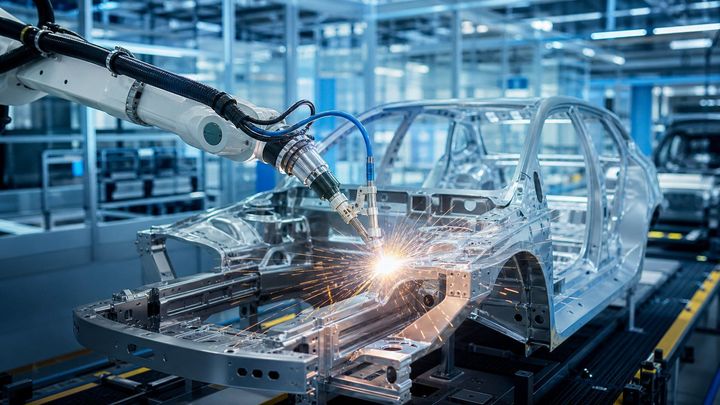
Fiber Laser Welding Machines Insights: Precision Joining
Fiber laser welding machines have become an important technology in modern manufacturing, supporting precision metal joining across automotive production, aerospace engineering, electronics manufacturing, medical device fabrication, and industrial equipment production.
These advanced welding systems use concentrated laser energy to create strong, accurate welds while minimizing heat impact on surrounding materials.
Compared with many conventional welding methods, fiber laser welding technology offers high precision, controlled heat input, and compatibility with automated manufacturing environments. As smart manufacturing continues to evolve, fiber laser welding systems are increasingly integrated with robotic automation, machine vision, and digital production monitoring platforms.
Fiber Laser Welding Machines at a Glance
Fiber laser welding machines use a solid-state laser source to generate a concentrated beam of light that melts and joins metal components. The laser energy is delivered through optical fiber systems, allowing precise control of weld location and penetration. These machines are widely used for stainless steel welding, aluminum welding, battery manufacturing, automotive components, electronics assembly, and precision fabrication applications.
Key Industry Facts
- Fiber laser welding is widely used in advanced manufacturing industries.
- Modern systems support automated and robotic welding applications.
- High beam quality enables precise weld placement.
- Fiber lasers are commonly used for stainless steel, aluminum, and specialty alloys.
- Many production lines integrate laser welding with industrial automation systems.
- Machine vision can assist with weld tracking and positioning.
- Digital monitoring systems provide process visibility and quality control insights.
How Fiber Laser Welding Works
Fiber laser welding uses concentrated laser energy to create a controlled molten pool between metal components.
Basic Welding Process
- Metal parts are positioned and secured.
- The laser source generates high-energy light.
- Optical fibers deliver the laser beam to the welding head.
- The beam focuses on the joint area.
- Metal surfaces melt and fuse together.
- The molten material solidifies to form a weld.
- Inspection systems verify weld quality.
The process can be highly automated for consistent production results.
Main Types of Fiber Laser Welding Machines
Handheld Fiber Laser Welders
Handheld systems provide flexibility for fabrication, maintenance, and repair applications.
Common uses include:
- Sheet metal fabrication
- Equipment maintenance
- Prototype manufacturing
- Small-scale production
Automated Fiber Laser Welding Systems
Automated systems perform programmed welding operations within production environments.
Applications include:
- Automotive manufacturing
- Electronics production
- Industrial equipment fabrication
- Precision component assembly
Robotic Laser Welding Systems
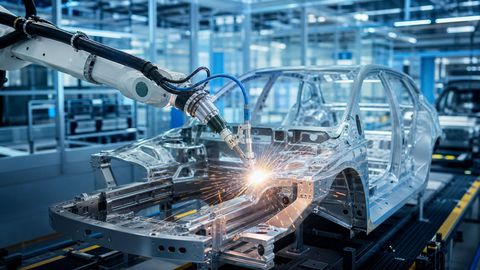
Robotic welding cells combine industrial robots with fiber laser technology.
Benefits include:
- Repeatable weld positioning
- Multi-axis movement
- High-volume production support
- Automated manufacturing integration
Continuous Wave Fiber Lasers
Continuous wave systems deliver uninterrupted laser energy and are commonly used for deep penetration welding applications.
Pulsed Fiber Laser Welders
Pulsed laser systems generate short bursts of energy, making them suitable for delicate or thin-material applications.
Comparison of Fiber Laser Welding Systems
| System Type | Typical Application | Automation Level |
|---|---|---|
| Handheld Fiber Laser | Fabrication & Repair | Manual |
| Automated Welding System | Production Manufacturing | High |
| Robotic Laser Welding | High-Volume Production | Very High |
| Continuous Wave Laser | Deep Weld Penetration | Variable |
| Pulsed Fiber Laser | Precision Components | Variable |
Core Components of Fiber Laser Welding Machines
Fiber Laser Source
The laser source generates the energy required for welding operations.
Optical Fiber Delivery System
Optical fibers transmit laser energy from the source to the welding head.
Welding Head
The welding head focuses the beam and directs it toward the workpiece.
Motion Control System
Servo-driven motion systems position the welding head or workpiece with precision.
Cooling System
Cooling equipment regulates operating temperatures and protects critical components.
Industrial Control Platform
Control systems manage welding parameters, machine operation, and production integration.
Machine Vision Systems
Advanced systems may use cameras and sensors to assist with weld alignment and quality monitoring.
Industry Applications
Automotive Manufacturing
Fiber laser welding is used for structural components, battery assemblies, brackets, and precision metal parts.
Battery Manufacturing
Battery production facilities often use laser welding for cell connections and electrical components.
Aerospace Engineering
Aerospace applications require precision welding for lightweight metal assemblies and specialized components.
Medical Device Manufacturing
Medical equipment manufacturers use laser welding for small, high-precision metal parts.
Electronics Production
Laser welding supports the assembly of sensors, connectors, enclosures, and electronic hardware.
Industrial Equipment Manufacturing
Machinery and equipment producers use laser welding for frames, housings, and fabricated assemblies.
Selection Factors
Material Compatibility
The system should support the intended metals and alloys.
Weld Thickness Requirements
Different applications require different power levels and welding configurations.
Production Volume
Manufacturing output requirements influence equipment selection.
Automation Needs
Facilities may require robotic integration or automated production systems.
Precision Requirements
Complex components often require highly accurate welding capabilities.
Monitoring Capabilities
Advanced quality monitoring can improve process visibility and traceability.
Benefits of Fiber Laser Welding Machines
- Supports high-precision metal joining
- Enables narrow weld seams
- Reduces heat-affected zones
- Supports manufacturing automation
- Integrates with robotic welding systems
- Provides repeatable welding performance
- Supports complex component fabrication
- Improves production consistency
- Enables machine vision integration
- Supports digital manufacturing environments
Challenges and Limitations
Initial Equipment Investment
Advanced laser systems often involve significant capital investment.
Operator Training
Personnel require specialized knowledge for setup and operation.
Material Preparation
Surface condition and joint preparation can affect weld quality.
Reflective Materials
Certain materials may require specialized process optimization.
Maintenance Requirements
Optics, cooling systems, and motion components require routine maintenance.
Industry Standards and Quality Considerations
Manufacturers often evaluate welding processes according to:
- Weld consistency
- Joint integrity
- Process repeatability
- Production traceability
- Material compatibility
- Inspection requirements
- Manufacturing specifications
Quality verification may involve visual inspection, dimensional checks, and non-destructive testing methods.
Safety Considerations
Laser welding systems require comprehensive safety measures.
Important considerations include:
- Laser safety enclosures
- Controlled work areas
- Eye protection requirements
- Emergency stop systems
- Fume extraction equipment
- Equipment inspections
- Operator training
- Access controls
- Maintenance procedures
Safety requirements vary according to laser classification and facility design.
Latest Technology Trends
AI-Assisted Process Monitoring
Artificial intelligence tools are helping analyze welding conditions and process performance.
Machine Vision Integration
Vision systems improve weld tracking and positioning accuracy.
Smart Manufacturing Connectivity
Connected welding equipment supports production monitoring and data analysis.
Advanced Robotic Welding
Industrial robots continue expanding automated laser welding capabilities.
Digital Quality Control
Real-time inspection technologies improve process visibility and traceability.
Expert Insights
Fiber laser welding machines are increasingly becoming a preferred joining technology for manufacturers seeking precision, automation compatibility, and production consistency. Their integration with robotic systems, machine vision, and digital manufacturing platforms aligns closely with the requirements of modern smart factories and advanced industrial production environments.
Key Takeaways
- Fiber laser welding provides precise metal joining capabilities.
- Handheld, automated, and robotic systems serve different production needs.
- Optical fiber technology enables efficient beam delivery.
- Automotive, aerospace, battery, and electronics industries use laser welding extensively.
- Machine vision improves weld positioning and inspection.
- Automation enhances consistency and productivity.
- Safety systems remain critical in laser processing environments.
- Smart manufacturing integration is driving future adoption.
Frequently Asked Questions
What is a fiber laser welding machine?
A fiber laser welding machine uses concentrated laser energy delivered through optical fibers to join metal components with precision.
What materials can fiber laser welding process?
Common materials include stainless steel, carbon steel, aluminum, nickel alloys, titanium, and other compatible metals.
How does fiber laser welding differ from traditional welding?
Fiber laser welding uses focused laser energy for precise heat application, often producing narrow welds and reduced heat-affected zones.
What industries use fiber laser welding?
Automotive, aerospace, electronics, battery manufacturing, medical devices, and industrial equipment manufacturing frequently use laser welding.
Can fiber laser welding be automated?
Yes. Many systems integrate with industrial robots, automation platforms, and machine vision technologies.
What is robotic laser welding?
Robotic laser welding combines industrial robots with laser welding equipment to perform automated welding operations.
Why is machine vision used in laser welding?
Machine vision helps align components, track weld paths, and support quality monitoring processes.
What maintenance does a fiber laser welder require?
Maintenance may include inspecting optics, cooling systems, motion components, control systems, and safety equipment.
Is fiber laser welding suitable for thin materials?
Yes. Appropriate laser settings can support precision welding of thin metal components.
What trends are shaping laser welding technology?
AI-assisted monitoring, robotic automation, machine vision, digital quality control, and smart manufacturing integration are major developments.
Conclusion
Fiber laser welding machines have become a key technology in precision manufacturing by combining advanced laser energy delivery, automation compatibility, and high-quality metal joining capabilities. From automotive production and battery manufacturing to aerospace engineering and electronics assembly, these systems support a wide range of industrial applications.
As manufacturers continue adopting robotic automation, machine vision, and connected production technologies, fiber laser welding systems are expected to play an increasingly important role in modern manufacturing environments. Understanding their operation, applications, benefits, and technological developments provides valuable insight into one of today's most advanced industrial welding solutions.