Thermal Imaging Leak Tools: Detection Technologies and Insights
Thermal imaging leak tools have become valuable technologies for identifying hidden leaks in buildings, industrial facilities, utility infrastructure, and mechanical systems.
These tools use infrared imaging technology to detect temperature differences that may indicate the presence of moisture, escaping fluids, insulation issues, or energy loss.
Unlike traditional inspection methods that often require physical access to hidden areas, thermal imaging allows inspectors and maintenance teams to locate potential problems without invasive procedures. As a result, thermal imaging technology is widely used in facility management, industrial maintenance, building diagnostics, energy management, and infrastructure monitoring.
Understanding how thermal imaging leak tools work can help property owners, facility managers, engineers, and maintenance professionals make informed decisions about leak detection and preventive maintenance.
Quick Facts Table
| Topic | Purpose | Key Technologies | Main Benefits | Common Applications |
|---|---|---|---|---|
| Thermal Imaging Leak Tools | Detect hidden leaks and temperature anomalies | Infrared Cameras, Thermal Sensors, Imaging Platforms, Analytics Tools | Non-invasive detection, faster inspections, improved diagnostics | Building inspections, industrial systems, utility networks, HVAC systems |
What Are Thermal Imaging Leak Tools?
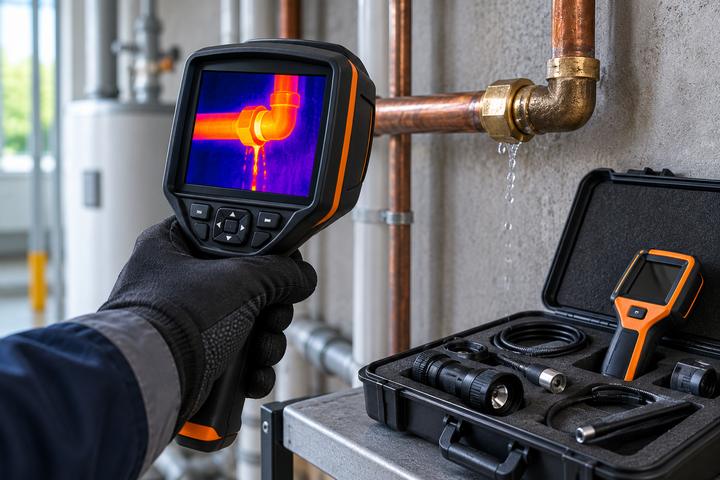
Thermal imaging leak tools are devices that use infrared technology to visualize temperature variations across surfaces and equipment. These temperature differences can reveal hidden moisture, fluid leaks, insulation failures, air leakage, and equipment abnormalities.
By converting infrared radiation into visual thermal images, these tools allow users to identify areas that require further investigation without damaging walls, floors, ceilings, or equipment.
Why Are Thermal Imaging Leak Tools Important?
Leaks often develop in locations that are difficult to access or inspect visually. Undetected leaks can lead to structural damage, energy waste, equipment deterioration, and operational disruptions.
Thermal imaging technologies help improve:
- Early leak detection
- Building diagnostics
- Infrastructure monitoring
- Energy efficiency assessments
- Maintenance planning
- Equipment reliability
- Moisture identification
- Operational safety
Thermal Imaging Leak Detection Facts
- Infrared technology can identify temperature differences that are invisible to the human eye.
- Thermal inspections are widely used in building diagnostics and industrial maintenance.
- Moisture intrusion often creates detectable temperature variations.
- Energy efficiency assessments frequently utilize thermal imaging technologies.
- Predictive maintenance programs increasingly include thermal inspection methods.
- Utility infrastructure inspections benefit from infrared monitoring techniques.
Understanding the Concept
Thermal imaging works by detecting infrared energy emitted from objects and surfaces. Every object with a temperature above absolute zero emits infrared radiation.
Thermal imaging leak tools capture this radiation and convert it into visual images showing temperature differences. Areas affected by leaks often display thermal patterns that differ from surrounding materials, making them easier to identify.
For example, moisture behind a wall may create a cooler area compared to dry sections, while hot water leaks may create warmer thermal signatures.
Major Types of Thermal Imaging Leak Tools
- Handheld Thermal Cameras
- Fixed Infrared Monitoring Systems
- Portable Thermal Inspection Devices
- Drone-Based Thermal Imaging Systems
- Industrial Thermal Monitoring Platforms
- Building Diagnostic Cameras
- Utility Infrastructure Inspection Systems
- HVAC Inspection Tools
- Pipe Inspection Thermal Devices
- Smart Thermal Analytics Platforms
Equipment Categories Table
| Equipment Category | Examples |
|---|---|
| Thermal Imaging Devices | Infrared Cameras, Thermal Scanners |
| Detection Equipment | Leak Detection Systems, Inspection Devices |
| Monitoring Technologies | Fixed Thermal Monitoring Systems |
| Mobile Inspection Tools | Handheld and Portable Cameras |
| Aerial Inspection Systems | Drone-Based Thermal Imaging Platforms |
| Analytics Technologies | Thermal Analysis and Reporting Platforms |
Key Features and Core Components
Modern thermal imaging leak tools often include:
- Infrared sensors
- Thermal imaging cameras
- High-resolution displays
- Temperature measurement capabilities
- Image recording functions
- Thermal analytics platforms
- Wireless connectivity
- Real-time monitoring
- Reporting tools
- Digital image storage
- Environmental monitoring features
- Inspection management platforms
Thermal Imaging Technology Comparison
| Technology | Detection Capability | Inspection Speed | Common Use |
|---|---|---|---|
| Handheld Thermal Camera | High | Fast | Building Inspections |
| Fixed Thermal Monitoring | High | Continuous | Industrial Facilities |
| Drone Thermal Imaging | Medium to High | Fast | Roof and Infrastructure Surveys |
| Pipe Inspection Imaging | High | Medium | Utility Networks |
| Building Diagnostic Imaging | High | Fast | Moisture Detection |
What Is Infrared Thermography?
Infrared thermography is the process of capturing and analyzing thermal energy emitted by objects. It forms the foundation of thermal imaging leak detection and helps identify temperature anomalies associated with leaks and equipment issues.
What Is Thermal Leak Detection?
Thermal leak detection uses infrared imaging technology to identify temperature variations caused by moisture, escaping fluids, insulation deficiencies, or air leakage.
What Is Building Thermography?
Building thermography involves using thermal imaging technology to evaluate walls, roofs, ceilings, windows, and structural components for hidden issues.
What Is Industrial Thermal Inspection?
Industrial thermal inspection uses infrared imaging to monitor equipment, pipelines, electrical systems, and process infrastructure.
How Thermal Imaging Leak Tools Work
- Infrared sensors capture thermal energy from surfaces.
- The device converts infrared radiation into digital information.
- Thermal images are generated using temperature data.
- Temperature variations appear as distinct thermal patterns.
- Inspectors analyze anomalies that may indicate leaks.
- Additional verification methods confirm findings.
- Maintenance actions address identified issues.
Benefits and Advantages
Thermal imaging leak tools provide several advantages:
- Non-invasive inspections
- Faster leak identification
- Reduced inspection time
- Improved maintenance planning
- Better asset management
- Enhanced infrastructure monitoring
- Early problem detection
- Reduced operational disruptions
- Improved energy assessments
- Greater inspection accuracy
- Enhanced workplace safety
- Improved facility diagnostics
Industry Applications
Building Inspections
Thermal imaging helps identify moisture intrusion, insulation deficiencies, and hidden water leaks.
HVAC Systems
Heating, ventilation, and cooling systems use thermal inspections to detect performance issues and air leakage.
Industrial Facilities
Manufacturing operations use thermal monitoring for equipment diagnostics and predictive maintenance.
Utility Infrastructure
Utility operators inspect pipelines, electrical systems, and distribution infrastructure using thermal imaging technologies.
Data Centers
Data centers monitor cooling systems and electrical equipment through thermal inspection programs.
Energy Facilities
Power generation and energy distribution facilities use thermal monitoring to improve operational reliability.
Commercial Buildings
Facility managers use thermal imaging to identify building envelope issues and energy losses.
Transportation Infrastructure
Thermal inspections support monitoring of bridges, tunnels, rail systems, and transportation facilities.
Real-World Examples and Applications
Example: Hidden Water Leak Behind a Wall
A building inspection identifies a cooler thermal pattern behind a wall. Further investigation reveals moisture caused by a concealed plumbing leak.
Example: Industrial Pipeline Monitoring
An industrial facility uses thermal imaging to identify abnormal temperature changes along a pipeline, helping maintenance teams locate a developing leak.
Example: Roof Moisture Assessment
A roof inspection uses drone-based thermal imaging to identify moisture accumulation beneath roofing materials.
Example: HVAC Air Leakage Detection
Thermal imaging reveals temperature variations around ductwork, helping identify areas where conditioned air is escaping.
Example: Utility Infrastructure Inspection
Utility operators use infrared imaging to monitor distribution systems and identify abnormal operating conditions.
Important Factors to Consider
When evaluating thermal imaging leak tools, consider:
- Image resolution
- Temperature measurement range
- Detection sensitivity
- Environmental conditions
- Inspection requirements
- Portability
- Data recording capabilities
- Reporting functions
- Monitoring requirements
- Operational complexity
Common Challenges and Solutions
| Challenge | Impact | Solution |
|---|---|---|
| Environmental Variations | Misinterpretation | Controlled Inspection Conditions |
| Surface Reflections | Reduced Accuracy | Proper Inspection Techniques |
| Hidden Obstructions | Limited Visibility | Combined Inspection Methods |
| Low Temperature Differences | Difficult Detection | High-Sensitivity Sensors |
| Complex Structures | Inspection Challenges | Advanced Thermal Analytics |
Thermal Imaging Best Practices
- Conduct inspections under suitable environmental conditions.
- Review historical inspection data when available.
- Verify thermal anomalies using additional methods.
- Maintain calibration of thermal devices.
- Follow consistent inspection procedures.
- Document findings thoroughly.
- Monitor critical systems regularly.
- Train personnel on thermal image interpretation.
- Utilize predictive maintenance strategies.
- Evaluate trends over time.
Future Trends and Industry Insights
Several emerging technologies are shaping the future of thermal imaging leak detection.
Artificial Intelligence Analytics
AI-powered analytics help identify thermal patterns and improve anomaly detection.
Automated Inspection Systems
Automation technologies support continuous monitoring and faster diagnostics.
Smart Building Integration
Thermal imaging systems increasingly connect with building management platforms.
Drone-Based Thermal Surveys
Drone inspections improve access to large facilities and difficult-to-reach infrastructure.
Predictive Maintenance Technologies
Advanced monitoring systems help identify developing issues before major failures occur.
Edge Computing
Real-time thermal data processing supports faster decision-making.
Digital Twin Integration
Digital twins help combine thermal inspection data with infrastructure models.
Expert Insights
Thermal imaging leak tools have become important components of modern inspection and maintenance strategies. Their ability to identify hidden issues without invasive procedures makes them valuable across building diagnostics, industrial operations, utility infrastructure, and energy management.
As artificial intelligence, automation, and smart monitoring technologies continue to evolve, thermal imaging systems are expected to provide even greater visibility into asset performance, infrastructure conditions, and maintenance requirements.
Key Takeaways
- Thermal imaging leak tools use infrared technology to identify hidden leaks.
- Infrared thermography helps detect temperature anomalies.
- Non-invasive inspections reduce disruption.
- Building diagnostics frequently utilize thermal imaging.
- Industrial facilities benefit from predictive maintenance applications.
- Utility infrastructure monitoring increasingly relies on thermal inspections.
- Drone-based imaging expands inspection capabilities.
- Future systems will integrate AI, automation, and advanced analytics.
Frequently Asked Questions (FAQ)
What are thermal imaging leak tools?
Thermal imaging leak tools are infrared devices used to identify hidden leaks through temperature differences.
How does thermal imaging detect leaks?
Leaks often create thermal patterns that differ from surrounding materials, making them visible through infrared imaging.
What is infrared thermography?
Infrared thermography is the process of capturing and analyzing thermal energy emitted by objects.
Can thermal imaging identify water leaks?
Thermal imaging can help locate moisture-related temperature variations that may indicate water leaks.
What industries use thermal imaging leak detection?
Building inspections, utilities, manufacturing, energy facilities, transportation infrastructure, and HVAC operations commonly use thermal imaging.
What is a thermal anomaly?
A thermal anomaly is an area displaying unusual temperature characteristics compared to surrounding surfaces.
Can thermal imaging inspect roofs?
Yes, thermal imaging is commonly used to identify moisture and insulation issues within roofing systems.
What is drone-based thermal imaging?
Drone-based thermal imaging combines aerial platforms with infrared cameras for large-area inspections.
What equipment is used for thermal leak detection?
Infrared cameras, thermal scanners, monitoring systems, and analytics platforms are commonly used.
What are the benefits of thermal inspections?
Benefits include faster inspections, non-invasive diagnostics, improved maintenance planning, and early issue identification.
What factors affect thermal imaging accuracy?
Environmental conditions, surface characteristics, temperature differences, and equipment sensitivity can influence results.
How does thermal imaging support predictive maintenance?
Thermal inspections help identify developing equipment issues before major failures occur.
What is building thermography?
Building thermography uses thermal imaging to evaluate structures for hidden moisture, insulation problems, and air leakage.
What role does AI play in thermal imaging?
AI helps analyze thermal patterns, improve anomaly detection, and support automated diagnostics.
What is the future of thermal imaging leak detection?
Future developments include AI analytics, automated inspections, smart building integration, digital twins, and advanced monitoring technologies.
Conclusion
Thermal imaging leak tools provide an effective way to identify hidden leaks, moisture intrusion, insulation deficiencies, and equipment abnormalities through infrared technology. By visualizing temperature differences, these tools help improve inspection efficiency, maintenance planning, and infrastructure monitoring.
As building systems, industrial facilities, and utility networks become increasingly connected, thermal imaging technologies will continue to play an important role in predictive maintenance, asset management, and operational reliability. Advances in artificial intelligence, automation, and smart monitoring systems are expected to further enhance the capabilities of thermal inspection technologies.