Fiber Laser Cutting Machines: Guide to Precision Cutting Technology
Laser Cutting Technology has transformed modern manufacturing by improving precision, speed, and efficiency in material cutting.
Among the most advanced cutting systems used today are fiber laser cutting machines. These machines are widely used in industries that require accurate and clean cutting for metal and other materials.
Fiber laser cutting technology is important because industries increasingly demand high-quality production with minimal material waste. Manufacturers use these machines for detailed designs, industrial components, automotive parts, construction materials, and electronic equipment.
Unlike traditional cutting methods, fiber laser systems use concentrated light energy to cut materials with remarkable accuracy. This guide explains how fiber laser cutting machines work, their major categories, practical applications, benefits, and future developments.
Understanding the Concept
Fiber laser cutting machines use a highly focused laser beam to cut through materials. The laser beam is generated through optical fibers that amplify light energy into a powerful cutting source.
The concentrated beam produces intense heat that melts or vaporizes material in a controlled manner. A gas stream then removes the melted material from the cutting area, creating a smooth and accurate edge.
These machines are commonly used for:
- Stainless steel
- Carbon steel
- Aluminum
- Brass
- Copper
- Titanium
Fiber laser technology is known for high precision and fast cutting performance. Many industries prefer it because it reduces material waste and improves production efficiency.
For example, a manufacturing company producing metal panels can create complex shapes quickly and consistently using fiber laser cutting systems.
Key Types or Categories
Fiber laser cutting machines come in different categories depending on industrial requirements and production environments.
Flatbed Fiber Laser Machines
Flatbed machines are commonly used for cutting flat metal sheets.
These systems include a large working table where materials are positioned before cutting begins.
Industries use flatbed machines for:
- Metal fabrication
- Construction materials
- Automotive panels
- Industrial components
They are popular because of their versatility and high cutting accuracy.
Tube Fiber Laser Machines
Tube laser machines are designed for cutting pipes and tubular materials.
These systems handle:
- Round tubes
- Square pipes
- Structural metal sections
Tube cutting is important in industries such as furniture manufacturing, construction, and automotive production.
Combination Laser Machines
Combination systems can cut both flat sheets and tubes in one machine.
This flexibility helps manufacturers manage different production requirements within a single workflow.
High-Power Fiber Laser Machines
High-power machines are designed for thick and heavy materials.
They are commonly used in:
- Shipbuilding
- Heavy machinery production
- Industrial engineering
- Aerospace manufacturing
These systems handle demanding industrial environments and large-scale production.
Important Subsections
Laser Source Technology
The laser source is the core component of the machine.
Fiber laser systems use optical fibers to generate and amplify light energy. This design improves efficiency and cutting precision.
Compared to older laser systems, fiber lasers often provide:
- Faster cutting
- Better energy efficiency
- Reduced maintenance needs
- Improved beam quality
CNC Control Systems
Most fiber laser machines operate using CNC technology. CNC stands for Computer Numerical Control.
Operators enter digital instructions into the system, and the machine follows programmed cutting paths automatically.
This improves consistency and reduces manual errors.
Cutting Head Components
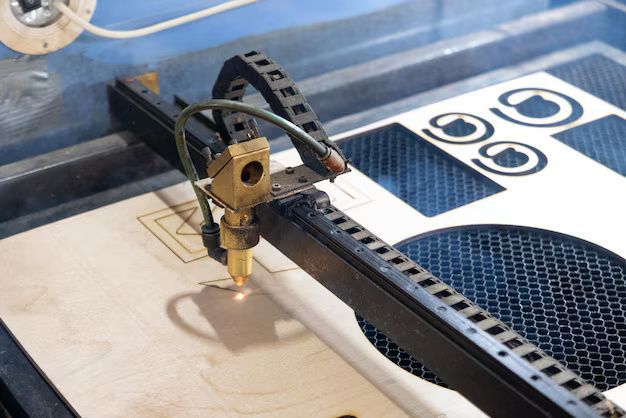
The cutting head directs the laser beam onto the material surface.
It contains:
- Focusing lenses
- Protective components
- Gas nozzles
- Sensor systems
These parts work together to maintain cutting accuracy.
Cooling Systems
Laser cutting generates significant heat.
Cooling systems help regulate machine temperature and maintain stable operation during continuous production.
Proper cooling improves machine reliability and performance.
How It Works
Fiber laser cutting follows a precise step-by-step process.
Step 1: Design Creation
Engineers or operators create a digital design using CAD systems. CAD means Computer-Aided Design.
The design contains cutting dimensions, shapes, and technical instructions.
Step 2: Material Positioning
The material sheet or tube is placed on the machine bed.
Positioning systems secure the material before cutting begins.
Step 3: Laser Beam Generation
The fiber laser source produces a concentrated beam of light energy.
The beam travels through optical fibers toward the cutting head.
Step 4: Beam Focusing
The cutting head focuses the beam into a very small point.
This concentrated energy creates extremely high temperatures at the cutting area.
Step 5: Material Cutting
The focused beam melts or vaporizes the material along the programmed cutting path.
Assist gases remove molten material and help create clean edges.
Step 6: Finished Output
After cutting is complete, the finished components are removed for inspection or assembly.
This process supports fast and accurate production.
Benefits and Advantages
Fiber laser cutting machines provide several practical benefits across industrial environments.
High Precision
Fiber lasers create detailed and accurate cuts.
This precision is important for industries requiring exact measurements and complex shapes.
Faster Production
These machines operate at high speeds compared to many traditional cutting methods.
Faster production improves manufacturing efficiency and output capacity.
Reduced Material Waste
Precise cutting paths help minimize wasted material.
This improves resource efficiency and production planning.
Smooth Cutting Edges
Fiber laser systems often produce clean and smooth edges.
This reduces the need for additional finishing processes.
Energy Efficiency
Fiber laser systems use energy more efficiently than older laser technologies.
Improved energy performance supports long-term industrial productivity.
Automation Compatibility
Many fiber laser machines integrate with automated production systems.
This improves workflow organization and reduces repetitive manual tasks.
Real-World Examples or Applications
Fiber laser cutting technology is widely used in modern industries.
Automotive Manufacturing
Automotive companies use fiber lasers for cutting:
- Vehicle frames
- Body panels
- Exhaust components
- Structural parts
Precision cutting improves part quality and production consistency.
Aerospace Industry
Aircraft manufacturers require highly accurate cutting for lightweight metal components.
Fiber laser systems help create complex aerospace parts with minimal material distortion.
Construction Industry
Construction companies use laser-cut materials for:
- Structural supports
- Decorative metal panels
- Industrial frameworks
- Building components
Laser cutting supports both functionality and modern architectural design.
Electronics Manufacturing
Electronic equipment often contains small and detailed metal components.
Fiber lasers help manufacturers create intricate parts with high precision.
Furniture Production
Metal furniture manufacturers use tube laser systems for:
- Chair frames
- Table structures
- Decorative elements
- Storage systems
Accurate cutting improves product consistency and design quality.
Important Factors to Understand
Several important factors influence fiber laser cutting performance.
Material Thickness
Different machines support different cutting thickness levels.
Thin materials generally cut faster, while thicker metals require more laser power.
Machine Power
Laser power affects cutting capability and production speed.
Higher-power systems handle thicker materials and demanding industrial tasks.
Maintenance Requirements
Proper maintenance helps maintain machine efficiency and accuracy.
Important maintenance areas include:
- Lens cleaning
- Cooling inspection
- Gas system checks
- Optical component care
Regular maintenance improves operational stability.
Operator Training
Operators should understand machine settings, safety procedures, and production workflows.
Proper training improves cutting accuracy and workplace safety.
Safety Measures
Laser cutting systems involve intense heat and high-energy light.
Industrial environments often use:
- Protective enclosures
- Ventilation systems
- Eye protection
- Safety monitoring systems
These measures help maintain safe working conditions.
Future Trends and Industry Insights
Fiber laser technology continues evolving as industries demand greater precision and automation.
Smart Manufacturing Integration
Many factories are adopting smart manufacturing systems connected through digital networks.
Fiber laser machines increasingly integrate with automated production environments and real-time monitoring systems.
Artificial Intelligence Applications
Artificial intelligence may improve machine performance by optimizing cutting paths and production settings automatically.
AI-driven analytics may also reduce production errors and improve efficiency.
Advanced Automation
Future systems may include:
- Robotic material handling
- Automated inspection systems
- Real-time production analysis
- Predictive maintenance tools
These developments may improve industrial productivity.
Higher Energy Efficiency
Manufacturers continue improving energy performance in fiber laser systems.
Improved efficiency supports sustainable manufacturing practices.
Expanded Material Capabilities
Future fiber laser machines may process a wider range of materials with improved cutting precision and flexibility.
This could expand industrial applications across multiple sectors.
Conclusion
Fiber laser cutting machines have become an essential part of modern manufacturing and industrial production. Their ability to produce fast, accurate, and clean cuts makes them valuable across industries such as automotive manufacturing, aerospace engineering, construction, electronics, and furniture production.
Features such as CNC control systems, advanced laser sources, automation compatibility, and energy efficiency help manufacturers improve productivity and cutting precision. As technology continues advancing, fiber laser cutting systems are expected to become even more intelligent, automated, and versatile.
Understanding how these machines work helps businesses and individuals recognize the importance of precision cutting technology in today’s industrial world. Fiber laser cutting remains a major contributor to efficient manufacturing, modern engineering, and high-quality production processes.