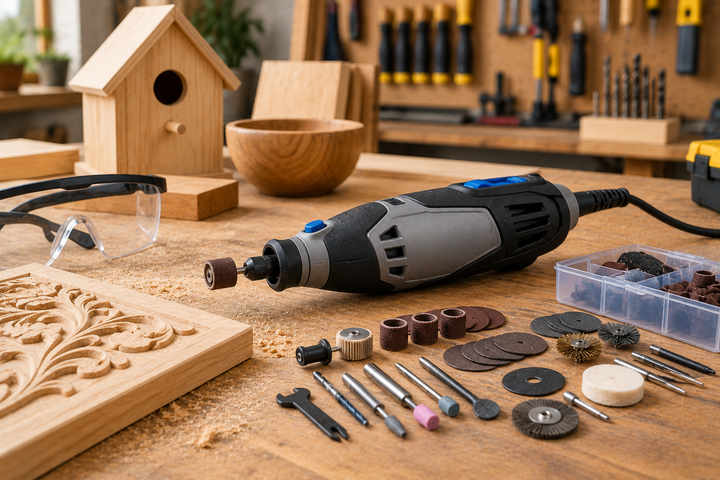
Woodworking Rotary Tools: Applications, Features and Insights
Woodworking rotary tools are versatile power tools used for cutting, carving, sanding, polishing, engraving, shaping, and finishing wood materials.
Their compact design and ability to work with a wide range of attachments make them useful for detailed woodworking tasks that require precision and control.
From hobby projects and furniture crafting to restoration work and decorative wood carving, rotary tools help users perform intricate operations that may be difficult with larger equipment. As tool technology continues to evolve, modern rotary tools are becoming more powerful, efficient, and adaptable to different woodworking applications.
Understanding how woodworking rotary tools work, their main features, and their practical uses can help beginners and experienced woodworkers make better decisions when selecting and using these tools.
Quick Facts Table
| Topic | Purpose | Key Components | Main Benefits | Common Applications |
|---|---|---|---|---|
| Woodworking Rotary Tools | Cutting, carving, sanding, polishing, and shaping wood | Motor, collet, speed controls, attachments, accessories | Precision, versatility, portability, detailed work | Wood carving, engraving, furniture restoration, sanding, finishing |
What Are Woodworking Rotary Tools?
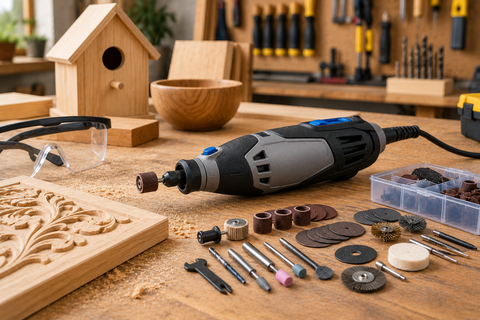
Woodworking rotary tools are handheld devices equipped with a rotating spindle that accepts various accessories and attachments. These tools operate at high speeds and can perform multiple functions depending on the accessory being used.
Common attachments include cutting wheels, sanding drums, engraving bits, carving burrs, polishing pads, and grinding stones. Their versatility makes them valuable tools in woodworking workshops and creative projects.
Why Are Woodworking Rotary Tools Important?
Woodworking projects often require detailed shaping, smoothing, and finishing work. Rotary tools provide precision and flexibility for tasks that larger woodworking machines may not handle effectively.
Their importance includes:
- Supporting detailed craftsmanship
- Improving finishing quality
- Assisting with decorative work
- Enhancing project accuracy
- Reaching tight spaces
- Supporting restoration projects
- Providing multi-purpose functionality
- Improving workflow efficiency
Quick Facts and Industry Insights
- Rotary tools are commonly used for detailed woodworking operations.
- Variable-speed technology improves control during different tasks.
- Modern attachments expand the range of woodworking applications.
- Compact designs improve maneuverability and accessibility.
- Precision carving tools continue to grow in popularity among hobbyists and professionals.
- Advanced battery technologies are increasing cordless tool capabilities.
- Multi-purpose tool systems support a wide variety of workshop tasks.
Understanding the Concept
A rotary tool works by spinning an accessory at high speed. Depending on the selected attachment, the tool can cut, carve, grind, sand, polish, or engrave wood surfaces.
Unlike larger woodworking machines designed for heavy material removal, rotary tools excel at precision work. They are particularly useful for intricate designs, fine details, edge shaping, and finishing operations.
As woodworking techniques become more sophisticated, rotary tools remain valuable because of their flexibility and precision.
Equipment Categories Table
| Tool Category | Common Attachments |
|---|---|
| Cutting Tools | Cutting Wheels, Spiral Bits |
| Carving Tools | Carving Burrs, Routing Bits |
| Sanding Tools | Sanding Drums, Sanding Bands |
| Grinding Tools | Grinding Stones |
| Polishing Tools | Buffing Wheels, Polishing Pads |
| Engraving Tools | Engraving Bits |
Key Features and Core Components
Modern woodworking rotary tools typically include:
- High-speed electric motor
- Variable speed controls
- Collet system
- Ergonomic grip
- Accessory compatibility
- Dust management options
- Precision control features
- Lightweight design
- Corded or cordless operation
- Multiple attachment support
These components help improve versatility and ease of use.
Main Types of Woodworking Rotary Tools
Corded Rotary Tools
Corded models provide continuous power and are commonly used for extended workshop projects. They are suitable for detailed woodworking applications requiring consistent performance.
Cordless Rotary Tools
Cordless models use rechargeable batteries and provide greater mobility. They are useful for projects where portability is important.
Heavy-Duty Rotary Tools
Heavy-duty rotary tools feature more powerful motors and are designed for demanding carving, shaping, and cutting applications.
Tool Comparison Table
| Tool Type | Power Availability | Mobility | Typical Applications |
|---|---|---|---|
| Corded Rotary Tool | Continuous | Moderate | Workshop Projects |
| Cordless Rotary Tool | Battery Powered | High | Portable Applications |
| Heavy-Duty Rotary Tool | High Output | Moderate | Material Shaping |
| Precision Rotary Tool | Moderate Output | High | Detailed Carving |
What Is a Rotary Tool?
A rotary tool is a handheld power tool that rotates attachments at high speed to perform multiple operations such as cutting, sanding, polishing, carving, and engraving.
What Is a Wood Carving Bit?
A wood carving bit is a specialized accessory designed for shaping and carving wood surfaces. Different bit designs produce different carving patterns and levels of detail.
What Is Variable Speed Control?
Variable speed control allows users to adjust the rotation speed according to the task being performed. Lower speeds may be useful for polishing, while higher speeds support cutting and material removal.
How Woodworking Rotary Tools Work
- The motor generates rotational motion.
- The collet securely holds the selected attachment.
- The attachment spins at the chosen speed.
- The user guides the tool over the workpiece.
- Material is shaped, sanded, cut, or polished.
- Finishing adjustments are made as needed.
- Accessories can be changed for different operations.
This flexibility allows one tool to perform multiple woodworking functions.
Benefits and Advantages
Woodworking rotary tools provide several practical benefits:
- Precision workmanship
- Multi-purpose functionality
- Compact size
- Easy handling
- Detailed carving capabilities
- Improved finishing quality
- Versatile accessory options
- Ability to reach tight spaces
- Useful for restoration projects
- Suitable for beginners and experienced users
Practical Usage Guide
Step 1: Select the Correct Attachment
Choose the accessory based on the intended task, such as carving, sanding, or polishing.
Step 2: Adjust Speed Settings
Match the speed setting to the material and operation.
Step 3: Secure the Workpiece
Ensure the wood remains stable during operation.
Step 4: Use Light Pressure
Allow the tool and attachment to perform the work without excessive force.
Step 5: Monitor Progress
Check the surface regularly and make adjustments when necessary.
Step 6: Replace Worn Accessories
Damaged or worn accessories can reduce accuracy and performance.
Real-World Examples and Applications
Example: Decorative Wood Carving
A craftsperson uses carving bits to create detailed patterns on a wooden sign or decorative panel.
Example: Furniture Restoration
A rotary tool helps remove old finishes, smooth damaged surfaces, and prepare furniture for refinishing.
Example: Custom Engraving
A hobbyist engraves names, designs, or artwork onto wooden objects using precision engraving bits.
Example: Edge Shaping
A woodworker shapes and smooths edges on cabinets, shelves, or decorative trim pieces.
Important Factors to Consider
Before selecting or using woodworking rotary tools, consider:
- Motor power
- Speed range
- Accessory compatibility
- Ergonomic comfort
- Project requirements
- Material type
- Dust management
- Precision needs
- Tool weight
- Maintenance requirements
Common Challenges and Solutions
| Challenge | Impact | Solution |
|---|---|---|
| Excessive Heat | Reduced Control | Use Appropriate Speed Settings |
| Uneven Surface Finish | Lower Quality Results | Use Correct Attachment |
| Accessory Wear | Reduced Performance | Replace Worn Components |
| Dust Accumulation | Visibility Issues | Utilize Dust Collection Methods |
| Over-Carving | Material Damage | Apply Light Pressure |
Best Practices for Woodworking Rotary Tools
- Select attachments carefully.
- Maintain clean accessories.
- Wear appropriate safety equipment.
- Use stable work surfaces.
- Practice on scrap material first.
- Adjust speed settings correctly.
- Inspect attachments before use.
- Keep the tool clean after operation.
- Store accessories properly.
- Follow manufacturer recommendations.
Industry Applications
Furniture Manufacturing
Rotary tools support shaping, finishing, and detailing operations.
Wood Restoration
Restoration professionals use rotary tools for refinishing and repair work.
Decorative Woodworking
Artists and craftspeople create intricate designs and carvings.
Educational Workshops
Training environments use rotary tools to teach woodworking techniques.
Custom Craft Production
Small-scale woodworking projects often utilize precision rotary tool operations.
Future Trends and Industry Insights
Several innovations are shaping the future of woodworking rotary tools.
Improved Battery Technology
Advances in battery systems are increasing cordless tool performance and runtime.
Smart Tool Features
Digital controls and monitoring technologies are improving precision and usability.
Enhanced Accessory Systems
Manufacturers continue to develop specialized attachments for different woodworking applications.
Better Ergonomic Design
Modern tools increasingly focus on comfort and reduced user fatigue.
Precision Control Technologies
Advanced speed management systems support greater accuracy during detailed work.
Expert Insights
Woodworking rotary tools remain among the most versatile tools available for detailed woodworking tasks. Their ability to support carving, sanding, polishing, engraving, and finishing operations makes them valuable in many workshop environments.
As accessory options continue to expand and tool technologies improve, rotary tools are expected to remain important components of modern woodworking practices. Their combination of precision, flexibility, and portability supports a wide variety of creative and practical applications.
Key Takeaways
- Woodworking rotary tools perform multiple functions using interchangeable accessories.
- They support carving, sanding, cutting, polishing, and engraving.
- Variable speed controls improve precision and flexibility.
- Corded and cordless options support different working environments.
- Proper accessory selection improves results and safety.
- Rotary tools are useful for both hobby and professional woodworking projects.
- Modern technologies continue to improve performance and usability.
Frequently Asked Questions (FAQ)
What are woodworking rotary tools?
Woodworking rotary tools are handheld devices used for cutting, carving, sanding, polishing, and engraving wood.
What can a rotary tool do in woodworking?
A rotary tool can carve, shape, smooth, engrave, cut, and finish wood surfaces.
Are rotary tools suitable for beginners?
Yes. With proper guidance and safety practices, rotary tools can be used by beginners and experienced woodworkers.
What attachments are commonly used?
Common accessories include carving bits, sanding drums, cutting wheels, engraving bits, and polishing pads.
What is the advantage of variable speed control?
Variable speed settings allow users to match tool performance to specific tasks and materials.
Can rotary tools be used for furniture restoration?
Yes. Rotary tools are frequently used for surface preparation, detailing, and refinishing work.
What safety equipment should be used?
Eye protection, hearing protection, and dust protection are commonly recommended.
How do cordless rotary tools differ from corded models?
Cordless tools provide greater mobility, while corded tools provide continuous power.
What materials can rotary tools work with?
In addition to wood, many rotary tools can work with plastic, metal, ceramic, and other materials when using appropriate accessories.
What is the future of woodworking rotary tools?
Future developments are expected to include improved batteries, smart controls, ergonomic enhancements, and expanded accessory systems.
Conclusion
Woodworking rotary tools are versatile and practical tools that support a wide range of woodworking applications, from detailed carving and engraving to sanding, polishing, and finishing. Their compact design, interchangeable accessories, and precision capabilities make them valuable for both creative and functional projects.
As woodworking technologies continue to evolve, rotary tools are becoming more efficient, adaptable, and user-friendly. Understanding their features, applications, maintenance practices, and future developments helps users make informed decisions and achieve better woodworking results.