Understanding Multi Axis CNC Machines: Types, Features, and Benefits
Modern manufacturing depends heavily on precision, speed, and consistency. One of the most important technologies supporting these goals is the use of multi axis cnc machines.
These advanced machines help industries create detailed parts with high accuracy and smooth finishing.
From automotive components to aerospace equipment, many industries rely on CNC technology because it improves production quality and reduces manual effort. Traditional machines usually move in two or three directions, but advanced CNC systems can move in multiple directions at the same time. This allows manufacturers to shape complex parts more efficiently.
Understanding how these machines work is important for anyone interested in manufacturing technology, industrial automation, or precision engineering. This article explains the concept, major types, working process, benefits, applications, and future developments of multi-axis machining in simple language.
Understanding the Concept
A CNC machine is a computer-controlled machine used to cut, shape, drill, or finish materials such as metal, plastic, wood, and composite materials. CNC stands for Computer Numerical Control. The machine follows programmed instructions to perform accurate movements.
Multi axis cnc machines are advanced versions of standard CNC equipment. Instead of moving in only three directions, they can move in four, five, or even more axes. An axis refers to a direction of movement.
Basic CNC movement includes:
- X-axis: left and right
- Y-axis: forward and backward
- Z-axis: up and down
Additional axes allow the machine or cutting tool to rotate and tilt. This makes it easier to create complex shapes without repositioning the material manually.
For example, aircraft turbine blades have curved surfaces and detailed angles. A normal machine may require several setups to create the part, while a multi-axis machine can complete the process in fewer steps.
Key Types or Categories
There are several types of multi-axis machines used in manufacturing environments. Each type is designed for different levels of complexity and production requirements.
3-Axis CNC Machines
These are the most common CNC machines. They move along the X, Y, and Z directions.
Common uses include:
- Flat surface cutting
- Drilling
- Simple shaping
- Basic industrial parts
Although useful, they have limitations when creating complex geometries.
4-Axis CNC Machines
A 4-axis machine includes an additional rotational movement. Usually, the material rotates while the cutting tool continues shaping it.
Advantages include:
- Better precision for curved surfaces
- Improved production efficiency
- Reduced manual repositioning
These machines are often used for cylindrical parts and engraved components.
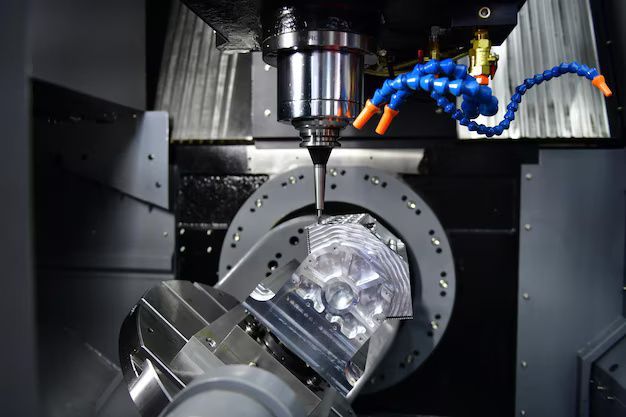
5-Axis CNC Machines
5-axis systems are among the most advanced machining solutions available today. They allow movement in five directions simultaneously.
Benefits include:
- Complex part creation
- High precision
- Better surface finishing
- Faster production cycles
Industries such as aerospace and medical manufacturing commonly use 5-axis technology.
Multi Axis Milling Equipment
A multi axis milling machine uses rotating cutting tools to remove material from a workpiece. These machines can produce detailed shapes, slots, and contours.
They are commonly used for:
- Mold manufacturing
- Automotive parts
- Aerospace structures
- Precision engineering components
Because the tool can approach the material from different angles, machining becomes more efficient and accurate.
Multi Axis Turning Equipment
A multi axis lathe rotates the material while cutting tools shape the outer or inner surface. Advanced turning systems may include live tooling and multiple rotational movements.
Typical applications include:
- Shafts
- Cylinders
- Engine components
- Precision metal parts
These machines are highly effective for producing symmetrical components with excellent consistency.
Important Subsections
Role of Automation
Automation plays a major role in modern CNC machining. The computer controls every movement based on programmed instructions. This reduces human error and improves repeatability.
For example, if a factory needs thousands of identical components, automated CNC machining ensures each part matches the required dimensions.
Importance of Precision
Precision is one of the biggest strengths of CNC technology. Even very small measurement differences can affect product quality.
Multi-axis systems improve precision by:
- Reducing repositioning errors
- Allowing smoother tool movement
- Maintaining consistent cutting angles
This is especially important in aerospace and medical industries where exact measurements are critical.
Material Compatibility
These machines can work with many materials, including:
- Aluminum
- Steel
- Titanium
- Plastic
- Wood
- Composite materials
Different cutting tools and speeds are selected depending on the material type.
How It Works
The working process of multi-axis machining involves several stages. Although the technology is advanced, the basic workflow is easy to understand.
Step 1: Designing the Part
Engineers first create a digital design using CAD technology. CAD stands for Computer-Aided Design.
The design includes:
- Dimensions
- Shapes
- Angles
- Surface details
Step 2: Creating Machine Instructions
The digital design is converted into machine instructions. These instructions guide every movement of the cutting tool.
The program tells the machine:
- Where to move
- How fast to cut
- Which tool to use
- How deep to cut
Step 3: Machine Setup
The material is securely fixed inside the machine. Cutting tools are installed according to the production requirements.
Operators also check:
- Tool alignment
- Material positioning
- Safety settings
Step 4: Machining Process
The machine begins cutting and shaping the material automatically. Multiple axes move simultaneously to create complex shapes.
For example:
- The cutting tool may rotate
- The workpiece may tilt
- Different angles may be machined continuously
This reduces interruptions and improves accuracy.
Step 5: Finishing and Inspection
After machining, the finished component is inspected for quality and accuracy.
Inspection methods may include:
- Digital measuring tools
- Surface analysis
- Dimensional verification
Benefits and Advantages
Multi-axis machining provides several important advantages in manufacturing environments.
Improved Accuracy
Because the machine can approach the material from different angles, parts are produced with excellent precision.
Faster Production
Fewer setups are needed during machining. This saves production time and improves workflow efficiency.
Better Surface Finish
Continuous movement creates smoother surfaces and cleaner edges.
Reduced Human Error
Automation minimizes mistakes caused by manual adjustments.
Complex Design Capability
Manufacturers can create advanced shapes that would be difficult with traditional machines.
Material Efficiency
Accurate cutting reduces unnecessary waste and improves material usage.
Real-World Examples or Applications
Multi-axis CNC technology is used in many industries around the world.
Aerospace Industry
Aircraft components often contain complex curves and lightweight structures. Multi-axis systems help create these parts with high precision.
Examples include:
- Turbine blades
- Structural brackets
- Engine components
Automotive Manufacturing
Automotive companies use CNC machining for detailed metal parts and engine systems.
Common examples include:
- Transmission parts
- Brake components
- Engine housings
Medical Equipment Production
Medical devices require extremely accurate dimensions.
Applications include:
- Surgical instruments
- Orthopedic implants
- Dental components
Industrial Equipment
Factories use CNC technology to create machine parts and production tools.
Examples include:
- Gear systems
- Precision molds
- Hydraulic components
Consumer Electronics
Electronic products contain small and detailed components that require accurate machining.
Examples include:
- Device frames
- Connectors
- Cooling components
Important Factors to Understand
Before using advanced CNC systems, several important factors should be considered.
Machine Complexity
More axes mean more advanced programming and setup requirements. Operators must understand machine movement and tool positioning.
Maintenance Requirements
Regular maintenance helps ensure machine performance and long-term accuracy.
Important maintenance activities include:
- Tool inspection
- Lubrication
- Cleaning
- Calibration checks
Training and Skills
Operators need technical knowledge to manage machine programs and machining strategies effectively.
Production Planning
Manufacturers should select the right machine type based on:
- Part complexity
- Production volume
- Material type
- Precision requirements
Future Trends and Industry Insights
The future of CNC machining continues to evolve with advancements in automation and digital manufacturing.
Smart Manufacturing
Modern factories are increasingly using connected machines that share production data in real time. This helps improve efficiency and machine monitoring.
Artificial Intelligence Integration
AI-based systems can help optimize cutting paths, reduce tool wear, and improve machining accuracy.
Advanced Robotics
Robotic systems are becoming more common in automated machining environments. Robots can handle material loading and unloading with high consistency.
Improved Energy Efficiency
Manufacturers are focusing on machines that consume less energy while maintaining high performance.
Higher Precision Standards
Industries such as aerospace and medical manufacturing continue to demand tighter tolerances and more detailed machining capabilities.
As technology advances, multi-axis machining will likely become even more important in precision manufacturing environments.
Conclusion
Multi axis cnc machines have transformed modern manufacturing by improving precision, efficiency, and production flexibility. These advanced systems allow manufacturers to create detailed and complex components with fewer manual adjustments.
Technologies such as the multi axis milling machine and multi axis lathe play a major role in industries including aerospace, automotive, medical manufacturing, and industrial engineering.
By understanding how these machines work, their major types, and their practical benefits, manufacturers and learners can better appreciate the importance of CNC technology in today’s industrial world. As automation and smart manufacturing continue to evolve, multi-axis machining will remain a key part of advanced production processes.