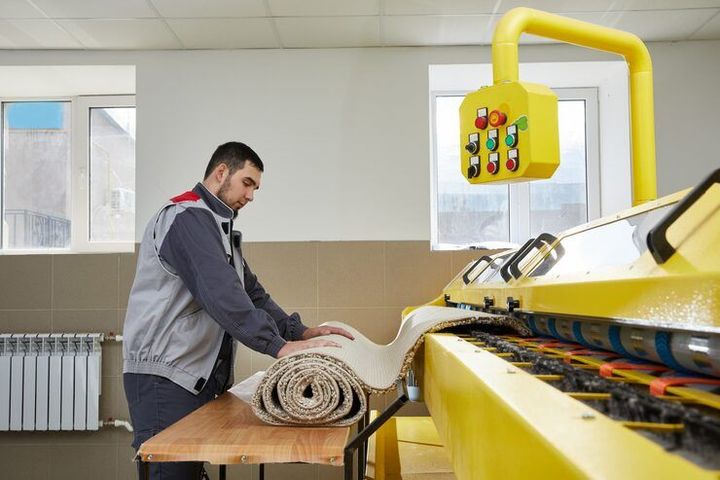
Advanced Textile Printing Machines Guide: Industrial Printing Techniques and Insights
Advanced textile printing machines are specialized industrial systems used to apply designs, patterns, and colors onto fabrics with precision and consistency. These machines range from digital ink-based systems to rotary and screen-based printing setups. They are designed to handle large-scale production while maintaining high-quality output across different types of textiles such as cotton, polyester, and blended materials. In simple terms, they help turn digital or manual designs into finished printed fabric used in clothing, home textiles, and industrial applications.
Over the past few years, global demand for faster and more efficient textile production has increased significantly. According to global industry research, manufacturers are increasingly shifting toward automated and digital solutions to reduce waste and improve customization capabilities. This transition is driven by the need for flexible production systems that can quickly adapt to design changes and shorter production cycles.
As a result, textile printing machines have become central to modern manufacturing strategies worldwide. They influence not only production speed but also design creativity, resource efficiency, and product quality. Understanding how these machines work is essential for anyone involved in textile production, supply chain planning, or industrial design. This leads us to explore who benefits most from these technologies and what challenges they help solve globally.
Who it affects & problems it solves
Advanced textile printing machines affect a wide range of individuals and industries across the world. Manufacturing professionals, production managers, textile designers, entrepreneurs, and supply chain planners all interact with these systems in different ways. Even small creative businesses and large-scale industrial manufacturers rely on these machines to maintain consistent output and meet changing customer demands. In many cases, they also support freelancers and design professionals who depend on rapid prototyping and short production runs.
Without efficient printing technology, many organizations face challenges such as inconsistent print quality, slow production cycles, high material waste, and limited design flexibility. Advanced machines help solve these problems by automating key steps, improving accuracy, and enabling faster transitions between different design patterns. They also allow for more sustainable production practices by reducing excess ink usage and minimizing fabric waste.
A common global scenario involves businesses struggling with traditional printing limitations when trying to meet fast-changing market trends. For example, delays in switching between designs can lead to missed opportunities and excess inventory. Advanced textile printing systems reduce these risks by enabling quicker adjustments and more efficient production planning. This naturally leads to understanding how the technology has evolved recently in response to global industry needs.
Recent updates
In recent years, textile printing technology has experienced significant improvements in automation and digital integration. Many modern systems now incorporate advanced software controls that allow operators to manage color accuracy, pattern scaling, and fabric compatibility more efficiently. This shift has made production processes more predictable and less dependent on manual adjustments.
Over the past year, there has been a noticeable trend toward sustainable printing methods. Manufacturers are focusing on reducing water usage, energy consumption, and chemical waste in printing operations. This reflects a broader global movement toward environmentally conscious production systems, where efficiency and sustainability are equally prioritized.
Another key development is the rise of hybrid printing solutions. These systems combine multiple printing techniques, such as digital and traditional methods, to achieve both speed and high-quality detailing. This flexibility is especially valuable in industries that require both mass production and customized designs within the same workflow.
Additionally, advancements in machine learning and data-driven production monitoring have improved maintenance prediction and operational efficiency. These technologies help reduce downtime and improve long-term machine reliability. With these developments shaping the industry, it becomes important to compare different machine types and their core features.
Comparison table
Before selecting or understanding textile printing machines, it is important to compare their operational characteristics, flexibility, and production capabilities. These parameters help identify which system best fits different industrial needs.
| Parameter | Digital printing machines | Screen printing machines | Rotary printing machines | Hybrid systems |
|---|---|---|---|---|
| Production speed | Medium | High | Very high | High |
| Design flexibility | Very high | Medium | Low | Very high |
| Setup complexity | Low | Medium | High | Medium |
| Cost efficiency | Medium | High for bulk | Very high for bulk | Medium |
| Material compatibility | Wide range | Limited range | Moderate range | Wide range |
| Maintenance needs | Low | Medium | High | Medium |
| Customization capability | Very high | Medium | Low | Very high |
| Color accuracy | High | Medium | High | Very high |
| Waste generation | Low | Medium | Medium | Low |
| Scalability | High | High | Very high | High |
The comparison shows that no single machine type is universally superior. Each system offers distinct advantages depending on production scale, design complexity, and operational goals. This naturally leads into understanding how regulations and practical considerations influence machine selection and usage globally.
Regulations & practical guidance
Across many industrial systems globally, textile printing operations are governed by safety, environmental, and quality standards. In most countries, manufacturers are expected to follow guidelines related to chemical usage, waste disposal, and workplace safety. These rules are designed to ensure that production processes remain safe for workers while minimizing environmental impact.
Additionally, quality control standards are commonly applied to ensure consistency in printed outputs. These standards help maintain uniform color reproduction, fabric durability, and print alignment across large production batches. While regulations vary depending on local frameworks, the general expectation is that manufacturers maintain responsible and traceable production practices.
From a practical perspective, choosing the right textile printing machine depends on production goals, budget planning, and long-term scalability. Understanding operational requirements helps businesses avoid inefficiencies and maintain stable output.
Which option suits your situation?
For individuals or organizations with stable and predictable production needs, traditional screen or rotary systems may offer efficiency in large-scale manufacturing. These systems perform well when design changes are infrequent and volume is high.
For flexible or design-focused operations, digital printing machines are often more suitable. They allow quick adjustments, small batch production, and detailed customization, which is useful for dynamic product lines.
For those managing mixed production requirements, hybrid systems provide a balanced approach. They support both bulk output and customized design workflows, making them adaptable to changing demand conditions.
For early-stage businesses or experimental production setups, compact digital systems may offer a practical starting point due to their lower setup complexity and operational flexibility. This leads to the importance of tools and resources that support better decision-making.
Tools & resources
To better understand and manage textile printing systems, several tools and resources are commonly used across the industry. These help improve design accuracy, workflow efficiency, and production monitoring.
Design simulation software — helps visualize textile patterns before production begins, reducing material waste.
Color management tools — ensure consistent color reproduction across different machines and fabric types.
Production planning systems — assist in scheduling and optimizing manufacturing workflows.
Fabric testing kits — evaluate material compatibility with different printing techniques.
Maintenance tracking systems — monitor machine performance and predict service needs.
Digital design platforms — support creation and editing of textile patterns.
Workflow analytics tools — provide insights into production efficiency and bottlenecks.
These resources collectively help improve decision-making and operational performance in textile printing environments. With these tools in mind, it becomes easier to address common questions about this technology.
Frequently asked questions
What are advanced textile printing machines and how do they differ from basic systems?
Advanced textile printing machines are industrial systems designed for high-precision and scalable fabric printing. Unlike basic systems, they integrate automation, digital controls, and improved color management. This allows faster production, better consistency, and higher customization capabilities. They are widely used in industries requiring both quality and efficiency in fabric design and output.
Who should choose digital vs traditional textile printing machines?
Digital systems are best suited for flexible, design-driven production where customization and quick changes are important. Traditional systems like screen or rotary printing are more suitable for large-scale, repetitive production. The choice depends on production volume, design complexity, and operational priorities rather than one being universally better than the other.
Are textile printing machines subject to global compliance standards?
Yes, textile printing machines typically operate under environmental, safety, and quality standards in many regions worldwide. These include guidelines for chemical usage, waste management, and workplace safety. Compliance ensures sustainable production and consistent product quality. However, specific requirements may vary depending on local industrial frameworks and manufacturing conditions.
What is a common misconception about textile printing technology?
A common misconception is that digital printing always replaces traditional methods entirely. In reality, both technologies coexist and serve different purposes. Digital systems excel in customization and flexibility, while traditional systems remain efficient for high-volume production. Many modern facilities use a combination of both approaches for optimal results.
Is there a production limit for textile printing machines?
Production limits depend on machine type, maintenance quality, and operational setup rather than a fixed universal threshold. High-capacity machines can handle continuous production cycles, while smaller systems are designed for flexible output. Proper maintenance and workflow optimization play a key role in determining long-term production efficiency.
Conclusion
Advanced textile printing machines represent a major evolution in industrial fabric production, combining automation, precision, and flexibility. They help solve key challenges such as inconsistent quality, slow production cycles, and limited design adaptability. The comparison of different systems shows that each machine type serves specific production needs rather than offering a one-size-fits-all solution.
Choosing the right system depends on balancing production scale, customization requirements, and operational efficiency. Digital, screen, rotary, and hybrid systems each play a distinct role in modern textile manufacturing environments. Understanding these differences allows for more informed and strategic decisions.