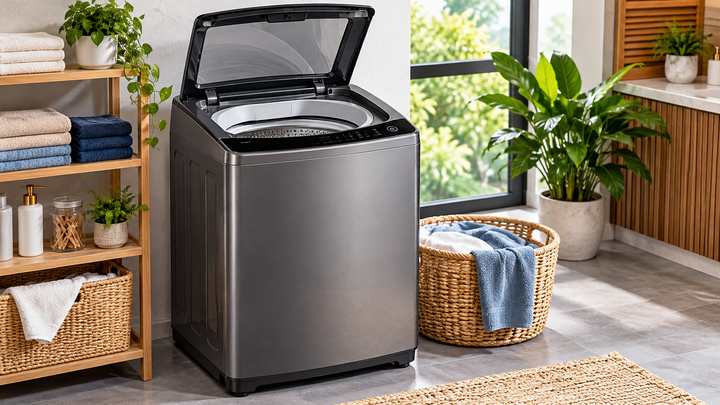
Top Load Washing Machines Guide: Types, Features and Maintenance
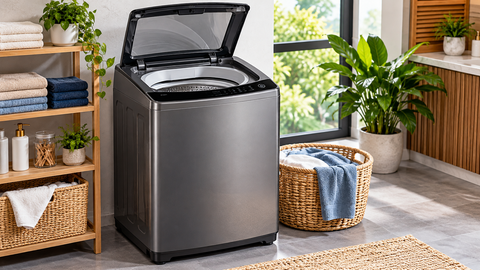
Top load washing machines are laundry appliances that load clothes through a lid on the top of the machine.
They clean garments by combining water, detergent, and mechanical movement, using either a central agitator or a low-profile impeller in many models. Their design, wash programs, drum capacity, water use, and maintenance requirements vary by model.
Understanding the differences between traditional agitator washers and high-efficiency impeller washers can help households choose an appropriate washing machine for their laundry volume, fabric types, available space, and daily routines. Proper care also helps maintain cleaning performance and reduce avoidable wear.
Quick Facts About Top Load Washing Machines
Feature | Description |
|---|---|
Loading design | Clothes are placed through an opening on the top |
Main washing mechanisms | Central agitator or low-profile impeller |
Typical applications | Household laundry and selected commercial settings |
Common wash programs | Normal, delicate, bulky, quick wash, and rinse and spin |
Drum capacity | Varies by model and is generally specified by weight |
Water supply | Usually connected to a household water supply |
Energy source | Electricity |
Common controls | Mechanical dials, electronic buttons, or touch controls |
Maintenance priorities | Tub cleaning, lint-filter care, detergent management, and load balancing |
Key selection factors | Capacity, cleaning mechanism, efficiency, dimensions, and available programs |
What Are Top Load Washing Machines?
A top load washing machine is an automatic or semi-automatic laundry appliance designed to receive clothes through an upper opening. Depending on the model, it may use a central agitator, an impeller, or a separate wash-and-spin arrangement to move clothes through water and detergent.
Automatic top loaders generally manage the wash cycle, rinsing, and water extraction through programmed controls. Semi-automatic models commonly have separate wash and spin tubs and require the user to transfer laundry between them.
Top load washing machines are available in different capacities and configurations. The most appropriate type depends on household size, laundry frequency, fabric-care needs, water availability, and the amount of space available for installation.
Why Top Load Washing Machines Matter
The design of a washing machine affects everyday laundry routines, including how clothes are loaded, how much space is required, and which wash settings are available. Top-loading designs can be convenient when users prefer loading laundry from above or have a laundry area configured for a top-opening appliance.
Their practical value depends on more than loading orientation. Capacity, agitation method, rinse performance, spin extraction, and energy and water consumption influence the overall experience.
Convenient loading: Clothes can be placed into the tub from above without opening a front-facing door.
Flexible laundry routines: Many models include programs for different fabrics and soil levels.
Multiple capacity options: Models serve different laundry volumes and household needs.
Simplified access: The upper opening can make loading and unloading comfortable for some users.
Specialized wash settings: Depending on the model, options may include deep-water washing, extra rinsing, or delicate cycles.
Maintenance access: Some models provide accessible lint filters and dedicated tub-cleaning programs.
These advantages are not universal. Lid clearance, control placement, water consumption, and cleaning performance vary by machine design.
Understanding Top Load Washing Machine Technology
Simple Explanation
A top load washer cleans clothes by moving them through a mixture of water and detergent. A central agitator uses repeated mechanical movement to circulate laundry, while an impeller uses a low-profile rotating mechanism to create water and clothing movement inside the tub.
After washing, the machine drains the dirty water and rinses the garments. During the spin stage, the tub rotates to extract water from the laundry before it is removed for drying.
Agitator Versus Impeller Technology
The agitator is a central post, often fitted with fins or vanes, that moves clothes through the wash water. This movement helps loosen soil through mechanical action.
An impeller is a low-profile plate or disc near the bottom of the tub. It generates movement that circulates clothes and water without requiring a tall central post. The amount of water, cycle duration, and exact motion depend on the machine's design and selected program.
Neither mechanism is automatically superior for every household. Cleaning performance, fabric wear, load size, and efficiency depend on the complete washer design and how it is used.
How Top Load Washing Machines Work
Step 1: Loading and Load Sensing
Clothes are placed into the tub, and detergent is added to the designated dispenser or according to the manufacturer's instructions. Many automatic models assess load conditions using sensors or programmed settings to determine water levels and wash behavior.
Overloading can prevent effective circulation, while a very small load may require a different setting to avoid unnecessary water use.
Step 2: Water Filling
The machine opens its water inlet valves to fill the tub. Depending on the model and selected program, it may use cold water, hot water, or a mixture of available supplies.
Water-level controls or load-sensing systems regulate the filling process. Water pressure, inlet-hose condition, and the selected cycle can affect filling performance.
Step 3: Washing and Mechanical Action
The washer moves the agitator or impeller, circulating water and detergent through the laundry. The movement, duration, and direction vary according to the cycle.
Wash performance depends on the combination of mechanical action, detergent chemistry, water temperature, time, and the amount and type of soil on the garments.
Step 4: Draining and Rinsing
After the wash phase, the machine drains the used water. It then adds rinse water or performs another programmed rinse to remove remaining detergent and loosened soil.
Extra-rinse options may be useful for certain loads, but their availability and water requirements vary by model.
Step 5: Spin Extraction
The tub rotates at a controlled speed to remove water from the clothes through centrifugal action. Higher spin speeds can extract more water under suitable conditions, but the selected speed must be appropriate for the fabric and load.
Unbalanced laundry may cause vibration or trigger automatic adjustments to the spin cycle.
Step 6: Cycle Completion
The washer stops when the programmed cycle is complete and indicates that the lid can be opened. The laundry can then be removed for air drying or transfer to a separate clothes dryer.
Top Load Washing Machine Workflow Table
Stage | Main Function | What Happens |
|---|---|---|
Loading | Prepare laundry | Clothes and detergent are added |
Filling | Supply water | The machine regulates water entry |
Washing | Remove soil | Mechanical action moves laundry through wash water |
Draining | Remove used water | The drain system empties the tub |
Rinsing | Remove residual detergent | Fresh water circulates through the load |
Spinning | Extract water | Tub rotation reduces retained moisture |
Completion | Finish the program | The machine signals that laundry can be removed |
Top Load Washing Machine Construction and Main Parts
Outer Cabinet and Lid
The cabinet supports the machine's internal components and protects them from routine contact. The lid provides access to the tub and may incorporate a lock or safety interlock that prevents opening during certain operations.
Wash Tub and Inner Basket
The inner basket holds the laundry, while the surrounding tub contains water where the design requires it. During spinning, the inner basket rotates to extract water. The materials and configuration vary by model.
Agitator or Impeller
This component generates the mechanical action that moves clothes through the wash water. Its design affects laundry circulation, loading space, and how the machine handles different fabric types.
Drive Motor and Transmission
The motor supplies the power required for washing and spinning. Depending on the design, the drive system may use a belt, transmission, direct-drive arrangement, or other mechanical components.
Water Inlet and Drain Systems
Inlet valves regulate water entering the washer, while hoses and a drain pump or other drainage arrangement remove used water. Blockages, leaks, restricted water supply, or faulty valves can interrupt normal operation.
Electronic Controls and Sensors
The control system manages cycle timing, water levels, motor movement, and safety functions. Some models also use sensors to monitor load balance, lid position, or other operating conditions.
Main Components of Top Load Washing Machines
Component | Primary Function | Common Maintenance Concern |
|---|---|---|
Lid and lid lock | Provides access and supports safe operation | Damaged hinges or lock faults |
Inner basket | Holds and rotates laundry | Residue or foreign objects |
Outer tub | Contains wash water | Detergent buildup |
Agitator or impeller | Generates wash movement | Obstructions or wear |
Motor and drive system | Powers washing and spinning | Abnormal noise or vibration |
Water inlet valves | Regulate incoming water | Restricted flow or leakage |
Drain pump and hose | Remove used water | Blockages or drainage faults |
Detergent dispenser | Directs detergent into the wash | Residue buildup |
Lint filter, where fitted | Collects lint and debris | Blockage or missed cleaning |
Control board and sensors | Manage programmed operation | Error codes or inconsistent cycles |
Types of Top Load Washing Machines
Top load washing machines can be classified by their washing mechanism and by how much user involvement is required. These classifications describe different aspects of the appliance, so an automatic impeller washer and a high-efficiency washer are not necessarily separate, mutually exclusive categories.
Traditional Agitator Washing Machines
Traditional agitator washers use a central post to move laundry through the wash water. The repeated movement helps loosen soil and circulate garments during the wash cycle.
Key advantages:
Familiar operating design with straightforward controls on many models.
Often available with wash settings that allow users to adjust water levels.
Suitable for many everyday household laundry loads.
Considerations include the space occupied by the central agitator and the possibility of increased fabric friction, depending on the wash action and load.
Impeller Washing Machines
Impeller washers use a low-profile rotating component at the bottom of the tub. The mechanism creates water movement and encourages garments to circulate through the wash area.
Key advantages:
More unobstructed space inside the wash basket.
Can accommodate bulky garments more easily when capacity permits.
Many models use load sensing and water-management features.
Cleaning results depend on loading, cycle selection, detergent, and the machine's wash pattern. Correctly loading clothes is particularly important for models designed to circulate laundry around the tub.
High-Efficiency Top Load Washing Machines
High-efficiency top loaders are designed to manage water and energy use through features such as load sensing, controlled water levels, and optimized wash programs. Many use an impeller, although efficiency should be assessed from the specific model's performance information rather than inferred from its mechanism alone.
Key advantages:
May use less water than some traditional designs.
Often include specialized wash programs and automatic sensing.
Can provide efficient cleaning when operated with compatible detergent and suitable loads.
High-efficiency machines commonly require detergent formulated for high-efficiency washers. Excess detergent can cause residue or excessive suds and may interfere with rinsing.
Semi-Automatic Top Load Washing Machines
Semi-automatic machines commonly have separate washing and spinning compartments. The user fills the wash tub as required, starts the wash cycle, drains the water, and transfers garments to the spin tub.
Key advantages:
Greater direct control over filling and some parts of the wash process.
Separate wash and spin compartments.
May suit households where water availability or supply conditions influence laundry routines.
These machines require more manual involvement than fully automatic models and may need additional space for their separate tubs.
Fully Automatic Top Load Washing Machines
Fully automatic top loaders manage the wash, rinse, and spin stages within a programmed cycle. The user generally loads the laundry, adds detergent, selects settings, and starts the machine.
Key advantages:
Less manual intervention during normal operation.
Integrated cycle management.
Often include load sensing, automatic drainage, and multiple fabric-care programs.
Their performance depends on proper installation, reliable water supply and drainage, and correct cycle selection.
Top Load Washing Machine Type Comparison
Type | Washing Mechanism or Operation | Main Advantage | Main Consideration |
|---|---|---|---|
Traditional agitator | Central post moves laundry | Familiar wash action | Central post occupies basket space |
Impeller | Low-profile mechanism circulates laundry | Open basket design | Correct loading can be important |
High-efficiency top loader | Optimized water and wash management | Potential water and energy savings | Requires suitable operating practices |
Semi-automatic | Separate wash and spin tubs | Direct user control | More manual involvement |
Fully automatic | Programmed wash, rinse, and spin | Convenience | Depends on functioning sensors and controls |
These categories overlap. For example, a fully automatic washer may use either an agitator or an impeller, and a high-efficiency model may also be fully automatic.
Materials and Installation Requirements
Drum and Cabinet Materials
The inner basket is commonly made from stainless steel or a molded material, depending on the design. The cabinet may use coated metal or other materials intended to withstand ordinary laundry-room conditions.
The choice of material affects corrosion resistance, durability, weight, and manufacturing design. Material alone does not establish the overall quality or expected life of the appliance.
Water Supply and Drainage
A washer needs a suitable water supply and a correctly installed drainage arrangement. Inlet hoses, valves, and drain connections must match the appliance's specifications and the building's plumbing conditions.
Insufficient water pressure, obstructed hoses, incorrect drainage height, or poor connections may cause filling problems, drainage faults, or leaks.
Electrical Supply
The washer must be connected to an electrical supply compatible with its rating and local electrical requirements. Grounding, circuit protection, and installation must follow the manufacturer's instructions and applicable electrical codes.
Electrical modifications or repairs should be handled by a qualified professional when they involve wiring, internal components, or other hazardous work.
Floor Stability and Lid Clearance
The floor should support the appliance and allow it to remain level during spinning. Uneven placement can increase vibration and noise. The installation area also needs sufficient clearance above the lid for convenient loading and access.
Top Load vs. Front Load Washing Machines
Top load and front load washing machines differ in loading orientation, wash mechanics, installation requirements, and the way garments move through water. Neither design is automatically the right choice for every household.
Feature | Top Load Washing Machine | Front Load Washing Machine |
|---|---|---|
Loading position | Upper opening | Front-facing door |
Common wash action | Agitator or impeller movement | Rotating drum that lifts and drops laundry |
Loading posture | Often avoids bending to a low door | Usually requires reaching toward a lower opening |
Installation clearance | Requires space above the lid | Requires clearance for the front door |
Water use | Varies by model and wash setting | Often lower in comparable high-efficiency models |
Typical cycle behavior | Varies by design and program | Some cycles may run longer |
Garment handling | Depends on agitator or impeller action | Depends on drum motion and selected program |
Maintenance | Tub, dispenser, filters, and seals where fitted | Drum, dispenser, door seal, and filters as applicable |
Actual water and energy performance should be compared using equivalent capacity, cycle, and efficiency information. Loading preference alone is not enough to determine which appliance is more suitable.
Benefits and Advantages of Top Load Washing Machines
Top load washers offer practical features that suit a range of household routines. Their main advantages depend on the specific mechanism, control system, and available wash programs.
Upper access: Laundry can be loaded from above, which some users find convenient.
Flexible cycle selection: Many models support settings for everyday garments, delicate fabrics, and bulky items.
Capacity options: Available basket sizes accommodate different laundry volumes.
Familiar controls: Some models use straightforward dials or buttons, while others provide electronic programs.
Multiple wash mechanisms: Buyers can choose between agitator and impeller designs.
Automatic operation: Fully automatic models coordinate filling, washing, rinsing, and spinning.
Specialized functions: Depending on the model, features may include delayed start, extra rinse, load sensing, or tub cleaning.
When comparing appliances, consider how these features work in practice rather than simply counting the number of programs or control options.
Household Applications of Top Load Washing Machines
Everyday Family Laundry
Households with frequent laundry loads may benefit from a capacity that accommodates regular clothing, towels, and bedding without overloading. Separating heavily soiled items from delicate garments can improve wash results and reduce unnecessary fabric wear.
Small Households and Apartments
Compact or lower-capacity top loaders may suit households with limited laundry volume. However, the machine's external dimensions, lid clearance, plumbing connections, and noise characteristics should be checked against the available installation space.
Bulky Garments and Bedding
Some top load washers include bulky-item cycles designed for items such as blankets or comforters. Suitability depends on the item dimensions, weight when wet, care label, and the manufacturer's load guidance.
Delicate Fabrics
Delicate garments may require lower mechanical action, cooler water, and a reduced spin setting. A top loader can handle suitable delicate items when the correct program and care instructions are followed.
High-Frequency Laundry Routines
Households that wash frequently may prioritize accessible controls, dependable cycle operation, appropriate capacity, and straightforward maintenance. Actual suitability depends on usage patterns and the machine's design.
Top Load Washing Machine Applications Table
Laundry Requirement | Useful Features | Important Consideration |
|---|---|---|
Everyday clothing | Normal or mixed-fabric cycle | Load size and soil level |
Towels and sheets | Suitable capacity and bedding settings | Space for garments to circulate |
Bulky bedding | Bulky-item cycle | Maximum load and item dimensions |
Delicate garments | Gentle cycle and adjustable spin | Fabric care label |
Frequent household loads | Appropriate capacity and convenient controls | Expected usage and maintenance |
Water-conscious operation | Load sensing and efficient wash programs | Verified model-specific water performance |
Limited installation space | Suitable external dimensions | Lid clearance and plumbing access |
Industry Standards and Washing Machine Safety
Top load washing machines are household electrical appliances, and their safety and efficiency requirements depend on the market in which they are sold. Product testing, electrical safety, water efficiency, and energy labeling may be governed by different standards and regulations.
IEC 60456: Clothes Washing Machines
IEC 60456 establishes methods for measuring the performance of household clothes washing machines. Testing can evaluate aspects of washing performance, water consumption, energy consumption, and related operating characteristics under defined conditions.
IEC 60335-1: Household Appliance Safety
IEC 60335-1 addresses general safety requirements for household and similar electrical appliances. Washing machines are also covered by the applicable requirements of IEC 60335-2-7, which specifically addresses the safety of washing machines.
Energy and Water Efficiency Labels
Efficiency labels and minimum performance requirements vary by country. Some markets use standardized energy labels, while others provide information about water consumption or tested energy performance. Comparisons should use the relevant local label and compatible test conditions.
Essential Operating Safety
Follow the manufacturer's instructions for electrical connections, water supply, and drainage.
Keep the appliance level and ensure that hoses are properly connected.
Do not bypass lid locks or other safety mechanisms.
Disconnect power according to the manufacturer's instructions before routine cleaning that requires access to internal or electrical areas.
Seek qualified assistance for electrical faults, significant leaks, or internal mechanical problems.
Common Top Load Washing Machine Problems and Solutions
Problem | Possible Cause | Recommended Action |
|---|---|---|
Washer does not fill | Closed supply valve, restricted hose, or inlet fault | Check the water supply and inspect accessible hoses |
Clothes remain dirty | Overloading, unsuitable cycle, or incorrect detergent use | Adjust the load and follow cycle instructions |
Excessive suds | Too much or incompatible detergent | Use the detergent type and amount specified for the model |
Washer does not drain | Blocked drain path or pump fault | Inspect accessible drainage components according to the manual |
Excessive vibration | Uneven floor or unbalanced laundry | Level the machine and redistribute the load |
Unpleasant odor | Residue, moisture, or insufficient tub cleaning | Run the approved tub-cleaning procedure |
Detergent remains in dispenser | Residue buildup or restricted water flow | Clean the dispenser and check the water supply |
Clothes remain very wet | Spin setting, unbalanced load, or drainage problem | Check the selected cycle and load distribution |
Unusual noise | Foreign object, uneven loading, or component wear | Stop operation if the noise is abnormal and arrange inspection |
Cycle stops unexpectedly | Lid-lock issue, supply interruption, or detected fault | Review the displayed error and the manufacturer's troubleshooting guidance |
These are possible causes rather than definitive diagnoses. Persistent faults, burning smells, electrical symptoms, or significant water leaks warrant stopping the machine and seeking qualified assistance.
How to Choose a Top Load Washing Machine
Selecting a washer involves balancing laundry volume, cleaning preferences, available space, efficiency, and ease of use. Features should be assessed in relation to actual household needs rather than selected solely because a model has the most settings.
Selection Factor | What to Evaluate | Why It Matters |
|---|---|---|
Capacity | Typical load size and bulky items | Helps prevent overloading |
Washing mechanism | Agitator or impeller | Influences basket layout and wash action |
Automation | Fully automatic or semi-automatic | Determines user involvement |
Energy efficiency | Relevant energy label and tested consumption | Helps compare electricity use |
Water consumption | Water use for comparable cycles | Important where water is limited |
Spin performance | Available spin settings and extraction performance | Influences remaining moisture |
Wash programs | Normal, delicate, bulky, and other useful settings | Matches the appliance to different fabrics |
Dimensions | Width, depth, height, and lid clearance | Ensures suitable installation |
Noise and vibration | Operating characteristics and installation conditions | Important for shared or compact living spaces |
Maintenance | Filter access, tub-cleaning program, and dispenser design | Affects routine care |
Controls | Dials, buttons, displays, and program clarity | Supports convenient operation |
Warranty and parts | Coverage terms and availability of compatible parts | Influences long-term ownership planning |
Capacity and Household Laundry Volume
Choose capacity based on the size and frequency of ordinary laundry loads, including occasional bulky items. A larger drum is not automatically more efficient if it is regularly used for small loads, while an undersized machine may require additional cycles.
Capacity ratings usually describe the maximum dry textile load under specified conditions. The amount suitable for an individual program may be lower, especially for bulky or delicate garments.
Energy and Water Efficiency
Compare the model's documented energy and water consumption under comparable test conditions. A high-efficiency label can help identify models that meet the applicable market criteria, but differences between programs and real-world usage can affect actual consumption.
Features and Control Options
Prioritize functions that match regular laundry needs. Load sensing, extra rinsing, adjustable spin settings, and tub-cleaning programs may be useful, while connectivity features or specialized cycles may be unnecessary for some households.
Installation and Ongoing Care
Confirm that the installation area has sufficient clearance, a compatible water supply, proper drainage, and an appropriate electrical connection. Review filter access, cleaning instructions, and available replacement components before making a final selection.
Maintenance Best Practices for Top Load Washing Machines
Regular maintenance helps prevent residue buildup, odors, restricted drainage, and avoidable operating problems. Cleaning frequency should follow the appliance manual and reflect how often the washer is used, the detergent type, water conditions, and the amount of soil in the laundry.
Clean the Wash Tub
Use the machine's tub-cleaning program and the cleaning product specified by the manufacturer. This helps remove detergent residue and other deposits that can accumulate during normal use.
Avoid mixing cleaning chemicals. In particular, bleach must never be combined with ammonia or acidic cleaners because dangerous gases can form.
Clean the Lint Filter
If the washer has a user-accessible lint filter, inspect and clean it at the recommended interval. Some models use different filtration arrangements, and not every top loader has a removable lint filter.
Follow the manufacturer's instructions for removing, cleaning, and reinstalling the component. A damaged or incorrectly installed filter may reduce its effectiveness.
Maintain the Detergent Dispenser
Remove detergent residue from the dispenser and its accessible surrounding surfaces according to the manual. Accumulated detergent can restrict dispensing or leave deposits inside the appliance.
Use detergent compatible with the washer's design. High-efficiency models generally require HE detergent, and the correct amount depends on the product instructions, load size, and soil level.
Inspect Water Inlet Hoses
Check accessible hoses and connections for leaks, cracking, bulging, or deterioration. Replace damaged components with compatible parts and follow the manufacturer's guidance for hose replacement.
If a connection leaks persistently or the water supply appears faulty, arrange appropriate repair rather than continuing to operate the appliance.
Keep the Lid and Tub Dry
After completing laundry, remove garments promptly and allow the tub to dry as recommended by the manufacturer. Where the design permits, leaving the lid open slightly can help moisture dissipate, provided this does not create a safety risk for children or pets.
Prevent Overloading
Follow the load-size guidance for the selected cycle. Clothes need sufficient room for the machine's intended wash movement, and an overloaded tub can reduce cleaning performance or contribute to imbalance.
Monitor Unusual Operation
Pay attention to changes in vibration, drainage, filling, noise, and cycle duration. Early attention to recurring symptoms can prevent a minor problem from developing into a more disruptive fault.
Limitations of Top Load Washing Machines
Top load washing machines offer convenient access, but their design has trade-offs that should be considered before selecting a model.
Lid clearance: The upper opening requires sufficient space above the appliance, which may restrict installation beneath shelves or counters.
Water consumption: Some models and cycles use more water than comparable high-efficiency front loaders.
Fabric wear: Wash action varies by design, and aggressive loading or unsuitable cycles can damage certain garments.
Efficiency differences: Top-loading orientation alone does not establish energy or water efficiency.
Bulky-load restrictions: Large bedding may not fit or circulate effectively even when the stated capacity appears sufficient.
Maintenance requirements: Detergent residue, lint, moisture, and mineral deposits can affect performance.
Noise and vibration: Poor leveling, uneven loads, or mechanical faults can increase vibration.
Manual involvement: Semi-automatic models require more user attention than fully automatic machines.
The best choice depends on how these limitations compare with the household's space, laundry routines, fabric-care needs, and resource constraints.
Future Trends in Top Load Washing Machines
Improved Load Sensing
Manufacturers continue to develop control systems that adjust water levels and wash behavior according to load conditions. More accurate sensing can help match operation to the laundry, although the results depend on sensor design and cycle settings.
Water and Energy Management
Efficiency improvements focus on controlling water use, optimizing wash action, and reducing unnecessary energy consumption. Performance labels and standardized testing remain useful for comparing models within a market.
Advanced Fabric-Care Programs
Wash programs increasingly offer more tailored settings for different garments and soil conditions. These options can improve convenience when their operation is clearly explained and users follow fabric-care instructions.
Connected Controls and Diagnostics
Some models include connectivity features that provide cycle notifications, remote control, or diagnostic information. These capabilities vary by product and depend on compatible devices, connectivity, and manufacturer support.
Easier Cleaning and Maintenance
Tub-cleaning cycles, accessible dispensers, and improved diagnostic functions can make routine care more manageable. Their usefulness depends on the machine's construction and the maintenance tasks that remain necessary.
Frequently Asked Questions About Top Load Washing Machines
1. What is a top load washing machine?
A top load washing machine is a laundry appliance in which clothes are loaded through an opening on the top. It cleans laundry using an agitator or impeller in many models, then drains, rinses, and spins the clothes according to the selected program.
2. What is the difference between an agitator and an impeller washer?
An agitator uses a central post to move laundry through the wash water, while an impeller uses a lower-profile mechanism to create movement inside the tub. The best choice depends on the machine's cleaning performance, load requirements, and fabric-care needs.
3. Are top load washing machines energy-efficient?
Some top load washers are designed for efficient water and energy use, particularly models with load sensing and optimized wash programs. Actual efficiency varies, so compare the applicable energy label and documented water consumption rather than relying on the loading design alone.
4. How often should a top load washing machine be cleaned?
Cleaning frequency depends on the model, usage, detergent, and water conditions. Follow the manufacturer's instructions for tub cleaning, dispenser care, and lint-filter maintenance, and clean more frequently if residue or odors develop.
5. Which detergent should be used in a top load washing machine?
Use detergent compatible with the specific washer. High-efficiency top loaders generally require HE detergent, while other models may have different instructions; the recommended quantity depends on load size, soil level, and detergent concentration.
6. Why does a top load washing machine vibrate during spinning?
Common causes include an unbalanced load, uneven installation, or a problem with the suspension or drive components. Redistribute the laundry and check that the machine is level; persistent or severe vibration should be inspected by a qualified technician.
7. Can a top load washing machine wash blankets and comforters?
Some models support bulky bedding, but suitability depends on the tub dimensions, load capacity, garment weight, and care instructions. Check the manual before washing large items because insufficient space can prevent effective cleaning and balancing.
8. What causes unpleasant odors in a top load washer?
Odors can develop from detergent residue, moisture, soil buildup, or infrequent tub cleaning. Use the approved tub-cleaning procedure, clean accessible filters and dispensers, and follow the manufacturer's guidance for drying the tub between loads.
9. Is a top load washing machine better than a front load washer?
Neither design is universally better. Top loaders provide upper access and different wash mechanisms, while front loaders often offer strong water-efficiency performance in comparable high-efficiency models; the appropriate choice depends on capacity, installation space, efficiency, and user preference.
10. How long does a top load washing machine last?
Lifespan varies with construction, usage frequency, water conditions, maintenance, and the availability of replacement components. Proper loading, routine cleaning, and timely attention to faults can help maintain performance, but no single lifespan applies to every model.
Conclusion
Top load washing machines offer a range of designs, from traditional agitator models to impeller-based and high-efficiency appliances. Understanding their wash mechanisms, capacity, controls, installation requirements, and maintenance needs helps households select a suitable machine and use it effectively. Regular cleaning, correct detergent use, balanced loads, and timely troubleshooting support dependable operation over the appliance's working life.