Front Load Washing Machines Guide: Features and Maintenance Tips
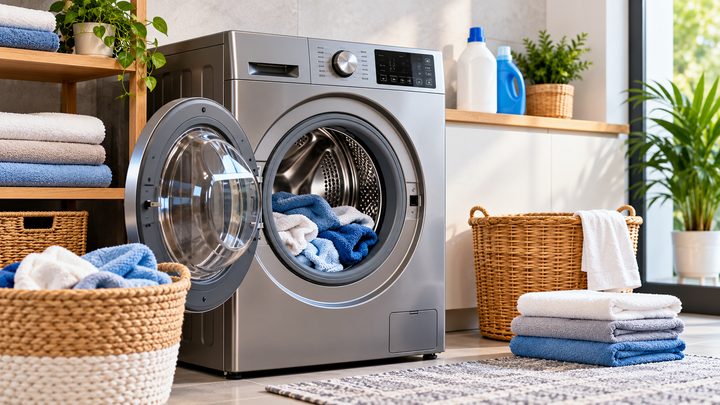
Front load washing machines are laundry appliances that load clothes through a door on the front of the cabinet and clean them using a rotating horizontal drum.
They combine controlled water levels, detergent action, mechanical tumbling, and spin extraction to remove soil from fabrics. Their features, energy use, wash programs, and maintenance needs vary by model.
Understanding drum operation, load capacity, fabric settings, and routine care helps households choose a suitable machine and maintain reliable washing performance. This guide explains the main technologies, practical selection factors, common problems, and maintenance methods for everyday use.
Quick Facts About Front Load Washing Machines
Feature | Description |
|---|---|
Loading design | Front-facing door and horizontal-axis drum |
Cleaning method | Tumbling clothes through a controlled amount of wash water |
Water use | Often lower than comparable traditional top-load agitator models, depending on the cycle and machine |
Spin extraction | High-speed drum rotation removes water from fabrics |
Detergent | Use detergent formulated for high-efficiency or front load machines as specified by the manufacturer |
Common programs | Cotton, synthetics, delicates, quick wash, rinse, and spin |
Installation needs | Level flooring, appropriate water connections, drainage, and electrical supply |
Regular maintenance | Door gasket, detergent drawer, drum, filter, and exterior |
Main considerations | Capacity, cycle duration, noise, vibration, cleaning performance, and upkeep |
What Is a Front Load Washing Machine?
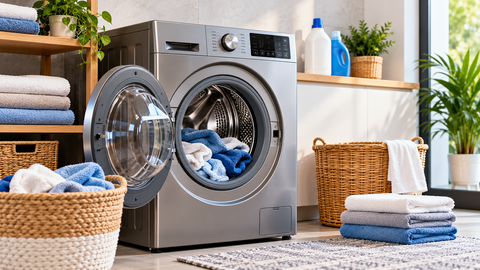
A front load washing machine is an automatic laundry appliance with a drum mounted horizontally or at a slight angle, accessed through a front door. During washing, the drum rotates and lifts clothes before allowing them to fall through the wash water. This repeated movement helps detergent and water reach fabric surfaces without relying on a central agitator.
Most modern models control water intake, drum movement, temperature, rinsing, and spinning through electronic controls. Depending on the design, they may also use load sensing, automatic detergent dispensing, steam-related programs, or connected controls.
Front load machines are common in homes, apartments, shared laundry areas, and some commercial environments. Household models are designed for domestic laundry volumes, while commercial machines are built for different duty cycles and operating demands.
Why Front Load Washing Machines Matter
Laundry appliances affect household water consumption, electricity use, fabric care, and daily routines. Front load machines can provide efficient washing when the selected program, detergent, and load size match the laundry being cleaned.
Their horizontal drum supports tumbling action, while high-speed spinning can remove substantial moisture before clothes are transferred to a dryer or drying area. However, actual efficiency depends on the model, cycle, load, water temperature, and local conditions.
Key reasons households consider front load washing machines include:
Efficient water management in many models.
Strong mechanical cleaning action for a range of everyday fabrics.
High-speed spin options that can reduce the moisture remaining in laundry.
Multiple programs for different fabric types and soil levels.
No central agitator taking up space inside the drum.
Options for automatic detergent dosing, delayed starts, and connected controls on selected models.
These advantages should be weighed against installation requirements, purchase considerations, cycle duration, and the need to keep the door seal and detergent compartment clean.
Understanding How Front Load Washing Machines Work
Simple Explanation
A front load machine cleans clothes by rotating a drum that repeatedly lifts and drops the laundry through a relatively shallow pool of water. Detergent helps loosen soil, while drum movement provides mechanical action that supports cleaning.
After washing, the machine drains the used water, rinses the fabrics, and spins the drum to extract more moisture. Sensors and electronic controls coordinate these stages according to the selected program and the machine's design.
The Role of Tumbling Action
The drum contains internal lifters or paddles that raise clothes as it rotates. Gravity then pulls the laundry back down, creating repeated movement through the wash solution. This action helps clean fabrics while avoiding the continuous central-agitator motion used in some top load machines.
The Role of Detergent and Water Temperature
Detergent helps loosen and suspend soil so it can be carried away during draining and rinsing. Water temperature influences detergent performance and soil removal, but the appropriate setting depends on the fabric care label, detergent instructions, and the type of stain.
The Role of Spin Extraction
During the spin stage, the drum rotates rapidly to force water through the fabric and out through the drum openings. The machine drains this water rather than relying on heat to remove it. Spin speed and extraction performance vary by model and selected program.
How to Use a Front Load Washing Machine Correctly
Step 1: Prepare the Laundry
Separate garments by color, fabric type, and care requirements. Check pockets, fasten zippers, close hooks where appropriate, and place delicate items in suitable laundry bags. Treat stains according to the garment's care instructions before starting the wash.
Step 2: Load the Drum Properly
Place garments loosely inside the drum rather than compressing them into a tight mass. The recommended capacity depends on the selected program because bulky bedding, delicate fabrics, and everyday cotton loads behave differently during washing.
Overloading can restrict tumbling, reduce cleaning performance, and contribute to unbalanced spinning. Very small loads may also require a different cycle or load-balancing approach.
Step 3: Add the Correct Detergent
Use detergent specifically recommended for front load or high-efficiency washing machines where required. Follow the detergent instructions and the appliance manual for dosage, dispenser placement, and fabric additives.
Excessive detergent can create residue and excessive suds, which may interfere with rinsing and contribute to unpleasant odors. The appropriate amount depends on the product concentration, soil level, load size, and water conditions.
Step 4: Select the Appropriate Program
Choose a cycle that matches the fabric and soil level. Cotton programs are generally intended for durable everyday fabrics, while delicate programs use gentler movement. Quick cycles may be suitable for lightly soiled garments, but they may not provide the same cleaning performance as longer programs.
Step 5: Set Temperature and Spin Options
Select the water temperature according to the garment label and the detergent instructions. Higher temperatures may help with some soils, but they are not suitable for every fabric. Choose a spin setting that balances moisture removal with fabric-care requirements.
Step 6: Start the Cycle and Remove Laundry Promptly
Confirm that the door is securely closed and the water supply is available before starting the machine. When the cycle finishes, remove the laundry promptly, check the drum for remaining items, and allow the interior to dry according to the manufacturer's instructions.
Front Load Washing Machine Workflow Table
Stage | User Action | Purpose |
|---|---|---|
Preparation | Sort garments and check care labels | Protect fabrics and improve washing results |
Loading | Distribute clothes loosely | Support effective tumbling |
Detergent | Measure the appropriate formulation | Reduce residue and excessive suds |
Program selection | Match the cycle to the load | Balance cleaning and fabric care |
Washing | Allow the selected cycle to complete | Remove soil and detergent |
Extraction | Use an appropriate spin setting | Reduce retained moisture |
Unloading | Remove garments promptly | Limit prolonged moisture exposure |
Aftercare | Wipe and ventilate the interior as directed | Reduce residue and odor buildup |
Main Components of a Front Load Washing Machine
Outer Cabinet and Door
The cabinet supports the machine's internal assemblies, while the front door provides access to the drum. A locking mechanism generally prevents the door from opening during unsafe stages of operation.
Drum and Inner Lifters
The perforated drum holds the laundry and rotates during washing and spinning. Internal lifters help raise garments and redistribute them through the wash water.
Outer Tub
The outer tub surrounds the rotating drum and contains the wash water. It is connected to the drainage arrangement and supported by the machine's suspension system.
Drive Motor and Drum Support
The motor turns the drum through a drive belt or a direct-drive arrangement, depending on the model. Bearings support drum rotation, while suspension components help manage movement during spinning.
Water Inlet and Drainage System
Inlet valves control water entry, and hoses carry water to the appliance. A drain pump removes used water through the outlet hose, while a drain filter in many models catches lint and small objects before they reach the pump.
Door Gasket
The flexible gasket seals the gap between the door and the tub. Its folds can retain moisture, lint, hair, and detergent residue, making routine inspection and cleaning important.
Electronic Controls and Sensors
The control board coordinates cycle timing, water intake, drum movement, temperature, and spin speed. Depending on the model, sensors may monitor water level, temperature, load balance, or other operating conditions.
Main Components Table
Component | Main Function | Maintenance Consideration |
|---|---|---|
Drum | Holds and tumbles laundry | Check for foreign objects |
Outer tub | Contains wash water | Monitor for leaks |
Motor and drive | Rotates the drum | Investigate unusual noise |
Suspension system | Controls drum movement | Check persistent vibration |
Door gasket | Seals the front opening | Remove residue and inspect for damage |
Detergent dispenser | Distributes detergent and additives | Clean accumulated deposits |
Drain pump and filter | Remove water and trap debris | Clean according to the manual |
Water inlet valves | Regulate incoming water | Investigate slow filling |
Electronic controls | Manage wash cycles | Record error codes for diagnosis |
Heating element, if fitted | Heats wash water | Seek qualified diagnosis if heating fails |
Types of Front Load Washing Machines
Front load washers can be classified by their installation arrangement, drying capability, and control features. These categories may overlap: one appliance can be a freestanding model with a steam program and connected controls, for example.
Standard Front Load Washing Machines
These machines wash, rinse, and spin laundry but do not dry it with a built-in heated drying cycle.
Advantages:
Dedicated washing and spin extraction.
A broad range of wash programs.
Can be paired with a separate dryer or a drying rack.
Washer-Dryer Combo Machines
These appliances combine washing and drying functions in one cabinet. Drying may use a condenser-based or heat-pump arrangement, depending on the model.
Advantages:
Combines two functions in one appliance.
Can suit homes with limited room for separate equipment.
Allows washing and drying within a single appliance workflow.
The drying capacity may be lower than the washing capacity, and complete wash-and-dry cycles can take longer than washing alone.
Smart Front Load Washing Machines
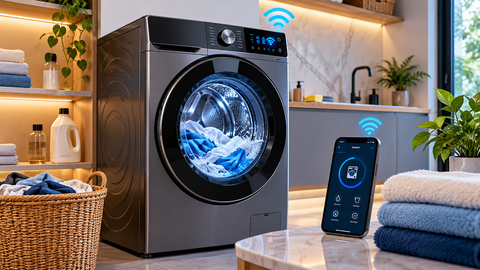
These models include connected controls or enhanced monitoring features. Depending on the appliance, users may be able to monitor cycle status, receive notifications, or adjust selected settings through a connected device.
Advantages:
Remote status monitoring on supported models.
Cycle notifications and diagnostic information.
Additional scheduling and control options.
Connected features depend on the appliance, network availability, and regional compatibility. They are not essential for basic washing performance.
Steam-Enabled Front Load Washing Machines
These models include a steam-related function for selected cycles. The purpose and operating method vary: steam may support stain treatment, fabric refreshment, or particular hygiene programs.
Advantages:
Additional treatment options for suitable garments.
Potential assistance with certain wrinkles or odors, depending on the cycle.
More flexibility for specific laundry requirements.
A steam feature does not mean every cycle sterilizes garments or removes every allergen. Follow the appliance instructions and the care label.
Compact Front Load Washing Machines
Compact models are designed for locations where a standard appliance may not fit. They can suit small households, apartments, or restricted laundry spaces.
Advantages:
Smaller installation footprint.
Access to front load washing functions in limited spaces.
Potential compatibility with compact laundry layouts.
The drum capacity, cycle options, and installation clearances should be checked carefully before choosing a compact model.
Front Load Washing Machine Type Comparison
Type | Main Distinction | Suitable Use Case | Important Limitation |
|---|---|---|---|
Standard front load | Washing and spinning | General household laundry | Requires a separate drying arrangement |
Washer-dryer combo | Washing and drying in one appliance | Limited installation space | Drying capacity and cycle duration may be restrictive |
Smart front load | Connected controls or monitoring | Users who want remote status updates | Connected functions depend on compatibility |
Steam-enabled | Additional steam-related programs | Specific fabric-treatment needs | Results vary by cycle and fabric |
Compact front load | Reduced physical dimensions | Restricted laundry areas | May have lower capacity |
Materials and Installation Requirements
Floor Stability and Leveling
A front load washer needs a stable, level floor that can support the appliance and its dynamic loads during spinning. Adjustable feet should be set according to the installation manual. An unstable floor or incorrectly adjusted feet can contribute to vibration and movement.
Water Supply and Drainage
The machine requires compatible water connections and a drain arrangement that meets the manufacturer's specified installation requirements. Inlet hoses, drain hoses, and connections should be checked for leaks, kinks, and incorrect positioning.
Electrical Supply
The electrical connection must meet the appliance's rated requirements and applicable local electrical regulations. Avoid improvised extensions or unsuitable adapters, and seek a qualified electrician when the installation requires electrical changes.
Space and Ventilation
Allow the clearance specified by the manufacturer for installation, door opening, hoses, and maintenance access. The surrounding area should not prevent access to controls or block required ventilation openings.
Transit Bolts and First Installation
Many front load washers use transit bolts to secure the drum during transport. These must be removed according to the installation instructions before normal operation. Operating the appliance with transport restraints still fitted can cause severe vibration or damage.
Front Load vs. Top Load Washing Machines
Front load and top load washing machines differ in drum orientation, loading method, cleaning action, and installation requirements. Neither design is automatically suitable for every household; the right choice depends on available space, laundry habits, accessibility needs, and the particular models being compared.
Feature | Front Load | Top Load |
|---|---|---|
Loading position | Front-facing door | Opening on the top |
Cleaning action | Horizontal-axis tumbling | Varies by design; may use an agitator, impeller, or other mechanism |
Water use | Often lower than traditional top load agitator models | Depends on the machine design and selected cycle |
Spin extraction | Many models provide high-speed spinning | Varies by model |
Loading access | Requires access to the front door | Allows access from above |
Installation | Requires suitable front clearance | May require vertical clearance for the lid |
Maintenance | Door gasket and dispenser need regular attention | Maintenance depends on the design |
Laundry visibility | Drum contents can be viewed through the door | Contents are generally viewed from above |
Modern top load machines with impellers can also be efficient, so comparisons should use the actual model's energy and water information rather than assuming all top load machines perform alike.
Benefits and Advantages of Front Load Washing Machines
Water and Energy Efficiency
Many front load washers use controlled water levels and tumbling action instead of filling the tub deeply for every cycle. Efficient models can reduce water and electricity consumption compared with less efficient alternatives. Actual performance depends on the selected cycle, water temperature, load size, and appliance efficiency rating.
Fabric Care
The tumbling mechanism avoids the central agitator found in some top load machines. With the correct program, this can provide effective cleaning while limiting unnecessary mechanical stress on many garments. Delicate fabrics still require appropriate settings and careful loading.
Moisture Extraction
High-speed spinning removes water from washed clothes before drying. This can reduce the moisture that must be removed during subsequent air-drying or tumble-drying, although the result depends on spin speed, fabric type, and machine design.
Flexible Wash Programs
Many models include separate programs for cotton, synthetics, wool, delicates, sportswear, bedding, and lightly soiled garments. Specialized cycles help users adapt the washing process to different laundry requirements rather than applying the same settings to every load.
Space Planning and Integration
Front load washers can be installed beneath suitable worktops or paired with a compatible dryer in a stacked arrangement. Installation dimensions, floor strength, ventilation, access, and manufacturer-approved stacking equipment must be checked before arranging the laundry area.
Household Applications of Front Load Washing Machines
Everyday Family Laundry
Cotton clothing, towels, school uniforms, and everyday garments can be washed using programs suited to their fabrics and soil levels. Separating colors and selecting an appropriate load size help maintain consistent results.
Delicate Garments
Wool, fine knits, and other delicate fabrics may be washed using dedicated programs when the garment label permits machine washing. Lower mechanical action and suitable detergent help reduce unnecessary fabric stress.
Bedding and Bulky Laundry
Some front load models accommodate sheets, pillowcases, and selected bulky items. The drum must have enough capacity for the item to move freely, and bedding should not be packed tightly enough to prevent balanced tumbling.
Sportswear and Synthetic Fabrics
Synthetic garments often benefit from programs designed for their fabric composition. Correct detergent dosage and suitable rinsing help manage detergent residue, while garment care labels determine appropriate temperature and spin settings.
Homes with Limited Space
Compact washers and washer-dryer combinations can accommodate laundry needs where separate full-size appliances are impractical. Before installation, users should verify the usable drum capacity, drying requirements, door clearance, and access to water and drainage connections.
Household Laundry Applications Table
Laundry Requirement | Suitable Program or Feature | Main Consideration |
|---|---|---|
Everyday clothing | Cotton or mixed-fabric cycle | Separate colors and fabrics |
Delicate garments | Delicate or wool cycle | Follow care labels |
Towels | Cotton or suitable heavy-fabric cycle | Avoid overloading |
Bedding | Bedding or suitable cotton cycle | Check drum capacity |
Sportswear | Sportswear or synthetic cycle | Follow fabric instructions |
Lightly soiled clothing | Quick wash, where appropriate | Not ideal for every stain |
Garments requiring less moisture | Suitable higher-spin setting | Consider fabric limitations |
Combined washing and drying | Washer-dryer program | Check drying capacity |
Industry Standards and Safety
Front load washing machines are electrical appliances that use water, rotating mechanical parts, and sometimes internal water heating. Safe installation and operation depend on appliance design, local electrical requirements, and the manufacturer's instructions.
IEC 60335-2-7
IEC 60335-2-7 addresses safety requirements for household and similar electric washing machines. It forms part of the IEC 60335 family of appliance safety standards and should be considered in the context of the applicable edition and national adoption.
IS 302 (Part 2/Sec 7)
IS 302 (Part 2/Sec 7) is an Indian standard addressing safety requirements for electric washing machines. The applicable edition and any current conformity or regulatory requirements should be confirmed for the relevant market.
Electrical and Water Safety
Use an electrical supply and protective arrangements appropriate to the appliance and local regulations.
Keep electrical connections protected from water exposure.
Do not operate a machine with a damaged power cord, leaking connection, or visibly damaged door seal.
Do not bypass the door lock or other safety interlocks.
Disconnect power according to the manufacturer's instructions before permitted cleaning or inspection tasks.
Seek qualified assistance for internal electrical, heating, motor, or control-system faults.
Common Front Load Washing Machine Problems and Solutions
Problem | Possible Cause | Recommended Action |
|---|---|---|
Musty odor | Moisture, detergent residue, or buildup | Clean the gasket and run the prescribed drum-cleaning cycle |
Excessive vibration | Uneven flooring, poor leveling, or unbalanced laundry | Check installation and redistribute the load |
Water remains in the drum | Blocked drainage, kinked hose, or pump issue | Check accessible drainage points according to the manual |
Clothes remain too wet | Selected spin setting, imbalance, or drainage fault | Check the program and inspect for error indications |
Excessive suds | Too much or unsuitable detergent | Use the recommended detergent and dosage |
Water leakage | Damaged gasket, hose, or connection | Stop use if needed and identify the leak safely |
Door does not open | Cycle or safety lock remains active | Wait for the unlock sequence and follow the manual |
Poor cleaning results | Overloading, unsuitable program, or detergent dosage | Adjust the load and cycle settings |
Machine does not fill | Water supply interruption, closed valve, or inlet problem | Check the supply and accessible hose connections |
Unusual noise | Foreign object, installation issue, or mechanical fault | Stop the machine if the noise is severe and arrange inspection |
Repeated errors, burning smells, electrical faults, or persistent leakage warrant stopping the appliance and obtaining qualified diagnosis rather than continuing to operate it.
How to Choose a Front Load Washing Machine
Selecting a front load washer involves more than comparing advertised features. The most useful criteria are the actual laundry volume, available installation space, energy and water performance, program requirements, and the ease of maintaining the appliance.
Selection Factor | What to Evaluate | Why It Matters |
|---|---|---|
Drum capacity | Typical load size and bulky laundry needs | Prevents routine overloading |
Energy efficiency | Applicable efficiency label and measured consumption | Helps compare operating performance |
Water efficiency | Water use under the relevant test cycle | Supports informed household water management |
Spin performance | Available spin settings and residual moisture information | Affects drying time |
Program selection | Cotton, synthetics, delicate, bedding, and other relevant cycles | Matches washing to fabric needs |
Dimensions | Width, height, depth, door clearance, and hose space | Ensures the appliance fits |
Noise and vibration | Operating noise information and installation conditions | Matters in apartments and shared spaces |
Maintenance access | Drain filter, dispenser, and gasket accessibility | Makes routine care easier |
Drying capability | Separate dryer compatibility or integrated drying capacity | Determines the laundry workflow |
Controls | Manual, automated, or connected functions | Aligns the machine with user preferences |
Warranty and parts | Coverage terms and parts availability | Helps assess long-term maintainability |
Safety compliance | Applicable market standards and electrical requirements | Supports safe installation and use |
Capacity should reflect actual laundry habits rather than household size alone. A smaller household may regularly wash bulky bedding, while a larger household may prefer frequent smaller loads. Efficiency labels should be compared using the relevant regional test methods because rating systems differ between markets.
Front Load Washing Machine Maintenance Best Practices
Regular maintenance helps limit residue buildup, unpleasant odors, drainage problems, and avoidable wear. The precise schedule depends on the appliance, water conditions, frequency of use, and manufacturer guidance.
Clean the Door Gasket
Inspect the rubber gasket regularly, paying attention to its folds where moisture, lint, hair, and small objects can collect. Wipe it using a method approved by the manufacturer and dry the accessible surfaces. Do not use abrasive tools that could damage the seal.
Clean the Detergent Drawer
Remove the dispenser only as instructed. Rinse away detergent and fabric-softener deposits, clean the accessible compartment, and allow the parts to dry before reinstalling them. Residue can restrict dispensing and contribute to odor buildup.
Run the Drum-Cleaning Cycle
Use the machine's dedicated cleaning program when provided. Follow the manual regarding cleaning products, temperature, and frequency. Do not combine cleaning chemicals or substitute household mixtures unless the manufacturer explicitly permits them.
Inspect the Drain Filter
Some front load machines have an accessible pump or drain filter that catches lint and small objects. Follow the manual for safe access, and prepare for residual water before opening the filter. If the filter is difficult to access or the machine has a fault, arrange qualified assistance.
Maintain the Water Inlet and Drain Hoses
Inspect accessible hoses and connections for kinks, deterioration, or leaks. Follow the manufacturer's replacement guidance, particularly for aging or damaged hoses. Do not operate the machine with a compromised water connection.
Remove Laundry Promptly
Leaving damp clothes inside a closed washer can encourage musty odors. Remove garments after the cycle and allow the door and dispenser to ventilate when safe and practical, while keeping the open appliance inaccessible to children.
Use Appropriate Detergent Dosage
Follow the detergent label and the machine's instructions. Excessive detergent and fabric additives can leave deposits, while unsuitable detergent may create excessive suds. Adjust the amount according to load size, soil level, water conditions, and product concentration.
Check Leveling and Vibration
Pay attention to new or persistent vibration during spinning. Confirm that the machine remains level and that the load is distributed appropriately. If vibration continues despite correct loading and installation, a technician may need to inspect the suspension or drum support.
Suggested Front Load Washing Machine Maintenance Schedule
Maintenance Task | Suggested Timing | Important Note |
|---|---|---|
Remove laundry after each cycle | Every wash | Avoid leaving damp garments inside |
Inspect and wipe the gasket | Regularly, especially after use | Dry moisture and remove debris |
Clean detergent dispenser | Weekly or as needed | Follow the removable-drawer instructions |
Run drum-cleaning program | According to the manual | Use only approved cleaning products |
Inspect drain filter | At the interval specified by the manufacturer | Drain residual water safely |
Inspect hoses and connections | Periodically | Check for wear and leakage |
Check leveling and vibration | When installed and if movement develops | Persistent vibration may need inspection |
Review error codes and performance | Whenever a fault occurs | Record the code before seeking assistance |
Limitations of Front Load Washing Machines
Front load washers offer useful cleaning and efficiency characteristics, but they also have practical drawbacks that should be considered before choosing one.
Door and gasket upkeep: Moisture can remain in the door seal and contribute to residue or odors if the machine is poorly ventilated.
Cycle duration: Some energy-efficient programs take longer than users expect, particularly when they adjust washing action or temperature to improve efficiency.
Loading access: Users must reach through the front opening, which may be inconvenient without a suitable installation height or access arrangement.
Installation sensitivity: Incorrect leveling, unsuitable flooring, or unremoved transit bolts can cause vibration.
Detergent sensitivity: Excessive or unsuitable detergent may cause suds and residue.
Repair complexity: Faults involving electronic controls, bearings, heating elements, or drive assemblies may require specialist diagnosis.
Bulky-item restrictions: The stated capacity does not mean every bulky item can be washed safely; the item's care label and the machine's instructions still apply.
Maintenance requirements are manageable for many households, but they should be treated as part of normal appliance ownership rather than ignored.
Future Trends in Front Load Washing Machines
Improved Water and Energy Management
Manufacturers continue to refine load sensing, temperature control, drum movement, and cycle programming. These features can help reduce unnecessary resource use when the selected program suits the load.
Automated Detergent Dispensing
Some models can dispense detergent from a reservoir according to the selected program and load information. Correct setup and periodic cleaning remain necessary because unsuitable detergent or residue can still affect performance.
Connected Diagnostics
Connected models may provide cycle notifications, usage information, or diagnostic alerts. These features can help users identify certain issues earlier, although they do not replace physical inspection or qualified repair when needed.
Specialized Fabric Programs
Programs for sportswear, bedding, delicates, and other fabric categories continue to expand. Their usefulness depends on how accurately the program matches the fabric, soil level, and care-label requirements.
Design for Easier Cleaning
Features such as dedicated drum-cleaning cycles, dispenser-cleaning functions, and improved gasket drainage aim to simplify routine upkeep. Actual effectiveness varies by design, and regular cleaning may still be necessary.
Frequently Asked Questions About Front Load Washing Machines
1. How does a front load washing machine clean clothes?
A front load washer rotates a horizontal drum to lift and drop garments through a controlled amount of wash water. Detergent loosens soil, and rinsing removes detergent and suspended dirt before the final spin extracts moisture.
2. Are front load washing machines more water-efficient than top load models?
Many front load models use less water than traditional top load machines with central agitators. However, efficiency varies by model, and some modern top load impeller machines also offer efficient operation.
3. Which detergent is suitable for a front load washing machine?
Use detergent labeled for front load or high-efficiency washing machines when specified by the manufacturer. Follow the recommended dosage because excessive detergent can cause residue, excess suds, and unpleasant odors.
4. How often should a front load washing machine be cleaned?
Clean the gasket and dispenser regularly, and run the prescribed drum-cleaning cycle according to the appliance manual. The frequency depends on usage, detergent buildup, water conditions, and the manufacturer's recommendations.
5. Why does a front load washing machine develop a bad smell?
Odors can develop when moisture, detergent residue, lint, and other deposits accumulate inside the drum, gasket, or dispenser. Removing laundry promptly, allowing the interior to dry, and maintaining the machine can help reduce the problem.
6. Why does a front load washer vibrate during spinning?
Common causes include an unbalanced load, incorrect leveling, unstable flooring, or transit bolts that were not removed during installation. Persistent or unusually severe vibration may indicate a mechanical problem requiring qualified inspection.
7. Can a front load washing machine wash blankets and bedding?
Yes, if the item fits within the machine's rated capacity and its care label permits machine washing. Bulky items need sufficient space to move freely, and some bedding may require a dedicated program or a larger-capacity appliance.
8. What is the difference between a front load washer and a washer-dryer combo?
A standard front load washer washes, rinses, and spins clothes but generally requires a separate drying arrangement. A washer-dryer combo adds a drying function to the same appliance, although its drying capacity may be lower than its washing capacity.
9. How can I reduce detergent residue in a front load washer?
Measure detergent according to the product instructions, load size, soil level, and water conditions. Clean the dispenser periodically and use the appropriate rinse or drum-cleaning program when recommended by the manufacturer.
10. What should I do if my front load washing machine is leaking?
Stop the cycle if it is safe to do so, and avoid touching wet electrical connections. Check accessible hoses and the door gasket for visible problems only when safe; persistent leaks or damage require qualified diagnosis before the machine is used again.
Conclusion
Front load washing machines combine horizontal drum movement, controlled water use, detergent action, and spin extraction to clean a wide range of fabrics. Choosing an appropriate capacity, comparing verified efficiency information, and selecting suitable wash programs can improve everyday laundry results. Regular care of the door gasket, dispenser, drain filter, and drum helps manage odors and maintain reliable operation over time.