Smart Washing Machines Guide: Features, Sensors and Wi-Fi Control
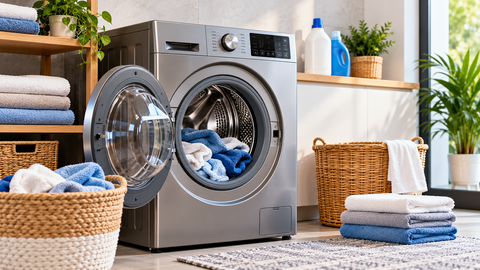
Smart washing machines are connected laundry appliances that use electronic sensors, automated wash programs, and, on compatible models, Wi-Fi connectivity to manage laundry cycles.
They can adjust washing parameters, monitor operating conditions, send notifications, and allow users to control selected functions through a mobile application. Their capabilities vary by model, connectivity platform, and available features.
Understanding smart washer technology helps households compare front-load and top-load designs, evaluate washing machine sensors, assess energy and water efficiency, and determine whether remote monitoring or connected-home integration is useful for their laundry routines.
Quick Facts About Smart Washing Machines
Feature | Description |
|---|---|
Primary function | Automated washing with electronic monitoring and control |
Core technology | Embedded controllers, sensors, and programmable wash cycles |
Connectivity | Wi-Fi, mobile applications, and selected smart-home integrations |
Common sensors | Water-level, temperature, load, imbalance, and motor sensors |
Main configurations | Front-load and top-load washing machines |
Automated functions | Cycle selection, water-level adjustment, imbalance detection, and fault alerts |
Energy considerations | Depends on appliance design, cycle selection, load size, and usage |
Maintenance features | Diagnostic alerts, cleaning reminders, and selected fault notifications |
Main limitation | Connected features and remote controls vary by model and region |
What Is a Smart Washing Machine?
A smart washing machine is a washer that combines conventional washing mechanisms with electronic control, automated sensing, and, in connected models, network communication. Its controller coordinates the motor, water inlet, drainage, heating where fitted, and other components according to the selected cycle and information received from sensors.
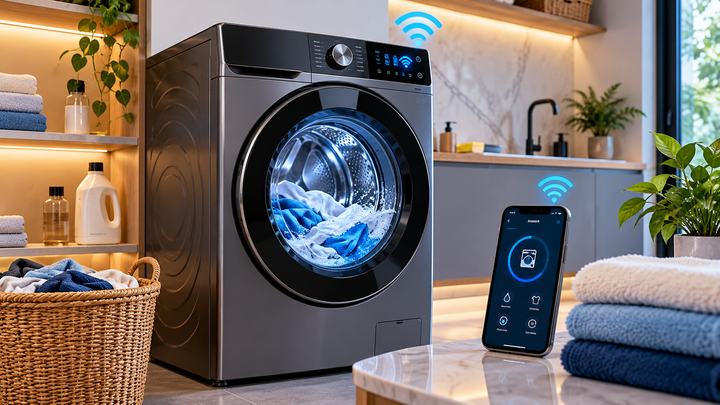
A Wi-Fi-enabled washer can communicate with a compatible mobile application or connected-home platform. Depending on the model, users may be able to check cycle progress, receive completion alerts, schedule eligible cycles, access maintenance notifications, or download additional programs.
Not every electronically controlled washing machine is a smart appliance. A washer with automatic load sensing but no network connectivity may offer intelligent automation without remote access.
Why Smart Washing Machine Technology Matters
Smart washer technology can reduce the need for manual adjustments and make laundry routines easier to monitor. Its practical value depends on which functions are automated and how accurately the appliance responds to different fabrics, load sizes, and operating conditions.
Automated cycle adjustment: Sensors can help the washer adapt selected settings to the detected load.
Remote monitoring: Connected models can report cycle progress without requiring users to stand near the appliance.
Maintenance awareness: Certain systems detect faults or provide cleaning and maintenance reminders.
Resource management: Appropriate wash programs and load detection can help avoid unnecessary water or energy use.
Improved convenience: Notifications can indicate when a cycle finishes or when attention may be required.
Program flexibility: Some models support additional cycles or settings through their connected applications.
Smart functions do not guarantee lower utility consumption or better cleaning in every situation. Results depend on appliance engineering, detergent use, fabric selection, cycle settings, and household habits.
Understanding Smart Washing Machine Technology
Simple Explanation
A smart washer works like a conventional washing machine with an electronic decision-making system. The user selects a cycle, the controller checks available sensor information, and the machine operates its valves, drum, motor, and drainage components in a programmed sequence.
In a connected model, a wireless communication module also exchanges information with an application or supported smart-home system. This creates two related functions: automated washing inside the appliance and connected control through a network.
For example, a load-sensing function may estimate the amount of laundry and adjust water intake. A Wi-Fi feature may notify the user when that same cycle is complete. The sensor performs the local measurement, while the network carries information between the appliance and the connected device.
How Smart Washing Machines Work
Step 1: Cycle Selection and Program Setup
The process starts when the user selects a wash program through the control panel or an available application. The selected program defines operating parameters such as wash action, target temperature, rinse sequence, and spin behavior.
Some connected models allow remote selection or scheduling, but remote-start functions may require a separate physical confirmation, an enabled setting, or other safety conditions.
Step 2: Load Detection
Depending on the design, the washer may estimate load size using motor behavior, drum movement, water-level measurements, or other sensing methods. The controller uses this information to determine appropriate operating settings.
Load sensing does not necessarily identify fabric type or measure every garment's soil level. The extent of automatic adjustment depends on the machine's sensors and control algorithms.
Step 3: Water Intake and Temperature Control
The controller operates the inlet valves and monitors water intake. A water-level sensor or pressure-based measurement helps determine whether the required level has been reached.
On machines with water heating, temperature feedback can help regulate heating during the cycle. Washers connected to a hot-water supply may use a different arrangement, depending on their design.
Step 4: Washing and Rinsing
The motor turns the drum or agitator according to the selected program. The controller coordinates movement, pauses, water use, and rinse stages to suit the chosen cycle.
Some machines use motor feedback to adjust movement or identify abnormal operating conditions. Specialized programs may also use different combinations of temperature, duration, and drum action.
Step 5: Load Balancing and Spinning
Before or during spinning, the washer may detect an uneven load through drum movement, vibration, or motor feedback. It can attempt to redistribute the laundry, adjust the spin sequence, or reduce spin speed when necessary.
These responses help manage vibration, although they cannot prevent every imbalance caused by bulky items or unsuitable load distribution.
Step 6: Cycle Completion and Notifications
At the end of the program, the controller stops the cycle and updates the appliance's status. A connected washer may send a completion notification to a paired application, depending on connectivity and notification settings.
Some models also record fault codes or provide diagnostic information that can help users identify maintenance needs.
Step 7: Connected Monitoring and Diagnostics
Wi-Fi-enabled models communicate with compatible applications or platform servers through the home network. Depending on the system, the connection may support cycle monitoring, maintenance reminders, diagnostic reports, or remote commands.
Connected features can become unavailable during network outages even when the washer's basic local controls and washing functions continue to work.
Smart Washing Machine Workflow Table
Stage | Technology Used | Main Function |
|---|---|---|
Program selection | Control panel or mobile application | Defines the wash cycle |
Load assessment | Motor feedback or load sensors | Estimates load-related requirements |
Water intake | Inlet valves and level sensing | Controls water filling |
Temperature regulation | Temperature sensor and controller | Monitors water temperature where applicable |
Washing | Motor and electronic controller | Coordinates drum movement |
Imbalance detection | Vibration or motor feedback | Detects uneven load conditions |
Spinning and drainage | Motor, pump, and control logic | Extracts water and drains the tub |
Status reporting | Display and wireless module | Shows progress and sends notifications |
Architecture and Main Parts of a Smart Washing Machine
Electronic Control Board
The control board is the appliance's central processing unit for washing operations. It receives signals from sensors, executes the selected program, and controls components such as the motor, valves, pump, and heater.
The board also manages fault detection and, in connected models, coordinates communication with the wireless module. Electrical faults, moisture damage, or incompatible replacement components can affect the appliance's operation.
Sensors and Feedback Devices
Sensors provide information about water level, temperature, motor behavior, vibration, and other operating conditions. The controller uses these inputs to decide when to continue, adjust, pause, or stop a stage of the wash cycle.
Sensor availability varies significantly between entry-level electronic washers and more advanced models.
Motor and Drive System
The motor rotates the drum or operates the washing mechanism. Modern designs may use electronically controlled drive systems that regulate speed and movement according to the selected program and feedback signals.
Drive technology influences vibration, operating noise, control precision, and energy consumption, but actual performance depends on the complete appliance design.
Water Inlet, Drainage, and Heating Components
Inlet valves regulate incoming water, while the drainage pump removes water at the appropriate stages. Models with internal heating use a heating element and temperature feedback to manage water temperature.
These components remain important even when a washer includes advanced connectivity because smart features do not replace the underlying washing mechanisms.
Wireless Communication Module
A Wi-Fi module connects compatible appliances to a home network and supported digital platforms. It transmits information such as cycle status or diagnostic notifications and receives permitted commands.
The module's functionality depends on application compatibility, network availability, account configuration, regional support, and manufacturer policies.
User Interface and Mobile Application
The physical control panel provides direct access to programs and settings. A mobile application may add cycle monitoring, alerts, program customization, or remote control where supported.
The application should be considered an additional interface rather than a guaranteed replacement for physical controls.
Main Components of Smart Washing Machines
Component | Function | Relevance to Smart Features |
|---|---|---|
Electronic control board | Coordinates appliance operation | Executes automated logic |
Water-level sensor | Measures or estimates water level | Supports water-intake control |
Temperature sensor | Monitors temperature where fitted | Supports temperature regulation |
Motor and drive electronics | Control drum movement | Provide movement feedback |
Imbalance detection system | Identifies uneven load conditions | Adjusts spin behavior |
Inlet valves | Regulate water entry | Respond to controller commands |
Drain pump | Removes used water | Supports cycle sequencing |
Wi-Fi module | Connects the washer to a network | Enables remote communication |
Display and controls | Accept user inputs and show status | Support local operation |
Mobile application | Provides connected controls and alerts | Enables supported remote functions |
Types of Smart Washing Machines
Smart washing machines can be classified by their physical configuration and by their level of connectivity. Front-load and top-load describe the way laundry enters the appliance, while Wi-Fi-enabled and locally controlled describe different electronic capabilities. These categories overlap rather than representing mutually exclusive machine types.
Smart Front-Load Washing Machines
Front-load washers use a horizontal drum that tumbles clothing through water and detergent. Many models offer electronic programs, automatic load sensing, imbalance detection, and Wi-Fi connectivity.
Potential advantages:
Often use relatively little water in suitable cycles.
Support a wide range of fabric-specific programs.
Can include detailed cycle monitoring and connected controls.
May offer high spin speeds for water extraction.
Actual water and energy use depends on the model, program, load, and regional testing method.
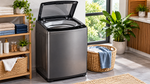
Smart Top-Load Washing Machines
Top-load washers allow laundry to be loaded through an upper opening. Depending on the design, washing action may come from an agitator or an impeller. Connected versions can provide automated water-level control, electronic programs, and mobile notifications.
Potential advantages:
Convenient loading without opening a front-facing door.
Multiple washing mechanisms are available.
Connected features can simplify cycle monitoring.
Some models provide flexible cycle options for household laundry.
Water use, fabric treatment, and cleaning performance vary by machine design and cycle.
Wi-Fi-Enabled Washing Machines
Wi-Fi-enabled washers connect to a compatible home network and application. Their functions may include cycle status, completion alerts, selected remote commands, diagnostic notifications, and additional program access.
Potential advantages:
Remote visibility into cycle progress.
Notifications when attention is required.
Access to supported connected features.
Potential integration with compatible smart-home routines.
Limitations include network dependence, application compatibility, and privacy considerations.
Non-Connected Automatic Washing Machines
These machines use electronic controllers and may include sensors, but they do not provide Wi-Fi-based remote control. Their main functions are operated through the appliance's physical interface.
Potential advantages:
No home-network setup is required.
Core washing functions remain independent of internet availability.
Fewer connected-account and application dependencies.
Automatic sensing may still be available.
A non-connected washer can still provide substantial automation. Wi-Fi connectivity is not a prerequisite for automatic load detection, temperature control, or electronic wash programs.
Smart Washing Machine Type Comparison
Feature | Smart Front-Load | Smart Top-Load | Wi-Fi-Enabled Washer | Non-Connected Automatic Washer |
|---|---|---|---|---|
Classification | Physical configuration | Physical configuration | Connectivity level | Connectivity level |
Loading method | Front door | Top opening | Varies | Varies |
Automatic sensing | Model-dependent | Model-dependent | Model-dependent | May be available |
Mobile monitoring | If connectivity is included | If connectivity is included | Supported by design | Generally unavailable |
Remote commands | On supported models | On supported models | Depends on model and safety settings | Unavailable |
Network dependency | Only for connected functions | Only for connected functions | Required for network functions | Not required |
Main consideration | Drum and cycle design | Washing mechanism and loading | Connectivity features | Local controls and automation |
Sensors Used in Smart Washing Machines
Sensors distinguish many automated washer functions from simple timed operation. However, sensor names and capabilities differ by manufacturer, and not every smart washer includes every sensor described below.
Water-Level Sensors
Water-level sensors help the controller determine how much water is present in the tub. Pressure-based systems commonly infer water level from pressure changes, while other designs may use different measurement methods.
The controller can use this information to regulate filling and detect certain water-level faults. Automatic water adjustment still depends on the selected program and the washer's control logic.
Temperature Sensors
Temperature sensors monitor water or component temperatures where fitted. The controller uses their readings to regulate heating, maintain selected conditions, or identify abnormal temperature behavior.
Accurate temperature feedback can support appropriate wash programs, but it does not mean every cycle reaches the same temperature or duration.
Load-Sensing Systems
Load sensing estimates the amount of laundry or the operating demands associated with it. Some systems use drum movement, motor current, torque, water absorption, or a combination of inputs to make this estimate.
The result can influence water intake, cycle duration, or other settings. It should not be confused with guaranteed fabric recognition or perfect automatic detergent dosing.
Imbalance and Vibration Sensors
An unevenly distributed load can create vibration during spinning. Depending on the design, the machine may detect imbalance through dedicated sensing devices or through motor and movement feedback.
The controller can then redistribute laundry, modify the spin sequence, or reduce the spin speed. Very bulky or uneven loads may still require manual redistribution.
Motor and Rotation Sensors
Motor feedback helps the controller monitor speed and movement. It can support controlled acceleration, different drum-motion patterns, and detection of some mechanical or electrical faults.
The sensing method varies by motor design, and a reported motor fault may require professional diagnosis to distinguish the underlying cause.
Leakage and Other Safety Sensors
Some models include water-leak detection or other protective mechanisms. Their availability and response differ between products, and a leak sensor should not be assumed to be present simply because a washer has Wi-Fi.
Protection against overfilling, overheating, and other faults may rely on combinations of sensors, control logic, mechanical components, and independent safety devices.
Wi-Fi Control and Smart Home Integration
Wi-Fi connectivity adds a communication layer to the washing machine. It allows compatible devices to exchange operating information with a mobile application or supported connected-home platform.
Remote Cycle Monitoring
A connected application may show whether a cycle is running, how much time remains, or whether the program has finished. The accuracy and detail of this information vary by appliance and application.
Remote monitoring is especially useful when the washer is located in a laundry room, utility area, or another part of the home.
Remote Start and Cycle Scheduling
Some models permit a user to select or initiate eligible cycles remotely. Others require the door to be closed, a physical remote-start setting to be enabled, or an on-device confirmation before a remote command can proceed.
These restrictions are intentional operational safeguards. Remote control should not be interpreted as permission to bypass door interlocks or other safety mechanisms.
Mobile Notifications and Diagnostics
Notifications can report cycle completion, certain faults, or maintenance reminders. Some applications also display diagnostic information that helps narrow down the type of problem.
A notification does not always identify the root cause. Persistent faults, electrical problems, water leaks, or unusual mechanical behavior may require qualified repair.
Smart Home Compatibility
Some connected washers integrate with supported home automation ecosystems. Depending on compatibility, an integration may expose appliance status or permit selected actions through a shared platform.
Compatibility should be checked for the exact model, application, region, and operating-system version. Not every washer supports voice control, automated routines, or integration with every smart-home platform.
Connectivity and Privacy
A connected appliance may transmit operational information, diagnostic data, account details, or other information described in its privacy documentation. The information collected and retained depends on the manufacturer and connected platform.
For safer use:
Use a strong, unique account password.
Enable multifactor authentication when available.
Keep the application and appliance firmware updated where supported.
Review connected-device permissions and privacy settings.
Remove access for accounts or devices no longer in use.
Follow the manufacturer's guidance when changing network settings.
A washer's basic local controls may remain usable during an internet outage, but remote monitoring and connected commands can become unavailable.
Materials and Requirements for Smart Washing Machines
Drum and Tub Materials
The inner drum is commonly made from stainless steel, while the outer tub may use engineered polymers or other materials depending on the design. Material selection affects durability, corrosion resistance, noise behavior, and manufacturing requirements.
The drum surface and internal geometry also influence how laundry moves during washing. Appropriate loading and cycle selection remain important regardless of the material used.
Motor and Electronic Components
Smart washers combine motors, drive electronics, sensors, wiring, and control boards. These components must operate reliably in an appliance exposed to moisture, vibration, temperature changes, and repeated mechanical movement.
Electronic components and replacement parts must be compatible with the exact model. Incorrect components or unqualified repairs can affect control behavior and safety.
Water Supply and Drainage
The appliance needs a suitable water connection, adequate drainage, and installation conditions that meet the manufacturer's specifications. Water pressure, supply temperature, drain arrangement, and hose condition can influence filling and draining performance.
Installation requirements differ by model and location. A qualified installer should address plumbing or electrical work that exceeds the user's competence or local requirements.
Electrical and Network Requirements
Smart washing machines require an appropriate electrical supply and, for connected features, a compatible wireless network. Network frequency, signal strength, application availability, and account requirements depend on the product.
Wi-Fi connectivity does not replace proper electrical installation, grounding, water management, or adherence to the appliance's safety instructions.
Smart Washing Machines vs. Conventional Washing Machines
A conventional washing machine may use mechanical controls or an electronic controller without network connectivity. A smart washing machine generally adds more advanced automation, connectivity, or both. The distinction is not simply whether a machine has a digital display.
Feature | Conventional Washer | Smart Washing Machine |
|---|---|---|
Cycle selection | Physical controls or digital panel | Physical controls, with app controls on connected models |
Sensor-based automation | May be available | Often available, depending on model |
Automatic water adjustment | Model-dependent | Model-dependent |
Mobile notifications | Generally unavailable | Available on supported connected models |
Remote monitoring | Generally unavailable | Available on Wi-Fi-enabled models |
Diagnostic information | May use basic fault codes | May include app-based diagnostics |
Network dependency | Usually none | Applies to connected features |
Maintenance needs | Mechanical and electrical care | Mechanical, electrical, and potentially connectivity-related care |
A conventional washer with effective load sensing may clean laundry as well as a connected model under the same conditions. The principal difference is the availability of particular automation and connected functions, not an automatic guarantee of better cleaning.
Energy and Water Efficiency in Smart Washing Machines
Energy and water efficiency depend on the appliance's mechanical design, wash program, load size, water temperature, spin performance, and usage patterns. Smart features may help optimize selected operations, but connectivity itself does not make a washer more efficient.
Automatic Load Adjustment
When supported, load sensing can adapt water intake or cycle parameters to the detected load. This can help avoid using settings intended for a larger load when washing a smaller amount of laundry.
The extent of the adjustment varies by model, and users should follow the manufacturer's loading guidance rather than assuming the machine will compensate for every load size.
Temperature and Program Selection
Heating water can contribute substantially to the energy used during a wash, depending on the machine and cycle. Lower-temperature programs may reduce heating demand when appropriate for the fabric, detergent, and cleaning task.
The energy impact depends on the actual program and household conditions. A longer cycle is not necessarily less efficient, and the most appropriate setting depends on the appliance's tested performance and the laundry being washed.
Spin Efficiency and Drying Requirements
The spin cycle removes water mechanically before laundry is taken out of the machine. Effective water extraction can reduce the amount of moisture remaining in fabrics, which may reduce subsequent drying demand.
The benefit depends on spin speed, fabric restrictions, load balance, and the type of drying equipment used afterward.
Reading Energy Labels
Where an official energy label is provided, use the measurements and testing conditions shown on that label rather than relying on broad claims about smart technology.
For example, European Union labels for household washing machines use an A-to-G efficiency scale and display information such as energy consumption per 100 cycles, water consumption per cycle, rated capacity, program duration, and noise emissions. Other markets may use different label formats and testing procedures.
Benefits and Advantages of Smart Washing Machines
Smart washing machines combine automated operation with optional connected features. Their advantages are most apparent when the functions address actual household needs.
Convenient monitoring: Check cycle status without repeatedly visiting the laundry area.
Automatic adjustments: Use sensor-based functions to adapt selected settings to operating conditions.
Cycle notifications: Receive alerts when washing is complete or certain conditions need attention.
Program flexibility: Access additional settings on models that support downloadable or application-based programs.
Diagnostic assistance: Use fault information to understand some operating problems.
Maintenance reminders: Receive prompts for selected cleaning or upkeep tasks.
Potential resource savings: Appropriate automatic settings may help reduce unnecessary water or energy use.
Integration possibilities: Compatible models can connect with selected smart-home platforms.
These advantages are not universal. The available functions, their reliability, and their practical value depend on the specific appliance and how it is used.
Applications of Smart Washing Machines
Everyday Household Laundry
For regular household loads, smart washers can automate selected settings and provide notifications when cycles finish. Load sensing and specialized programs may help users manage mixed laundry needs, provided they follow garment-care instructions.
Large Households
Households that run multiple loads may find cycle tracking, scheduling, and completion alerts useful. Capacity, program duration, and the ability to handle different fabric types remain important when evaluating overall suitability.
Apartments and Compact Laundry Areas
In compact living spaces, cycle notifications can help users coordinate laundry with other household activities. Physical dimensions, door clearance, noise, vibration, drainage, and network signal strength should be assessed separately from smart features.
Connected Homes
For homes that already use connected appliances, compatible washing machines may provide shared status monitoring or selected automation. Integration depends on platform support and should not be assumed from the presence of Wi-Fi alone.
Shared Household Laundry Rooms
In households where several people use the same appliance, status notifications and clear program information can help coordinate use. Account permissions and remote-control access should be configured carefully so that one user does not unintentionally interfere with another's cycle.
Smart Washing Machine Applications Table
Use Case | Relevant Features | Main Consideration |
|---|---|---|
Everyday laundry | Automatic programs and cycle notifications | Fabric and load requirements |
Large households | Capacity, scheduling, and status monitoring | Frequency of use and cycle duration |
Compact apartments | Remote alerts and selected quiet programs | Dimensions, vibration, and connectivity |
Connected homes | Supported smart-home integration | Platform compatibility |
Shared laundry spaces | Status visibility and clear controls | Access permissions and coordination |
Delicate garments | Fabric-specific cycles and controlled movement | Garment-care instructions |
Standards and Safety for Smart Washing Machines
Smart washing machines combine water, electricity, rotating mechanical components, and, in connected models, networked electronics. Appliance safety and performance requirements depend on the market where the product is installed.
IEC 60456: Household Washing Machines
IEC 60456 specifies methods for measuring the performance of household washing machines. It provides a framework for testing characteristics such as washing performance and resource-related performance under defined conditions.
Test results should be interpreted according to the relevant edition and applicable regional labeling requirements.
IEC 60335-1 and IEC 60335-2-7: Appliance Safety
IEC 60335-1 addresses general safety requirements for household and similar electrical appliances. IEC 60335-2-7 addresses particular safety requirements for washing machines.
The applicable edition, national adoption, and certification requirements depend on the jurisdiction and product.
IEC TS 62950: Smart Appliance Capabilities
IEC TS 62950 provides a framework for specifying smart capabilities and smart operating modes in appliances and related devices. It addresses how such capabilities can be described and evaluated, rather than establishing a universal minimum set of smart functions for every washer.
ISO/IEC 27404:2025: Consumer IoT Cybersecurity Labelling
ISO/IEC 27404:2025 defines a cybersecurity and privacy labelling framework for consumer Internet of Things products, including connected appliances. Its relevance depends on the product, market, and applicable conformity or labelling program.
Practical Household Safety
Follow the manufacturer's installation and operating instructions.
Use the specified electrical supply and appropriate grounding.
Do not bypass door locks, electrical protections, or other safety mechanisms.
Inspect accessible hoses for visible deterioration or leakage.
Keep the appliance and surrounding area within the specified installation conditions.
Use only compatible replacement parts and approved maintenance procedures.
Seek qualified assistance for electrical faults, persistent leaks, or internal repairs.
Common Smart Washing Machine Problems and Solutions
Problem | Possible Cause | Appropriate Response |
|---|---|---|
Washer will not connect to Wi-Fi | Weak signal, incorrect network settings, or setup issue | Check the network and follow the manufacturer's connection procedure |
Mobile application shows outdated status | Temporary communication failure or delayed synchronization | Check the appliance's local display and network connection |
Remote start is unavailable | Safety conditions or remote-start setting not satisfied | Check the required on-device settings and door status |
Water level appears incorrect | Load conditions, inlet restriction, or sensor fault | Check permitted user-level items and seek repair if the fault persists |
Washer vibrates excessively | Uneven load, installation issue, or mechanical problem | Redistribute the load and verify installation requirements |
Cycle takes longer than expected | Program design, load balancing, water supply, or other operating conditions | Review the selected cycle and any displayed alerts |
Fault notification appears | Sensor reading or component malfunction | Record the error code and follow the model-specific guidance |
Notifications are missing | App permissions, account settings, or network interruption | Review notification settings and connectivity |
Water leakage occurs | Hose, connection, seal, or internal component problem | Stop use when safe, isolate the supply as appropriate, and arrange qualified assistance |
Unusual noise develops | Foreign object, unbalanced load, or mechanical wear | Stop the cycle if necessary and inspect only user-accessible areas |
A displayed error code is a diagnostic clue, not necessarily a definitive diagnosis. If the appliance leaks, produces an electrical smell, trips a protective device repeatedly, or develops severe mechanical noise, discontinue use when safe and seek qualified assistance.
How to Choose a Smart Washing Machine
Choosing a suitable model requires comparing the washing mechanism, capacity, sensor functions, energy performance, connectivity, and long-term support. A feature list alone does not establish that a particular washer will suit a household's needs.
Selection Factor | What to Evaluate | Why It Matters |
|---|---|---|
Washing configuration | Front-load or top-load design | Affects loading, washing action, and installation |
Drum capacity | Typical household load requirements | Helps avoid unsuitable loading patterns |
Sensor functions | Load, water-level, temperature, and imbalance detection | Determines the level of automation |
Wi-Fi connectivity | Supported app features and remote commands | Establishes what can actually be controlled |
Energy and water performance | Official label and standardized measurements | Enables more meaningful comparisons |
Cycle selection | Delicate, quick, intensive, and other relevant programs | Matches the washer to laundry needs |
Noise and vibration | Operating characteristics and installation requirements | Matters in apartments and shared spaces |
Application compatibility | Supported phones, operating systems, and regions | Reduces connectivity surprises |
Security and privacy | Update policy, account controls, and data practices | Helps assess connected-device risks |
Maintenance support | Filter access, diagnostic information, and parts availability | Affects long-term usability |
Installation requirements | Water supply, drainage, electrical supply, and dimensions | Helps prevent installation problems |
A household that values remote alerts should prioritize reliable application support and straightforward connectivity. A household primarily concerned with washing performance should place greater emphasis on cycle quality, capacity, resource consumption, and fabric-care requirements. Smart features are most useful when they solve a specific, recurring problem.
Maintenance Best Practices for Smart Washing Machines
Clean the Drum and Detergent Drawer
Follow the manufacturer's recommended cleaning cycle and schedule. Remove detergent residue from accessible areas and allow the door or lid to dry as instructed to help limit odors and residue buildup.
Inspect Hoses and Connections
Check accessible water hoses and connections for visible wear, kinks, or leaks. Replace deteriorated components using compatible parts and the specified procedure. Internal plumbing repairs should be handled by a qualified technician when required.
Maintain Drainage Components
Where the model provides user-accessible pump-filter maintenance, follow the exact instructions for safe access and water removal. Some washers have different drainage arrangements, and not every component should be opened by the user.
Keep the Appliance Level
Follow the installation instructions for leveling and floor support. An unstable appliance can vibrate excessively, particularly during spinning, and may place additional stress on surrounding connections.
Review Connected Features
Keep the associated application updated and apply available appliance firmware updates according to manufacturer guidance. Review account access, network settings, and notifications periodically so that connected functions remain configured as intended.
Respond to Diagnostic Alerts
Record fault codes and review the recommended action for the exact model. Avoid repeatedly resetting a washer when the same serious fault returns, because doing so may delay diagnosis of an underlying problem.
Limitations of Smart Washing Machines
Smart washing machines introduce useful automation, but they also have limitations that should be considered before choosing a connected model.
Variable functionality: Sensors, mobile controls, and diagnostic features differ between models.
Network dependence: Wi-Fi monitoring and remote commands may stop working during connectivity problems.
Application changes: App support, operating-system compatibility, and connected features can change over the appliance's lifetime.
Privacy considerations: Connected operation may involve data collection and account-based access.
Maintenance complexity: Electronic boards, sensors, drive systems, and connectivity modules can require specialized diagnosis.
No guaranteed efficiency improvement: Smart features alone do not ensure lower energy or water use.
Limited remote control: Safety interlocks and operating conditions may prevent certain commands.
Potentially unnecessary features: Households that prefer simple controls may gain little from extensive connectivity.
A connected washer should therefore be evaluated as a complete household appliance rather than selected solely for the number of smart functions it advertises.
Future Trends in Smart Washing Machine Technology
More Adaptive Wash Programs
Manufacturers may continue developing control systems that use sensor feedback to adjust selected wash parameters. The usefulness of these systems depends on the quality of sensing, program design, and the ability to respond appropriately to different loads.
Better Diagnostic Capabilities
More detailed fault reporting and operating-status monitoring may help users distinguish simple maintenance needs from problems that require technical support. Diagnostics remain dependent on the sensors and information available to each model.
Energy-Aware Connected Operation
Smart appliances may support more sophisticated scheduling and energy-management functions where compatible household systems and local electricity arrangements permit them. The practical benefit depends on the appliance's capabilities and the conditions under which it operates.
Stronger Connected-Device Security
As connected appliances become part of household networks, update support, access control, privacy transparency, and secure communication remain relevant design considerations. No connected appliance should be assumed secure solely because it carries a smart-home label.
More Integrated Household Controls
Compatible platforms may make it easier to view appliance status alongside other connected-home devices. The availability and durability of these integrations will depend on manufacturers, technical standards, and platform support.
Frequently Asked Questions About Smart Washing Machines
1. What makes a washing machine smart?
A smart washing machine combines electronic control and automated functions, and connected models add network communication. Depending on the model, features may include load sensing, cycle notifications, remote monitoring, and selected app-based controls.
2. Do all smart washing machines have Wi-Fi?
No. Some washing machines provide automatic sensing and electronic programs without internet connectivity. A Wi-Fi-enabled model adds connected features, but the exact functions vary by product.
3. How do sensors improve washing machine operation?
Sensors provide information about conditions such as water level, temperature, motor movement, and load imbalance. The controller uses these inputs to adjust selected operations, detect certain faults, or manage the wash cycle.
4. Can I control a smart washing machine from my phone?
Compatible Wi-Fi models may support cycle monitoring, notifications, scheduling, and selected remote commands through a mobile application. Remote-start functions may require on-device confirmation or other safety conditions.
5. Do smart washing machines use less water and electricity?
They can help manage selected settings through load sensing and automated programs, but savings are not guaranteed. Actual consumption depends on appliance design, program choice, load size, temperature, and usage patterns.
6. What happens if the Wi-Fi connection stops working?
Connected features such as remote monitoring and mobile notifications may become unavailable. The appliance's local washing functions may continue to work, depending on the model and the nature of the fault.
7. Are smart washing machines compatible with every smart-home system?
No. Compatibility depends on the model, application, platform, region, and supported integrations. Check the specific appliance documentation rather than assuming that every Wi-Fi washer supports voice assistants or shared automation routines.
8. How do I maintain a Wi-Fi-enabled washing machine?
Follow the manufacturer's guidance for drum cleaning, detergent-drawer care, hose inspection, drainage maintenance, and fault handling. Keep supported connected components updated and review application permissions and account security.
9. Are smart washing machines safe to use?
They can be used safely when installed and operated according to the manufacturer's instructions and applicable electrical and appliance-safety requirements. Connectivity does not replace physical safety mechanisms, proper installation, or qualified repair when faults occur.
10. What should I compare when selecting a smart washer?
Compare capacity, washing configuration, cycle options, official energy information, sensor functions, app compatibility, remote-control limitations, maintenance requirements, and security support. Prioritize features that match your household's laundry needs rather than assuming that more connected functions always mean better performance.
Conclusion
Smart washing machines combine electronic control, sensor-based automation, and optional Wi-Fi connectivity to make laundry operations easier to monitor and manage. Their practical value depends on the quality of the washing system, available sensors, connected functions, energy performance, and maintenance requirements. Comparing these factors helps households distinguish useful automation from features that may add little value to their daily routines.