Learn Hydraulic Press Machines: Complete Guide, Technical Basics, Insights, and Applications
Hydraulic press machines are industrial mechanical systems that use fluid pressure to generate compressive force. They operate on a basic physical principle where pressure applied to a confined liquid is transmitted evenly in all directions. This principle allows relatively small input forces to generate very large output forces.
These machines exist to handle tasks that require controlled, consistent, and high-pressure force. Over time, hydraulic press machines have become standard equipment in manufacturing, material processing, metal forming, and testing environments due to their reliability and precision.
Unlike mechanical presses that rely on fixed motion paths, hydraulic presses offer flexible force control. This flexibility makes them suitable for both heavy-duty operations and delicate forming processes where accuracy matters.
Why Hydraulic Press Machines Matter Today
Hydraulic press machines play a significant role in modern industrial systems. They influence productivity, material quality, and operational safety across many sectors.
Their importance today is driven by several factors:
-
Growing demand for precise material shaping
-
Increased focus on equipment safety and control
-
Need for consistent pressure across varied applications
-
Compatibility with automated and digitally monitored systems
Industries that commonly rely on hydraulic press machines include manufacturing, construction materials processing, automotive component production, aerospace fabrication, and laboratory testing environments.
These machines help address key challenges such as uneven force distribution, material deformation errors, and repeatability issues in high-force operations.
Recent Developments and Industry Trends
Over the past year, hydraulic press machine technology has continued to evolve, particularly in efficiency, monitoring, and environmental performance.
Key updates and trends observed since 2025 include:
-
Increased integration of sensor-based pressure monitoring
-
Wider use of programmable logic controllers for precision control
-
Adoption of energy-efficient hydraulic circuits to reduce fluid loss
-
Improved safety interlock systems aligned with updated machinery standards
Digital dashboards and data logging have become more common, allowing operators to track pressure cycles, system temperature, and operational consistency. These changes support better preventive maintenance planning and performance evaluation.
There is also a noticeable shift toward quieter hydraulic systems, addressing workplace noise concerns without affecting machine output.
Regulatory Frameworks and Compliance Considerations
Hydraulic press machines are influenced by occupational safety regulations, machinery standards, and environmental guidelines that govern equipment operation and maintenance.
Common regulatory themes include:
-
Operator safety and guarding requirements
-
Pressure vessel and hydraulic system integrity rules
-
Emergency stop and overload protection standards
-
Environmental handling of hydraulic fluids
International machinery safety frameworks typically require hydraulic presses to undergo regular inspections, pressure testing, and documentation updates. Compliance ensures that systems operate within defined pressure limits and that potential risks are minimized.
Many regulations emphasize clear labeling, user instructions, and safety training documentation to reduce misuse and mechanical failure.
Useful Tools, References, and Learning Resources
Several technical tools and educational resources help users understand and manage hydraulic press machines effectively.
Helpful resources include:
-
Hydraulic force calculation tools for pressure and cylinder sizing
-
Technical manuals from equipment manufacturers
-
Industrial safety standard publications
-
Preventive maintenance checklists
-
Online engineering reference libraries
These tools support better system understanding, accurate load planning, and consistent operational performance.
Core Technical Components Explained
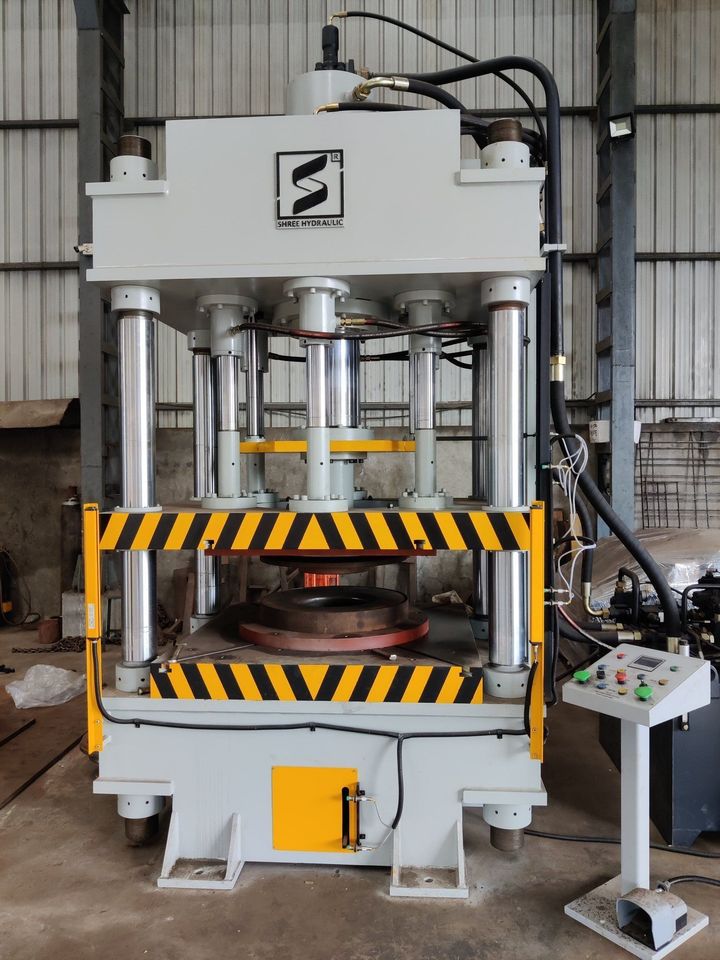
Hydraulic press machines are made up of several interconnected components that work together to generate force.
Key elements include:
-
Hydraulic cylinder
-
Pump system
-
Control valves
-
Hydraulic fluid reservoir
-
Frame and platen structure
Each component plays a role in maintaining pressure balance, force transmission, and operational stability.
Basic Working Principle
The working process starts when hydraulic fluid is pressurized by a pump. This pressure moves the piston inside the hydraulic cylinder, creating force on the press platen. The applied force is directly related to the pressure level and piston surface area.
This relationship allows precise adjustment of output force without changing the machine’s physical structure.
Comparison Table: Hydraulic vs Mechanical Presses
| Feature | Hydraulic Press | Mechanical Press |
|---|---|---|
| Force Control | Adjustable and consistent | Fixed force profile |
| Speed Control | Variable | Limited |
| Overload Protection | Built-in pressure relief | Limited |
| Maintenance Focus | Fluid systems | Mechanical components |
Applications Across Industries
Hydraulic press machines are used in a wide range of controlled-force applications.
Common applications include:
-
Metal forming and shaping
-
Composite material pressing
-
Powder compaction processes
-
Plastic molding operations
-
Laboratory material testing
Their adaptability allows use across both large-scale industrial facilities and specialized technical environments.
Performance Parameters Table
| Parameter | Typical Range |
|---|---|
| Operating Pressure | Medium to high |
| Force Output | Variable by cylinder size |
| Stroke Length | Adjustable |
| Control Accuracy | High |
Frequently Asked Questions
What makes hydraulic press machines different from other presses?
They use fluid pressure to generate force, allowing smoother control and consistent output across the entire stroke.
Are hydraulic press machines suitable for precision work?
Yes. Their adjustable pressure control makes them suitable for tasks requiring accurate force application.
How is safety maintained during operation?
Safety is maintained through pressure relief valves, guarding systems, emergency stops, and regular inspections.
Do hydraulic presses require regular monitoring?
Yes. Pressure levels, fluid condition, and component integrity are monitored to maintain stable performance.
Can hydraulic press machines support automation?
Modern systems are often compatible with automated controls and sensor-based monitoring systems.
Key Advantages and Limitations
Advantages include:
-
Consistent pressure distribution
-
Flexible force adjustment
-
High operational control
-
Adaptability to varied tasks
Limitations may include:
-
Dependence on fluid quality
-
Sensitivity to temperature changes
-
Need for structured maintenance routines
Understanding both aspects helps users apply these machines appropriately.
Conclusion
Hydraulic press machines remain essential equipment for applications that demand controlled, high-force pressure with precision. Their working principle, rooted in fluid pressure transmission, provides flexibility and consistency that many other systems cannot match.
Recent technological updates have improved efficiency, safety, and monitoring capabilities, making these machines more aligned with modern industrial requirements. Compliance with safety and operational standards ensures reliable performance and long-term system stability.
By understanding their technical foundations, regulatory considerations, and practical applications, readers can better evaluate how hydraulic press machines function within broader mechanical and industrial systems.

YOU MAY ALSO LIKE