Industrial Equipment Financing: Explore Loan Options, Asset Funding and Requirements
Industrial equipment plays an important role in manufacturing, construction, transportation, logistics, agriculture, energy, and other business operations. Machinery such as CNC systems, production lines, forklifts, generators, packaging equipment, and industrial automation systems can help companies expand capacity, improve productivity, and modernize operations.
However, purchasing equipment often requires a substantial financial commitment. Paying the full amount upfront may reduce working capital that a business needs for payroll, inventory, maintenance, and other operating expenses.
Industrial equipment financing provides businesses with different ways to fund machinery purchases while spreading payments over an agreed period. Depending on the company's financial position and the equipment involved, options may include traditional equipment loans, leasing arrangements, equipment finance agreements, asset-based lending, and government-backed financing programs.
Understanding these structures helps business owners compare financing terms, assess repayment obligations, and select an approach that fits their operational and financial plans.
This guide focuses primarily on the United States and explains equipment financing options, eligibility requirements, lender assessments, tax considerations, and practical steps for preparing an application.
Importance of Industrial Equipment Financing
Equipment financing can support business expansion without requiring the entire purchase amount to be paid immediately.
It can be particularly relevant when businesses need to replace outdated machinery, introduce new production technology, increase manufacturing capacity, or acquire specialized equipment for a new contract.
Important considerations include:
Preserving working capital: Spreading payments can help businesses retain liquidity for routine operations.
Supporting expansion: Financing can help companies acquire machinery needed for additional production capacity.
Modernizing operations: Businesses may use financing to introduce newer equipment, automation, and technology.
Managing payment schedules: Structured repayment can help align financing obligations with expected operating cash flow.
Planning asset ownership: Different arrangements allow businesses to choose between ownership, leasing, or other contractual structures.
Supporting equipment replacement: Financing may help companies replace aging machinery before maintenance and downtime become significant operational concerns.
Improving financial planning: Defined repayment schedules can be incorporated into budgets and capital expenditure forecasts.
Financing does not automatically improve profitability. Businesses should evaluate whether the expected operational benefits justify the repayment obligations and ongoing ownership or leasing expenses.
What Is Industrial Equipment Financing?
Industrial equipment financing refers to financial arrangements used to acquire machinery, production assets, vehicles, and other equipment required for business operations.
The financing may be secured by the equipment itself or supported by additional business assets, guarantees, or other collateral.
Common equipment categories include:
Manufacturing machinery: CNC machines, industrial presses, injection molding systems, cutting equipment, and assembly lines.
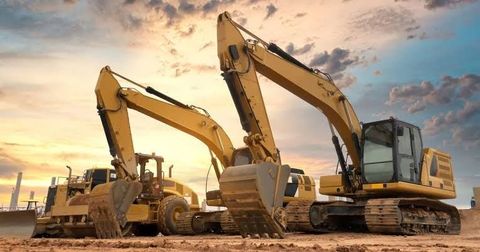
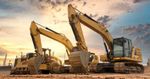
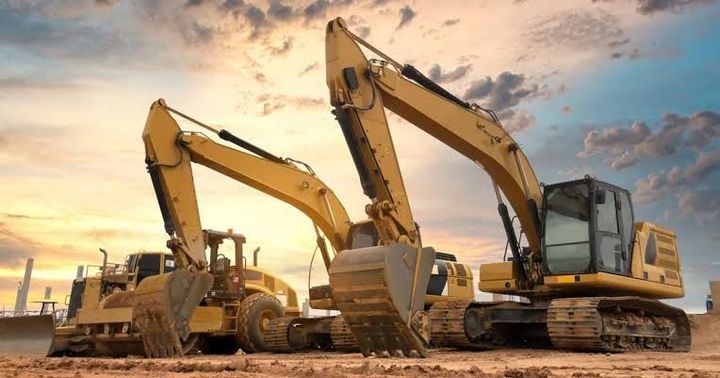
Construction equipment: Excavators, cranes, loaders, bulldozers, and specialized construction machinery.
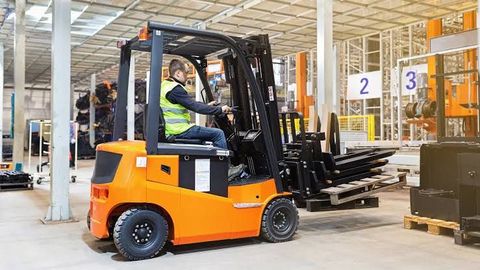
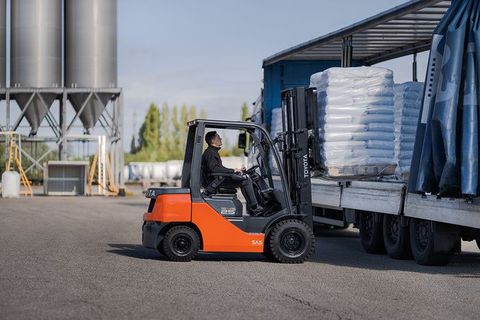
Material handling equipment: Forklifts, conveyors, warehouse automation systems, and pallet handling equipment.
Agricultural equipment: Tractors, harvesters, irrigation systems, and agricultural processing machinery.
Transportation assets: Commercial trucks, trailers, specialized vehicles, and fleet equipment.
Energy and utility equipment: Generators, compressors, transformers, and industrial power systems.
Packaging and processing equipment: Filling machines, bottling systems, food processing equipment, and industrial packaging lines.
The financing structure depends on the equipment's useful life, resale value, expected business use, purchase amount, and the borrower's ability to repay.
Main Industrial Equipment Financing Options
Businesses can choose from several financing arrangements. Each has different ownership rules, repayment structures, documentation requirements, and financial implications.
1. Traditional Equipment Loans
An equipment loan provides funding to acquire machinery or other qualifying business assets. The borrower generally makes scheduled principal and interest payments over an agreed term.
The equipment may act as collateral, although the lender can also require additional guarantees or security depending on the transaction.
Typical characteristics include:
Defined repayment schedules.
Interest charges based on the financing agreement.
Potential ownership of the equipment after acquisition.
Possible down payment or borrower equity contribution.
Collateral requirements based on lender policy.
Restrictions or conditions concerning asset disposal.
Equipment loans may suit businesses that expect to use machinery over an extended period and prefer to own the asset.
2. Equipment Leasing
Equipment leasing allows a business to use machinery under a contractual arrangement without necessarily purchasing it immediately.
The business makes scheduled lease payments and follows the terms established by the leasing company.
Common lease structures include:
Operating lease: Often structured around temporary use of equipment, with ownership generally remaining with the lessor.
Finance lease: Designed to transfer substantially more of the economic risks and rewards associated with ownership, depending on the agreement and applicable accounting rules.
Fair market value lease: May provide an option to purchase equipment at its fair market value at the end of the lease, return it, or renew the agreement, depending on the contract.
Dollar purchase option lease: May include a contractual purchase option for a predetermined nominal amount at the end of the lease.
Leasing may be relevant when equipment requirements are temporary, technology changes quickly, or the business prefers not to hold the asset on its balance sheet in the same way as an owned asset. Accounting standards can still require recognition of lease assets and liabilities.
3. SBA 7(a) Equipment Financing
The U.S. Small Business Administration's 7(a) program supports eligible small businesses through participating lenders.
Eligible uses include purchasing and installing machinery and equipment, alongside other permitted business purposes.
Key considerations include:
The maximum 7(a) loan amount is generally $5 million.
The business must meet SBA eligibility requirements.
The borrower must demonstrate creditworthiness and repayment ability.
The lender evaluates the business and the proposed financing.
Repayment terms depend on the loan purpose, asset, and applicable SBA requirements.
Applications are submitted through participating lenders rather than directly to the SBA. <Cite refs={["turn778211search0","turn778211search3"]}/>
4. SBA 504 Financing
The SBA 504 program provides long-term financing for eligible major fixed assets through Certified Development Companies (CDCs) and participating private-sector lenders.
Qualifying equipment purchases may be considered when the machinery meets the program's requirements.
Typical project structures involve:
A senior loan from a private-sector lender.
A CDC-backed financing component.
A borrower equity contribution.
The exact structure and required contribution depend on the project and applicable program rules. The program generally focuses on long-term fixed assets and is not intended for ordinary working capital or inventory. <Cite refs={["turn778211search1","turn778211search4"]}/>
5. Equipment Finance Agreements
An equipment finance agreement (EFA) is a contractual arrangement used to finance equipment acquisition.
The borrower generally makes scheduled payments toward the financed asset. Ownership and security rights depend on the agreement.
EFAs can resemble traditional equipment loans, but the legal structure and documentation may differ.
Businesses should review the payment schedule, security interest, ownership provisions, default clauses, and any restrictions on transferring the equipment.
6. Asset-Based Financing
Asset-based financing uses eligible business assets as collateral for borrowing.
Depending on the lender and structure, collateral may include:
Industrial machinery.
Equipment fleets.
Accounts receivable.
Inventory.
Other qualifying business assets.
This approach may be relevant when a business has valuable assets but needs financing beyond a single equipment purchase.
Lenders generally assess collateral quality, valuation, liquidity, ownership, and the company's financial position. Borrowing availability may change as asset values or eligibility change.
7. Vendor and Manufacturer Financing
Some equipment manufacturers and authorized distributors work with financial institutions to provide financing arrangements for qualifying machinery purchases.
Possible structures include installment financing, leasing, deferred payment arrangements, or financing through a third-party lender.
Businesses should compare the complete financing agreement rather than focusing only on the advertised payment amount.
Important terms include interest, fees, payment frequency, ownership, maintenance responsibilities, and early termination conditions.
Comparison of Industrial Equipment Financing Options
| Financing option | Ownership approach | Common purpose | Important consideration |
|---|---|---|---|
| Equipment loan | Borrower generally owns the asset | Long-term machinery acquisition | Collateral and repayment requirements |
| Operating lease | Lessor generally retains ownership | Temporary or flexible equipment use | Return and renewal conditions |
| Finance lease | Contract may transfer substantial ownership-related risks and rewards | Extended equipment use | Accounting and end-of-term obligations |
| SBA 7(a) | Depends on the acquisition arrangement | Eligible equipment and broader business financing | SBA and lender eligibility |
| SBA 504 | Borrower acquires qualifying fixed assets | Major long-term machinery investments | Project structure and fixed-asset eligibility |
| Equipment finance agreement | Depends on contract terms | Structured equipment acquisition | Security and ownership provisions |
| Asset-based financing | Depends on collateral arrangement | Financing supported by business assets | Collateral valuation and monitoring |
| Vendor financing | Depends on the agreement | Equipment acquisition through manufacturer-linked arrangements | Contract terms and financing conditions |
No financing structure is automatically appropriate for every business. Companies should compare total repayment obligations, ownership rights, flexibility, and tax treatment.
Industrial Equipment Financing Requirements
Lenders evaluate the borrower's financial position and the equipment being financed. Requirements differ by institution, loan size, industry, and financing structure.
1. Business Credit History
A lender may review the company's credit history, outstanding borrowing, repayment performance, and previous defaults.
Some lenders also evaluate the personal credit history of owners or guarantors, particularly for smaller businesses.
2. Business Financial Statements
Financial documentation helps lenders assess the company's ability to meet repayment obligations.
Commonly requested documents include:
Profit and loss statements.
Balance sheets.
Cash flow statements.
Business tax returns.
Bank statements.
Accounts receivable and payable schedules.
Existing debt schedules.
Financial projections.
Established businesses may need to provide several years of financial information, while newer businesses may be asked for additional projections and ownership documentation.
3. Equipment Details and Valuation
Lenders generally need information about the machinery being acquired.
This may include:
Manufacturer and model.
Equipment specifications.
Purchase quotation or invoice.
New or used condition.
Manufacturing year.
Expected useful life.
Installation requirements.
Warranty information.
Estimated resale value.
Supplier and delivery details.
For used machinery, lenders may request an independent inspection or valuation to assess its condition and collateral value.
4. Down Payment and Borrower Contribution
Some financing arrangements require the borrower to contribute part of the acquisition amount.
The required contribution depends on factors such as:
Borrower's credit profile.
Business operating history.
Equipment type.
Equipment age and resale value.
Loan term.
Lender underwriting policies.
Applicable government-backed program rules.
There is no universal down payment percentage for industrial equipment financing.
5. Business Operating History
A lender may examine how long the company has been operating, its industry experience, management capabilities, and previous financial performance.
Newer businesses may face additional underwriting requirements because they have a shorter financial history.
6. Repayment Capacity
Lenders commonly examine whether the business generates sufficient cash flow to meet existing and proposed debt obligations.
Relevant indicators may include:
Operating cash flow.
Debt service coverage ratio.
Existing debt commitments.
Revenue stability.
Profitability trends.
Seasonal business patterns.
Customer concentration.
Future capital expenditure requirements.
A lender may also consider whether the proposed equipment is expected to generate additional revenue, reduce operating expenses, or improve production capacity.
How Lenders Evaluate Equipment Financing Applications
Equipment financing decisions generally involve several stages of underwriting.
Credit assessment: Review the company's credit history, outstanding obligations, and repayment behavior.
Financial analysis: Examine revenue, profitability, cash flow, liquidity, and debt levels.
Collateral evaluation: Assess equipment condition, useful life, resale potential, and ownership documentation.
Business assessment: Review management experience, industry conditions, operating history, and the purpose of the equipment.
Repayment analysis: Evaluate whether the proposed payment schedule is consistent with projected cash flow.
Documentation review: Confirm that financial records, purchase details, ownership information, and legal documents are complete.
A strong application explains why the equipment is necessary, how it will be used, and how the business expects to meet its repayment obligations.
Understanding Equipment Financing Terms
Before signing an equipment financing agreement, businesses should understand the major financial and contractual provisions.
Interest Rate
The interest rate determines the amount charged for borrowing. It may be fixed or variable.
A fixed rate generally remains unchanged during the agreed period, while a variable rate can change according to the contract's reference rate and adjustment provisions.
Repayment Term
The repayment term determines how long the borrower has to repay the financing.
The term should be considered alongside the expected useful life of the equipment. Financing machinery over a period longer than its productive life can create financial pressure.
Down Payment
A down payment is the initial amount contributed by the borrower. A larger contribution may reduce the financed balance, but it also uses business liquidity.
Balloon Payment
Some agreements include a larger final payment after a series of smaller scheduled payments. Businesses should plan for this obligation rather than focusing only on regular installments.
Personal Guarantees
Lenders may require business owners or other individuals to provide personal guarantees.
A guarantee can create personal financial exposure if the business fails to meet its obligations. The scope, duration, and release conditions should be reviewed carefully.
Security Interest
A lender may register or otherwise establish a security interest in the financed equipment or other collateral.
The agreement should explain the lender's rights following a payment default, including repossession procedures where legally permitted.
Early Repayment and Termination
Some financing agreements contain early repayment charges, lease termination provisions, or restrictions on asset transfers.
Businesses should understand these conditions before entering into the agreement.
Evaluating the Financial Impact of Equipment Financing
Equipment financing should be evaluated using the expected financial contribution of the machinery and the complete repayment obligation.
A hypothetical example illustrates the process.
A manufacturing business is considering equipment priced at $200,000. It contributes $40,000 upfront and finances the remaining $160,000.
Assume the lender proposes a five-year fixed-rate agreement with a hypothetical annual interest rate of 8%.
The business should assess:
The initial contribution.
The monthly principal and interest payments.
Total interest over the agreement.
Installation and training expenditure.
Maintenance and repair requirements.
Insurance and operating expenses.
Expected production improvements.
Potential downtime and replacement needs.
The business should also consider whether additional production revenue or operational savings are realistic and supported by evidence.
The illustration is not a current market quotation or a prediction of financing approval. Actual payment amounts depend on the lender's calculation method, fees, payment timing, and final agreement.
Tax Considerations for Industrial Equipment Financing
Tax treatment can influence the financial comparison between purchasing equipment and leasing it.
In the United States, businesses should review the following areas with qualified tax professionals.
Depreciation
Qualifying business equipment may be depreciable when it meets applicable tax requirements.
The IRS generally requires depreciable property to be owned, used in a business or income-producing activity, have a determinable useful life, and be expected to last more than one year.
MACRS is a common depreciation framework for eligible property. <Cite refs={["turn778211search8"]}/>
Section 179 Deduction
Section 179 may allow eligible businesses to deduct qualifying equipment expenditure in the year the property is placed in service, subject to applicable limits and phaseout rules.
Eligibility depends on the property, business use, acquisition, and other statutory conditions.
Bonus Depreciation
Qualifying equipment may also be eligible for bonus depreciation under the applicable federal tax rules.
The One Big Beautiful Bill Act of 2025 changed depreciation provisions, including restoring 100% bonus depreciation for qualifying property under specified effective-date requirements.
Businesses should check acquisition dates, placed-in-service dates, property eligibility, and applicable elections before estimating the deduction.
Lease Accounting and Tax Treatment
Lease classification for financial reporting does not automatically determine tax treatment.
Businesses should review the actual lease agreement, ownership provisions, purchase options, and applicable tax rules before deciding how payments and assets should be treated.
Tax planning should be coordinated with financing decisions rather than treated as a separate calculation.
Recent Industrial Equipment Financing Developments in 2026
The equipment finance market has experienced changes in demand, investment priorities, and lending conditions during 2026.
Equipment Finance Demand
The Equipment Leasing & Finance Association (ELFA) reported that new business volume among surveyed member companies reached $11.8 billion in August 2026 on a seasonally adjusted basis. Year-to-date volume was 17.3% higher than the corresponding period in 2025.
The August result followed an unusually strong July, when new business volume reached $14.3 billion. These figures describe ELFA member activity and should not be treated as a complete measure of every equipment financing transaction in the United States. <Cite refs={["turn778211search5","turn778211search7"]}/>
Bank Lending Conditions
The Federal Reserve's July 2026 Senior Loan Officer Opinion Survey reported broadly unchanged commercial and industrial lending standards across firms of different sizes during the second quarter. Banks also reported stronger demand from large and middle-market businesses, while demand from small businesses was broadly unchanged.
These results provide context about general business lending conditions, not a guarantee of equipment loan approval. <Cite refs={["turn778211search6"]}/>
SBA Program Guidance
The SBA's updated SOP 50 10 Version 8.1 became effective on October 1, 2026. It sets out origination policies and procedures for the 7(a) and 504 loan programs.
Businesses considering SBA-backed equipment financing should check the current version and confirm program requirements with a participating lender or CDC. <Cite refs={["turn778211search2"]}/>
Tax Treatment and Capital Investment
Federal tax changes enacted in 2025 affect depreciation and certain equipment investment decisions for 2026.
The tax treatment of machinery should be evaluated using current IRS guidance rather than relying on older depreciation assumptions. <Cite refs={["turn778211search8","turn778211search15"]}/>
Practical Steps for Preparing an Equipment Financing Application
A structured preparation process can help businesses compare financing arrangements and respond to lender requests.
Identify the equipment requirement: Specify the machinery, intended business use, production requirements, and expected useful life.
Obtain equipment quotations: Collect supplier quotations, specifications, delivery information, and installation details.
Review financial capacity: Prepare current financial statements, tax returns, bank records, and cash flow projections.
Check credit history: Review outstanding borrowing, repayment records, and any potential credit reporting issues.
Compare financing structures: Evaluate loans, leasing, EFAs, asset-based financing, and applicable SBA programs.
Estimate repayment obligations: Compare monthly payments, interest, fees, down payment, and any final balloon payment.
Review collateral conditions: Understand security interests, guarantees, equipment valuation, and insurance requirements.
Assess tax treatment: Review depreciation, Section 179, bonus depreciation, and lease treatment with a tax professional.
Examine the agreement: Check default provisions, maintenance responsibilities, early repayment terms, and ownership rights.
Monitor performance: Track whether the equipment delivers the expected operational and financial results.
Industrial Equipment Financing Checklist
Use this checklist when reviewing a potential financing arrangement:
Define the equipment requirement and business purpose.
Confirm machinery specifications and supplier details.
Obtain quotations and delivery estimates.
Review the equipment's useful life and resale potential.
Prepare financial statements and business tax returns.
Review existing debt and repayment obligations.
Evaluate the required borrower contribution.
Compare loan, lease, and equipment finance agreement structures.
Review interest rates and repayment schedules.
Check collateral, guarantee, and insurance requirements.
Evaluate tax depreciation and eligible deductions.
Review default, termination, and early repayment clauses.
Confirm that the equipment can meet operational requirements.
Retain the final agreement and supporting documentation.
Tools and Resources
The following organizations provide official information and industry data relevant to industrial equipment financing in the United States.
U.S. Small Business Administration (SBA): Information about 7(a), 504, and other eligible small business financing programs. <Link url="https://www.sba.gov/funding-programs/loans" title="Explore SBA Loan Programs"/>
SBA 7(a) Program: Eligibility, permitted uses, application information, and lender arrangements. <Link url="https://www.sba.gov/loans/7a-loans/" title="Review SBA 7(a) Loans"/>
SBA 504 Program: Guidance on financing qualifying machinery and other major fixed assets. <Link url="https://www.sba.gov/loans/504-loans" title="Review SBA 504 Loans"/>
SBA Lender Match: Helps eligible businesses identify participating lenders. <Link url="https://www.sba.gov/funding-programs/loans/lender-match" title="Explore SBA Lender Match"/>
Internal Revenue Service (IRS): Official guidance on depreciation and Section 179. <Link url="https://www.irs.gov/publications/p946" title="Review IRS Publication 946"/>
Equipment Leasing and Finance Association (ELFA): Industry research, market indicators, and equipment finance information. <Link url="https://www.elfaonline.org/" title="Explore ELFA Resources"/>
Federal Reserve: Business lending surveys and financial market information. <Link url="https://www.federalreserve.gov/data/sloos.htm" title="Review Federal Reserve Lending Surveys"/>
Frequently Asked Questions
1. What is industrial equipment financing?
Industrial equipment financing is a funding arrangement that allows a business to acquire machinery and spread payments over an agreed period. Common structures include equipment loans, leasing, equipment finance agreements, and government-backed programs.
2. What credit score is needed for equipment financing?
There is no universal credit score requirement. Lenders consider business credit history, personal credit where relevant, financial statements, operating history, equipment value, and repayment capacity. Requirements vary by lender and financing structure.
3. Can a startup obtain industrial equipment financing?
A startup may qualify, but it can face additional underwriting requirements because it has limited operating history. Lenders may review owner credit, business plans, financial projections, collateral, equity contributions, and relevant management experience.
4. Is equipment leasing different from an equipment loan?
Yes. An equipment loan generally finances an asset that the borrower acquires, while a lease provides contractual rights to use equipment under agreed conditions. Ownership, accounting treatment, tax treatment, and end-of-term rights depend on the specific arrangement.
5. Can SBA loans be used to finance industrial machinery?
Eligible machinery and equipment purchases can be financed through SBA 7(a) loans. The 504 program can also support qualifying long-term machinery and fixed-asset projects. Both programs have eligibility requirements and must be arranged through the appropriate participating lenders or CDCs.
Conclusion
Industrial equipment financing can help businesses acquire machinery, expand production capacity, modernize operations, and manage capital expenditure over time. Available options include traditional equipment loans, leasing, equipment finance agreements, asset-based financing, and SBA-backed programs.
The right structure depends on the business's financial position, equipment requirements, ownership preferences, repayment capacity, and long-term operating plans.
Before entering into an agreement, businesses should compare financing terms, assess collateral and guarantee obligations, understand tax considerations, and review the complete contract. Careful planning can help companies align equipment investment with their operational needs and financial objectives.