Construction Heavy Equipment: Complete Guide to Types, Uses, and Working Principles
Construction heavy equipment plays a major role in modern infrastructure development. From building highways and bridges to preparing land for large buildings, these powerful machines help complete difficult tasks with speed and accuracy.
Without heavy machinery, large-scale construction projects would take much longer and require far more manual labor.
Today, construction equipment is used in road development, mining operations, industrial projects, and urban expansion. Machines such as excavators, bulldozers, loaders, and cranes are designed to handle massive workloads in challenging environments. These machines improve productivity, reduce physical strain, and support safer working conditions on construction sites.
Understanding how heavy equipment works is important for anyone interested in construction technology, industrial machinery, or infrastructure development.
Understanding the Concept
Construction heavy equipment refers to large machines designed to perform construction-related tasks. These tasks may include digging, lifting, moving materials, grading surfaces, and transporting heavy loads.
Each machine is built for a specific purpose. Some equipment focuses on earthmoving, while others specialize in lifting or compacting materials. Hydraulic systems, powerful engines, and advanced control mechanisms allow these machines to operate efficiently even in demanding conditions.
Heavy equipment is commonly seen in:
- Highway construction
- Bridge development
- Mining areas
- Industrial zones
- Residential building projects
- Agricultural land preparation
Modern construction machinery combines mechanical engineering with hydraulic technology to improve performance and precision.
Key Types or Categories
Excavators
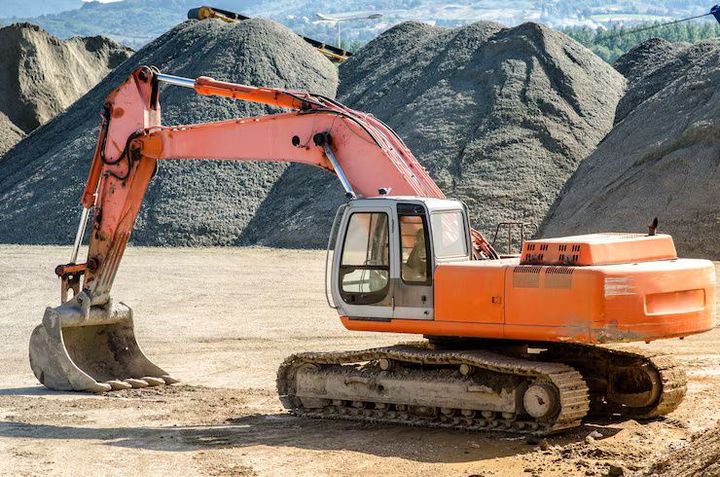
Excavators are among the most commonly used construction machines. They feature a rotating cabin, hydraulic arm, and digging bucket.
Main uses include:
- Digging trenches
- Breaking rocks
- Land clearing
- Demolition work
- Material handling
Crawler excavators use tracks instead of wheels, helping them move across rough terrain. Mini excavators are smaller versions designed for compact spaces.
Bulldozers
Bulldozers are powerful machines equipped with a large front blade. They are mainly used for pushing soil, debris, and rocks.
Common applications include:
- Road preparation
- Land leveling
- Site clearing
- Moving large amounts of earth
The tracked design helps bulldozers maintain stability on uneven surfaces.
Wheel Loaders
Wheel loaders are designed to move loose materials such as sand, gravel, and soil. They use a large front bucket for lifting and transporting materials over short distances.
These machines are commonly used in:
- Mining operations
- Construction yards
- Material stock areas
- Agricultural environments
Cranes
Cranes lift and move heavy objects vertically and horizontally. Tower cranes are often used in tall building projects, while mobile cranes can move around construction sites.
Crane operations are important for:
- Steel structure installation
- Concrete placement
- Bridge construction
- Heavy material positioning
Motor Graders
Motor graders are used for creating smooth and level surfaces. They contain a long adjustable blade positioned beneath the machine.
They are mainly used in:
- Road construction
- Surface finishing
- Drainage shaping
- Snow removal
Dump Trucks
Dump trucks transport loose materials such as sand, gravel, or demolition waste. Their hydraulic lifting system allows quick unloading.
These trucks are essential for:
- Mining projects
- Large construction sites
- Earthmoving activities
- Infrastructure projects
Important Subsections
Hydraulic Systems in Heavy Equipment
Hydraulic systems are the core power source behind many construction machines. Hydraulic fluid transfers force through hoses and cylinders, allowing equipment to lift heavy loads with precision.
For example, an excavator uses hydraulic pressure to move its arm and bucket smoothly during digging operations.
Advantages of hydraulic technology include:
- Strong lifting capability
- Better movement control
- Efficient power transfer
- Reduced mechanical strain
Engine Power and Performance
Construction machinery typically uses high-powered diesel engines. These engines generate the energy needed to operate hydraulic pumps, tracks, wheels, and attachments.
Engine performance depends on factors such as:
- Torque output
- Fuel efficiency
- Cooling systems
- Load capacity
Modern machines often include electronic monitoring systems that track engine health and machine performance.
Attachments and Specialized Tools
Heavy equipment can use different attachments for specialized tasks.
Examples include:
- Hydraulic breakers for concrete demolition
- Grapples for handling scrap materials
- Augers for drilling holes
- Compactors for soil compression
This flexibility allows one machine to perform multiple operations on a construction site.
How It Works
Construction heavy equipment operates through a combination of engine power, hydraulic systems, and mechanical movement.
Here is a simplified step-by-step explanation:
- The engine generates mechanical power.
- Hydraulic pumps convert this power into hydraulic pressure.
- Hydraulic fluid travels through hoses and valves.
- Cylinders and motors receive the pressure.
- Machine components move according to operator controls.
For example, when an excavator operator pulls a control lever:
- Hydraulic fluid flows into a cylinder
- The cylinder extends
- The boom and bucket move upward
Tracks or wheels help the machine move across construction areas while maintaining balance and traction.
Many modern machines also include:
- GPS guidance systems
- Digital control panels
- Safety monitoring systems
- Automated movement assistance
These technologies improve precision and operational efficiency.
Benefits and Advantages
Construction heavy equipment provides many practical advantages across different industries.
Faster Project Completion
Large machines complete tasks much faster than manual methods. Excavators can dig deep trenches within hours instead of days.
Improved Accuracy
Modern equipment allows operators to perform detailed work with greater precision. Graders can create smooth road surfaces with consistent leveling.
Reduced Physical Labor
Heavy lifting and digging tasks are handled by machinery instead of workers, reducing physical strain.
Better Safety Conditions
Advanced cabins, cameras, and warning systems help improve operator safety on busy construction sites.
Increased Productivity
Machines can work continuously for long periods, helping large projects stay on schedule.
Multi-Purpose Applications
Different attachments allow a single machine to handle multiple operations, improving overall site efficiency.
Real-World Examples or Applications
Heavy equipment is used in many real-world situations.
Highway Construction
Bulldozers clear land, graders level surfaces, and rollers compact soil before asphalt is applied.
Urban Building Projects
Tower cranes lift steel beams and concrete materials during high-rise construction.
Mining Operations
Excavators and dump trucks transport large amounts of rock and minerals from mining zones.
Flood Control Projects
Excavators dig drainage channels and reshape riverbanks to improve water flow management.
Agricultural Land Development
Loaders and bulldozers help prepare farmland by removing debris and leveling uneven ground.
Airport Expansion
Heavy machinery supports runway preparation, material transportation, and large-scale earthmoving operations.
Important Factors to Understand
Operator Skill and Training
Heavy machinery requires skilled operators who understand equipment controls, safety practices, and site conditions.
Proper training helps reduce accidents and equipment damage.
Terrain Conditions
Construction sites vary greatly. Muddy, rocky, or steep environments may require specialized tracked equipment for better stability.
Equipment Maintenance
Regular maintenance is important for machine performance.
Common maintenance tasks include:
- Checking hydraulic fluid
- Inspecting hoses
- Replacing filters
- Monitoring engine temperature
- Lubricating moving parts
Proper maintenance helps extend machine lifespan and improve reliability.
Fuel Efficiency
Large equipment consumes significant amounts of fuel. Modern machines focus on improved fuel efficiency through advanced engine technology.
Safety Standards
Construction sites follow strict safety guidelines to reduce risks associated with heavy machinery operation.
Important safety practices include:
- Wearing protective gear
- Conducting machine inspections
- Maintaining clear communication
- Following operating limits
Future Trends and Industry Insights
Construction heavy equipment continues to evolve with new technologies and smarter systems.
Electric Construction Equipment
Some manufacturers are developing electric-powered machines that reduce emissions and noise levels. These machines are especially useful in urban environments.
Smart Machine Technology
Advanced sensors and GPS systems help operators improve precision during excavation and grading activities.
Semi-Autonomous Equipment
Automation technology is becoming more common in mining and large infrastructure projects. Certain machines can perform repetitive tasks with limited operator input.
Remote Monitoring Systems
Digital monitoring allows construction managers to track machine performance, fuel usage, and maintenance schedules in real time.
Improved Safety Features
Future machines may include:
- Collision detection systems
- 360-degree cameras
- AI-assisted controls
- Automatic shutdown protection
These innovations aim to improve productivity while reducing operational risks.
Conclusion
Construction heavy equipment is an essential part of modern infrastructure development. Machines such as excavators, bulldozers, cranes, and loaders help complete large projects efficiently and accurately.
These powerful machines use hydraulic systems, advanced engines, and specialized attachments to perform demanding tasks across construction, mining, transportation, and industrial environments.
As technology continues to advance, heavy equipment is becoming smarter, safer, and more efficient. Understanding the types, working principles, and practical applications of construction machinery helps explain how modern cities, roads, and industrial structures are built.