Torque Testing Machines Explained: Types, Uses, and Key Insights
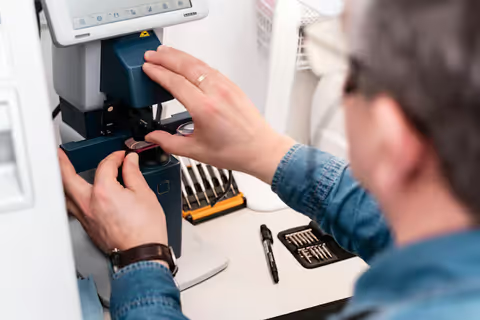
Torque testing machines are precision instruments used to measure the rotational force, or torque, applied to a fastener, component, or assembly. They help manufacturers confirm that products meet required tightening specifications before they leave the production line. Torque values are critical in industries where incorrect fastening can lead to mechanical failure, safety hazards, or product recalls.
What Are Torque Testing Machines
Torque testing machines are precision instruments used to measure the rotational force, or torque, applied to a fastener, component, or assembly. They help manufacturers confirm that products meet required tightening specifications before they leave the production line. Torque values are critical in industries where incorrect fastening can lead to mechanical failure, safety hazards, or product recalls.
These machines are widely used in automotive, aerospace, electronics, medical device, and industrial equipment manufacturing. By applying controlled rotational force and recording the resistance or output, torque testers verify whether a component, tool, or joint performs within an acceptable engineering range.
How Torque Testing Machines Work
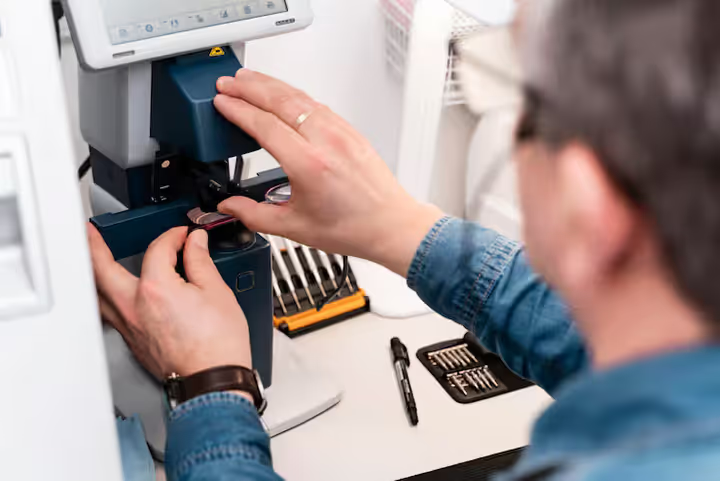
A torque testing machine typically applies a controlled rotational load to a test sample while a sensor, known as a torque transducer, measures the resulting force. The data is converted into readable units such as Newton-meters (Nm) or pound-inches (lb-in) and displayed on a digital interface or software dashboard.
Most machines follow this general sequence:
Basic Testing Process
- The sample, such as a bolt, screw, hinge, or motor shaft, is mounted securely in the machine
- A drive mechanism applies rotational force at a controlled speed
- A torque sensor captures real-time force data during rotation
- The system records peak torque, breakaway torque, or running torque depending on test type
- Results are compared against a preset tolerance range to determine pass or fail status
Some machines test static torque, which measures force at a fixed point, while others measure dynamic torque, capturing changes as an object rotates continuously.
Why Torque Testing Matters
Torque testing plays a direct role in product safety and reliability. In an automotive assembly, for example, a wheel lug nut tightened below specification can loosen during use, while over-tightening can damage threads or crack components. Torque testing machines remove guesswork by providing measurable, repeatable data.
Common Problems Torque Testing Solves
- Identifying under-torqued or over-torqued fasteners before assembly is completed
- Detecting inconsistent manufacturing quality across production batches
- Validating hand tools and power tools used in assembly lines
- Supporting compliance with industry and safety standards
- Reducing warranty claims linked to mechanical failure
Industries such as aerospace and medical device manufacturing rely heavily on torque verification because even small deviations can compromise safety-critical assemblies.
Types of Torque Testing Machines
Torque testers vary based on the application, force range, and testing method required.
Common Machine Types
- Digital torque testers – Provide electronic readouts and data logging for precise measurement
- Torque wrench calibrators – Used to verify and calibrate hand torque wrenches
- Rotary torque sensors – Measure torque on continuously rotating shafts, such as in motor testing
- Static torque testers – Measure torque at a single point without continuous rotation
- Bidirectional torque testers – Capable of measuring both clockwise and counterclockwise force
Selection depends on factors such as required torque range, sample size, and whether testing is performed manually or through automated production systems.
Key Components and Features
Modern torque testing machines share several core components that contribute to measurement accuracy and usability.
| Component | Function |
|---|---|
| Torque transducer | Converts rotational force into an electrical signal for measurement |
| Drive system | Applies controlled rotational input to the sample |
| Digital display or software | Shows real-time torque values and stores test data |
| Fixture or clamp | Holds the test sample securely during measurement |
| Calibration module | Ensures measurement accuracy against known reference standards |
Many current models also include data export features, allowing quality teams to integrate results into broader manufacturing analytics systems.
Real-World Use Cases
Torque testing machines are used across a wide range of manufacturing and quality control environments.
Where Torque Testing Is Applied
- Automotive assembly lines testing engine bolts, wheel fasteners, and suspension components
- Electronics manufacturing verifying screw torque on device housings
- Medical device production confirming surgical instrument and implant assembly precision
- Aerospace component testing for structural fastener reliability
- Furniture and appliance manufacturing checking hinge and joint durability
In each case, the machine provides objective data that supports engineering decisions and quality assurance documentation.
Recent Trends and Developments
Torque testing technology has continued to evolve alongside broader manufacturing automation trends. Over the past year, several developments have shaped the industry:
Notable Trends
- Increased integration of torque testers with Industry 4.0 systems, allowing real-time data transmission to centralized quality management platforms throughout 2025 and into 2026
- Growing adoption of wireless torque sensors that reduce cabling complexity on production lines
- Expanded use of software-based analytics for tracking torque trends across production batches, helping manufacturers detect drift before failures occur
- Rising demand for compact, portable torque testers suited to field calibration and on-site verification
- Continued emphasis on traceable calibration records to support audit and compliance requirements
These developments reflect a broader manufacturing shift toward connected, data-driven quality control rather than isolated, manual testing.
Relevant Standards and Regulations
Torque testing is guided by several recognized standards that help ensure consistency across industries and regions.
Common Standards Referenced
- ISO 6789 – Specifies requirements for hand torque tools, including wrenches and screwdrivers
- ASTM E74 – Provides practices for calibration of force-measuring instruments
- ISO/IEC 17025 – Establishes general requirements for calibration and testing laboratory competence
- Automotive industry-specific standards, such as those set by original equipment manufacturers for fastener torque specifications
Compliance with these standards is often required for suppliers working with automotive, aerospace, and medical device manufacturers, as documented calibration and testing records support audit readiness.
Tools and Learning Resources
For those researching or working with torque testing equipment, several categories of resources can support further learning.
Helpful Resources
- Manufacturer technical documentation and calibration guides from established torque equipment producers
- ISO and ASTM standard publications for detailed testing methodology
- Industry publications covering quality assurance and manufacturing metrology
- Online training modules offered by calibration laboratories and metrology associations
- Trade association resources from organizations focused on manufacturing quality standards
Reviewing manufacturer specifications alongside relevant ISO standards is generally the most reliable way to understand equipment capabilities and testing requirements.
Frequently Asked Questions
What is the difference between static and dynamic torque testing?
Static torque testing measures force at a fixed point without continuous rotation, while dynamic torque testing captures force changes during ongoing rotation, such as in a running motor.
How often should a torque testing machine be calibrated?
Calibration frequency depends on usage intensity and industry requirements, but many manufacturers follow annual calibration schedules, with more frequent checks in high-precision environments like aerospace or medical manufacturing.
What units are commonly used in torque measurement?
Newton-meters (Nm) and pound-inches (lb-in) are the most commonly used units, with the choice often depending on regional standards or industry convention.
Can torque testing machines test both fasteners and tools?
Yes. Many torque testers are designed to evaluate fasteners directly, while others, such as torque wrench calibrators, are built specifically to verify the accuracy of hand or power tools.
Why is torque testing important in automotive manufacturing?
Torque testing helps ensure that critical fasteners, such as those used in engines, wheels, and suspension systems, are tightened within safe and reliable ranges, reducing the risk of mechanical failure.
Conclusion
Torque testing machines play a foundational role in manufacturing quality control by providing measurable, repeatable data on rotational force. From automotive assembly to medical device production, these machines help confirm that fasteners and components meet required specifications, reducing the risk of mechanical failure and supporting regulatory compliance.
As manufacturing continues to adopt connected quality systems, torque testing technology is evolving to offer greater precision, traceability, and integration with broader production analytics. Understanding how these machines function and where they are applied provides a clearer picture of their role in maintaining safe, reliable products across industries.