Carton Folding Machines: Overview of Automated Folding Systems and Their Uses
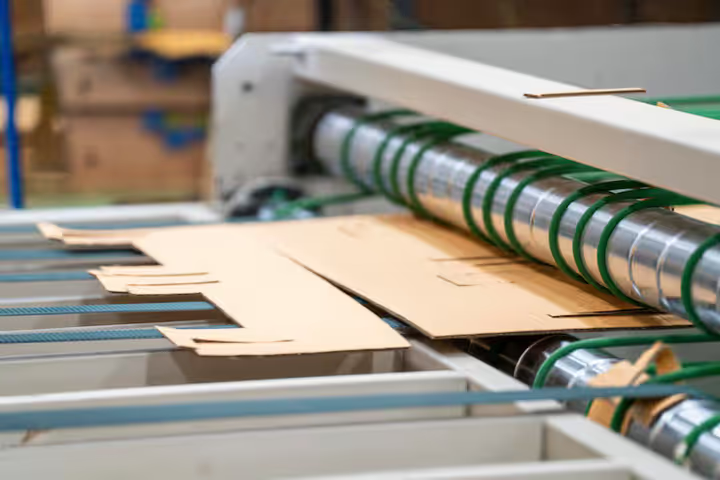
Carton folding machines are specialized industrial equipment designed to fold flat carton blanks into accurately shaped cartons for packaging applications. These machines play an essential role in modern manufacturing by automating one of the most important stages of product packaging.
Packaging industries rely on consistent carton shapes to protect products during storage, transportation, and retail display. Manual folding can be slow, inconsistent, and labor-intensive, especially in large-scale production environments. Carton folding machines improve accuracy, production speed, and packaging consistency while reducing material waste.
Today, these machines are widely used across industries such as food processing, pharmaceuticals, cosmetics, consumer electronics, personal care products, household goods, and industrial manufacturing.
How Carton Folding Machines Work
Most carton folding machines follow a systematic sequence to transform flat cardboard sheets into finished cartons.
The process generally includes:
- Feeding flat carton blanks into the machine.
- Positioning the blank using guides and sensors.
- Folding pre-scored panels along designated fold lines.
- Applying adhesive or mechanical locking where required.
- Compressing folded sections for proper bonding.
- Delivering completed cartons for filling or further packaging operations.
Modern systems often integrate programmable controllers, automated sensors, and conveyor systems that maintain continuous production with minimal interruptions.
Table: Common Types of Carton Folding Machines
| Machine Type | Typical Application | Main Advantage |
|---|---|---|
| Automatic Carton Folding Machine | High-volume manufacturing | High production speed |
| Semi-Automatic Folding Machine | Medium-scale production | Flexible operation |
| Folder Gluer Machine | Folding and adhesive application | Accurate carton assembly |
| Multi-Function Folding Machine | Multiple carton styles | Greater versatility |
| High-Speed Folding Machine | Large packaging facilities | Maximum throughput |
| Compact Folding Machine | Small production environments | Space-efficient design |
Why Carton Folding Machines Are Important
Packaging has become increasingly important across manufacturing industries. Products require secure, uniform, and attractive cartons that protect contents while supporting efficient logistics.
Carton folding machines contribute by:
- Increasing production consistency
- Reducing manual handling
- Improving packaging accuracy
- Supporting continuous manufacturing
- Minimizing carton damage
- Reducing packaging material waste
- Enhancing workplace efficiency
- Supporting quality control standards
These benefits make automated carton folding equipment an essential component of modern production lines.
Real-World Applications
Carton folding machines are used across numerous industries where standardized packaging is required.
Food and Beverage
- Cereal boxes
- Frozen food cartons
- Beverage packaging
- Bakery packaging
- Snack product cartons
Pharmaceutical Manufacturing
- Medicine cartons
- Medical device packaging
- Healthcare product cartons
- Nutritional supplement boxes
Cosmetics and Personal Care
- Skincare packaging
- Perfume cartons
- Makeup product boxes
- Personal hygiene packaging
Consumer Electronics
- Mobile accessory cartons
- Electronic device packaging
- Computer accessories
- Home appliance packaging
Industrial Products
- Spare parts packaging
- Hardware cartons
- Industrial component boxes
- Equipment accessory packaging
Key Features
Modern carton folding machines include numerous advanced features that improve production efficiency.
Automation Systems
- PLC control systems
- Touchscreen interfaces
- Automated product settings
- Digital production monitoring
Precision Folding
- Accurate fold alignment
- Consistent folding pressure
- Adjustable folding mechanisms
- Stable carton dimensions
Speed Control
- Variable production speed
- Automatic synchronization
- Continuous feeding
- Production optimization
Safety Functions
- Emergency stop systems
- Protective covers
- Sensor-based detection
- Automatic shutdown during faults
Quality Monitoring
- Vision inspection systems
- Fold verification
- Adhesive monitoring
- Error detection sensors
Main Components
A carton folding machine consists of several interconnected components.
Feeding System
Introduces flat carton blanks into the machine while maintaining consistent alignment.
Conveyor System
Moves cartons smoothly between processing stations.
Folding Mechanism
Uses guides, rollers, belts, and folding arms to create accurate folds.
Adhesive Unit
Applies glue where permanent carton assembly is required.
Compression Section
Maintains pressure until adhesive bonding is complete.
Control Panel
Allows operators to configure machine settings, production speed, and diagnostics.
Sensors
Monitor carton position, machine status, and production quality throughout operation.
Problems These Machines Help Solve
Packaging operations often encounter challenges that affect productivity and product quality.
Carton folding machines help address:
- Uneven manual folding
- Slow packaging production
- Carton misalignment
- Excess packaging waste
- Inconsistent product presentation
- Production bottlenecks
- Increased labor dependency
- Packaging quality variations
Automation significantly improves repeatability while reducing operational interruptions.
Factors to Consider When Selecting a Machine
Manufacturers evaluate several technical aspects before integrating a carton folding machine into a production line.
Production Capacity
The machine should match expected packaging volumes without creating bottlenecks.
Carton Compatibility
Different machines support varying carton sizes, board thicknesses, and folding styles.
Automation Level
Facilities may require semi-automatic, fully automatic, or integrated packaging solutions.
Integration
Compatibility with existing packaging lines, conveyors, filling equipment, and labeling systems is essential.
Maintenance Requirements
Machines designed for easy cleaning and component replacement typically reduce production downtime.
Maintenance Best Practices
Routine maintenance helps ensure reliable machine performance and longer equipment life.
Daily Maintenance
- Remove dust and paper particles
- Inspect folding guides
- Check adhesive systems
- Verify sensor operation
Weekly Maintenance
- Lubricate moving components
- Tighten mechanical fasteners
- Inspect conveyor belts
- Clean rollers
Periodic Maintenance
- Calibrate sensors
- Update control software
- Replace worn belts
- Inspect electrical systems
- Verify production accuracy
Preventive maintenance contributes to stable production quality and minimizes unexpected interruptions.
Recent Trends and Developments (2025–2026)
Packaging automation continues to evolve with new technologies improving efficiency and sustainability.
Some notable developments include:
- Increased adoption of AI-assisted machine monitoring for predictive maintenance.
- Greater use of machine vision systems to improve fold accuracy and defect detection.
- Expansion of Industry 4.0 connectivity, allowing production data to be monitored remotely.
- Improved energy-efficient drive systems that reduce electricity consumption.
- Growth in recyclable and fiber-based packaging materials requiring adaptable folding technologies.
- Enhanced human-machine interfaces featuring larger touchscreens and real-time diagnostics.
- More modular machine designs that simplify upgrades and production flexibility.
These developments reflect the industry's continued focus on smart manufacturing, operational efficiency, and sustainable packaging practices.
Standards and Regulations
Packaging machinery is commonly designed to support internationally recognized manufacturing and safety standards.
Depending on industry and region, organizations may consider:
- ISO 9001 Quality Management Systems
- ISO 22000 for food packaging environments
- Good Manufacturing Practices (GMP) in pharmaceutical production
- Machinery safety standards based on ISO 12100
- Occupational safety regulations for industrial equipment
- Environmental initiatives encouraging recyclable packaging materials and waste reduction
Organizations should follow local regulatory requirements applicable to their manufacturing operations.
Useful Tools, Platforms, and Learning Resources
Professionals interested in carton folding technology can benefit from a variety of educational resources.
Industry Resources
- Packaging engineering publications
- Manufacturing technology journals
- Industrial automation magazines
- Packaging association technical documents
Software
- CAD software for carton design
- PLC programming platforms
- Manufacturing execution systems (MES)
- Production monitoring software
- Industrial simulation tools
Learning Opportunities
- Packaging engineering courses
- Industrial automation training
- Manufacturing process workshops
- Mechanical engineering reference books
- Quality management certification programs
Continuous learning helps engineers, operators, and production managers stay informed about evolving packaging technologies.
Frequently Asked Questions
What is a carton folding machine?
A carton folding machine is industrial equipment that automatically folds flat carton blanks into finished cartons used for packaging products in manufacturing and distribution.
Which industries commonly use carton folding machines?
They are widely used in food processing, pharmaceuticals, cosmetics, consumer goods, electronics, household products, and industrial manufacturing.
What materials can these machines process?
Most machines process paperboard, folding cartons, coated cardboard, and similar packaging materials designed with pre-scored folding lines.
How do automated machines improve packaging quality?
Automation produces consistent folds, reduces human error, improves production speed, minimizes waste, and supports standardized packaging across large production volumes.
Why is preventive maintenance important?
Regular maintenance helps maintain machine accuracy, reduces unexpected downtime, extends equipment lifespan, and supports reliable production performance.
Conclusion
Carton folding machines have become an essential part of modern packaging operations by delivering accurate, repeatable, and efficient carton assembly. Their ability to automate folding processes improves productivity, supports consistent packaging quality, and reduces material waste across diverse manufacturing environments.
As packaging technology continues to advance through artificial intelligence, machine vision, digital monitoring, and sustainable materials, carton folding machines are becoming more adaptable and intelligent. Understanding their operating principles, components, applications, maintenance requirements, and industry standards enables manufacturers and packaging professionals to improve operational efficiency while meeting evolving production and quality expectations.