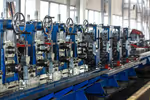
Overview of Surgical Mask Making Machines, Components, and Modern Trends
Surgical mask making machines are automated industrial systems designed to manufacture disposable medical masks using multiple layers of specialized materials. These machines are used to transform raw materials such as nonwoven fabric, melt-blown filtration layers, and elastic components into finished protective masks through controlled manufacturing processes.
The primary purpose of these machines is to support consistent production quality, improve manufacturing efficiency, and maintain hygiene standards required for medical protective equipment. They are widely used in healthcare manufacturing facilities, laboratories, and industrial production environments where reliable mask output is required.
Modern surgical mask making machines combine mechanical systems, electronic controls, and automation technologies to perform multiple steps, including fabric feeding, layer alignment, ultrasonic welding, nose wire placement, ear loop attachment, and final inspection.
Working Process and Machine Structure
A surgical mask making machine operates through a sequence of automated stages. The design may vary depending on production requirements, but most systems follow a similar structure.
Main Manufacturing Process
- Material feeding: Multiple fabric layers are guided into the machine through controlled rollers.
- Layer alignment: Different layers are positioned accurately to maintain mask structure.
- Folding process: The machine creates pleats that allow masks to expand and fit different face shapes.
- Nose wire installation: A flexible metal strip is inserted to improve fitting around the nose area.
- Ultrasonic welding: High-frequency vibrations join fabric layers without traditional stitching.
- Ear loop attachment: Elastic loops are connected using automated welding systems.
- Cutting and shaping: Individual masks are separated into finished units.
- Quality inspection: Sensors and monitoring systems check production accuracy.
The machine structure generally includes material holders, conveyor systems, ultrasonic welding units, control panels, pneumatic components, sensors, and automation software.
Importance and Industrial Applications
Surgical mask making machines play an important role in medical manufacturing by supporting the availability of protective equipment during regular healthcare activities and emergency situations.
Reliable production systems help manufacturers maintain consistent product specifications, reduce manual handling, and improve process control. Automation also supports better workplace hygiene by limiting direct human contact during production.
Common Applications
- Hospitals and healthcare supply chains
- Pharmaceutical manufacturing environments
- Research laboratories
- Medical equipment production facilities
- Industrial workplaces requiring protective face coverings
- Emergency preparedness programs
These machines help address challenges such as increasing demand for protective equipment, maintaining quality standards, and achieving scalable manufacturing operations.
Key Features and Components
Different surgical mask making machines include various features based on their design, automation level, and production capacity.
Important Machine Components
- Ultrasonic welding system: Uses vibration technology to bond fabric layers securely.
- Programmable control system: Allows operators to manage machine settings and production parameters.
- Material feeding unit: Maintains smooth movement of fabric rolls through the machine.
- Sensor technology: Detects material positioning and production errors.
- Pneumatic mechanisms: Support movement and precise component handling.
- Conveyor system: Transfers masks through different production stages.
- Inspection mechanisms: Assist in maintaining manufacturing consistency.
Types of Surgical Mask Making Machines
| Machine Type | Main Function | Common Usage |
|---|---|---|
| Automatic mask production line | Handles complete mask manufacturing steps | Large-scale medical production |
| Semi-automatic mask machine | Combines automated and manual operations | Smaller manufacturing environments |
| Ear loop welding machine | Attaches elastic loops to masks | Mask finishing operations |
| Folding mask machine | Creates layered and pleated mask structures | Medical mask production |
Materials Used in Surgical Mask Production
The performance of a surgical mask depends on the quality and structure of its materials. Manufacturing machines are designed to process different layers that serve specific purposes.
Common Materials
- Nonwoven polypropylene fabric: Forms the outer and inner protective layers.
- Melt-blown fabric: Provides filtration capability.
- Elastic materials: Used for ear loops.
- Nose wire components: Improve facial fitting.
- Packaging materials: Protect finished products during handling and storage.
Material selection must follow healthcare manufacturing requirements and applicable regulatory guidelines.
Recent Developments and Technology Trends
Surgical mask manufacturing technology has continued evolving with improvements in automation, monitoring, and digital control systems.
Recent developments from 2025 and 2026 include greater use of smart manufacturing methods, improved sensor integration, and advanced monitoring systems. Manufacturers are increasingly adopting connected production equipment that can collect operational data and support quality management.
Current Industry Trends
- Increased automation for higher production consistency
- Digital control panels with real-time monitoring
- Improved energy management systems
- Integration of artificial intelligence-based inspection technologies
- Better traceability through manufacturing data systems
These developments support more efficient production planning and improved quality assurance practices.
Regulations and Quality Standards
Surgical mask production is influenced by healthcare regulations and quality standards that vary by region. Manufacturers must follow applicable requirements related to material performance, filtration efficiency, safety, and manufacturing practices.
Examples of Relevant Standards
- ASTM standards for medical face mask performance in many regions
- EN standards used for protective equipment classification in Europe
- ISO quality management systems for medical manufacturing organizations
- Local healthcare authority guidelines for medical device production
Manufacturers should maintain proper documentation, testing procedures, and quality control processes to ensure compliance with applicable regulations.
Useful Tools, Platforms, and Learning Resources
Professionals working with surgical mask manufacturing technology can use various resources to understand machine operation, automation systems, and quality practices.
Helpful Resources
- Industrial automation training platforms for machine control knowledge
- Medical device regulatory databases for compliance information
- Manufacturing technology publications for industry updates
- Engineering software resources for production system planning
- Quality management resources for manufacturing standards
These resources help engineers, operators, and researchers improve their understanding of medical manufacturing processes.
Advantages of Automated Surgical Mask Manufacturing
Automated mask production systems provide several operational benefits for manufacturing environments.
Major Advantages
- Consistent product quality through controlled processes
- Reduced manual production requirements
- Faster manufacturing cycles
- Better material management
- Improved process monitoring
- Easier integration with quality control systems
Automation helps manufacturers maintain stable production while meeting healthcare industry requirements.
Challenges in Surgical Mask Machine Operation
Although automated systems improve production capabilities, manufacturers must manage several challenges.
Common Challenges
- Regular equipment maintenance requirements
- Need for skilled technical knowledge
- Material quality variations
- Production calibration requirements
- Compliance with changing healthcare standards
Proper maintenance schedules, operator training, and quality monitoring help reduce operational issues.
Future Outlook of Surgical Mask Manufacturing Technology
The future of surgical mask making machines is expected to focus on smarter automation, sustainability, and improved manufacturing intelligence.
Future systems may include advanced robotics, improved artificial intelligence inspection tools, and environmentally responsible material processing methods. Digital manufacturing networks may also improve production visibility and quality management.
As healthcare requirements continue evolving, manufacturers are likely to focus on flexible production systems that can adapt to different mask designs and changing industry needs.
Frequently Asked Questions
What is a surgical mask making machine?
A surgical mask making machine is an automated manufacturing system that converts raw materials into finished medical masks through processes such as fabric layering, welding, cutting, and assembly.
How does ultrasonic welding work in mask production?
Ultrasonic welding uses high-frequency vibrations to create heat at contact points between fabric layers, allowing materials to bond without traditional stitching methods.
What materials are commonly used in surgical mask production?
Common materials include nonwoven polypropylene fabric, melt-blown filtration layers, elastic components, and nose wire materials designed for protective mask structures.
Are surgical mask making machines fully automated?
Many modern systems are highly automated and can perform multiple production steps automatically. However, some models may require operator involvement for setup, monitoring, and maintenance activities.
What factors affect the quality of masks produced by these machines?
Mask quality depends on material selection, machine calibration, production conditions, filtration requirements, welding accuracy, and compliance with healthcare standards.
Conclusion
Surgical mask making machines are important manufacturing systems that support the production of protective medical equipment through automated and controlled processes. These machines combine mechanical engineering, automation technology, and quality management practices to create consistent mask products.
Understanding their working principles, components, applications, and regulatory considerations helps professionals make informed decisions about medical manufacturing technology. With ongoing developments in smart automation and digital monitoring, surgical mask production systems continue to become more efficient, reliable, and adaptable for future healthcare needs.