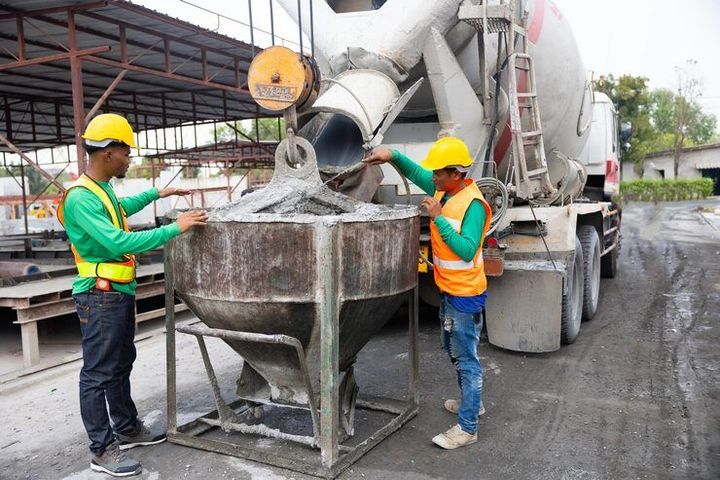
Industrial Concrete Mixer Machines Guide With Mixing Process And Construction Applications
Industrial concrete mixer machines are essential construction equipment designed to produce uniform concrete by combining cement, aggregates, water, and supplementary materials into a consistent mixture. These machines play a vital role in infrastructure development, commercial construction, industrial facilities, transportation projects, and residential buildings by ensuring that concrete achieves the required workability, strength, and durability. Modern concrete mixers integrate precision engineering, automated controls, intelligent monitoring, and efficient mixing technology to improve productivity while maintaining consistent concrete quality throughout large-scale construction projects.
According to global construction engineering research, concrete mixing technology continues to evolve through automated batching systems, digital moisture monitoring, programmable mixing controls, intelligent weighing equipment, and predictive maintenance solutions. These innovations improve material accuracy, reduce waste, enhance production efficiency, and support consistent concrete quality. Modern concrete production facilities increasingly integrate mixer machines with automated batching plants and digital control systems to optimize construction operations.
Understanding industrial concrete mixer machines helps civil engineers, construction managers, equipment operators, maintenance professionals, project planners, and engineering students appreciate the importance of controlled concrete production. Learning about machine components, working principles, mixing technology, and construction applications provides valuable knowledge about one of the most important systems supporting modern construction projects.
Importance Of Industrial Concrete Mixer Machines
Industrial concrete mixer machines are widely used in commercial buildings, industrial facilities, bridges, highways, tunnels, dams, airports, residential developments, precast manufacturing plants, and infrastructure projects. These sectors require uniform concrete mixtures to ensure structural strength, durability, and long-term performance.
Proper concrete mixing improves consistency by evenly distributing cement, aggregates, and water throughout the mixture. Uniform mixing reduces material segregation while supporting predictable curing characteristics and structural performance after placement.
Engineering Insight:
Construction engineers frequently observe that concrete quality depends more on accurate material proportioning and sufficient mixing time than increasing mixer capacity. Controlled batching and consistent mixing generally produce stronger and more reliable concrete than simply accelerating production speed.
Recent Developments In Concrete Mixing Technology
Modern concrete mixing technology has advanced through computerized batching systems, automatic moisture sensors, digital weighing equipment, variable-speed mixing drives, and real-time production monitoring. These technologies improve measurement accuracy while supporting efficient concrete production across different project requirements.
Machine monitoring systems continuously supervise motor performance, drum rotation, material loading, mixing duration, temperature, and maintenance conditions. Predictive maintenance software analyzes equipment data to reduce unexpected downtime while improving operational reliability.
Industrial automation has also expanded throughout concrete production facilities. Automated conveyors, aggregate feeding systems, cement storage equipment, water dosing systems, and intelligent production software now operate together with mixer machines to improve manufacturing efficiency and production consistency.
Industrial Concrete Mixer Machine Comparison
| Mixer Type | Primary Advantage | Common Construction Application |
|---|---|---|
| Drum Concrete Mixer | Continuous mixing | General Construction |
| Twin Shaft Mixer | High mixing efficiency | Ready-Mix Production |
| Pan Mixer | Uniform blending | Precast Components |
| Planetary Mixer | Precision mixing | High-Performance Concrete |
| Continuous Mixer | High production output | Infrastructure Projects |
| Mobile Concrete Mixer | Flexible transportation | Remote Construction Sites |
Each mixer type serves different construction requirements. Drum mixers support general applications, twin shaft mixers improve production efficiency, pan mixers provide consistent blending, planetary mixers handle specialized concrete mixtures, continuous mixers maximize output, and mobile mixers improve project flexibility.
Working Process And Mixing Technology
Concrete production begins with careful selection and measurement of raw materials including cement, aggregates, water, and supplementary materials. Accurate batching ensures the correct proportions required to achieve specified concrete properties while maintaining production consistency throughout the construction project.
Materials enter the concrete mixer according to a controlled loading sequence. Rotating mixing blades, paddles, or drums continuously move materials throughout the mixing chamber, repeatedly lifting, folding, and blending the ingredients until a uniform concrete mixture is produced. Controlled mixing distributes cement paste evenly around aggregate particles while improving overall workability.
Modern concrete mixer machines utilize programmable control systems to regulate material loading, mixing duration, drum speed, water addition, discharge timing, and production monitoring. Automated controls allow operators to reproduce consistent mixing conditions across multiple production batches while reducing manual adjustments.
Practical Engineering Observation:
Construction evaluations frequently demonstrate that maintaining consistent moisture content within aggregates significantly improves concrete quality. Variations in aggregate moisture may affect workability, strength development, and production consistency if not accurately monitored during batching.
Once the mixing cycle is completed, discharge systems transfer fresh concrete into transport vehicles, pumps, buckets, or placement equipment depending on project requirements. Efficient discharge minimizes material loss while maintaining continuous production flow throughout construction operations.
Routine preventive maintenance remains essential for reliable mixer performance. Regular inspection of mixing blades, drums, gearboxes, bearings, motors, hydraulic systems, electrical controls, sensors, lubrication systems, and discharge mechanisms helps maintain production efficiency while reducing unexpected equipment failures. Cleaning the mixer after each production cycle also prevents hardened concrete buildup and preserves mixing performance.
Construction Applications
Industrial concrete mixer machines support commercial construction, industrial buildings, residential developments, bridges, highways, tunnels, airports, dams, marine structures, precast manufacturing, renewable energy infrastructure, and transportation projects.
Commercial construction utilizes concrete mixers for foundations, columns, beams, floor slabs, retaining walls, and structural components requiring consistent concrete quality. Infrastructure projects depend on high-capacity mixers to produce large volumes of concrete for roads, bridges, tunnels, and public works.
Precast manufacturing facilities use precision mixers for producing concrete panels, pipes, beams, blocks, and architectural components requiring accurate material consistency. Industrial facilities, renewable energy installations, marine engineering projects, and heavy civil construction also rely on advanced concrete mixing equipment to maintain reliable structural performance.
Professional Insight:
Successful concrete production depends on integrating batching accuracy, mixing efficiency, equipment maintenance, material quality, moisture control, and production monitoring into one coordinated construction process. Consistent engineering practices generally contribute more to concrete performance than mixer capacity alone.
Frequently Asked Questions
What is an industrial concrete mixer machine?
An industrial concrete mixer machine is construction equipment designed to blend cement, aggregates, water, and other materials into a uniform concrete mixture for building and infrastructure projects.
What are the main types of concrete mixers?
Common concrete mixers include drum mixers, twin shaft mixers, pan mixers, planetary mixers, continuous mixers, and mobile concrete mixers designed for different construction applications.
How does a concrete mixer machine work?
Measured materials enter the mixing chamber where rotating blades or drums continuously blend the ingredients until a uniform concrete mixture is produced before controlled discharge.
Which industries commonly use concrete mixer machines?
Construction, infrastructure development, precast manufacturing, transportation projects, industrial facilities, renewable energy, marine engineering, residential construction, and commercial building sectors widely use concrete mixers.
Why is preventive maintenance important?
Routine maintenance improves mixing consistency, extends equipment lifespan, reduces unexpected downtime, preserves production efficiency, maintains concrete quality, and supports reliable construction operations.
Conclusion
Industrial concrete mixer machines remain essential construction equipment because they provide consistent concrete quality, reliable material blending, efficient production, and dependable performance across numerous construction sectors. Advances in automated batching, intelligent controls, digital monitoring, and precision engineering continue improving concrete production throughout modern construction projects.
From an engineering perspective, successful concrete mixing depends on accurate batching, controlled moisture management, efficient mixing technology, preventive maintenance, continuous quality monitoring, and proper equipment operation. As construction technology continues advancing, industrial concrete mixer machines will remain fundamental to producing durable, high-quality concrete for future infrastructure and building developments.