Turret Milling Machines Guide: Types, Uses, Working Principles, and Industrial Applications
Turret milling machines are among the most widely used machine tools in modern manufacturing and engineering. They are designed to remove material from a workpiece by rotating a cutting tool while the workpiece remains securely positioned on a movable table. Their flexible design makes them suitable for producing accurate parts in industries ranging from automotive manufacturing to aerospace engineering.
As industries continue adopting advanced manufacturing methods, turret milling machines remain relevant because they combine precision with adaptability. Understanding how these machines work helps students, engineers, manufacturers, and technical professionals appreciate their role in today's industrial environment.
What Are Turret Milling Machines?
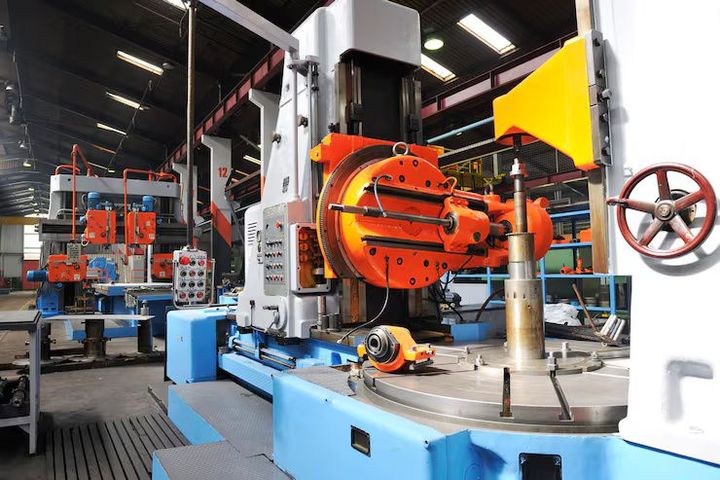
A turret milling machine is a vertical milling machine in which the spindle remains stationary while the worktable moves in different directions to remove material from a workpiece. The machine's movable head allows operators to perform a variety of machining operations with improved flexibility.
These machines were developed to provide greater machining accuracy and simplify complex manufacturing tasks. Over time, turret milling machines have become essential for producing components with precise dimensions and smooth finishes.
Unlike heavier bed-type milling machines designed mainly for high-volume production, turret milling machines are well suited for precision machining, prototype development, maintenance work, and customized manufacturing.
Why Do Turret Milling Machines Exist?
Manufacturers require equipment capable of producing accurate components while allowing different machining operations on a single machine. Turret milling machines meet this need by offering versatility, precise control, and ease of operation.
They help create components used in:
- Industrial machinery
- Automotive parts
- Aerospace components
- Medical instruments
- Educational training laboratories
- Tool and die manufacturing
- Research and development projects
Their ability to perform multiple machining processes reduces setup time and improves production efficiency.
Importance
Why Turret Milling Machines Matter Today
Modern manufacturing depends on precision. Even small dimensional errors can affect product quality, safety, and performance. Turret milling machines help achieve high accuracy while supporting various machining operations.
Industries continue using these machines because they:
- Produce highly accurate parts
- Support prototype manufacturing
- Handle low- and medium-volume production
- Improve machining flexibility
- Reduce production errors
- Support precision engineering
Who Uses Turret Milling Machines?
Many professionals work with turret milling machines, including:
- Mechanical engineers
- Manufacturing engineers
- Machine operators
- Technical educators
- Tool designers
- Production planners
- Maintenance specialists
Educational institutions also use these machines to teach machining fundamentals before students transition to automated manufacturing systems.
Problems They Help Solve
Turret milling machines address several manufacturing challenges:
- Precise material removal
- Complex component machining
- Multi-directional cutting
- Prototype development
- Tool manufacturing
- Component repair
- Small-batch production
Their flexibility allows manufacturers to adapt quickly to changing production requirements.
Types of Turret Milling Machines
Different applications require different machine configurations.
Vertical Turret Milling Machine
This is the most common type. The spindle is positioned vertically, making it suitable for drilling, face milling, slotting, and contour machining.
Ram-Type Turret Milling Machine
The machine head is mounted on a movable ram, allowing greater positioning flexibility. It is commonly used for complex machining tasks.
Manual Turret Milling Machine
Operated entirely by the machinist, these machines remain widely used in educational institutes, maintenance workshops, and prototype manufacturing.
CNC-Assisted Turret Milling Machine
Modern versions include digital controls that improve machining accuracy, repeatability, and productivity while reducing manual adjustments.
Working Principles
The working principle of a turret milling machine is based on rotating cutting tools removing material from a stationary workpiece.
The machining process generally includes:
| Step | Process |
|---|---|
| Material Positioning | Workpiece is securely clamped on the table |
| Tool Selection | Appropriate milling cutter is installed |
| Machine Setup | Speed and feed settings are adjusted |
| Machining | Rotating cutter removes material |
| Inspection | Dimensions are checked for accuracy |
| Finishing | Final surface quality is verified |
Different cutting tools perform different operations depending on the desired shape and finish.
Common machining operations include:
- Face milling
- End milling
- Slot milling
- Keyway cutting
- Drilling
- Reaming
- Boring
- Chamfering
The movable worktable allows movement along multiple axes for improved machining precision.
Industrial Applications
Turret milling machines support numerous manufacturing industries.
Automotive Industry
They produce:
- Engine components
- Gear housings
- Brackets
- Fixtures
- Prototype vehicle parts
Aerospace Manufacturing
High-precision machining is essential for:
- Structural components
- Instrument panels
- Mounting brackets
- Precision fixtures
Medical Equipment
Manufacturers use turret milling machines to create:
- Surgical instruments
- Medical device components
- Laboratory equipment
- Precision housings
Tool and Die Industry
Toolmakers manufacture:
- Dies
- Molds
- Jigs
- Fixtures
- Gauges
Educational Institutions
Technical colleges use turret milling machines for:
- Practical machining education
- Manufacturing demonstrations
- Engineering laboratory training
General Engineering
General manufacturing facilities produce:
- Machine components
- Replacement parts
- Mechanical assemblies
- Industrial equipment
Advantages of Turret Milling Machines
Several features contribute to their widespread use.
- High machining accuracy
- Excellent versatility
- Easy setup
- Smooth surface finishes
- Flexible tool positioning
- Suitable for prototype production
- Reliable performance
- Long operational life with proper maintenance
These advantages make turret milling machines practical for a wide range of manufacturing applications.
Recent Updates
Manufacturing technology continues evolving, and turret milling machines have also improved significantly during 2025–2026.
Recent developments include:
Digital Readout Systems
Modern machines increasingly include digital measurement systems that improve positioning accuracy and reduce measurement errors.
Energy-Efficient Designs
Manufacturers are developing machines with improved motor efficiency and reduced power consumption to support sustainable manufacturing.
Improved Safety Features
Newer models incorporate:
- Enhanced emergency stop systems
- Better spindle protection
- Improved guarding
- Safer operator controls
Smart Manufacturing Integration
Many facilities now integrate turret milling machines into digital production environments where machining data supports production planning and quality management.
Better Cutting Tools
Advancements in cutting tool materials continue improving machining performance, surface finish, and tool life across different industrial applications.
These developments help manufacturers achieve higher productivity while maintaining consistent machining quality.
Laws or Policies
The operation of turret milling machines is influenced by industrial safety regulations and manufacturing standards that vary by country.
Common regulatory areas include:
Workplace Safety Regulations
Industrial facilities are expected to provide:
- Machine guarding
- Emergency stop systems
- Personal protective equipment
- Safe operating procedures
Occupational Health Standards
Employers typically implement safety training programs covering:
- Machine operation
- Hazard identification
- Safe material handling
- Emergency response
Quality Management Standards
Many manufacturers follow internationally recognized quality management frameworks to improve consistency and product reliability.
Environmental Regulations
Manufacturing facilities often implement policies related to:
- Metal recycling
- Waste management
- Coolant disposal
- Energy conservation
Compliance helps improve workplace safety while supporting responsible manufacturing practices.
Tools and Resources
Various general resources help individuals learn about turret milling machines and machining practices.
Useful learning resources include:
- Engineering calculation tools
- Machining parameter calculators
- Feed and speed reference charts
- CAD software
- CAM software
- Technical drawing templates
- Manufacturing process checklists
- Machine maintenance schedules
- Engineering handbooks
- Industrial safety guides
- Technical training manuals
- Measurement conversion calculators
These resources assist students, engineers, technicians, and manufacturers in improving machining knowledge and operational efficiency.
Frequently Asked Questions
What is the main purpose of a turret milling machine?
A turret milling machine removes material from a workpiece with high precision, allowing manufacturers to create accurate mechanical components for many industries.
Which industries commonly use turret milling machines?
Automotive, aerospace, medical equipment, electronics, tooling, education, research, and general engineering industries regularly use turret milling machines.
What materials can be machined?
These machines commonly process steel, aluminum, brass, copper, cast iron, plastics, composites, and several engineering alloys depending on the cutting tool used.
What is the difference between a turret milling machine and a bed milling machine?
A turret milling machine provides greater flexibility for precision work and prototype production, while a bed milling machine is generally designed for heavier machining and higher production volumes.
Why is maintenance important?
Regular maintenance helps maintain machining accuracy, extends machine life, improves safety, reduces unexpected downtime, and supports consistent manufacturing quality.
Conclusion
Turret milling machines remain an essential part of modern manufacturing because they combine precision, flexibility, and reliable performance. Their ability to perform multiple machining operations makes them suitable for industries ranging from automotive and aerospace to medical manufacturing, education, and general engineering.