Precision Grinding Machines: Complete Technology and Applications Guide
Precision grinding machines are advanced machine tools designed to remove small amounts of material from a workpiece using an abrasive grinding wheel. Unlike conventional cutting processes, grinding focuses strongly on dimensional accuracy, surface finish, and geometric consistency.
Grinding is often used toward the end of a manufacturing process because it can refine a component after operations such as turning, milling, forging, or heat treatment. It is particularly useful when a component requires tight dimensional control or a carefully controlled surface.
A typical precision grinding system can include:
- Grinding wheel and spindle
- Workholding or clamping system
- CNC control system
- Coolant delivery equipment
- Dressing equipment
- Measuring and inspection systems
- Sensors for process monitoring
- Automated loading and unloading equipment
Different machines are designed for different geometries. Common categories include cylindrical grinding machines, surface grinding machines, centerless grinders, internal grinding machines, tool and cutter grinders, and specialized CNC grinding systems.
The abrasive wheel is an important part of the process. Depending on the application, grinding wheels may use conventional abrasives or superabrasive materials such as diamond and cubic boron nitride.
The basic objective remains the same: remove controlled amounts of material while maintaining the required dimensional, geometric, and surface characteristics.
Why Precision Grinding Matters in Modern Manufacturing
Precision grinding is important because many industrial components must function reliably within closely controlled dimensional limits. Even a small geometric variation can influence fit, movement, vibration, sealing, or contact between components.
The technology is widely relevant to industries such as:
- Automotive manufacturing
- Aerospace production
- Medical equipment manufacturing
- Tool and die production
- Bearing manufacturing
- Semiconductor equipment
- Energy equipment
- Industrial machinery
- Robotics and automation
- Precision engineering
Grinding can address several manufacturing requirements at once. It can improve surface quality, correct small dimensional variations, and produce accurate cylindrical, flat, internal, or complex surfaces.
For example, bearing components require carefully controlled dimensions and surface characteristics. Similarly, gears, shafts, molds, cutting tools, hydraulic components, and precision mechanical parts may require grinding after earlier manufacturing operations.
Another important factor is repeatability. CNC grinding machines can store programmed machining parameters and follow controlled movements. This can help manufacturers maintain more consistent results across repeated production cycles.
Precision Grinding and CNC Technology
CNC technology has changed the way grinding operations are planned and controlled. Instead of relying entirely on manual adjustments, CNC systems can coordinate machine axes, spindle movement, dressing operations, and measurement functions.
Modern systems may also integrate automatic compensation. If measurement data indicates gradual dimensional changes, the control system can use predetermined compensation strategies to maintain process consistency.
This makes precision grinding particularly relevant for applications where dimensional control and repeatability are important.
Main Types of Precision Grinding Machines
The correct machine depends on the shape, material, tolerance requirements, and surface characteristics of the workpiece.
| Machine Type | Typical Application | Main Characteristic |
|---|---|---|
| Cylindrical Grinder | Shafts and round components | External cylindrical surfaces |
| Internal Grinder | Bores and internal surfaces | Internal diameter finishing |
| Surface Grinder | Flat components | Controlled flat surfaces |
| Centerless Grinder | Round production parts | Grinding without traditional centers |
| Tool Grinder | Cutting tools | Tool geometry and edge finishing |
| CNC Grinder | Complex precision parts | Programmable multi-axis control |
Cylindrical Grinding Machines
Cylindrical grinding machines are commonly used for external round surfaces. They can process shafts, pins, bearing components, sleeves, and similar parts.
Depending on the configuration, cylindrical grinders may perform plunge grinding, traverse grinding, or specialized operations.
Surface Grinding Machines
Surface grinders are designed primarily for producing accurate flat surfaces. A grinding wheel moves across the workpiece while controlled material removal produces the required surface condition.
These machines are common for plates, dies, fixtures, machine components, and other flat parts.
Internal Grinding Machines
Internal grinders process holes and internal cylindrical surfaces. They are useful when a bore requires accurate diameter, geometry, and surface characteristics.
Centerless Grinding Machines
Centerless grinding supports high-volume production of cylindrical components without holding the workpiece between traditional centers. The process uses a grinding wheel, regulating wheel, and supporting arrangement to control the workpiece.
Tool and Cutter Grinding Machines
Tool grinders are used to manufacture and maintain cutting tools. They can produce or restore specific geometries on drills, milling cutters, reamers, and other precision tools.
Recent Developments in Grinding Technology
Grinding technology has been moving toward connected, automated, and data-driven manufacturing. GrindingHub 2026, held in Stuttgart in June 2026, highlighted this direction, with attention placed on integrated process chains, measurement systems, sensors, automation, digital feedback, and process monitoring.
One notable development is the increasing integration of measurement and process control. Instead of treating grinding as an isolated machine operation, manufacturers are connecting machine data, tool condition information, inspection results, and process parameters.
Artificial intelligence is also becoming relevant as an analysis and assistance technology. Potential applications include identifying process deviations, monitoring machine conditions, analyzing tool wear, and supporting predictive maintenance decisions. These systems work best when combined with reliable process data and established manufacturing knowledge.
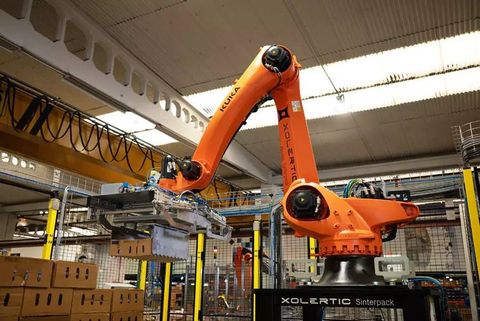
Another trend is greater automation. Grinding cells can combine CNC machines, robotic handling, measurement equipment, tool management, and data collection. This approach can reduce repetitive manual intervention while improving process traceability.
Energy and resource efficiency are also receiving more attention. Modern grinding systems increasingly consider coolant management, abrasive consumption, machine energy use, and process optimization as part of the overall manufacturing system.
The 2026 technology landscape therefore shows a shift from standalone grinding machines toward connected precision manufacturing systems.
Laws, Safety Rules, and Manufacturing Policies
Grinding machines involve rotating components, abrasive wheels, electrical systems, coolant, and potentially high-speed material removal. Proper safety practices are therefore essential.
In India, the Machinery and Electrical Equipment Safety (Omnibus Technical Regulation) Amendment Order, 2025 stated that the regulation would apply from 1 September 2026 to machines and electrical equipment listed in the relevant schedule, subject to the provisions of the order. Applicable machines must conform to the corresponding Indian Standards specified by the regulation.
Grinding-wheel safety is another important consideration. Indian mining-safety guidance has emphasized inspecting grinding wheels for damage, observing their rated operating speed, using suitable mounting arrangements, maintaining guards, and wearing appropriate eye protection.
For organizations operating grinding equipment, practical safety controls should include:
- Inspecting grinding wheels before use
- Following the wheel manufacturer's rated speed
- Checking guards and protective equipment
- Using appropriate eye and face protection
- Maintaining correct workholding
- Training operators in machine-specific procedures
- Following electrical and emergency-stop requirements
- Maintaining coolant and ventilation systems appropriately
- Recording relevant inspection and maintenance activities
Requirements can vary by country, workplace, machine category, and industry. Manufacturers and operators should therefore verify the applicable national standards and workplace regulations before commissioning or modifying equipment.
Tools and Resources for Precision Grinding
Several general tools can help engineers, technicians, and students understand and manage grinding operations.
Measurement Tools
Common inspection equipment includes:
- Micrometers
- Vernier instruments
- Bore gauges
- Dial indicators
- Surface roughness testers
- Coordinate measuring systems
- Optical measurement equipment
The appropriate instrument depends on the dimensional and geometric characteristic being evaluated.
Grinding Process Calculators
Engineering calculators can help estimate or evaluate parameters such as:
- Wheel speed
- Workpiece speed
- Feed rate
- Material removal rate
- Grinding ratio
- Surface speed
- Basic spindle relationships
These calculations should be checked against machine specifications and validated process parameters rather than used independently.
Technical References and Templates
Useful learning resources include:
- Grinding parameter worksheets
- Machine inspection checklists
- Preventive-maintenance templates
- Grinding-wheel specification charts
- Process-monitoring forms
- Surface-finish reference tables
- Dimensional inspection sheets
- CNC programming documentation
Digital production-monitoring systems can also collect information from sensors, machine controls, and inspection equipment. This data can help identify trends and support process analysis.
Frequently Asked Questions
What is a precision grinding machine?
A precision grinding machine is a machine tool that uses an abrasive wheel to remove controlled amounts of material and achieve accurate dimensions, geometry, and surface characteristics.
What materials can be processed by precision grinding?
Precision grinding is commonly used with hardened steels, tool steels, cast materials, ceramics, carbide, and various engineered materials. The appropriate abrasive and process parameters depend on the workpiece material.
What is CNC grinding?
CNC grinding uses computer numerical control to coordinate machine movements and grinding operations. It can support repeatable production of components with complex geometries and controlled dimensions.
Why is dressing important in grinding?
Dressing restores or conditions the grinding wheel's working surface. Proper dressing can help maintain wheel geometry, cutting behavior, and process consistency.
Is precision grinding suitable for every manufacturing operation?
No. The appropriate process depends on the workpiece geometry, material, required accuracy, surface requirements, production volume, and preceding operations. Grinding is particularly valuable when controlled finishing and dimensional accuracy are important.
Conclusion
Precision grinding machines remain an important part of advanced manufacturing because they can produce controlled dimensions, geometry, and surface characteristics on demanding components. Their applications range from shafts and bearings to cutting tools, aerospace components, medical equipment, and automation systems.