Industrial Wire Processing Machines: Advanced Manufacturing Technology Guide
Industrial wire processing machines are automated or semi-automated systems used to prepare electrical wires and cables for assembly. They can perform tasks such as wire feeding, measuring, cutting, stripping, crimping, twisting, marking, terminal insertion, and electrical testing.
These machines are used in many manufacturing environments where wire quality, dimensional accuracy, and repeatable production are important. Common applications include automotive wiring harnesses, electrical panels, industrial automation, telecommunications equipment, renewable energy systems, battery assemblies, appliances, and electronic equipment.
Traditional wire preparation often required several manual operations. Workers had to measure wire lengths, remove insulation, attach terminals, and inspect finished connections separately. Modern wire processing equipment can combine several of these operations into one controlled workflow.
The basic process normally begins with wire feeding. The machine measures the required length and moves the wire through a controlled path. Cutting tools then separate the wire, while stripping units remove insulation from selected sections. Depending on the application, further stages may include terminal crimping, marking, twisting, sealing, or testing.
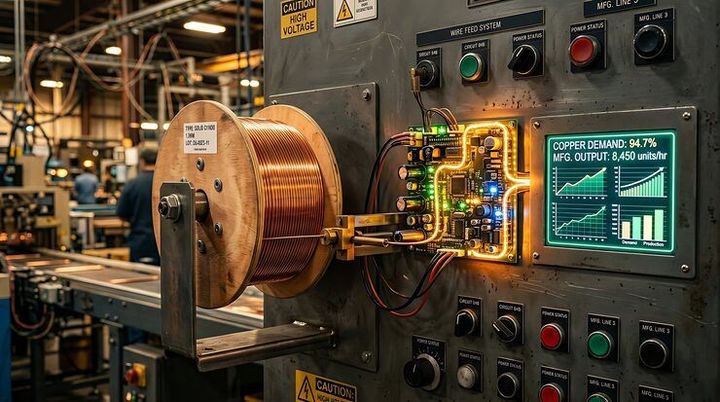
Modern systems increasingly use programmable controls, servo-driven mechanisms, sensors, digital interfaces, and production data monitoring. These technologies help manufacturers manage different wire types and production requirements without relying entirely on manual adjustments.
The technology exists because electrical assemblies require consistent preparation. Even a small variation in stripping length or terminal positioning can affect the reliability of a finished connection.
Importance
Wire processing has become an important part of modern manufacturing because electrical systems are becoming more complex. Vehicles, industrial machines, data equipment, energy systems, and electronic products can contain large numbers of wires and connections.
For manufacturers, accurate processing can help address several practical challenges:
- Maintaining consistent wire lengths
- Producing repeatable stripping dimensions
- Controlling terminal crimping quality
- Reducing variation between production cycles
- Handling multiple wire sizes
- Improving traceability of processed components
- Supporting higher levels of production automation
- Reducing unnecessary material handling
- Detecting processing problems earlier
The technology is particularly relevant to industries where wiring harnesses and electrical assemblies are produced in large quantities.
Automotive manufacturing is one major application area. Modern vehicles contain increasingly complex electrical and electronic architectures. Electric vehicles also require specialized wiring for batteries, power electronics, charging systems, sensors, and control units.
Industrial automation is another important area. Control cabinets, programmable systems, sensors, motors, and automated production equipment all depend on properly prepared electrical connections.
The technology also supports high-mix manufacturing. A modern machine may be programmed for different wire lengths, insulation types, terminal positions, and processing sequences. This flexibility is useful when production requirements change frequently.
Quality control is equally important. Advanced equipment can monitor processing parameters and identify abnormal conditions. For example, force monitoring during crimping can help detect changes associated with an incorrect terminal, damaged tooling, or an improperly positioned conductor.
A 2026 industry discussion from the International Wire and Machinery Association highlighted automation, electrification, digitalisation, advanced materials, and AI-supported manufacturing as important themes shaping the wire and cable sector.
Recent Updates
During 2025 and 2026, wire processing technology has continued moving toward connected automation rather than simply faster mechanical processing.
One important development is the integration of several operations into a single production station. Modern systems may combine feeding, cutting, stripping, crimping, marking, or related operations. This approach can reduce the number of separate handling steps.
Another trend is greater use of servo-driven systems and process monitoring. Instead of checking only the final product, manufacturers can increasingly monitor information generated during individual processing cycles.
Flexible automation is also becoming more important. Current industry discussions point toward high-mix, low-volume production and increasingly complex wiring architectures as factors supporting demand for flexible wire processing equipment.
Digital monitoring is gaining attention. Machine data can be used to monitor production parameters, identify unusual process conditions, and support quality documentation. In some advanced systems, force, position, speed, and cycle information can be recorded for individual operations.
Inline inspection is another developing area. Vision systems, dimensional sensors, and electrical testing can be incorporated into production workflows to identify problems before an assembly moves to the next stage.
Electrification is influencing equipment requirements. Growing demand for electric vehicles, energy infrastructure, battery systems, and power electronics creates applications requiring reliable processing of different wire and cable configurations.
The broader wire industry is also seeing increased interest in automation, robotic material handling, digital process control, inline measurement, surface inspection, and real-time monitoring. These trends were highlighted in industry reporting published during 2026.
Laws or Policies
Wire processing machines are affected by machinery safety, electrical safety, workplace protection, and product conformity requirements. The exact rules depend on the country where equipment is manufactured, installed, or placed on the market.
In the European Union, Regulation (EU) 2023/1230 on machinery establishes health and safety requirements for machinery and related products. It replaces the previous Machinery Directive and is scheduled to apply from 20 January 2027.
The regulation covers areas such as machinery design, safety requirements, conformity assessment, technical documentation, and instructions. The European Commission also notes that the new framework includes provisions relating to AI-powered safety functions and cybersecurity for compliance-relevant software and safety control systems.
The transition is particularly relevant for manufacturers planning equipment for the European market because documentation, conformity assessment, risk management, and safety design need to reflect the applicable requirements.
India has also introduced developments affecting machinery and electrical equipment. In August 2025, the Ministry of Heavy Industries announced an amendment to the Machinery and Electrical Equipment Safety (Omnibus Technical Regulation) Order, 2024. The amendment stated that the regulation would apply from 1 September 2026 to machines and electrical equipment listed in its first schedule, subject to the specified provisions.
In the United States and other markets, manufacturers and workplaces may also need to consider applicable machinery guarding, electrical safety, workplace safety, and conformity requirements.
Because requirements vary by jurisdiction and machine configuration, manufacturers should check the current national rules, applicable standards, technical documentation requirements, and risk-assessment procedures before placing or operating equipment in a particular market.
Tools and Resources
Several general tools can help organizations understand, operate, and maintain industrial wire processing equipment.
Machine configuration software can help technicians define wire lengths, stripping dimensions, terminal positions, and production sequences.
Production monitoring dashboards can track cycle counts, machine status, alarms, downtime, and selected process parameters.
Crimp-force monitoring systems can provide information about the force profile during terminal crimping and help identify unusual processing conditions.
Digital measurement tools can support dimensional checks for wire length, stripping length, conductor exposure, and terminal positioning.
Preventive maintenance templates can help record tooling inspections, blade condition, lubrication activities, sensor checks, and scheduled maintenance.
Electrical testing equipment can be used for continuity, insulation, resistance, and other relevant checks depending on the finished assembly.
| Tool or Resource | Main Purpose |
|---|---|
| Machine control software | Process programming and recipe management |
| Digital calipers | Dimensional inspection |
| Crimp-force monitoring | Crimp process verification |
| Vision inspection | Visual quality checking |
| Electrical tester | Continuity and electrical verification |
| Maintenance checklist | Routine equipment inspection |
| Production dashboard | Monitoring output and machine status |
| Technical standards database | Understanding applicable requirements |
Training materials, machinery manuals, risk-assessment templates, technical standards, and workplace safety guidance can also support better equipment management.
FAQs
What are industrial wire processing machines?
They are machines designed to automate one or more wire preparation operations, including feeding, measuring, cutting, stripping, crimping, marking, twisting, and testing.
Which industries use wire processing equipment?
Common applications include automotive manufacturing, electrical equipment, industrial automation, electronics, telecommunications, energy systems, appliances, and battery-related manufacturing.
What is automated wire cutting and stripping?
It is a controlled process in which equipment measures a specified wire length, cuts the conductor, and removes insulation from selected sections according to programmed parameters.
Why is crimping accuracy important?
Crimping creates a mechanical and electrical connection between a conductor and terminal. Incorrect positioning, unsuitable tooling, or inconsistent force can affect connection quality, so controlled processing and inspection are important.
What should manufacturers consider when selecting a wire processing machine?
Important factors include wire diameter range, insulation type, required operations, production volume, accuracy requirements, changeover needs, quality monitoring, safety features, maintenance requirements, and applicable regulations.
Conclusion
Industrial wire processing machines are becoming an important part of modern manufacturing technology. Their role has expanded from basic cutting and stripping toward integrated processing, quality monitoring, digital controls, and flexible automation.