Industrial Laser Cutting Machines: Advanced Manufacturing Insights
Industrial laser cutting machines are computer-controlled systems that use a concentrated beam of light to cut, shape, or process materials. They are widely used in metal fabrication, automotive production, electronics, engineering, construction equipment, and many other manufacturing activities.
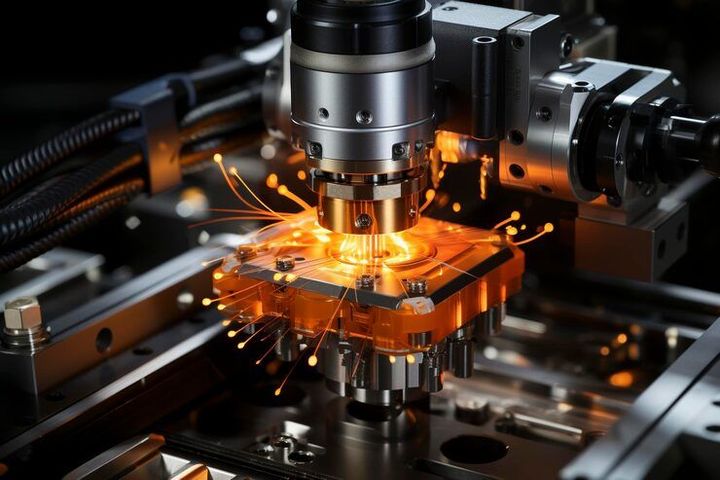
Unlike conventional mechanical cutting, laser cutting does not require a cutting tool to physically contact the material. The laser beam generates enough concentrated energy to melt, burn, or vaporize material along a programmed path. An assist gas can then help remove molten material from the cutting zone.
The technology exists because modern manufacturing requires accurate shapes, repeatable dimensions, and flexible production methods. A digital drawing can be converted into a machine program, allowing complex profiles to be produced without creating a separate physical cutting pattern.
Several types of laser systems are used in industry. Fiber lasers are common for metal processing, while CO₂ and other laser technologies continue to have applications in specific materials and processes.
A typical industrial laser cutting system includes:
- Laser source
- Cutting head
- CNC controller
- Motion system
- Cutting bed
- Assist-gas system
- Cooling system
- Fume extraction equipment
- Safety enclosure and interlocks
- Software for design, nesting, and machine control
The final cutting result depends on several factors, including laser power, material type, thickness, cutting speed, focal position, nozzle condition, and assist-gas pressure.
Importance
Industrial laser cutting machines are important because manufacturing increasingly depends on accuracy, repeatability, and digital production control. They can process detailed shapes that may be difficult to produce using traditional cutting methods.
The technology is particularly relevant for sheet-metal and plate processing. It can be used for components such as brackets, panels, enclosures, structural parts, machine frames, electrical cabinets, and precision assemblies.
Laser cutting also supports different production volumes. A factory may use the same basic digital workflow for prototypes, small batches, or larger production schedules while changing the cutting program and material parameters.
Another important advantage is process consistency. Once a suitable cutting program has been developed and validated, the machine can repeat the same path many times. Sensors and automated controls can further help monitor process conditions.
The technology also affects material planning. Nesting software can arrange multiple components on a sheet before cutting. Better nesting can reduce unused areas of material, although actual material utilization depends on part geometry, sheet dimensions, kerf width, edge margins, and production requirements.
Industrial laser cutting is used across many sectors, including:
- Automotive components
- Agricultural machinery
- Construction equipment
- Electrical enclosures
- General engineering
- Sheet-metal fabrication
- Aerospace components
- Consumer appliances
- Electronics manufacturing
- Renewable-energy equipment
For manufacturers, the broader importance is not simply cutting speed. Modern laser cutting is becoming part of a connected production environment that links design software, CNC controls, inspection systems, material handling, and production data.
Recent Updates and Technology Trends
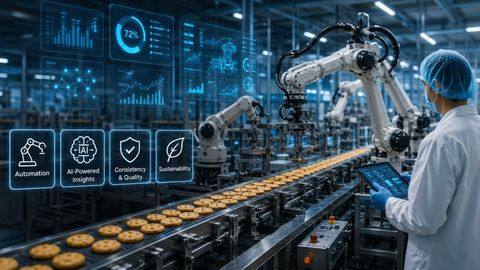
The laser cutting sector has continued moving toward automation, artificial intelligence, real-time monitoring, and connected manufacturing during 2025 and 2026.
One important development is the growing use of AI-assisted process control. Research published in 2025 examined machine-learning approaches for improving laser processing by analyzing relationships between process parameters, material characteristics, and cutting results.
In March 2025, an industrial laser technology demonstration showed an AI-based approach for assessing cut-edge quality and recommending process adjustments. This illustrates a broader movement toward data-supported parameter selection rather than relying entirely on manual trial and error.
Another trend is the combination of laser cutting with sensors and connected factory systems. Real-time monitoring can collect information about machine status, cutting conditions, alarms, and production output. Such data can support maintenance planning and quality checks.
Automation is also expanding beyond the cutting head itself. Modern production cells may include:
- Automatic sheet loading
- Automatic unloading
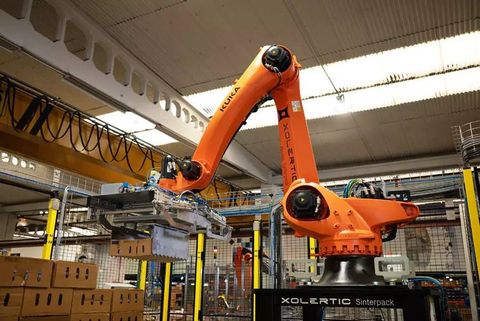
- Robotic part handling
- Vision-based inspection
- Automated sorting
- Digital production scheduling
- Machine condition monitoring
- Data collection and analysis
These developments are part of the wider Industry 4.0 movement. However, automation levels vary considerably between factories, so a highly automated system is not automatically appropriate for every manufacturing environment.
High-power fiber laser technology is another continuing area of development. Higher laser power can expand the range of material thicknesses and production applications, but power alone does not determine cutting quality. Beam characteristics, optics, machine structure, material properties, gas control, and process parameters also matter.
Laws and Policies in India
Laser cutting machines used in India must be considered within the wider framework of machinery safety, workplace safety, electrical requirements, and applicable standards.
A significant recent development is India's Machinery and Electrical Equipment Safety (Omnibus Technical Regulation) Amendment Order, 2025. The Ministry of Heavy Industries stated that the regulation would apply from 1 September 2026 to machines and electrical equipment listed in the relevant schedule. The framework references machinery safety principles including IS 16819:2018 / ISO 12100:2010, along with applicable Type B and Type C standards.
Bureau of Indian Standards information updated in April 2026 also identifies safety certification guidance for machinery, including specific guidelines for metal-cutting machines.
For laser equipment, safety assessment is especially important because optical radiation can create hazards to eyes and skin. Indian regulatory guidance identifies laser and optical radiation as hazards requiring appropriate engineering and administrative controls in relevant environments.
Industrial facilities should therefore consider measures such as:
- Proper machine guarding
- Enclosed laser paths where applicable
- Safety interlocks
- Warning labels
- Controlled access
- Emergency-stop systems
- Fume extraction
- Electrical protection
- Operator training
- Preventive inspection
- Documented risk assessment
The exact regulatory requirements can depend on the machine category, installation, laser classification, workplace conditions, and applicable Indian standards. High-hazard laser systems may have additional regulatory requirements in specific facilities.
It is also important not to confuse ordinary industrial laser processing with ionizing-radiation equipment. AERB's licensing framework primarily addresses ionizing radiation and specified radiation facilities; applicability should be determined from the actual equipment and process rather than from the word "laser" alone.
Tools and Resources
Several general tools can help engineers, production planners, students, and machine operators understand laser cutting processes.
CAD software: Used to create or modify two-dimensional and three-dimensional component designs before generating cutting geometry.
Nesting software: Arranges multiple parts on a sheet to improve material utilization and production planning.
Laser parameter calculators: Can help estimate starting values for cutting speed, power, focal position, and assist-gas settings. Actual parameters should always be validated against the material and machine.
Material databases: Useful for comparing properties such as thickness, reflectivity, thermal behavior, and suitability for different cutting processes.
CNC simulation tools: Allow users to review toolpaths and identify potential movement or programming problems before production.
Maintenance checklists: Help track nozzle condition, optics, cooling systems, extraction equipment, machine alignment, and other inspection points.
Safety templates: Risk-assessment forms, inspection checklists, emergency procedures, and operator training records can support structured workplace safety management.
A useful learning workflow is to start with material properties, understand laser fundamentals, study machine components, review cutting parameters, and then examine automation and quality-control methods.
FAQs
What is an industrial laser cutting machine?
An industrial laser cutting machine is a computer-controlled system that uses a concentrated laser beam to cut or process materials according to a programmed design.
Which materials can laser cutting machines process?
Depending on the laser technology and machine configuration, industrial systems can process materials such as mild steel, stainless steel, aluminum, copper, brass, plastics, and other suitable materials. Material compatibility depends on the laser wavelength, thickness, surface properties, and machine configuration.
What is a fiber laser cutting machine?
A fiber laser cutting machine uses a fiber-based laser source to generate and deliver the laser beam. Fiber systems are widely used for metal processing because they can provide high precision and are well suited to many industrial metal-cutting applications.
Is laser cutting completely automated?
Not always. Some systems have automated loading, unloading, nesting, inspection, and process monitoring, while others require more operator involvement. The level of automation depends on the machine, production process, material, and factory layout.
What safety precautions are important?
Important precautions include appropriate machine guarding, controlled access, safety interlocks, warning labels, ventilation and fume extraction, electrical protection, operator training, and documented risk assessment. The requirements should be based on the specific laser system and applicable regulations.
Conclusion
Industrial laser cutting machines have become an important part of modern manufacturing because they combine focused energy, computer-controlled movement, digital design, and repeatable processing.The technology is evolving beyond basic cutting. Fiber lasers, automated material handling, sensors, machine monitoring, AI-assisted parameter selection, and connected production systems are creating more integrated manufacturing workflows.