Insights Into Slotting Machines Used for Precision Metal Processing
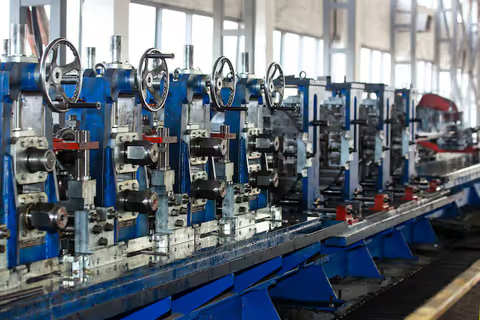
Slotting machines are industrial metal cutting machines designed to create slots, grooves, keyways, internal profiles, and other shaped cuts on workpieces. They use a reciprocating cutting tool that moves vertically to remove material from metals and other suitable materials. These machines are commonly used in manufacturing environments where accurate internal and external machining operations are required.
The main purpose of a slotting machine is to produce precise cuts that may be difficult to achieve with conventional machining equipment. Industries such as automotive, aerospace, tooling, heavy engineering, and general manufacturing use these machines for specialized machining tasks.
Slotting machines are based on the same basic principle as shaping machines, but their cutting motion is generally vertical instead of horizontal. Their structure allows manufacturers to process components with complex shapes, narrow openings, and internal surfaces.
Working Principle of Slotting Machines
A slotting machine operates through a reciprocating cutting mechanism. The cutting tool moves upward and downward while the workpiece remains fixed or moves according to the machining requirement.
The cutting process usually involves two movements:
- The downward stroke removes material from the workpiece.
- The upward stroke returns the tool to its original position.
The machine table can move in different directions to position the workpiece accurately. This movement helps create precise slots, grooves, and profiles.
Main Working Steps
- The workpiece is securely positioned on the machine table.
- A suitable cutting tool is installed based on the required operation.
- The tool performs repeated vertical strokes.
- Material is gradually removed during cutting movements.
- Final dimensions are achieved through controlled adjustments.
Modern slotting machines may include digital controls, automated positioning systems, and advanced monitoring features to improve accuracy and productivity.
Structure and Main Components
A slotting machine contains several mechanical and electrical components that work together to achieve accurate machining results.
Major Components
- Base: Provides stability and supports the complete machine structure.
- Column: A vertical structure that houses important mechanical parts.
- Ram: Holds and moves the cutting tool through vertical motion.
- Cutting Tool Holder: Secures the cutting tool during operation.
- Work Table: Supports and positions the workpiece.
- Feed Mechanism: Controls table movement for accurate cutting.
- Drive System: Provides power for the reciprocating movement.
- Control Panel: Allows operators to adjust machine settings.
The quality of machining depends on proper alignment, suitable tooling, correct operating parameters, and regular inspection of machine components.
Types of Slotting Machines
Different slotting machines are designed for specific manufacturing requirements. The selection depends on the material type, component size, accuracy requirements, and production environment.
| Type | Main Characteristics | Common Applications |
|---|---|---|
| Standard Slotting Machine | General-purpose design for basic cutting operations | Workshops and manufacturing units |
| Precision Slotting Machine | Designed for accurate machining work | Tool rooms and engineering applications |
| Production Slotting Machine | Built for repeated machining operations | Large-scale component production |
| CNC Slotting Machine | Uses computer-controlled movements | Advanced manufacturing processes |
Common Machine Categories
- Mechanical Slotting Machines: Use mechanical drive systems for tool movement and are suitable for traditional machining operations.
- Hydraulic Slotting Machines: Use hydraulic systems to provide smooth and controlled cutting motion.
- CNC Slotting Machines: Integrate computer numerical control technology for improved accuracy and automated operation.
- Vertical Slotting Machines: Designed mainly for vertical cutting applications and internal machining tasks.
Importance in Manufacturing Applications
Slotting machines remain important because they solve machining challenges involving internal shapes and narrow cutting areas. Some components require specialized grooves or profiles that cannot be easily produced using standard cutting equipment.
Industrial Applications
- Automotive component manufacturing
- Gear and keyway production
- Tool and die manufacturing
- Aerospace component processing
- Heavy machinery production
- Electrical equipment manufacturing
- Precision engineering applications
These machines help manufacturers achieve consistent dimensions and support the production of complex mechanical components.
Problems Solved by Slotting Machines
Manufacturing industries often require accurate machining of areas with limited accessibility. Slotting machines address several technical challenges.
Key Advantages
- Creates accurate internal slots and grooves
- Supports machining of complex profiles
- Handles difficult-to-reach surfaces
- Provides controlled material removal
- Supports precision engineering tasks
Their ability to perform specialized cutting operations makes them useful alongside other machining equipment such as milling machines, drilling machines, and CNC systems.
Features of Modern Slotting Machines
Recent machine developments focus on improving accuracy, automation, energy management, and operator control.
Important Features
- Digital measurement systems
- Automated tool positioning
- Improved vibration control
- Advanced control interfaces
- Better machine monitoring
- Integration with manufacturing software
Manufacturing industries are increasingly adopting smart machining technologies. In 2025, industrial equipment development continued moving toward connected systems that collect operational data, improve process monitoring, and support predictive maintenance strategies.
Modern CNC-based slotting machines can be integrated with digital manufacturing environments to improve workflow management and production planning.
Safety Standards and Regulations
Slotting machine operations require proper safety practices because cutting tools and moving components can create workplace risks.
Important Safety Practices
- Use appropriate protective equipment.
- Follow machine operating instructions.
- Inspect cutting tools before operation.
- Maintain proper machine guarding.
- Provide operator training.
- Follow workplace safety guidelines.
In many regions, industrial machinery must comply with workplace safety frameworks such as equipment guarding requirements, electrical safety standards, and occupational safety regulations. Manufacturers and operators should follow applicable national standards and workplace policies.
Useful Tools and Learning Resources
Learning about slotting machines requires understanding machining principles, machine operation, and industrial automation concepts.
Helpful Resources
- CAD and CAM software for machining design
- CNC programming learning platforms
- Manufacturing engineering textbooks
- Industrial automation training materials
- Machine tool technology courses
- Technical documentation from equipment manufacturers
These resources help engineers, students, and technicians improve their understanding of machining processes and modern manufacturing systems.
Recent Developments in Slotting Machine Technology
The manufacturing sector has experienced several technology improvements related to machining equipment.
Recent Trends
- Increased use of CNC automation for precise operations
- Integration of sensors for machine condition monitoring
- Adoption of digital manufacturing systems
- Improved energy management technologies
- Greater focus on accurate and repeatable machining
During 2024 and 2025, industrial manufacturers continued investing in smart factory technologies that connect machinery with digital monitoring systems. These developments help improve operational visibility and reduce unexpected machine interruptions.
Factors Affecting Slotting Machine Performance
Several factors influence machining quality and efficiency.
Important Considerations
- Material hardness and composition
- Cutting tool selection
- Machine alignment
- Cutting speed and feed settings
- Workpiece stability
- Maintenance practices
Proper machine setup and suitable operating conditions are essential for achieving accurate machining results.
Future Scope of Slotting Machines
Slotting machines are expected to continue evolving with advancements in automation and digital manufacturing. Future systems may include more intelligent control features, improved data analysis capabilities, and greater integration with smart production environments.
Although advanced machining centers are becoming common, slotting machines remain valuable for specialized operations that require vertical cutting movements and precise profile creation.
Frequently Asked Questions
What is a slotting machine used for?
A slotting machine is used for creating slots, grooves, keyways, and internal profiles in metal components. It is commonly applied in precision machining and engineering industries.
How does a slotting machine work?
A slotting machine works by moving a cutting tool vertically in a reciprocating motion. The tool removes material during each cutting stroke while the workpiece is positioned on the machine table.
What materials can be processed using slotting machines?
Slotting machines are mainly used for metals such as steel, cast iron, aluminum, and other engineering materials. The suitable material depends on machine capability and cutting tool selection.
What is the difference between a slotting machine and a milling machine?
A slotting machine mainly uses vertical reciprocating tool movement, while a milling machine uses rotating cutting tools. Each machine is suitable for different machining requirements.
Are CNC slotting machines used in modern manufacturing?
Yes, CNC slotting machines are used in modern manufacturing environments where automated control, accuracy, and repeatable machining operations are required.
Conclusion
Slotting machines are important metal processing tools used for producing accurate slots, grooves, and specialized profiles in engineering components. Their vertical cutting mechanism allows them to handle machining tasks that may be challenging for other equipment.
With developments in CNC technology, automation, and smart manufacturing, slotting machines continue to adapt to modern industrial requirements. Understanding their working principles, components, applications, and safety practices helps engineers and manufacturers use these machines effectively in precision machining environments.