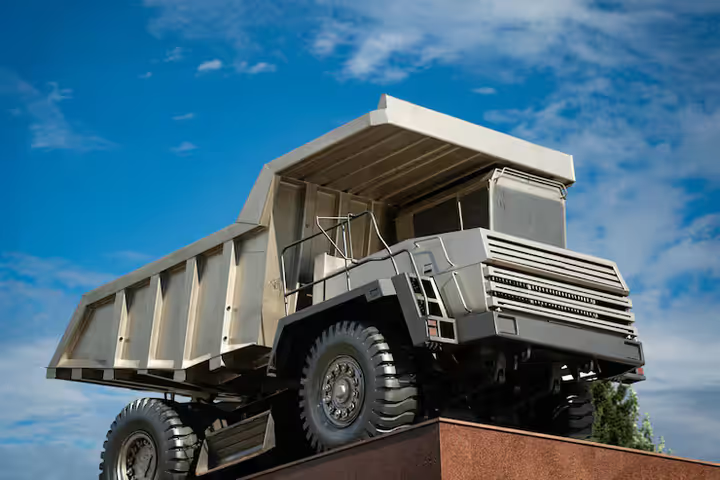
Electric Dump Truck: Resources for Understanding Next-Generation Haul Vehicles
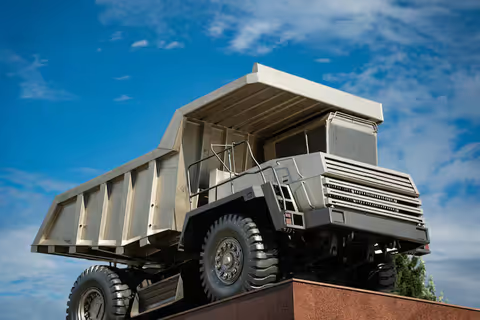
Unlike conventional dump trucks that rely on diesel engines, electric dump trucks use battery systems or electric drive technologies to move materials across construction sites, mines, quarries, and industrial facilities. Their development reflects the growing demand for cleaner transportation solutions while maintaining the high carrying capacity required for heavy-duty applications.
Many manufacturers now integrate advanced battery management systems, regenerative braking, intelligent monitoring, and digital fleet management into these vehicles. As industries continue working toward lower environmental impacts, electric dump trucks are becoming an important part of modern infrastructure and mining operations.
Electric Dump Truck Structure and Working Principle
An electric dump truck combines electric propulsion technology with the traditional dump truck structure. Instead of transferring power from a diesel engine, electrical energy powers motors connected to the drivetrain.
The operating process generally includes:
- Battery packs store electrical energy.
- Power electronics regulate electricity flow.
- Electric motors generate driving force.
- Transmission transfers power to the wheels.
- Hydraulic systems lift and lower the dump body.
- Regenerative braking recovers energy during downhill movement.
- Electronic control systems monitor performance continuously.
This integrated system improves operational efficiency while reducing mechanical complexity in several areas.
Main Components of an Electric Dump Truck
Key Components
- High-capacity lithium-ion battery packs
- Electric drive motors
- Battery Management System (BMS)
- Power inverter
- Charging interface
- Electric drivetrain
- Hydraulic lifting mechanism
- Chassis and reinforced frame
- Suspension system
- Intelligent control software
- Cooling and thermal management system
- Safety monitoring sensors
- Driver information display
- Fleet communication module
Each component contributes to reliable operation under demanding industrial conditions.
Key Features
Important Features
- Zero tailpipe emissions during operation
- High torque from electric motors
- Lower operational noise
- Regenerative braking capability
- Advanced battery monitoring
- Digital diagnostics
- Remote fleet monitoring
- Reduced mechanical wear
- Fast torque response
- High load carrying capability
- Intelligent energy management
- Integrated safety systems
- Software-based performance optimization
These features make electric dump trucks suitable for continuous industrial operations.
Common Types of Electric Dump Trucks
Different industries require different truck configurations.
| Type | Typical Application | Main Characteristics |
|---|---|---|
| Battery Electric Dump Truck | Mining | Large battery capacity with zero tailpipe emissions |
| Underground Electric Dump Truck | Underground Mining | Compact design with improved ventilation benefits |
| Articulated Electric Dump Truck | Construction | Better maneuverability on uneven terrain |
| Rigid Frame Electric Dump Truck | Large Surface Mines | High payload and stability |
| Autonomous Electric Dump Truck | Smart Mining | Automated navigation and fleet coordination |
Importance Across Modern Industries
Electric dump trucks contribute to industrial productivity while supporting environmental goals.
Major advantages include:
- Reduced greenhouse gas emissions
- Improved workplace air quality
- Lower operating noise
- Better energy efficiency
- Increased automation opportunities
- Enhanced fleet data collection
- Improved sustainability reporting
- Support for corporate environmental initiatives
Many organizations are incorporating electric fleets into long-term modernization strategies.
Real-World Applications
Electric dump trucks are now used across multiple sectors.
Major Industries
- Surface mining
- Underground mining
- Quarry operations
- Construction projects
- Infrastructure development
- Tunnel excavation
- Industrial material transport
- Waste management facilities
- Hydroelectric construction
- Large industrial plants
These applications continue expanding as battery technology improves.
Problems Electric Dump Trucks Help Solve
Traditional heavy equipment often faces operational and environmental challenges.
Electric dump trucks help address issues such as:
- Air pollution
- Diesel exhaust emissions
- High noise levels
- Reduced energy efficiency
- Maintenance associated with complex engine systems
- Heat generation in underground environments
- Workplace environmental compliance
- Carbon reduction targets
Their adoption supports cleaner industrial operations without compromising hauling capability.
Battery Technology and Energy Management
Battery systems are among the most important parts of electric dump trucks.
Modern systems typically include:
Battery Technologies
- Lithium-ion batteries
- Lithium iron phosphate (LFP) batteries
- Nickel manganese cobalt (NMC) batteries
- Battery thermal management
- Smart charging systems
- Battery health monitoring
- Fast charging compatibility
- High-voltage protection systems
Battery management software continuously balances cell performance and enhances operational safety.
Digital Technologies Used
Advanced digital technologies improve equipment efficiency and reliability.
Common Technologies
- GPS fleet tracking
- Artificial Intelligence (AI)
- Internet of Things (IoT)
- Predictive maintenance
- Cloud fleet management
- Remote diagnostics
- Machine learning analytics
- Telematics systems
- Autonomous navigation
- Collision avoidance systems
- Real-time battery analytics
These technologies support informed operational decisions and equipment optimization.
Safety Considerations
Electric dump trucks incorporate multiple safety features designed for industrial environments.
Important Safety Features
- Battery protection systems
- Thermal monitoring
- Emergency shutdown controls
- High-voltage isolation
- Fire detection systems
- Stability monitoring
- Hydraulic safety controls
- Driver assistance systems
- Collision warning technology
- Camera monitoring systems
Regular inspections remain essential for maintaining safe operations.
Recent Trends and Developments (2025–2026)
The electric heavy equipment sector has experienced rapid progress during 2025 and early 2026.
Recent developments include:
- Increased deployment of autonomous electric haul trucks in large mining operations.
- Expansion of battery-electric mining fleets by major equipment manufacturers.
- Higher-capacity battery systems supporting longer operating cycles.
- Improved ultra-fast industrial charging infrastructure.
- Greater integration of AI-powered fleet optimization software.
- Enhanced regenerative braking systems for steep mining environments.
- Wider adoption of predictive maintenance using cloud-based analytics.
- Continued investment in low-emission mining technologies aligned with global sustainability initiatives.
These developments indicate ongoing industry investment in cleaner heavy equipment technologies.
Regulations and Industry Standards
Electric dump trucks are influenced by various international regulations and safety standards.
Relevant areas include:
Common Regulatory Areas
- Workplace safety regulations
- Electrical equipment safety standards
- Battery transportation regulations
- Environmental emission policies
- Industrial machinery safety requirements
- Mining safety regulations
- Occupational health requirements
- Functional safety standards for industrial equipment
Organizations should always follow national and regional regulations applicable to their operations.
Useful Tools, Platforms, and Learning Resources
Professionals interested in electric dump truck technology can explore numerous educational resources.
Helpful Resources
- Equipment manufacturer technical documentation
- Mining technology publications
- Construction engineering journals
- Battery technology research organizations
- Industrial automation learning platforms
- Fleet management software documentation
- Government transportation agencies
- Occupational safety organizations
- Engineering universities
- Professional heavy equipment associations
These resources help users stay informed about emerging technologies and best practices.
Industry Challenges
Although electric dump trucks provide numerous advantages, several challenges remain.
Current considerations include:
- Battery charging infrastructure
- Battery weight
- Charging time planning
- Thermal management in extreme environments
- Initial fleet transition planning
- Electrical infrastructure upgrades
- Skilled technical workforce
- Large-scale battery recycling
Continuous technological improvements are helping reduce these limitations.
Future Outlook
Electric dump trucks are expected to become increasingly common in mining and construction over the coming years.
Future developments may include:
Expected Innovations
- Larger battery capacities
- Improved solid-state battery technology
- Faster charging systems
- Expanded autonomous operation
- AI-driven fleet optimization
- Smart energy management
- Renewable energy integration
- Improved recycling technologies
- Digital twin simulations
- Enhanced predictive maintenance capabilities
These innovations are expected to further improve operational efficiency and environmental performance.
Frequently Asked Questions
What is an electric dump truck?
An electric dump truck is a heavy-duty vehicle powered primarily by electric motors and rechargeable battery systems. It transports bulk materials such as rock, soil, ore, and construction aggregates while producing zero tailpipe emissions during operation.
Where are electric dump trucks commonly used?
They are widely used in mining, quarrying, construction projects, tunnel development, industrial facilities, and large infrastructure projects that require heavy material transportation.
How does regenerative braking benefit electric dump trucks?
Regenerative braking converts kinetic energy into electrical energy during braking or downhill travel, helping recharge the battery and improve overall energy efficiency.
Are electric dump trucks suitable for autonomous operation?
Yes. Many modern electric dump trucks are designed to integrate with autonomous driving systems, advanced sensors, GPS navigation, and fleet management platforms.
What technologies are commonly integrated into electric dump trucks?
Modern electric dump trucks often include IoT connectivity, AI-powered diagnostics, telematics, battery management systems, predictive maintenance software, cloud-based fleet monitoring, and advanced safety technologies.
Conclusion
Electric dump trucks represent an important advancement in heavy industrial transportation. By combining electric propulsion, intelligent control systems, advanced battery technology, and digital fleet management, these vehicles support cleaner, quieter, and more efficient operations across mining, construction, and infrastructure sectors.
As battery technology, autonomous systems, and industrial automation continue to evolve through 2026 and beyond, electric dump trucks are expected to play an increasingly significant role in sustainable material handling. Organizations adopting these technologies can benefit from improved operational efficiency, enhanced environmental performance, and greater integration with modern digital industrial ecosystems while supporting long-term infrastructure development.