Metal 3D Print Machine Guide for Modern Manufacturing and Industrial Applications
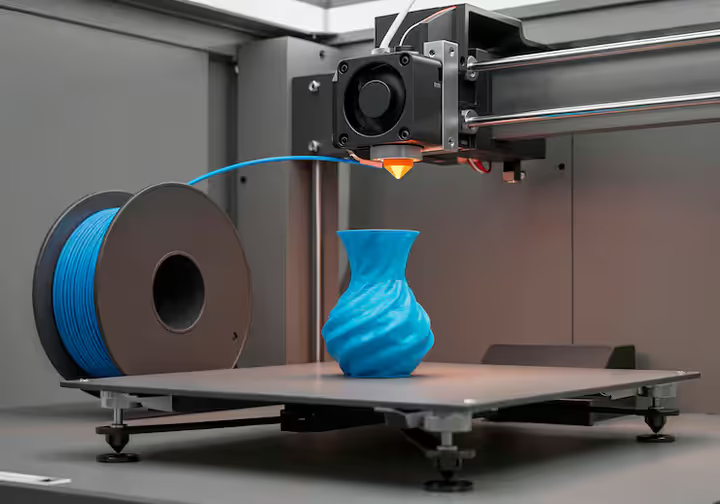
A Metal 3D Print Machine is an advanced manufacturing system that creates metal components by building them layer by layer from digital design files. Unlike traditional manufacturing methods that remove material through cutting, drilling, or milling, metal additive manufacturing forms objects by adding material only where it is needed.
The idea of layer-based manufacturing developed from early rapid prototyping technologies introduced during the late twentieth century. As digital design software, material science, and industrial automation improved, these systems evolved into reliable manufacturing equipment capable of producing functional metal parts.
Today, Metal 3D Print Machine technology is used in industries that require precision, consistency, and complex designs. Engineers, researchers, manufacturers, healthcare professionals, and educational institutions use these systems to study new designs, develop prototypes, and manufacture specialized components.
A digital workflow is central to the process. Designers create a three-dimensional model using computer-aided design (CAD) software. The model is converted into machine-readable instructions that guide the printing process. Thin layers of metal powder or wire are gradually fused together until the complete object is formed.
Several printing technologies exist, each designed for different manufacturing requirements. The selection depends on material compatibility, component size, accuracy requirements, and production volume.
Common Metal 3D Printing Technologies
- Powder Bed Fusion (PBF)
- Direct Energy Deposition (DED)
- Binder Jetting
- Metal Material Extrusion
- Wire Arc Additive Manufacturing (WAAM)
Each technology follows a different approach, yet all share the same principle of creating parts layer by layer from digital models.
Importance
Metal manufacturing continues to evolve as industries demand lighter, stronger, and more customized components. A Metal 3D Print Machine helps address many manufacturing challenges by enabling greater design flexibility while reducing unnecessary material waste.
One important advantage is the ability to manufacture highly detailed internal structures. Traditional machining may struggle with enclosed channels or intricate lattice designs, whereas additive manufacturing can often produce these features directly.
Many industries also benefit from producing low-volume or specialized components without creating complex molds or tooling. This can simplify product development and shorten manufacturing cycles.
Industries Using Metal 3D Print Machine Technology
- Aerospace manufacturing
- Automotive engineering
- Medical device production
- Dental laboratories
- Industrial machinery
- Energy equipment
- Academic research
- Defense manufacturing
- Tool and mold production
- Electronics manufacturing
The technology also supports repair and restoration of selected industrial components by adding material only where needed rather than replacing an entire part.
Advantages Compared with Traditional Manufacturing
| Feature | Metal 3D Print Machine | Traditional Manufacturing |
|---|---|---|
| Material usage | Adds material layer by layer | Removes material from larger stock |
| Design complexity | Supports highly complex shapes | Limited by cutting tools |
| Customization | Suitable for unique designs | Often optimized for repeated designs |
| Internal structures | Can produce enclosed features | Often difficult to manufacture |
| Production workflow | Digital design driven | Frequently requires multiple machining steps |
Although additive manufacturing provides many advantages, conventional manufacturing methods remain important for numerous applications. In many industries, both approaches are used together depending on production requirements.
Common Materials
Modern Metal 3D Print Machine systems can process various engineering materials, including:
- Stainless steel
- Titanium alloys
- Aluminum alloys
- Tool steel
- Nickel-based alloys
- Cobalt-chromium alloys
- Copper alloys
- Precious metal alloys for selected applications
Material selection depends on strength requirements, corrosion resistance, temperature performance, and intended application.
Recent Updates
Metal additive manufacturing continues to advance through improvements in machine performance, software, automation, and material development. The overall trend between 2024 and 2026 has focused on improving manufacturing efficiency while making industrial production more consistent.
Manufacturers are introducing systems with larger build volumes that can produce bigger components or multiple smaller parts during a single production cycle. Larger systems are expanding opportunities in aerospace, energy infrastructure, and industrial equipment manufacturing.
Artificial intelligence is becoming increasingly integrated into machine monitoring. Advanced sensors can observe temperature, powder distribution, laser performance, and build quality throughout the printing process. These monitoring systems help identify potential manufacturing issues during production.
Software improvements have also enhanced simulation capabilities. Engineers can evaluate part orientation, material behavior, thermal effects, and support structures before printing begins. Better simulation reduces design revisions and improves manufacturing planning.
Automation is another growing trend. Modern production environments increasingly include automated powder handling, robotic material movement, and digital quality inspection systems that reduce manual intervention while improving workflow consistency.
Researchers continue developing additional printable metal alloys designed for specialized engineering applications. Material research focuses on improved mechanical performance, corrosion resistance, heat resistance, and sustainability.
Hybrid manufacturing systems are also becoming more common. These machines combine additive manufacturing with traditional machining, allowing printed components to receive precision finishing within the same production workflow.
Laws or Policies
Metal 3D Print Machine technology is influenced by manufacturing standards, workplace safety regulations, environmental policies, and product certification requirements. The specific rules vary by country and industry.
Manufacturers operating industrial metal printing equipment typically follow occupational health and safety requirements related to handling fine metal powders, operating high-powered lasers, electrical systems, and ventilation equipment.
Many countries apply manufacturing quality standards published by recognized organizations. These standards help establish consistent production methods, inspection procedures, documentation practices, and material verification.
Industries such as aerospace and medical manufacturing often require additional certification because printed components may be used in safety-sensitive applications. Manufacturers generally perform extensive testing before components enter operational use.
Environmental regulations may also apply to:
- Metal powder handling
- Waste management
- Air filtration systems
- Energy efficiency
- Workplace ventilation
- Recycling of unused materials
Many governments support advanced manufacturing through research initiatives, innovation programs, educational partnerships, and industrial development strategies that encourage adoption of modern production technologies.
Organizations working with exported industrial products may also need to comply with international technical standards depending on destination markets.
Tools and Resources
Various digital tools support the complete workflow of a Metal 3D Print Machine, from design through inspection.
CAD Software
Computer-aided design software is used to create detailed three-dimensional models before printing.
Examples include:
- Autodesk Fusion
- SolidWorks
- Siemens NX
- CATIA
Build Preparation Software
These applications prepare digital models for printing by creating support structures, adjusting orientation, and generating machine instructions.
Examples include:
- Materialise Magics
- Autodesk Netfabb
- EOSPRINT
Simulation Software
Simulation software predicts heat distribution, distortion, and mechanical behavior before production begins.
Common capabilities include:
- Thermal simulation
- Structural analysis
- Build optimization
- Support generation
Inspection Tools
Quality inspection frequently combines several technologies:
- 3D scanners
- Coordinate Measuring Machines (CMM)
- Industrial CT scanning
- Digital measurement software
Learning Resources
People interested in understanding additive manufacturing can explore educational materials from:
- Universities
- Engineering organizations
- Manufacturing associations
- Technical standards organizations
- Scientific journals
- Industry conferences
These resources explain manufacturing principles, material science, engineering design, and production quality.
FAQs
What is a Metal 3D Print Machine?
A Metal 3D Print Machine is industrial equipment that creates metal objects layer by layer using digital design files. It uses specialized manufacturing technologies to produce functional metal components with complex geometries.
Which industries commonly use Metal 3D Print Machine technology?
Aerospace, automotive, healthcare, dental manufacturing, industrial machinery, energy, research institutions, electronics, and tooling industries commonly use Metal 3D Print Machine systems for specialized manufacturing applications.
What materials can a Metal 3D Print Machine process?
Many systems work with stainless steel, titanium, aluminum, nickel alloys, tool steel, cobalt-chromium alloys, copper alloys, and several specialized engineering metals depending on machine capabilities.
Is metal additive manufacturing replacing traditional machining?
Metal additive manufacturing complements traditional machining rather than replacing it completely. Many manufacturers combine both approaches because each method has strengths for different component designs and production requirements.
Why is Metal 3D Print Machine technology becoming more common?
Growing demand for customized designs, lightweight structures, digital manufacturing workflows, and improved production flexibility has increased interest in Metal 3D Print Machine technology across multiple industries.
Conclusion
Metal 3D Print Machine technology represents an important development in modern manufacturing by producing metal components through layer-based construction from digital designs. It supports complex engineering applications across aerospace, healthcare, automotive, research, and industrial manufacturing. Continuous improvements in software, automation, materials, and quality monitoring are expanding its capabilities. As manufacturing technologies continue to evolve, metal additive manufacturing is expected to remain an important part of industrial production alongside conventional manufacturing methods.