Learn Industrial Transmitters: Basics, Working Principles, and Applications
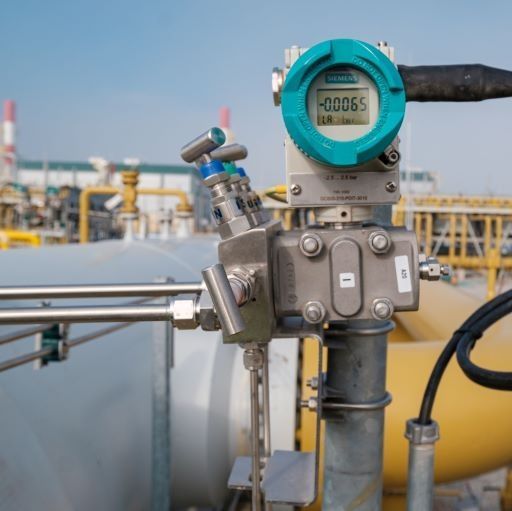
Industrial transmitters are core components used in automation and process environments to convert physical measurements into standardized electrical signals. These signals can be interpreted by control systems, monitoring platforms, or data logging equipment.
The need for transmitters arose as industrial processes became larger, more complex, and more automated. Direct manual observation was no longer practical, so industries required a reliable way to communicate measurement data such as pressure, temperature, flow, or level over long distances without signal distortion.
Transmitters act as the communication bridge between sensors and control systems. While a sensor detects a physical variable, the transmitter ensures that this information reaches downstream systems accurately and consistently.
Why Industrial Transmitters Matter Today
Modern industries rely heavily on precise measurement and real-time feedback. Industrial transmitters play a central role in maintaining process stability, operational safety, and data reliability.
Their relevance continues to increase due to:
-
Expansion of industrial automation systems
-
Growing use of distributed control architectures
-
Higher expectations for measurement accuracy
-
Integration with digital monitoring platforms
Industrial transmitters affect operators, engineers, maintenance teams, and system designers. Without dependable signal transmission, even well-designed systems can produce unreliable data, leading to inefficiencies or unsafe operating conditions.
Transmitters help solve problems such as signal loss, electrical noise interference, and inconsistent measurement scaling across large facilities.
How Industrial Transmitters Work
At a fundamental level, an industrial transmitter performs three main functions:
-
Receives input from a sensing element
-
Converts the signal into a standard format
-
Sends the signal to a receiving system
Most transmitters use standardized outputs such as 4–20 mA current loops or digital communication protocols. These formats are widely adopted because they remain stable over long cable lengths and in electrically noisy environments.
Basic Signal Flow
| Stage | Function |
|---|---|
| Sensing | Detects physical variable |
| Signal Conditioning | Filters and amplifies signal |
| Conversion | Translates to standard output |
| Transmission | Sends signal to control system |
This structure allows transmitters to operate reliably even in harsh industrial conditions.
Common Types of Industrial Transmitters
Different industrial applications require different transmitter types depending on the variable being measured.
Pressure Transmitters
Used to measure gases or liquids under pressure. Common in fluid handling systems, pipelines, and energy facilities.
Temperature Transmitters
Convert readings from thermocouples or resistance sensors into standardized signals for monitoring thermal processes.
Flow Transmitters
Used with flow sensors to communicate volumetric or mass flow rates in pipelines.
Level Transmitters
Measure the height or volume of materials in tanks or vessels.
Typical Applications by Transmitter Type
| Transmitter Type | Typical Use |
|---|---|
| Pressure | Fluid systems |
| Temperature | Thermal processes |
| Flow | Process monitoring |
| Level | Storage management |
Applications Across Industrial Sectors
Industrial transmitters are used wherever controlled measurement is essential. Their applications span a wide range of sectors.
Common application areas include:
-
Manufacturing process control
-
Energy generation and distribution
-
Chemical processing facilities
-
Water and wastewater systems
-
Food and beverage production environments
In each case, transmitters help ensure that measurements are transmitted accurately to automation systems that regulate operations.
Recent Developments and Industry Trends
Over the past year, several trends have influenced the design and usage of industrial transmitters.
In 2025, manufacturers expanded support for digital communication protocols that allow multiple data points to be transmitted over a single connection. These updates improve diagnostic visibility and system integration.
Another noticeable trend is the increased use of smart transmitters with built-in self-monitoring capabilities. These devices can report status information such as signal stability and internal temperature, helping reduce unexpected downtime.
Wireless transmitter adoption has also grown, particularly in locations where cabling is impractical. These solutions are designed to meet industrial reliability requirements while simplifying installation.
Standards, Rules, and Compliance Considerations
Industrial transmitters are influenced by international technical standards and safety frameworks rather than consumer regulations. These standards help ensure compatibility, accuracy, and safe operation.
Common compliance areas include:
-
Electrical safety classifications
-
Environmental protection ratings
-
Electromagnetic compatibility requirements
-
Functional safety guidelines
International standards organizations publish guidelines that define how transmitters should perform under specific conditions. Compliance ensures that devices can be integrated into global industrial systems without interoperability issues.
Tools and Learning Resources
Understanding industrial transmitters often requires access to reference materials and practical tools.
Helpful resources include:
-
Instrumentation handbooks and technical manuals
-
Signal loop diagrams and calibration templates
-
Simulation software for control systems
-
Industrial automation learning platforms
-
Measurement accuracy calculators
These resources support engineers, technicians, and students who want to deepen their understanding of transmitter behavior and system integration.
Data Flow in a Typical Control Loop
Below is a simplified representation of how transmitter data moves through a control loop.
| Component | Role |
|---|---|
| Sensor | Detects physical change |
| Transmitter | Converts to standard signal |
| Controller | Analyzes input |
| Actuator | Adjusts process |
This flow highlights why transmitters are critical links within automated environments.
Frequently Asked Questions
What is the difference between a sensor and a transmitter?
A sensor detects a physical variable, while a transmitter converts that measurement into a standardized signal suitable for transmission.
Why is the 4–20 mA signal commonly used?
It provides strong noise resistance and allows fault detection when the signal falls outside the normal range.
Are industrial transmitters used only in large facilities?
They are used in both small and large systems wherever reliable measurement communication is required.
What makes a transmitter “smart”?
Smart transmitters include digital communication features and internal diagnostics for enhanced monitoring.
How often do transmitters need calibration?
Calibration intervals depend on application requirements, environmental conditions, and internal stability characteristics.
Conclusion
Industrial transmitters are essential components in modern automation and measurement systems. By converting physical variables into reliable signals, they enable accurate monitoring, control, and data analysis across many industrial environments.
As technology continues to advance, transmitters are becoming more intelligent, connected, and adaptable. Understanding their principles, applications, and standards helps users better interpret process data and maintain dependable industrial operations.
Their continued evolution reflects the growing importance of accurate measurement in an increasingly automated world.

YOU MAY ALSO LIKE