Industrial Processing Equipment Types, Uses & Trends
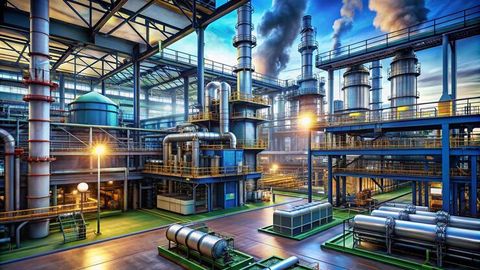
Industrial processing equipment includes machines, systems, and devices used to transform raw materials into finished or semi-finished products. These systems are essential in industries such as food production, pharmaceuticals, chemicals, metalworking, textiles, plastics, paper manufacturing, and water treatment.
The equipment used in each industry depends on the materials being processed and the final product requirements. Some machines reduce the size of raw materials, while others mix ingredients, remove moisture, separate substances, apply heat, or shape materials into specific forms.
Industrial processing developed as manufacturers needed more consistent production methods and greater control over product quality. Manual processes were often slow and difficult to repeat on a large scale. Mechanical equipment made it possible to handle larger quantities, improve consistency, and reduce unnecessary material handling.
Today, industrial processing equipment combines mechanical engineering, electrical controls, sensors, and digital monitoring. Some systems operate independently, while others connect with production lines and centralized control systems.
The main purpose is to carry out a defined processing task safely, consistently, and efficiently. Understanding the different equipment categories helps students, engineers, production managers, and industry researchers recognize how modern manufacturing systems work.
Main Types of Industrial Processing Equipment
Industrial processing equipment can be classified according to its function, the materials it handles, and the conditions under which it operates.
Size Reduction Equipment
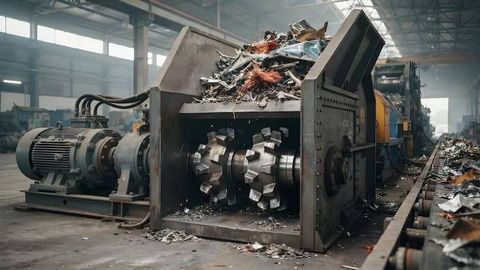
Size reduction machines break large materials into smaller pieces or particles. Common examples include crushers, grinders, shredders, and milling machines.
These machines are widely used in mineral processing, food production, chemical preparation, and pharmaceutical manufacturing. Particle size can affect mixing, drying, extraction, and the quality of the final product.
Mixing and Blending Equipment
Mixers and blenders combine two or more materials to create a uniform mixture. They may process powders, liquids, pastes, or solid and liquid combinations.
Applications include food ingredients, chemical formulations, coatings, construction materials, and pharmaceutical preparations. Equipment selection depends on viscosity, particle characteristics, batch size, and the required level of uniformity.
Heating and Cooling Equipment
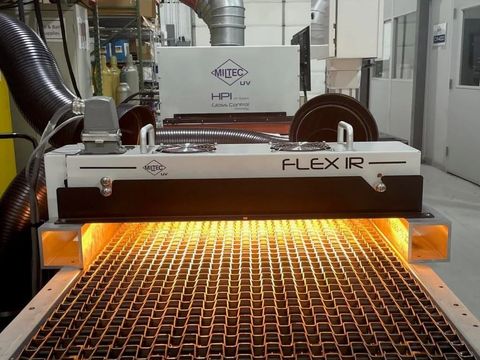
Heating and cooling systems control the temperature of materials during processing. Examples include industrial ovens, furnaces, heat exchangers, chillers, and temperature-controlled vessels.
These systems support processes such as melting, pasteurization, drying, curing, cooling, and chemical reactions. Accurate temperature control is important because excessive heat or cooling can affect product quality and equipment safety.
Separation and Filtration Equipment
Separation equipment divides mixtures into different components. Filters, centrifuges, screens, separators, and industrial membranes are common examples.
Food processors use filtration to remove unwanted particles, while chemical plants may separate liquids and solids during production. Water treatment facilities use several separation methods to reduce suspended particles and other contaminants.
Drying and Evaporation Equipment
Dryers remove moisture from solids or other materials, while evaporators remove part of a liquid through vaporization. Examples include spray dryers, rotary dryers, vacuum dryers, and industrial evaporators.
These systems are used in food processing, chemical production, mineral preparation, and pharmaceutical manufacturing. Operating temperature, moisture content, material sensitivity, and energy use all influence equipment selection.
Conveying and Material Handling Equipment
Conveyors, pumps, feeders, hoppers, and industrial handling systems move materials between processing stages.
Automated material handling can reduce manual movement and support continuous production. The appropriate equipment depends on whether materials are liquid, granular, powdered, fragile, heavy, or hazardous.
Industrial Processing Equipment Uses Across Industries
Different industries use specialized machinery to meet their production requirements. Some equipment categories appear in several sectors, but their designs and operating conditions may vary considerably.
Industry | Common equipment | Main application |
|---|---|---|
Food and beverages | Mixers, pasteurizers, dryers | Preparing and preserving products |
Pharmaceuticals | Granulators, mixers, filtration systems | Processing ingredients and formulations |
Chemicals | Reactors, pumps, heat exchangers | Controlling chemical processes |
Metalworking | Furnaces, grinders, cutting systems | Treating and shaping metals |
Textiles | Carding, washing, drying machines | Preparing and processing fibers |
Water treatment | Filters, membranes, dewatering systems | Removing unwanted substances |
Plastics | Extruders, mixers, molding equipment | Processing polymer materials |
Minerals | Crushers, screens, separators | Reducing and separating minerals |
The equipment required depends on production volume, material properties, environmental conditions, and the quality standards applicable to the industry. A machine suitable for one material may not be appropriate for another.
For example, pharmaceutical processing may require strict control of contamination, while mineral processing equipment must often withstand abrasive materials and heavy operating loads.
Importance of Industrial Processing Equipment in Modern Manufacturing
Industrial processing equipment plays an important role in improving production consistency, workplace safety, and material utilization. As manufacturing requirements become more complex, companies need equipment that can handle different materials while maintaining reliable operating conditions.
Improved production consistency
Automated machines can repeat the same operation under controlled conditions. This helps reduce variations between batches and makes it easier to maintain defined quality standards.
Better workplace safety
Enclosed processing systems, machine guards, automatic shutoffs, and remote monitoring can reduce exposure to moving parts, high temperatures, dust, and hazardous materials. However, these features must be designed correctly and supported by proper training.
More efficient use of resources
Modern equipment can monitor electricity, water, compressed air, and raw material consumption. This information helps operators identify waste and adjust operating conditions.
Support for different production needs
Modular machinery allows manufacturers to adapt certain processing stages when materials or product specifications change. Flexible systems can be particularly useful when production involves several product types.
Improved product quality
Sensors and automated inspection systems can detect changes in temperature, pressure, flow, particle size, and other important measurements. Early detection helps operators correct problems before they affect larger quantities of material.
Industrial processing equipment also supports small and medium-sized manufacturers, research laboratories, and large production facilities. The appropriate system depends on the process, available space, workforce skills, and regulatory requirements.
Recent Industrial Processing Equipment Trends in 2025 and 2026
Recent developments show growing interest in connected machinery, artificial intelligence, energy efficiency, and predictive maintenance. These technologies are being introduced at different rates across industries.
Artificial intelligence and smart manufacturing
AI-based systems can analyze production data, identify unusual operating patterns, and support quality inspection. In June 2026, an industrial manufacturing technology report highlighted the growing use of AI, advanced analytics, and connected data systems across manufacturing operations.
Examples of practical applications include:
Detecting visible defects through automated inspection.
Identifying unusual vibration or temperature readings.
Supporting production scheduling and process monitoring.
Helping operators interpret machine alarms and operating records.
AI results depend on data quality, equipment compatibility, and appropriate human oversight. These systems do not eliminate the need for engineering judgment.
Predictive maintenance
Traditional maintenance may follow a fixed schedule or take place after a machine fails. Predictive maintenance uses sensor readings and operating history to help identify developing problems.
Vibration sensors, temperature monitors, pressure measurements, and equipment logs can provide useful warning signs. Maintenance teams can use this information to investigate issues before they interrupt production.
A manufacturing operations study published in April 2026 identified digital tools, AI adoption, and equipment reliability as important areas of industry attention.
Industrial Internet of Things
The Industrial Internet of Things, or IIoT, connects machines, sensors, and control systems so that operating data can be collected and reviewed. Connected equipment may help production teams monitor several processing stages from a central location.
However, connecting industrial systems also creates cybersecurity concerns. Access controls, secure network design, software updates, and backup procedures are important.
Energy and water efficiency
Manufacturers are paying greater attention to electricity consumption, water use, heat recovery, and material waste. Equipment improvements may include variable-speed drives, efficient motors, improved insulation, heat exchangers, and better process controls.
The actual results depend on operating conditions and system design. Measuring performance before and after an upgrade helps determine whether the change has delivered the expected improvement.
Modular and flexible equipment
Modular systems allow selected components to be changed or expanded without redesigning an entire production line. This approach can support changing production requirements, although compatibility, validation, and operator training remain essential.
Overall, the direction in 2026 is toward better-connected, more measurable, and more adaptable industrial processing systems rather than automation alone.
Laws and Policies Affecting Industrial Processing Equipment
Industrial processing equipment must comply with the laws and technical requirements that apply to its location, industry, and intended use. These may cover worker safety, electrical systems, emissions, pressure equipment, product hygiene, and environmental protection.
In India, several important regulatory areas are relevant.
Workplace health and safety
India's Occupational Safety, Health and Working Conditions Code, 2020, became effective on 21 November 2025, according to the Ministry of Labour and Employment. It establishes a framework covering workplace safety, health, and working conditions.
For industrial equipment, relevant considerations include:
Protecting workers from hazardous machinery and operating conditions.
Providing suitable training and safety procedures.
Maintaining equipment in a safe condition.
Identifying workplace hazards and implementing controls.
Following applicable central and state rules.
The Occupational Safety, Health and Working Conditions (Central) Rules, 2026, were notified on 8 May 2026. The applicable requirements depend on the establishment and the relevant central or state framework.
Machinery and electrical safety
Equipment must meet applicable electrical safety, installation, and product requirements. The Bureau of Indian Standards develops Indian Standards that may apply to machinery and industrial components.
India's Ministry of Heavy Industries lists a withdrawal of the Machinery and Electrical Equipment Safety (Omnibus Technical Regulation) Order, 2024, dated 16 January 2026. Therefore, manufacturers and equipment users should verify the current requirements for their specific machinery rather than assuming an earlier order remains in effect.
Environmental protection
Industrial plants may need to comply with environmental requirements relating to air emissions, wastewater discharge, hazardous waste, noise, and resource use. Requirements vary according to the activity, location, and environmental impact.
Industry-specific rules
Food processing, pharmaceutical manufacturing, chemical production, and pressure-based operations may require additional controls. Relevant standards can address hygiene, material compatibility, contamination prevention, pressure protection, and product quality.
Manufacturers and plant operators should check current legal requirements with the appropriate authorities and qualified safety professionals before installing or modifying equipment.
Tools and Resources for Industrial Processing Equipment
Choosing and managing industrial processing equipment requires accurate technical information. Several general-purpose tools can help engineers, operators, and production planners evaluate equipment performance and operating conditions.
Equipment selection worksheets: Record material type, required output, operating temperature, pressure range, and production capacity.
Energy monitoring tools: Track electricity consumption and identify equipment that uses more energy than expected.
Maintenance planning templates: Organize inspection dates, maintenance tasks, replacement parts, and equipment history.
Process simulation software: Model selected manufacturing operations before making changes to an actual production line.
Computer-aided design tools: Prepare equipment layouts, component drawings, and installation plans.
Quality control charts: Track measurements over time and help identify variations in production.
Risk assessment checklists: Identify moving parts, heat exposure, chemical hazards, pressure risks, and other workplace dangers.
Environmental monitoring tools: Measure relevant emissions, water consumption, waste generation, and energy use.
When comparing equipment, users should review the manufacturer's technical documentation, operating limits, maintenance instructions, and compatibility requirements. Training materials and applicable technical standards can also help teams understand correct operating procedures.
Frequently Asked Questions
What is industrial processing equipment?
Industrial processing equipment refers to machinery used to transform, mix, heat, cool, separate, dry, or transport materials during manufacturing and other industrial activities.
What are the main types of industrial processing equipment?
Common types include size reduction machines, mixers, heat exchangers, filtration systems, dryers, evaporators, conveyors, pumps, and industrial reactors. The appropriate category depends on the process and material.
How does automation improve industrial processing?
Automation can improve process consistency, monitor operating conditions, reduce repetitive manual tasks, and help detect production problems. Its effectiveness depends on system design, maintenance, and operator training.
How can manufacturers select suitable processing equipment?
They should assess material properties, production capacity, required product quality, operating conditions, energy requirements, safety features, maintenance needs, and applicable regulations before selecting a system.
What is the role of predictive maintenance in industrial equipment?
Predictive maintenance uses equipment data, such as vibration, temperature, and pressure readings, to identify possible faults. It helps maintenance teams investigate developing problems and plan interventions more effectively.
Conclusion
Industrial processing equipment forms the foundation of many modern manufacturing operations. From mixing and filtration to heating, drying, and material handling, each machine performs a specific function that contributes to the production process.