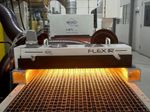
Industrial Equipment Automation: Latest Trends in AI & Smart Manufacturing
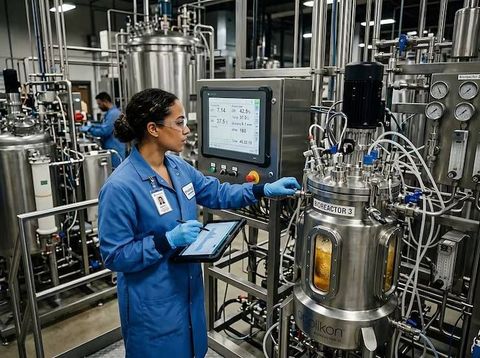
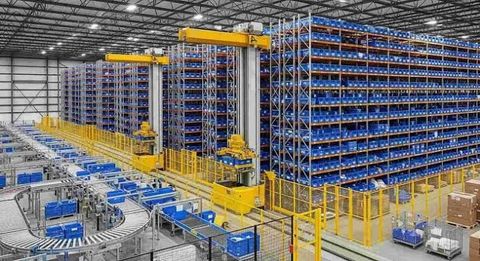
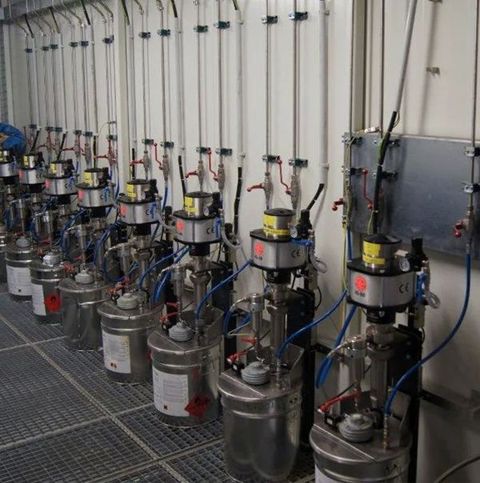
Industrial equipment automation refers to the use of control systems, sensors, software, robotics, artificial intelligence, and connected machinery to perform manufacturing activities with limited manual intervention. It can be applied to production lines, material handling, quality inspection, packaging, assembly, process control, and equipment monitoring.
Traditional industrial automation commonly relied on programmable logic controllers, sensors, motors, drives, and predefined control logic. Modern systems increasingly combine these technologies with artificial intelligence, machine learning, industrial IoT, robotics, digital twins, edge computing, and industrial data analytics.
The main reason for this development is the growing complexity of manufacturing. Factories may need to manage large amounts of machine data while maintaining consistent production, quality, safety, energy management, and equipment performance.
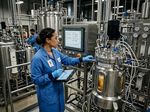
Smart manufacturing extends automation by connecting machines and information systems. Instead of simply instructing equipment to perform a fixed sequence, connected systems can collect information, analyze operating conditions, identify patterns, and support better decisions.
A typical smart manufacturing environment can include:
- Industrial robots and automated machinery
- PLC and industrial control systems
- Sensors and machine-vision equipment
- Industrial IoT gateways
- AI and machine-learning models
- Digital twins
- Predictive maintenance systems
- Manufacturing execution platforms
- Industrial cybersecurity controls
- Energy and environmental monitoring systems
The goal is not simply to automate every activity. Effective automation combines technology with appropriate human oversight, reliable data, safety controls, and clearly defined production requirements.
Importance
Industrial equipment automation matters because manufacturers increasingly need systems that can respond to changing production conditions while maintaining reliability and quality.
One important application is predictive maintenance. Sensors can monitor vibration, temperature, pressure, current, acoustic signals, or other operating characteristics. Analytical models can then identify unusual patterns that may indicate developing equipment problems.
Automation can also support quality control. Machine-vision systems can inspect products for dimensions, surface defects, incorrect assembly, labeling problems, or other measurable characteristics. AI-based inspection can complement established inspection methods when properly validated.
Another important area is production optimization. Manufacturing data can help identify bottlenecks, unnecessary machine downtime, process variations, and inefficient equipment utilization.
Smart automation also affects several groups:
- Manufacturers: They can use operational data to understand production performance.
- Engineers: Connected systems provide more information for equipment design and process improvement.
- Maintenance teams: Sensor data can support condition-based maintenance planning.
- Operators: Human-machine interfaces can provide clearer information about machine conditions.
- Quality teams: Automated inspection can help identify recurring process variations.
- Management teams: Production analytics can support long-term planning and resource allocation.
The technology also introduces challenges. Older machines may use different communication protocols, making integration difficult. Poor-quality data can reduce the reliability of AI models. Cybersecurity risks can increase when industrial equipment becomes more connected.
For this reason, automation should be approached as a combination of industrial engineering, data management, cybersecurity, safety, and human decision-making rather than as an AI-only project.
Recent Updates
The past year has brought increased attention to AI-enabled manufacturing, digital twins, robotics, industrial data, and autonomous systems.
In July 2026, the U.S. National Institute of Standards and Technology published its 2026 Roadmap on Artificial Intelligence and Machine Learning for Smart Manufacturing. The roadmap identifies industrial big-data analytics, advanced sensing, autonomous systems, digital twins, robotics, logistics optimization, and sustainable manufacturing among important areas for continued development.
The development indicates a broader shift from isolated automation toward connected manufacturing ecosystems. AI is increasingly being considered alongside sensors, control systems, robotics, data infrastructure, and digital representations of physical production processes.
In October 2025, NITI Aayog in India released a roadmap for advanced manufacturing that identified AI and machine learning, advanced materials, digital twins, and robotics as important technologies across priority manufacturing sectors.
India also highlighted AI for Manufacturing Engineering Technology in February 2026, focusing on responsible AI adoption, skills development, and broader participation in manufacturing technology.
Another major development is the growing connection between AI and industrial cybersecurity. As factories connect more machines to networks and cloud or edge systems, organizations increasingly need to consider authentication, access controls, network segmentation, software updates, monitoring, and incident response.
Digital twins are also becoming more important. A digital twin can represent a physical machine, process, or production environment using data and computational models. It can help engineers study operating conditions and evaluate possible changes before applying them to physical equipment.
Key smart manufacturing trends
| Technology | Common industrial purpose |
|---|---|
| AI and machine learning | Pattern analysis and decision support |
| Digital twins | Simulation and process analysis |
| Robotics | Automated movement and production tasks |
| Machine vision | Automated inspection |
| Industrial IoT | Machine connectivity and data collection |
| Edge computing | Local data processing |
| Predictive analytics | Equipment condition monitoring |
| Cybersecurity | Protection of industrial networks and systems |
These developments suggest that future industrial automation will increasingly focus on interoperability, trustworthy AI, real-time data, cybersecurity, and collaboration between people and intelligent machines.
Laws or Policies
Industrial equipment automation can be affected by several layers of regulation. The exact requirements depend on the country, industry, machinery type, workplace environment, and intended use of AI.
For organizations operating in the European Union, the EU AI Act is particularly important when AI systems fall within its scope. The framework follows a risk-based approach and introduces different obligations depending on the nature and risk of an AI application.
Several provisions began applying during 2025, while broader AI Act rules and enforcement began on 2 August 2026. The current implementation schedule includes later dates for certain high-risk AI systems.
The EU also introduced changes through the AI Omnibus in July 2026, including revised implementation timelines. Certain high-risk AI systems under Annex III are scheduled for rules beginning 2 December 2027, while certain high-risk AI systems embedded in regulated physical products are scheduled for 2 August 2028.
For industrial organizations, the important lesson is that AI regulation should be considered during system planning rather than after deployment.
Other regulatory areas can include:
- Machinery safety requirements
- Electrical and functional safety standards
- Workplace health and safety rules
- Data protection and privacy requirements
- Industrial cybersecurity frameworks
- Environmental and energy regulations
- Product conformity requirements
- Sector-specific regulations
Rules differ between jurisdictions, so organizations should determine which regulations apply to their specific equipment and operating environment.
Tools and Resources
Several categories of tools can help organizations understand and manage industrial automation.
Automation design tools can be used for PLC programming, control-system development, machine configuration, and process simulation.
Industrial data platforms help collect information from sensors, machines, controllers, and production systems. They can organize operational information for analysis.
AI and machine-learning tools can be used for predictive maintenance, anomaly detection, forecasting, visual inspection, and process optimization. Models should be tested against representative industrial data before being relied upon for important decisions.
Digital-twin platforms can represent equipment or production processes in a virtual environment. They can support simulation, monitoring, and scenario analysis.
Cybersecurity assessment tools can help organizations identify exposed systems, review network architecture, monitor unusual activity, and manage access permissions.
Maintenance templates can help teams document equipment conditions, inspection schedules, failure patterns, and maintenance history.
Energy calculators and monitoring dashboards can help evaluate electricity use, equipment efficiency, and changes in energy consumption.
Useful learning resources include:
- Industrial automation training materials
- PLC programming guides
- Machine-vision tutorials
- AI and machine-learning fundamentals
- Digital-twin documentation
- Industrial cybersecurity frameworks
- Machinery safety standards
- Manufacturing data-management guides
A practical automation assessment should begin with a clear production problem. Organizations can then identify the required data, equipment interfaces, safety considerations, cybersecurity requirements, and measurable performance indicators.
FAQs
What is industrial equipment automation?
Industrial equipment automation uses control systems, sensors, software, robotics, and related technologies to operate or monitor industrial machinery with reduced manual intervention.
How does AI improve industrial automation?
AI can analyze large volumes of machine and production data to identify patterns, detect anomalies, support predictive maintenance, improve inspection, and assist operational decisions. AI does not automatically guarantee better performance and requires suitable data and validation.
What is smart manufacturing?
Smart manufacturing connects machinery, sensors, software, people, and production data so that manufacturing processes can be monitored and improved using connected information and analytical technologies.
What is a digital twin in manufacturing?
A digital twin is a digital representation of a physical machine, process, or production environment. It can use operational data and models to support monitoring, simulation, analysis, and planning.
Is industrial automation completely autonomous?
No. Many industrial systems still require human supervision, maintenance, configuration, safety controls, and decision-making. The appropriate level of autonomy depends on the equipment, process, risk level, and regulatory requirements.
Conclusion
Industrial equipment automation is moving from traditional machine control toward connected and data-driven smart manufacturing. AI, robotics, digital twins, industrial IoT, machine vision, and predictive analytics are becoming increasingly important parts of this transformation.