Automated Storage and Retrieval Systems: Advanced Warehouse Automation Guide
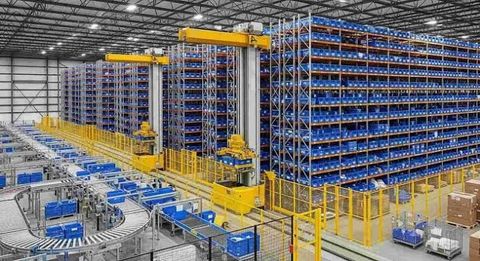
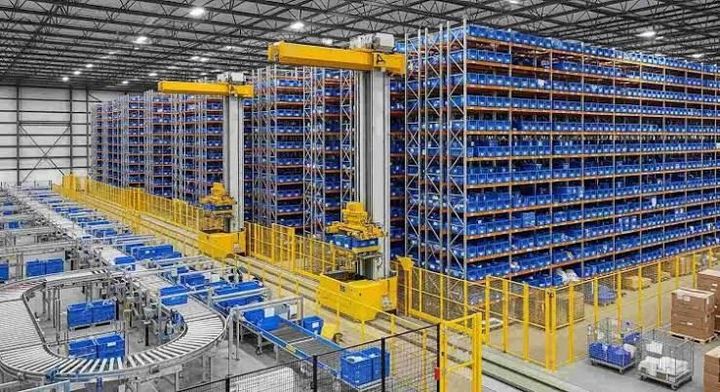
Automated Storage and Retrieval Systems, commonly called ASRS or AS/RS, are computer-controlled systems designed to place materials into storage locations and retrieve them when required. They combine mechanical equipment with warehouse software to coordinate inventory movement.
Traditional warehouses often depend on manual movement, forklifts, fixed shelving, and paper-based inventory processes. ASRS introduces automated storage technology that can handle repetitive movement with programmed instructions.
An ASRS installation may include:
- Storage racks and high-density shelving
- Cranes, shuttles, lifts, or robotic equipment
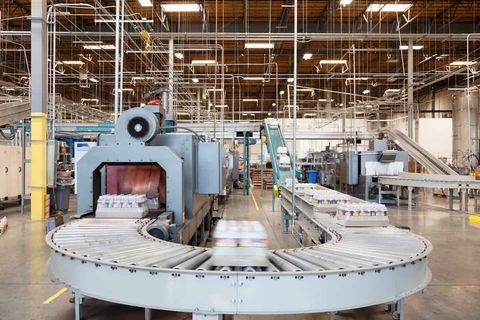
- Conveyors and material-handling equipment
- Sensors and barcode or identification systems
- Warehouse control software
- Warehouse management software
- Safety controls and monitoring systems
Different ASRS designs are suitable for different materials. Pallet-based systems are commonly used for large loads, while tote, bin, and mini-load systems can handle smaller items.
The basic process is straightforward. Inventory arrives at a designated point, identification information is recorded, and the control system assigns or confirms a storage location. Automated equipment then moves the inventory into that location. When the inventory is needed, the system receives a retrieval instruction and moves the item to an appropriate access point.
Main Types of ASRS
The technology has developed into several system categories.
| ASRS Type | Typical Application |
|---|---|
| Pallet ASRS | Heavy pallets and bulk inventory |
| Mini-load ASRS | Small containers and cartons |
| Shuttle ASRS | High-density storage and repeated movement |
| Crane-based ASRS | High-bay pallet storage |
| Vertical Lift Modules | Small parts and compact storage |
| Carousel Systems | Picking and organized item access |
| Robotic ASRS | Flexible storage and retrieval tasks |
The right configuration depends on inventory dimensions, warehouse layout, throughput requirements, storage height, product characteristics, and integration needs.
Importance
Why Warehouse Automation Matters
Modern warehouses handle increasingly varied inventories and more frequent movement of goods. Manual processes can become difficult to manage when the number of storage locations, product categories, and transactions increases.
ASRS addresses several common warehouse challenges.
Better use of vertical space
High-bay storage allows warehouses to use vertical space instead of depending only on floor area. This can be especially useful where available land or building space is limited.
Improved inventory accuracy
Automated identification and software-controlled locations can reduce some common manual recording errors. Inventory movements can be associated with specific locations and transactions.
More consistent material handling
Machines can follow programmed movement patterns and defined operating procedures. This supports consistent handling for repetitive storage and retrieval activities.
Improved workplace organization
When repetitive transportation is automated, people can focus on activities that require inspection, decision-making, exception handling, and other human judgment.
Better inventory visibility
ASRS can connect with warehouse management systems and other digital platforms. This creates a more detailed view of inventory locations and movement.
Industries Using ASRS
ASRS technology is used across many sectors, including:
- E-commerce and retail distribution
- Automotive manufacturing
- Electronics and semiconductor production
- Pharmaceutical and healthcare supply chains
- Food and beverage operations
- Cold-chain warehouses
- Industrial manufacturing
- Spare-parts distribution
- Third-party logistics facilities
The technology is particularly useful where inventory volumes are high, storage density matters, or repetitive movement represents a significant part of warehouse activity.
Recent Updates
AI and Intelligent Warehouse Automation
During 2026, ASRS development has increasingly focused on connecting automated storage equipment with artificial intelligence, autonomous mobile robots, Internet of Things sensors, edge computing, and digital-twin technologies.
Modern systems are moving beyond fixed storage instructions. Data can increasingly be used to understand inventory movement, equipment condition, congestion, and changing warehouse requirements.
AI-assisted slotting is one important development. Instead of relying only on fixed storage rules, software can analyze inventory movement patterns and help determine suitable locations for frequently accessed items.
Digital Twins and Simulation
Digital twins are also becoming more relevant to warehouse automation. A digital twin represents a virtual version of a physical warehouse and can be used to study layouts, traffic patterns, storage capacity, and possible bottlenecks.
Before changing a physical warehouse, planners can use simulation to examine different configurations. This can help identify potential problems before they affect real operations.
AMR and ASRS Integration
Autonomous Mobile Robots, or AMRs, are increasingly being connected with automated storage environments. An ASRS can manage storage and retrieval while mobile robots move containers or goods between different areas.
This creates a more connected warehouse automation architecture rather than treating each machine as a separate system.
Predictive Equipment Monitoring
Sensors can monitor conditions such as vibration, temperature, motor performance, battery condition, and operating cycles. This information can help maintenance teams identify unusual patterns before equipment performance is significantly affected.
Recent industry research published in 2026 also highlights AI, AMRs, digital twins, IoT, and edge computing as important directions for next-generation ASRS.
Laws or Policies
Workplace Safety Requirements
Automated storage equipment introduces mechanical, electrical, movement, and access hazards. Safety planning therefore needs to be considered during system design, installation, operation, inspection, and maintenance.
In the United States, workplace requirements can involve OSHA rules covering machine guarding, walking-working surfaces, hazardous energy control, and related warehouse hazards. OSHA also highlights specific risks associated with conveyors, automated equipment, and industrial robots.
In India, the Occupational Safety, Health and Working Conditions Code, 2020 is an important part of the national occupational safety framework. India Code records its enforcement date as November 21, 2025. The framework addresses workplace safety and includes matters such as machinery safety, lifting equipment, workplace access, and related protections.
In the European Union, Regulation (EU) 2023/1230 establishes updated machinery safety requirements. The regulation is scheduled to apply from January 20, 2027, with certain provisions applying earlier. It also addresses modern machinery-related areas such as safety functions, software, and cyber-safety considerations.
Because ASRS installations can include machinery, electrical systems, software, lifting equipment, and robotic components, compliance should be assessed according to the specific equipment and country where it operates.
Safety Practices for ASRS
Important safety measures can include:
- Physical guarding around hazardous moving areas
- Emergency stop systems
- Controlled access to automated zones
- Lockout and energy-isolation procedures
- Regular inspection and maintenance
- Worker training
- Clearly defined pedestrian and machine routes
- Load and rack inspections
- Documented operating procedures
- Risk assessment before system modifications
Tools and Resources
Useful ASRS Planning Tools
Several general tools can support warehouse automation planning and analysis.
Warehouse management software can track inventory, locations, orders, and movement.
Warehouse control software can coordinate automated equipment and communicate movement instructions.
Simulation software can model storage layouts, traffic, throughput, and equipment capacity.
Digital twin platforms can create virtual representations of warehouse environments.
Inventory analysis tools can examine SKU movement, storage frequency, dimensions, and replenishment patterns.
Maintenance monitoring tools can collect equipment data and identify unusual operating conditions.
Safety assessment templates can help document hazards, controls, inspection schedules, and operating procedures.
A structured planning process should consider:
- Inventory characteristics
- Storage density
- Required throughput
- Building height and layout
- Equipment compatibility
- Software integration
- Safety requirements
- Maintenance access
- Future expansion
- Data and cybersecurity requirements
FAQs
What is the main purpose of ASRS?
The main purpose of ASRS is to automate the storage and retrieval of inventory. It combines mechanical equipment, identification technology, sensors, and software to coordinate movement between storage locations and access points.
What is the difference between ASRS and a traditional warehouse?
A traditional warehouse often depends more heavily on manual picking, forklifts, shelving, and human-directed inventory movement. ASRS uses automated equipment and software to perform many storage and retrieval activities.
Can ASRS work with warehouse management software?
Yes. Many modern ASRS environments are designed to communicate with warehouse management and warehouse control systems. Integration allows inventory records and automated movement instructions to be coordinated.
Is ASRS suitable for every warehouse?
No. ASRS suitability depends on inventory type, volume, building structure, storage requirements, throughput, workflow, safety conditions, and integration requirements. A detailed operational assessment is necessary before selecting a system.
Is ASRS completely autonomous?
Not necessarily. The level of automation varies. Some systems automate specific storage and retrieval activities while people manage exceptions, maintenance, quality checks, supervision, and other responsibilities. Advanced facilities may combine ASRS with robotics, AI, and autonomous mobile systems.
Conclusion
Automated Storage and Retrieval Systems are an important part of modern warehouse automation. They combine storage infrastructure, mechanical movement, sensors, software, and data to organize inventory and automate repetitive material-handling activities.