Industrial Conveyor Automation Systems: Explanation of Smart Conveyor Technology
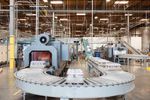
Industrial conveyor automation systems are mechanical and electronic systems designed to move materials, products, and components through manufacturing facilities, warehouses, packaging areas, and distribution centers. They reduce the need for repeated manual handling and help materials move between different stages of a production process.
Traditional conveyors often operate at a fixed speed and follow a simple route. Smart conveyor technology adds sensors, programmable controllers, automated sorting, and digital monitoring. These features allow a conveyor system to respond to changing production conditions and coordinate with other machines.
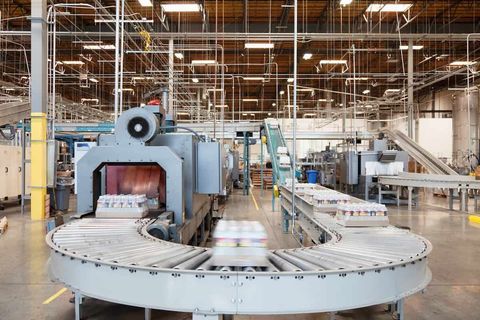
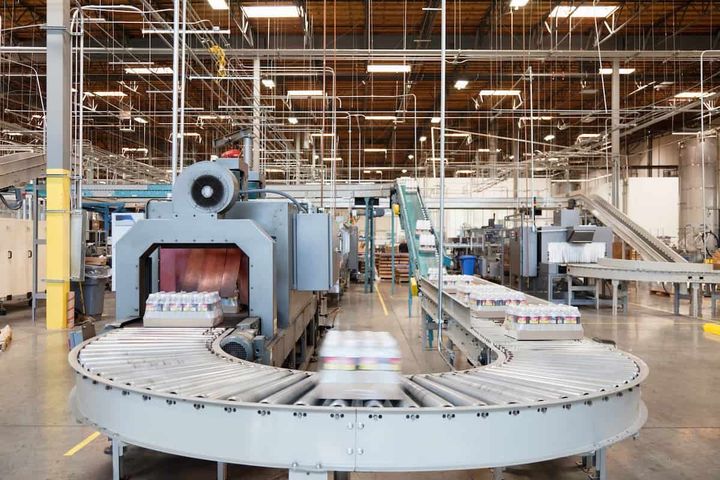
For example, a food processing facility may use conveyors to move containers from filling equipment to inspection and packaging stations. In an automotive plant, conveyors can transport parts between assembly areas while keeping production steps organized.
Industrial conveyor automation can include several technologies:
Belt conveyors: Move materials on a continuous belt.
Roller conveyors: Transport cartons, boxes, and rigid products.
Chain conveyors: Carry heavy components and industrial loads.
Overhead conveyors: Move products above the production floor.
Automated sorting conveyors: Direct products toward designated destinations.
Smart conveyor systems: Use sensors and control software to adjust movement and communicate with connected equipment.
The main purpose is to create a more predictable flow of materials. The system must match the product type, required movement, operating environment, and production speed.
How Smart Conveyor Technology Works
A smart conveyor combines mechanical equipment with electronic controls and information systems. Each component performs a specific function, but the components work together to coordinate material movement.
The process usually follows these steps:
Material detection: Sensors identify the presence, position, or movement of an item.
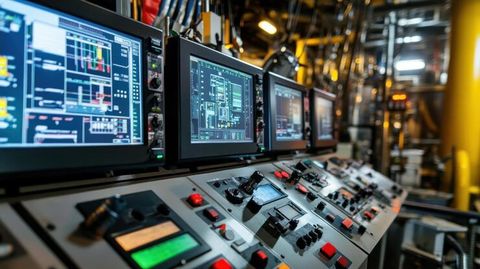
Control processing: A programmable logic controller (PLC) receives signals and applies programmed rules.
Movement control: Motors, drives, and mechanical components move the material.
Routing and sorting: Automated gates, diverters, or robotic equipment direct products to the correct location.
System monitoring: Operators review operating status, alarms, and production information.
Feedback and adjustment: The system changes selected operating parameters when its design and programming allow it.
Variable-frequency drives can regulate motor speed, while photoelectric sensors detect objects without physical contact. Barcode readers and machine vision systems can identify products or check their position.
A conveyor does not automatically become intelligent simply because it uses a sensor. Smart operation depends on how well the equipment, control logic, software, and production data are integrated.
Importance of Conveyor Automation in Modern Manufacturing
Why Industrial Conveyor Automation Matters
Manufacturing and logistics facilities often handle thousands of items during a normal operating period. When material movement depends entirely on manual handling or disconnected machines, production may experience delays, inconsistent flow, and avoidable handling errors.
Industrial conveyor automation systems help coordinate these activities. Their value depends on the type of operation, the quality of system design, and how effectively workers manage the equipment.
Key benefits include:
Consistent material movement: Automated conveyors maintain a planned flow between production stages.
Improved productivity: Equipment can move products while workers focus on inspection, assembly, and other tasks.
Better product tracking: Sensors, barcode readers, and connected software can record item movement.
Reduced handling risks: Properly designed automation can reduce repetitive lifting and unnecessary manual movement.
Improved process visibility: Monitoring systems help operators identify blockages, abnormal speeds, and equipment faults.
More organized production: Automated routing helps coordinate packaging, sorting, and material transfer.
These benefits are particularly relevant to automotive manufacturing, electronics production, food processing, pharmaceuticals, parcel distribution, and industrial warehousing.
However, automation does not eliminate every operational problem. Poorly positioned conveyors can create bottlenecks, and a failure in one section can interrupt connected production stages. Regular inspection, appropriate system design, and employee training remain essential.
Industries That Use Smart Conveyor Systems
Different industries require different conveyor designs. The material's weight, shape, temperature, cleanliness requirements, and handling sensitivity influence equipment selection.
Industry | Typical application | Important consideration |
|---|---|---|
Automotive | Moving components between assembly stations | Load capacity and precise positioning |
Food processing | Transporting ingredients and packaged products | Hygiene and cleanability |
Pharmaceuticals | Moving containers and packaged medicines | Traceability and controlled handling |
Electronics | Transferring circuit boards and small components | Accurate positioning and static control |
Warehousing | Sorting cartons and parcels | Routing accuracy and variable flow |
Mining and bulk handling | Transporting ores and other raw materials | Wear resistance and dust management |
A conveyor used for lightweight packaging may need high sorting accuracy, while a system transporting heavy industrial materials requires strong mechanical construction. Selecting technology according to the application is more important than choosing the most advanced equipment available.
Recent Developments in Smart Conveyor Technology
Trends Shaping Conveyor Automation in 2025 and 2026
Industrial conveyor technology is increasingly connected to broader smart manufacturing systems. Recent developments emphasize practical monitoring, flexible automation, energy awareness, and secure data exchange.
Sensor-based condition monitoring: Sensors can track motor temperature, vibration, belt alignment, speed, and load. Maintenance teams can review these readings to identify unusual operating conditions before they lead to major interruptions. Research published in 2026 has also examined methods for adding real-time monitoring to existing conveyor equipment without replacing its main mechanical structure.
Artificial intelligence and predictive maintenance: Data analysis tools can examine operating patterns and help identify conditions associated with equipment deterioration. Their accuracy depends on sensor quality, historical data, and suitable models. Human inspection remains important when interpreting alerts and deciding on corrective action.
Modular conveyor designs: Modular sections make it easier to adapt selected layouts as product types and production requirements change. This approach can be useful in facilities that handle multiple product sizes or need to reorganize work areas.
Digital twins and simulation: A digital twin is a digital representation of physical equipment or a process. Engineers can use simulations to examine conveyor layouts, product flow, and possible bottlenecks before changing an operating system.
Greater attention to cybersecurity: Connected industrial equipment can introduce digital risks as well as operational benefits. Manufacturers are placing greater emphasis on network separation, controlled access, system updates, and secure communication between machines and software.
These developments do not mean every facility needs artificial intelligence or cloud connectivity. Basic sensors, reliable motor controls, and well-planned maintenance may provide the most practical improvements for some operations.
Comparing Traditional and Smart Conveyor Systems
Feature | Traditional conveyor | Smart conveyor |
|---|---|---|
Operation | Often follows fixed settings | Can respond to sensor inputs |
Monitoring | Primarily manual or local | May include continuous digital monitoring |
Fault detection | Often depends on inspection or basic alarms | Can use condition data and automated alerts |
Product routing | May require manual changes | Can use programmed sorting and identification |
Data collection | Limited or separate records | Can integrate with production data systems |
Maintenance planning | Often based on schedules or visible faults | Can also use equipment condition data |
Both approaches can be appropriate. The right choice depends on operating needs, existing equipment, employee capabilities, and the level of control required.
Laws, Safety Standards, and Industrial Policies
Conveyor Safety Regulations in India
Industrial conveyor automation systems must be designed and operated with appropriate attention to worker safety, electrical protection, and machinery risks. The exact requirements depend on the facility, industry, equipment type, and applicable national and state rules.
In India, manufacturers and plant operators should consider the following regulatory areas:
Factories legislation: Applicable factory safety provisions and state rules address machinery guarding, worker protection, workplace conditions, and safe operating practices.
Occupational safety requirements: Applicable occupational safety legislation and rules establish responsibilities for employers and workers in industrial environments.
Electrical safety: Conveyor motors, control panels, wiring, and isolation equipment must meet relevant electrical safety requirements.
Product standards: Applicable Bureau of Indian Standards (BIS) requirements and notified technical regulations may affect particular machines, components, or equipment categories.
Environmental requirements: Dust, noise, waste, and energy use may be subject to environmental rules depending on the facility and its activities.
Internationally, standards such as ISO 12100 provide a framework for machinery risk assessment and risk reduction. IEC 60204-1 addresses electrical equipment of machinery, while ISO 13849-1 covers safety-related parts of control systems.
These standards should be checked against the applicable legal requirements and current editions before a project is approved.
Essential Safety Practices
A safe conveyor installation should include suitable guarding around hazardous moving parts, accessible emergency stops, clear warning signs, and appropriate isolation procedures for maintenance.
Workers should receive training on safe operating procedures, blockage removal, and fault reporting. Equipment should never be inspected or repaired while moving parts remain hazardous.
Tools and Resources for Conveyor System Planning
Helpful Technical Tools
Engineers and plant managers can use several general tools to plan, monitor, and maintain industrial conveyor automation systems.
Conveyor capacity calculators: Estimate throughput based on belt speed, item spacing, material density, or load dimensions.
CAD software: Helps prepare conveyor layouts, equipment dimensions, and factory floor plans.
PLC programming tools: Define control logic, sensor responses, motor sequences, and safety-related functions.
SCADA dashboards: Display equipment status, alarms, production data, and selected operating measurements.
Maintenance checklists: Organize inspections of belts, rollers, bearings, motors, guards, and electrical connections.
Energy monitoring tools: Record electricity consumption and help identify unusual changes in equipment operation.
Risk assessment templates: Document hazards, possible consequences, and appropriate protective measures.
Useful learning materials include machinery safety manuals, industrial automation textbooks, electrical engineering references, and technical documentation for conveyor components.
When choosing tools, check whether they support the existing control equipment and communication protocols. Accurate records and clearly defined operating limits are often more useful than collecting large amounts of data without a specific purpose.
Frequently Asked Questions
What is an industrial conveyor automation system?
It is a system that uses mechanical conveyors, motors, sensors, and control equipment to move materials through production or distribution processes. Advanced systems can also sort products, monitor equipment, and exchange data with other machines.
How does smart conveyor technology improve productivity?
It helps coordinate material movement, identify blockages, reduce unnecessary handling, and provide information about equipment performance. Actual results depend on system design, maintenance, and production requirements.
Which sensors are commonly used in automated conveyor systems?
Common examples include photoelectric sensors, proximity sensors, encoders, load sensors, temperature sensors, and vibration sensors. The appropriate choice depends on what the system needs to detect or measure.
Are smart conveyor systems suitable for small manufacturing facilities?
Yes. Smaller facilities can begin with basic motor controls, sensors, and automated stopping or sorting functions. Additional monitoring and integration can be introduced as operational needs develop.
How can conveyor equipment safety be maintained?
Safety requires appropriate guarding, emergency stops, electrical protection, planned inspections, worker training, and safe isolation during maintenance. Facilities should also follow the rules and standards applicable to their equipment and industry.
Conclusion
Industrial conveyor automation systems play an important role in modern manufacturing, warehousing, and material handling. By combining mechanical transport equipment with sensors, controllers, and monitoring software, they help organizations coordinate production and improve visibility into daily operations.