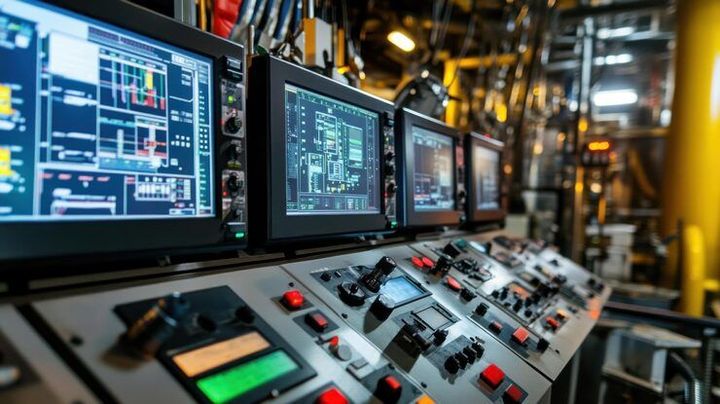
Industrial Monitoring Equipment: Advanced Technology and Smart Factory Trends
Industrial monitoring equipment plays an important role in modern manufacturing, production, and industrial automation. It includes electronic devices, sensors, software platforms, and connected systems that collect and analyze information from machines, production lines, and industrial environments.
These technologies help factories understand what is happening across their operations. They monitor important conditions such as temperature, pressure, vibration, humidity, energy consumption, machine speed, and production performance.
Traditional industrial monitoring systems often depended on manual inspections and basic control panels. Operators had to check machines regularly and identify problems through physical observations or individual measurements. Although these methods remain useful, modern manufacturing requires faster and more connected monitoring approaches.
Today, industrial monitoring equipment combines several technologies, including:
Smart sensors for continuous machine monitoring.
Industrial Internet of Things (IIoT) devices for connected operations.
Programmable Logic Controllers (PLCs) for machine control.
Supervisory Control and Data Acquisition (SCADA) systems for industrial supervision.
Artificial intelligence (AI) for identifying unusual operating patterns.
Cloud-based platforms for collecting and analyzing industrial data.
Edge computing systems for processing information near machines.
Together, these technologies create a connected manufacturing environment. They allow operators and engineers to understand machine conditions, recognize performance changes, and make informed decisions.
The growth of Industry 4.0 has increased the importance of industrial monitoring equipment. Factories are gradually moving toward intelligent production environments where machines, software, and people exchange information through connected systems.
Importance: Why Industrial Monitoring Matters Today
Industrial monitoring equipment is becoming increasingly important because manufacturers need accurate information about their production processes. Modern factories operate complex machinery, automated production lines, and interconnected equipment.
Without effective monitoring, identifying machine problems and understanding production performance can become difficult.
Improving Equipment Performance
Industrial monitoring systems collect information about machine operations. This helps technical teams understand whether equipment is working within its normal operating conditions.
For example, vibration sensors can identify unusual movement in rotating machinery. Temperature sensors can detect overheating in motors, electrical panels, and industrial processing equipment.
These measurements help maintenance teams investigate potential problems before they affect wider operations.
Supporting Predictive Maintenance
Predictive maintenance uses equipment data to estimate when maintenance may become necessary.
Instead of depending entirely on fixed inspection schedules, manufacturers can study machine conditions and identify patterns that may indicate developing faults.
Common monitoring measurements include:
Motor vibration and temperature.
Bearing condition and operating speed.
Electrical current and voltage.
Hydraulic pressure.
Lubrication conditions.
Machine operating hours.
This approach can help reduce unexpected interruptions and improve maintenance planning.
Improving Workplace Safety
Industrial environments may involve high temperatures, moving machinery, electrical systems, chemicals, and pressurized equipment.
Monitoring devices can track environmental and machine conditions that require attention.
For example, gas detection systems can identify certain hazardous gases, while temperature monitoring devices can help detect abnormal heat levels.
These technologies support workplace safety procedures but do not replace physical safeguards, employee training, or emergency response systems.
Supporting Energy Management
Energy consumption is another important area of industrial monitoring.
Smart meters and electrical monitoring equipment measure power usage across machines, production areas, and industrial facilities.
Manufacturers can analyze this information to identify unusual consumption patterns and understand how different production activities affect energy demand.
Recent Updates: Industrial Monitoring Technology Trends in 2025–2026
Industrial monitoring technology continues to develop through artificial intelligence, connected sensors, industrial cybersecurity, and advanced data processing.
Several important trends are influencing modern manufacturing.
AI-Based Industrial Monitoring
Artificial intelligence is increasingly being used to analyze machine data and identify unusual operating patterns.
AI-based monitoring systems can examine historical measurements, compare current conditions, and help engineers investigate possible equipment problems.
Machine learning models can also support predictive maintenance by identifying relationships between vibration, temperature, operating speed, and equipment performance.
Growth of Industrial IoT
Industrial Internet of Things technology connects sensors, machines, controllers, and monitoring platforms.
This allows information from different production areas to become available through connected industrial networks.
During 2025 and 2026, manufacturers continued exploring connected monitoring systems that support remote visibility, production analysis, and equipment management.
Digital Twin Technology
A digital twin is a digital representation of a physical machine, production line, or industrial process.
It uses operational information to help engineers understand equipment behavior and evaluate possible operating changes.
Digital twins can support:
Equipment performance analysis.
Production process simulation.
Maintenance planning.
Machine condition evaluation.
Industrial design improvements.
Edge Computing for Faster Analysis
Edge computing processes information close to the equipment generating it.
This reduces the need to send every measurement to a distant data center before analysis.
For industrial applications, edge computing can support faster responses to certain operating conditions, especially when continuous connectivity is limited.
Wireless Sensor Networks
Wireless monitoring devices are becoming useful in industrial locations where installing traditional cables may be difficult.
These networks can collect information from equipment across large facilities.
However, manufacturers must consider signal reliability, battery life, interference, and cybersecurity when selecting wireless monitoring technologies.
Industrial Data Analytics and Smart Dashboards
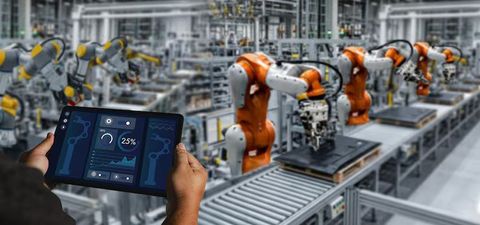
Modern monitoring dashboards bring information from multiple machines into a single interface. Engineers can review production measurements, equipment conditions, energy consumption, and machine alerts.
Important dashboard features include:
Real-time equipment status.
Historical performance reports.
Custom monitoring alerts.
Production efficiency indicators.
Equipment condition comparisons.
These developments show that industrial monitoring is becoming more closely connected with intelligent decision-making. A 2026 Cisco industrial AI report also highlights growing investment in advanced sensors, edge computing, AI vision, and industrial connectivity.
Industrial monitoring equipment in India operates within a regulatory environment covering workplace safety, electrical equipment, environmental protection, and industrial cybersecurity.
Manufacturers must consider the rules that apply to their industry, facility, equipment category, and operating activities.
Occupational Safety and Health Requirements
India's Occupational Safety, Health and Working Conditions Code, 2020 came into force on 21 November 2025. It establishes requirements relating to workplace safety, employer responsibilities, and occupational health standards.
Section 6 addresses employer duties, including protecting employees from workplace hazards. Section 18 concerns occupational safety and health standards.
Industrial monitoring technologies can support these responsibilities by helping factories observe environmental and equipment conditions. However, installing monitoring devices alone does not establish legal compliance.
Depending on the equipment category, applicable Indian standards and regulatory requirements may cover:
Electrical insulation and protection.
Equipment testing and certification.
Safe installation and operation.
Electromagnetic compatibility.
Industrial control panel protection.
Manufacturers should identify the applicable Bureau of Indian Standards (BIS) requirements before selecting or installing equipment.
Industrial Cybersecurity
Connected monitoring equipment creates additional cybersecurity considerations. Unauthorized access, insecure network connections, and outdated software can affect industrial operations.
The ISA/IEC 62443 framework provides internationally recognized guidance for industrial automation and control system cybersecurity.
On 19 December 2025, IEC published IEC PAS 62443-1-6:2025, which provides guidance on applying the 62443 framework to Industrial Internet of Things environments.
Factories may also need to monitor emissions, wastewater, air quality, noise, and other environmental conditions.
Applicable requirements depend on the industrial activity and relevant Central Pollution Control Board (CPCB) and State Pollution Control Board (SPCB) rules.
Monitoring equipment can help organizations collect environmental measurements and maintain operational records where required.
Tools and Resources for Industrial Monitoring
Selecting suitable industrial monitoring equipment requires an understanding of machinery, operating conditions, measurement accuracy, and communication requirements.
The following tools and resources can help engineers and factory managers plan monitoring activities.
Tool or Resource | Main Purpose |
|---|---|
Vibration sensors | Monitor machine movement and mechanical conditions |
Temperature sensors | Measure equipment heat levels |
Pressure transmitters | Monitor pressure in industrial systems |
Smart energy meters | Measure electrical consumption |
PLC systems | Control and monitor industrial machinery |
SCADA platforms | Display industrial processes and equipment status |
IIoT gateways | Connect industrial devices and networks |
Predictive maintenance software | Analyze equipment condition patterns |
Data visualization dashboards | Present measurements through charts and reports |
Digital twin platforms | Represent and analyze physical equipment digitally |
Useful Monitoring Calculations
Basic calculations can help operators understand equipment performance.
1. Equipment availability:
2. Energy consumption:
3. Temperature variation:
These calculations provide useful indicators, but their interpretation depends on the machine, operating conditions, and measurement accuracy.
Important Learning Resources
Industrial professionals can explore educational materials covering:
Industrial automation fundamentals.
Sensor calibration and measurement techniques.
PLC and SCADA system operation.
Industrial IoT architecture.
Predictive maintenance methods.
Industrial cybersecurity.
Factory energy management.
Technical documentation, equipment manuals, safety training materials, and relevant engineering standards can help users understand the correct application of monitoring technologies.
Frequently Asked Questions (FAQs)
1. What is industrial monitoring equipment?
Industrial monitoring equipment includes sensors, measuring instruments, controllers, and software that collect information about machines, production processes, and factory environments. It helps operators understand equipment conditions and production performance.
2. How does industrial IoT improve factory monitoring?
Industrial IoT connects machines, sensors, and monitoring platforms through communication networks. It allows factories to collect operational information, monitor equipment remotely, and analyze production conditions.
3. What is predictive maintenance in industrial monitoring?
Predictive maintenance uses machine data, sensors, and analytical techniques to identify possible equipment problems. It helps maintenance teams plan inspections based on actual machine conditions rather than relying only on fixed schedules.
4. How does AI support industrial monitoring systems?
AI analyzes operational data to identify unusual patterns, detect potential equipment problems, and support production decisions. It can also assist with automated quality inspection and equipment performance analysis.
5. What should manufacturers consider when selecting monitoring equipment?
Manufacturers should evaluate measurement accuracy, operating temperature, environmental conditions, communication compatibility, cybersecurity, installation requirements, and applicable safety standards.
Conclusion
Industrial monitoring equipment is an important part of modern manufacturing and smart factory development. Technologies such as industrial IoT, artificial intelligence, digital twins, advanced sensors, and predictive maintenance are changing how factories understand and manage their operations.