Industrial Process Plants: Guide to Digital Engineering and Automation
Industrial process plants are facilities designed to transform raw materials, chemicals, energy resources, or intermediate materials into finished or processed products. They are widely used across industries such as chemicals, pharmaceuticals, food processing, energy, metals, mining, water treatment, and advanced manufacturing.
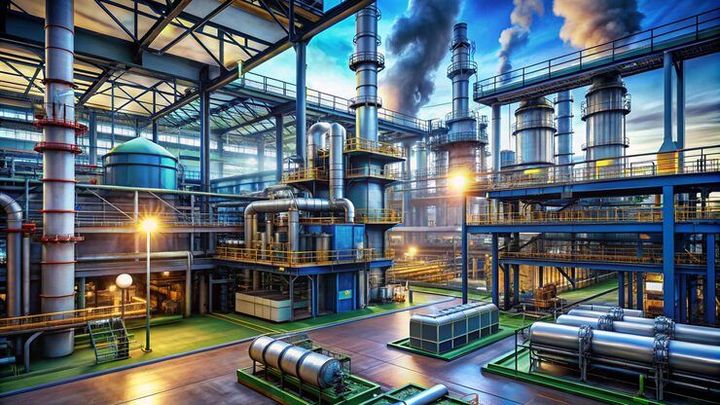
A typical process plant contains many interconnected systems. These may include pumps, compressors, reactors, boilers, heat exchangers, storage equipment, pipelines, electrical systems, sensors, control panels, and safety equipment.
Modern plants increasingly combine physical equipment with digital engineering and industrial automation. Instead of depending only on manual monitoring, operators can use sensors, programmable logic controllers (PLCs), distributed control systems (DCS), supervisory control and data acquisition (SCADA), industrial networks, and data analytics.
Digital engineering helps engineers create and manage detailed digital representations of equipment and processes before and during plant operation. Digital twins can also represent physical equipment or processes and use operational data for simulation, monitoring, and analysis. Industrial automation trends increasingly connect IIoT devices, edge computing, cloud computing, artificial intelligence, digital twins, and advanced human-machine interfaces.
The basic objective is to create a coordinated environment where engineering information, process data, control systems, and operational decisions can work together.
How a Modern Process Plant Works
Although plant designs vary significantly, the overall process commonly follows several stages:
- Raw material receiving and preparation
- Processing or chemical transformation
- Heat transfer or separation
- Material movement through pumps and pipelines
- Automated measurement and control
- Quality monitoring
- Storage and handling
- Waste and emissions management
- Safety monitoring and emergency control
Automation systems continuously collect information from instruments and equipment. Controllers then use programmed logic to maintain variables such as pressure, temperature, flow, level, and composition within defined operating ranges.
Importance: Why Digital Engineering Matters
Improving Process Visibility
Industrial plants generate large volumes of operational data. Temperature, pressure, vibration, flow rate, energy use, equipment status, and production information can all provide useful signals.
Digital engineering helps organize this information so engineers and operators can understand how different parts of a plant interact.
Better visibility can support:
- Process monitoring
- Equipment diagnostics
- Energy analysis
- Production planning
- Maintenance planning
- Safety management
- Quality control
- Environmental monitoring
Supporting Automation and Process Control
Automation reduces the need for continuous manual intervention in repetitive control tasks. PLCs, DCS platforms, SCADA systems, sensors, and industrial communication networks can coordinate complex processes.
For example, a temperature sensor can detect a change in process conditions. A controller can compare the measurement with a defined operating target and adjust another system according to programmed logic.
This type of closed-loop control is common in modern industrial automation.
Supporting Digital Twin Technology
A digital twin is a digital representation of a physical asset, system, or process. It can combine engineering information with operational data to support simulation, monitoring, and analysis.
Digital twin applications can include:
- Equipment behavior analysis
- Process simulation
- Operator training
- Engineering validation
- Predictive maintenance analysis
- Production optimization
- Asset lifecycle management
Recent industrial technology developments show continued movement toward combining digital twins with industrial AI and advanced visualization. In March 2026, Siemens announced digital-twin technologies in India that combine industrial software, automation, AI infrastructure, and accelerated computing.
Key Technologies Used in Process Plants
| Technology | Main Purpose |
|---|---|
| PLC | Machine and process control |
| DCS | Continuous process control |
| SCADA | Supervisory monitoring and control |
| IIoT Sensors | Data collection |
| HMI | Operator interaction |
| Digital Twin | Digital modeling and analysis |
| Edge Computing | Local data processing |
| Industrial AI | Pattern analysis and decision support |
| MES | Production information management |
| Industrial Networks | Equipment communication |
Recent Updates: Digital Plant Trends in 2025–2026
Greater Use of Industrial AI
Industrial AI is increasingly being discussed as part of plant engineering, automation, maintenance analysis, and operational decision support.
Rather than replacing every existing control system, AI is often being considered as an additional analytical layer that can identify patterns in large datasets.
Potential applications include anomaly detection, predictive analysis, process optimization, and engineering assistance.
Expansion of Digital Twins
Digital twins continue to develop from simple 3D representations into data-connected engineering and operational models.
The trend is toward linking engineering information with real-time or historical plant information. This can provide a more complete view of how equipment behaves throughout its lifecycle.
Industrial automation discussions in 2025 also highlighted digital twins, edge computing, IIoT, AI, connected workers, and advanced HMIs as important technologies for connected industrial operations.
Increasing Attention to OT Cybersecurity
As process plants become more connected, operational technology (OT) cybersecurity has become an important engineering consideration.
Industrial control environments have different requirements from conventional office IT systems because availability, reliability, safety, and process continuity can be critical.
The IEC 62443 family provides a structured approach to cybersecurity for industrial automation and control systems.
A notable recent development was IEC PAS 62443-2-2:2025, published on March 11, 2025. It provides guidance for developing and operating security protection schemes for industrial automation and control systems.
Another development was IEC PAS 62443-1-6:2025, published on December 19, 2025, which addresses applying the IEC 62443 framework to Industrial Internet of Things environments.
More Structured Cybersecurity Programs
IEC 62443-2-1:2024, published August 7, 2024, updated requirements for security programs used by industrial automation and control system asset owners. It also introduced a maturity model for evaluating requirements and recognized the challenges created by long-lived legacy systems.
These developments show that cybersecurity is increasingly treated as part of plant lifecycle management rather than as a separate IT activity.
Laws or Policies: Regulations Affecting Process Plants
Regulations Depend on Location and Industry
Industrial process plants are affected by different laws depending on their country, industry, plant size, materials handled, environmental impact, and risk profile.
Common regulatory areas include:
- Industrial safety
- Environmental protection
- Air emissions
- Water discharge
- Chemical handling
- Pressure equipment
- Electrical safety
- Fire protection
- Hazardous-area classification
- Data and cybersecurity requirements
- Worker protection
- Emergency planning
Because requirements vary by jurisdiction, engineers should verify the current rules that apply to the specific plant location.
Cybersecurity Frameworks
International standards such as IEC 62443 can provide a structured foundation for industrial cybersecurity. IEC 62443 covers organizational processes, system-level security, and component-level security requirements.
In the United States, NIST SP 800-82 Rev. 3 provides guidance for securing operational technology, including industrial control systems, SCADA, DCS, and PLC environments.
These frameworks are not automatically a substitute for local legislation. Their applicability should be evaluated alongside national and sector-specific requirements.
Environmental and Process Safety Requirements
Depending on the plant, environmental rules may address emissions, wastewater, hazardous substances, waste handling, and energy use. Process safety frameworks can also address hazardous materials, emergency shutdown systems, risk assessment, and safety management.
A plant's digital engineering model should therefore consider safety and compliance requirements from the early design stage rather than adding them only after construction.
Tools and Resources for Digital Plant Engineering
Engineering and Design Tools
Useful categories of tools include:
- Process simulation software
- 3D plant design platforms
- Piping and instrumentation diagram tools
- Electrical design software
- Control-system configuration tools
- Digital twin platforms
- Industrial data historians
- Asset-management databases
- Energy monitoring calculators
- Risk assessment templates
Automation and Monitoring Resources
Plant teams may also use:
- PLC programming environments
- SCADA dashboards
- HMI design tools
- Industrial network diagnostic tools
- Sensor monitoring systems
- Condition-monitoring platforms
- Predictive analytics tools
- Maintenance planning templates
- Cybersecurity assessment checklists
Learning Resources
For people learning industrial process engineering, useful resources include:
- Process control textbooks
- Industrial automation training material
- Engineering standards
- Cybersecurity frameworks
- Safety guidelines
- Process simulation exercises
- Instrumentation reference guides
- Industrial networking documentation
A useful approach is to learn the relationship between process engineering, instrumentation, automation, electrical systems, cybersecurity, and safety rather than studying each area independently.
FAQs
What is an industrial process plant?
An industrial process plant is a facility where raw materials or intermediate materials are processed through mechanical, chemical, thermal, biological, or other controlled processes. Plants commonly use equipment, instrumentation, automation, and safety systems to manage these operations.
What is digital engineering in a process plant?
Digital engineering uses digital models, engineering data, simulation, automation information, and connected systems to design, operate, monitor, and improve industrial facilities.
How does automation help process plants?
Automation allows control systems to monitor measurements and execute programmed actions. It can support consistent process control, equipment monitoring, alarm management, data collection, and operational decision-making.
What is a digital twin in industrial automation?
A digital twin is a digital representation of a physical asset, process, or system. Depending on its design, it can combine engineering models and operational data for simulation, monitoring, analysis, and lifecycle management.
Why is cybersecurity important for process plants?
Process plants increasingly use connected control systems and industrial networks. Cybersecurity helps protect these environments from unauthorized access, disruption, manipulation, and other digital risks while supporting reliability and safety requirements.
Conclusion
Industrial process plants are evolving from largely isolated physical facilities into connected environments that combine process engineering, automation, data, digital models, and cybersecurity.Digital engineering provides a foundation for this transformation by connecting plant design information with operational technologies.