Thermal Cure Coating Guide: Understanding Heat-Cured Coating Technology
Thermal curing changes coatings through controlled heat. This process is widely used in industrial manufacturing to create protective, functional, and decorative surfaces. Thermal Cure Coating technology involves applying a specially formulated coating and exposing it to a controlled temperature for a specific period.
Heat activates chemical reactions within the coating, helping it develop a solid and stable film. Depending on the formulation, the process may involve melting, flowing, drying, or chemical crosslinking. Powder coatings are a common example of heat-cured materials used across several industries.
What Is Heat-Cured Coating Technology?
Heat-cured coating technology uses thermal energy to transform an applied coating into a finished surface. The required temperature and curing time depend on the coating chemistry, material thickness, equipment, and intended application.
Some coatings harden mainly through evaporation and drying, while thermosetting coatings undergo chemical reactions that create stronger molecular connections. These differences influence the final surface properties, including hardness, adhesion, flexibility, and resistance to environmental conditions.
Main Types of Thermal Curing
Several coating technologies use heat during the finishing process:
Thermosetting powder coatings: Solid powder particles melt and chemically react during heating to form a continuous coating.
Heat-cured liquid coatings: Liquid formulations undergo drying and chemical reactions when exposed to controlled temperatures.
Low-temperature curing coatings: Special formulations are designed to cure at comparatively lower temperatures.
Radiation-assisted coatings: Certain systems combine thermal energy with ultraviolet or other radiation-based curing methods.
Importance of Thermal Cure Coating in Modern Industries
Industrial products frequently operate in environments where surfaces experience moisture, friction, temperature changes, and chemical exposure. Thermal curing helps manufacturers develop surface finishes designed for these conditions.
The technology also supports consistent production processes. Controlled heating allows manufacturers to manage coating thickness, surface appearance, adhesion, and other quality characteristics.
Industrial Benefits and Practical Applications
Thermal curing has applications across different manufacturing sectors.
Automotive manufacturing: Used on vehicle components, wheels, metal frames, and selected structural parts.
Construction: Applied to metal panels, architectural components, doors, and building equipment.
Electrical equipment: Used on enclosures, cabinets, electrical housings, and metal components.
Home appliances: Provides protective and decorative finishes for selected appliance surfaces.
Industrial machinery: Helps protect equipment housings, brackets, and fabricated metal parts.
The suitability of each coating depends on the operating environment and the material being treated. Manufacturers must consider temperature resistance, surface preparation, and required performance before selecting a formulation.
Understanding Powder Coating Raw Materials
Powder coating raw materials determine how a coating behaves during application and curing. Different ingredients contribute to appearance, durability, chemical reactions, and processing characteristics.
Common materials include:
Resins: Form the main coating structure and influence adhesion, flexibility, and surface performance.
Hardeners: Help initiate or control chemical crosslinking during thermal curing.
Pigments: Provide color, opacity, and selected visual characteristics.
Additives: Improve flow, surface appearance, stability, and other formulation properties.
Fillers: Influence texture, thickness, mechanical characteristics, and formulation consistency.
The combination of these ingredients determines the coating's suitability for specific manufacturing applications.
Recent Updates and Technology Developments
Thermal curing technology continues to develop as manufacturers explore energy efficiency, faster production processes, and wider material compatibility. Recent developments have focused on reducing curing temperatures and improving how thermal energy reaches coated components.
Low-Temperature Curing Developments
On March 16, 2026, WEG announced powder coating technology designed for lower-temperature curing. The development highlighted curing ranges of approximately 110–140°C, compared with conventional systems commonly operating at higher temperatures. Such technologies are expanding research into coating heat-sensitive materials, including selected plastics and composites.
In October 2025, industry analysis also highlighted developments in low-temperature formulations, smart coatings, and alternative resin technologies. These developments demonstrate how powder coatings are evolving beyond traditional metal finishing applications.
Advanced Heating and Curing Methods
Manufacturers are also exploring different approaches to thermal energy management.
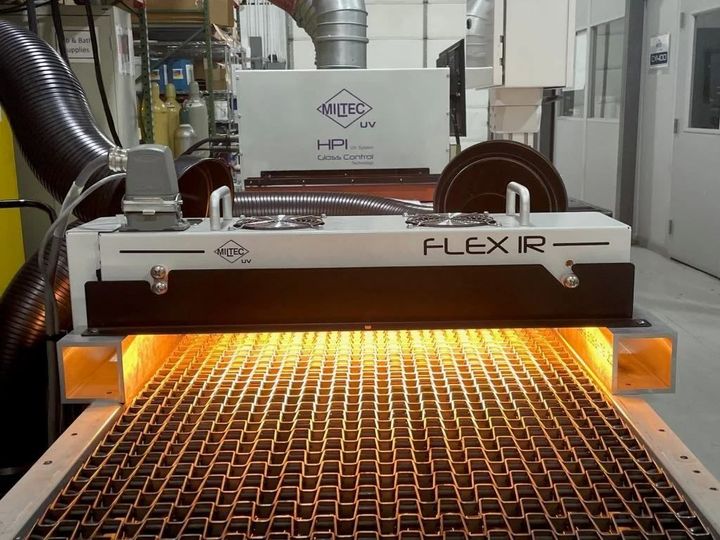
Infrared heating transfers energy directly to coated surfaces.
Near-infrared systems support targeted heating in selected applications.
Laser-assisted curing concentrates energy on specific coated areas.
Automated temperature monitoring helps maintain consistent processing conditions.
These approaches have different equipment requirements and application limitations. Their suitability depends on coating chemistry, production speed, component geometry, and manufacturing objectives.
Thermal Curing and Heat Exchanger Technology
Heat exchanger technology is important in industrial facilities where heating and cooling systems support production operations. Heat exchangers transfer thermal energy between fluids without necessarily mixing them.
In coating facilities, thermal management systems may support oven operation, process heating, ventilation, and equipment temperature control. Efficient heat transfer can help manufacturers manage energy consumption and maintain stable operating conditions.
| Technology | Main Function | Industrial Application |
|---|---|---|
| Convection ovens | Circulate heated air | Powder coating lines |
| Infrared heaters | Provide radiant heating | Surface curing |
| Heat exchangers | Transfer thermal energy | Industrial heating systems |
| Laser curing | Deliver concentrated energy | Selected advanced coatings |
| Temperature sensors | Monitor process conditions | Quality control |
Laws, Policies, and Safety Considerations
Thermal coating operations must follow applicable environmental, workplace safety, and industrial regulations. Requirements differ according to the country, coating formulation, production capacity, and manufacturing activities.
Environmental Requirements
Powder coatings generally contain little or no conventional solvent-based liquid carrier, which can help reduce volatile organic compound emissions during application. However, environmental performance depends on the complete manufacturing process, including pretreatment, cleaning, powder handling, and energy consumption.
In the European Union, industrial facilities may be subject to the Industrial Emissions Directive and applicable national environmental requirements. Other regions have their own rules covering air emissions, chemical handling, and industrial waste.
Workplace Safety
Heat-curing equipment involves elevated temperatures and electrical or mechanical hazards. Manufacturing facilities should consider:
Appropriate protective equipment for workers.
Ventilation and temperature monitoring.
Safe powder storage and handling procedures.
Regular inspection of ovens and heating equipment.
Fire prevention and emergency response arrangements.
Workers should follow equipment instructions and applicable workplace safety standards. Proper training and maintenance are important parts of safe industrial operations.
Tools and Resources for Understanding Thermal Curing
Learning resources and technical instruments help manufacturers understand coating processes and evaluate production conditions.
Useful Equipment and Learning Resources
Common resources include:
Temperature monitoring instruments: Measure oven temperatures and component surface temperatures.
Film thickness gauges: Check the thickness of applied coating layers.
Adhesion testing equipment: Evaluate how effectively a coating remains attached to a substrate.
Curing analysis tools: Help determine whether the coating has completed its required curing process.
Technical data sheets: Explain recommended application conditions, curing schedules, and material properties.
Energy monitoring systems: Help assess energy consumption across manufacturing operations.
These tools support process evaluation and quality management. Results should be interpreted according to the relevant coating specifications and testing procedures.
Frequently Asked Questions
1. What Is Thermal Cure Coating?
Thermal cure coating is a finishing technology that uses controlled heat to dry, melt, or chemically harden an applied coating.
2. What Are Powder Coating Raw Materials?
They include resins, hardeners, pigments, additives, and fillers that determine coating characteristics and curing behaviour.
3. How Long Does Thermal Curing Take?
Curing time varies according to coating chemistry, component thickness, temperature, and the manufacturer's recommended processing conditions.
4. What Is the Difference Between Powder Coatings and Liquid Coatings?
Powder coatings are applied as dry particles, while liquid coatings are applied using liquid formulations. Their application and curing requirements differ.
5. How Does Heat Exchanger Technology Support Coating Operations?
Heat exchangers transfer thermal energy between fluids and can support heating, cooling, and temperature management in industrial facilities.
Conclusion
Thermal Cure Coating technology plays an important role in modern industrial finishing. It combines specially formulated materials, controlled heating, and suitable equipment to develop functional and decorative surfaces.