Industrial Grinding Machine Knowledge for Advanced Manufacturing
Industrial grinding machines are specialized manufacturing systems designed to remove material from a workpiece through abrasion. They use rotating grinding wheels made from abrasive materials to achieve precise dimensions, smooth surface finishes, and high levels of accuracy.
These machines play a critical role in modern manufacturing by refining components after machining operations such as turning, milling, casting, or forging. Industries including automotive, aerospace, medical equipment, construction, mining, and heavy engineering rely on grinding technology to produce parts that meet strict quality standards.
Grinding operations can improve dimensional accuracy, surface quality, and component performance while reducing imperfections that may affect reliability.
How Industrial Grinding Machines Work
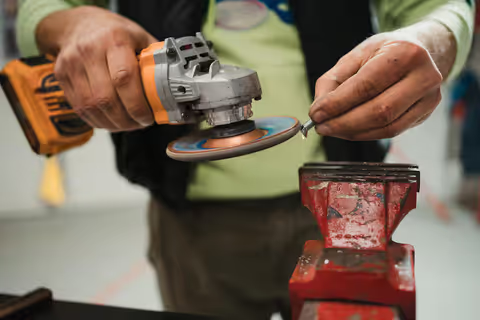
The grinding process involves a rotating abrasive wheel coming into controlled contact with a workpiece. Tiny abrasive particles act as cutting tools, removing microscopic layers of material.
The process generally includes:
- Workpiece positioning and clamping
- Wheel rotation at high speed
- Controlled feed movement
- Material removal through abrasion
- Cooling through lubrication systems
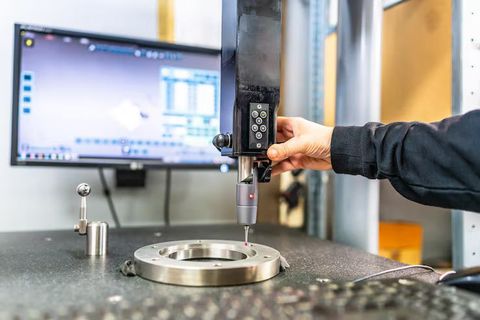
- Inspection for dimensional accuracy
Advanced grinding systems often incorporate computerized controls that monitor wheel speed, feed rate, temperature, and machining precision throughout production.
Major Types of Industrial Grinding Machines
| Machine Type | Primary Function | Common Applications |
|---|---|---|
| Surface Grinder | Produces flat surfaces | Tool manufacturing, molds, dies |
| Cylindrical Grinder | Grinds external cylindrical surfaces | Shafts, rollers, bearings |
| Centerless Grinder | Grinds without centers or chucks | High-volume component production |
| Internal Grinder | Finishes internal surfaces | Bushings, bearings, cylinders |
| Tool and Cutter Grinder | Sharpens cutting tools | Manufacturing facilities |
| CNC Grinder | Automated precision grinding | Aerospace, automotive, medical sectors |
| Bench Grinder | General-purpose grinding | Workshops and maintenance operations |
Key Components of Industrial Grinding Machines
Modern grinding machines consist of several essential components that work together to achieve precise machining results.
Main Components
- Grinding wheel
- Wheel spindle
- Workholding system
- Machine bed
- Control panel
- Feed mechanism
- Coolant system
- Sensors and monitoring equipment
- Safety guards
- Drive motors
The quality and alignment of these components directly influence machining accuracy and productivity.
Importance in Modern Manufacturing
Industrial grinding machines are essential because many products require extremely tight tolerances that conventional machining methods cannot consistently achieve.
Key benefits include:
- Improved dimensional accuracy
- Superior surface finish
- Enhanced component durability
- Reduced production defects
- Better product consistency
- Higher manufacturing efficiency
- Support for complex geometries
Many high-performance industrial components depend on grinding operations to meet strict engineering requirements.
Real-World Applications
Industrial grinding machines are used across numerous sectors.
Automotive Manufacturing
- Engine components
- Transmission shafts
- Brake systems
- Fuel injection parts
- Bearings
Aerospace Industry
- Turbine blades
- Landing gear components
- Aircraft engine parts
- Structural assemblies
Medical Equipment Production
- Surgical instruments
- Orthopedic implants
- Medical device components
- Precision stainless steel parts
Heavy Engineering
- Industrial rollers
- Hydraulic cylinders
- Mining equipment
- Power generation components
Tool Manufacturing
- Cutting tools
- Drill bits
- Milling cutters
- Precision gauges
These applications require exceptional accuracy and surface quality that grinding technology provides.
Problems Solved by Industrial Grinding Machines
Manufacturers face various production challenges that grinding machines help address.
Common Manufacturing Challenges
- Rough surface finishes
- Dimensional inaccuracies
- Tool wear issues
- Material hardness limitations
- Complex geometry requirements
- High tolerance demands
- Inconsistent product quality
Grinding technology helps overcome these challenges while maintaining production efficiency and product reliability.
Important Features of Modern Grinding Equipment
Industrial grinding systems have evolved significantly with technological advancements.
Advanced Features
- CNC automation
- Real-time process monitoring
- Adaptive grinding control
- Digital measurement systems
- Automated wheel dressing
- Energy-efficient motors
- Remote diagnostics
- Predictive maintenance capabilities
- Integrated quality inspection
- Smart manufacturing connectivity
These features help manufacturers improve productivity while maintaining consistent quality.
CNC Grinding Machines and Industry 4.0
Computer Numerical Control (CNC) technology has transformed industrial grinding operations.
Modern CNC grinders can:
- Execute highly complex grinding paths
- Reduce operator intervention
- Improve repeatability
- Minimize material waste
- Increase production consistency
- Support digital manufacturing environments
Industry 4.0 integration allows grinding equipment to connect with factory networks, enabling real-time data analysis and production optimization.
Abrasive Materials Used in Grinding Wheels
Grinding performance depends heavily on wheel composition.
Common Abrasive Materials
- Aluminum oxide
- Silicon carbide
- Cubic boron nitride (CBN)
- Diamond abrasives
- Ceramic abrasives
- Zirconia alumina
Different materials are selected based on workpiece hardness, required finish, and production objectives.
Recent Trends and Developments (2025–2026)
The industrial grinding machine sector continues to advance through automation, digitalization, and sustainability initiatives.
Key Industry Developments
- Increased adoption of AI-assisted machining optimization in 2025
- Expansion of smart sensor technology for predictive maintenance
- Greater use of robotic loading and unloading systems
- Enhanced CNC software for precision control
- Growth in high-speed grinding technologies
- Development of energy-efficient grinding equipment
- Wider implementation of digital twins for process simulation
- Improved abrasive materials for longer wheel life
- Integration with Industrial Internet of Things (IIoT) platforms
Throughout 2025 and early 2026, manufacturers have focused on reducing downtime while improving productivity and process visibility.
Regulations and Industry Standards
Industrial grinding operations must comply with workplace safety and equipment regulations.
Important Standards and Guidelines
- ISO 16089 for machine tool safety
- ISO 23125 safety requirements
- Occupational safety regulations for machinery operation
- Industrial dust control standards
- Machine guarding requirements
- Electrical safety regulations
- Environmental compliance guidelines
Organizations must also follow local workplace safety requirements to protect operators and maintain regulatory compliance.
Useful Tools and Learning Resources
Professionals seeking to understand grinding technology can benefit from various educational resources.
Learning Resources
- Manufacturing engineering textbooks
- Industrial automation training programs
- CNC machining courses
- Mechanical engineering publications
- Technical standards documentation
- Industry association resources
- Engineering research journals
- Digital manufacturing learning platforms
Software and Technology Platforms
- CAD software
- CAM software
- CNC programming systems
- Manufacturing execution systems
- Predictive maintenance platforms
- Industrial IoT monitoring tools
These resources help engineers, technicians, and manufacturing professionals stay informed about evolving grinding technologies.
Maintenance Best Practices
Proper maintenance is essential for achieving consistent grinding performance.
Recommended Practices
- Regular wheel inspection
- Proper wheel balancing
- Coolant system maintenance
- Alignment verification
- Lubrication monitoring
- Vibration analysis
- Sensor calibration
- Scheduled preventive maintenance
Consistent maintenance improves equipment reliability and extends machine lifespan.
Frequently Asked Questions
What is an industrial grinding machine?
An industrial grinding machine is a manufacturing system that removes material using an abrasive grinding wheel to achieve precise dimensions, smooth finishes, and tight tolerances.
What industries commonly use grinding machines?
Automotive, aerospace, medical equipment, mining, construction, power generation, and precision manufacturing industries commonly utilize grinding technology.
What is the difference between CNC grinding and conventional grinding?
CNC grinding uses computerized controls for automated precision machining, while conventional grinding relies more heavily on manual operation and adjustment.
Why are grinding wheels important?
Grinding wheels perform the actual cutting action. Their abrasive composition determines machining efficiency, surface quality, and overall performance.
How does predictive maintenance improve grinding operations?
Predictive maintenance uses sensors and monitoring systems to detect potential issues before failures occur, reducing downtime and improving productivity.
Conclusion
Industrial grinding machines are fundamental to modern manufacturing because they deliver the precision, consistency, and surface quality required for advanced industrial components. From automotive and aerospace production to medical equipment manufacturing, grinding technology enables organizations to meet demanding engineering specifications and quality standards.
Recent developments in CNC automation, artificial intelligence, Industrial IoT connectivity, and predictive maintenance continue to improve grinding efficiency and operational reliability. As manufacturing becomes increasingly digital and data-driven, industrial grinding machines will remain a vital part of precision production systems, supporting innovation across a wide range of industries.