Future of Agricultural Machinery: Smart Farming Innovations Explained
Agriculture is experiencing one of the biggest technological transformations in its history. As global food demand continues to rise and farmland resources become increasingly limited, farmers are turning to advanced machinery and smart farming technologies to improve productivity and sustainability.
The future of agricultural machinery is no longer limited to larger tractors or more powerful harvesters. Modern innovations are introducing intelligent systems, automation, artificial intelligence, precision agriculture, and connected equipment that help farmers make better decisions while reducing waste.
Understanding these developments can help explain how farming is evolving to meet the challenges of a growing population and changing climate conditions.
Why Agricultural Machinery Is Rapidly Evolving
Agricultural machinery has always played a crucial role in improving farming efficiency. However, today's challenges require more than traditional equipment.
Several factors are driving innovation:
- Growing global food demand
- Labor shortages in agricultural regions
- Rising operational efficiency requirements
- Climate variability and unpredictable weather
- Need for sustainable farming practices
- Increased focus on resource management
Industry reports suggest that precision agriculture technologies can significantly improve crop productivity while reducing unnecessary use of water, fertilizers, and fuel. These benefits are encouraging rapid adoption of smart farming equipment across many countries.
Smart Farming and Connected Agriculture
Smart farming refers to the use of digital technologies, sensors, data analytics, and connected machinery to optimize agricultural operations.
Modern agricultural equipment can now communicate through cloud-based systems and Internet of Things (IoT) networks. Farmers can monitor equipment performance, crop health, and field conditions from computers or mobile devices.
Real-Time Data Collection
Today's machinery collects valuable information during field operations, including:
- Soil moisture levels
- Crop growth patterns
- Weather conditions
- Fuel consumption
- Equipment performance metrics
- Field productivity data
This information allows farmers to make more informed decisions and improve overall farm management.
GPS-Guided Equipment
GPS technology has become a key component of modern farming machinery.
Advanced guidance systems help tractors and harvesters follow precise routes, reducing overlap and minimizing input waste. This improves operational efficiency while supporting sustainable agriculture goals.
Autonomous Tractors and Self-Driving Farm Equipment
One of the most exciting developments in agricultural technology is the rise of autonomous machinery.
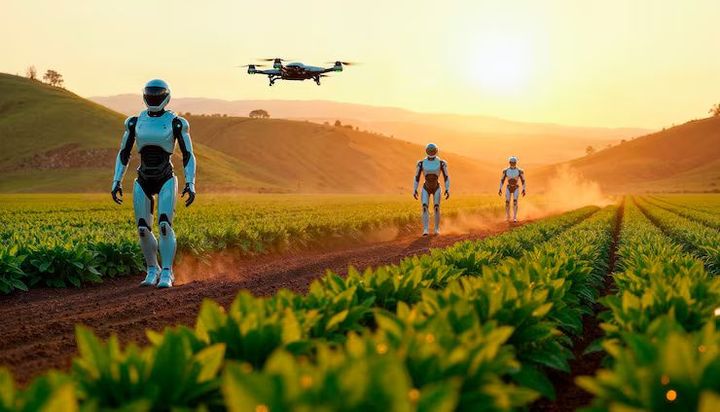
Self-driving tractors use GPS, sensors, cameras, and artificial intelligence to navigate fields with minimal human intervention. These systems can perform tasks such as:
- Planting
- Tilling
- Spraying
- Fertilizing
- Harvesting
Autonomous equipment can operate with remarkable precision, helping farms maintain productivity even when skilled labor is difficult to find.
Benefits of Autonomous Machinery
Key advantages include:
- Increased operational efficiency
- Reduced labor dependency
- Consistent field performance
- Better resource utilization
- Enhanced productivity monitoring
As artificial intelligence continues to advance, autonomous farming systems are expected to become increasingly common worldwide.
Precision Agriculture and Variable Rate Technology
Precision agriculture is transforming how farmers manage crops.
Instead of treating an entire field the same way, precision farming allows equipment to respond to specific conditions in different areas.
Variable Rate Applications
Modern machinery can automatically adjust:
- Seed placement
- Fertilizer distribution
- Irrigation levels
- Crop protection applications
This technology ensures that resources are applied only where needed, improving efficiency while reducing environmental impact.
Precision agriculture is becoming a major focus area for agricultural technology investment because it helps maximize yields while supporting sustainable farming practices.
Artificial Intelligence in Agricultural Machinery
Artificial intelligence is becoming a powerful tool in modern agriculture.
AI-powered systems can analyze massive amounts of farming data and identify patterns that would be difficult for humans to detect.
AI-Powered Crop Monitoring
Advanced machinery equipped with AI can:
- Detect crop stress
- Identify nutrient deficiencies
- Monitor plant growth
- Recognize disease symptoms
- Analyze field performance
Early detection helps farmers respond quickly and protect crop health before issues become widespread.
Predictive Analytics
AI systems can also forecast:
- Yield potential
- Weather-related risks
- Equipment maintenance needs
- Resource requirements
These predictive capabilities help improve planning and operational efficiency.
Smart Irrigation and Water Management
Water conservation is becoming increasingly important in agriculture.
Smart irrigation systems combine sensors, automation, and data analytics to optimize water usage.
Agricultural machinery connected to irrigation platforms can automatically respond to soil moisture conditions and weather forecasts. This helps reduce unnecessary water consumption while maintaining healthy crop growth.
Efficient water management is especially valuable in regions facing drought conditions or increasing pressure on water resources.
Drone Technology and Aerial Field Monitoring
Drones are emerging as valuable tools within smart farming ecosystems.
Agricultural drones provide detailed aerial views of fields, helping farmers monitor large areas quickly and accurately.
Common Drone Applications
Drones are frequently used for:
- Crop health assessment
- Field mapping
- Irrigation monitoring
- Pest detection
- Plant population analysis
The data collected by drones often integrates directly with agricultural machinery systems, creating a comprehensive digital farming environment.
Sustainable Farming Through Advanced Machinery
Sustainability is becoming a major priority across the agriculture sector.
Future agricultural machinery is being designed to support environmentally responsible farming practices.
Key Sustainability Features
Innovations include:
- Reduced fuel consumption
- Lower emissions
- Improved resource efficiency
- Precision input management
- Soil health protection
- Energy-efficient operations
These technologies help farmers balance productivity goals with environmental stewardship.
The Role of Robotics in Future Farming
Agricultural robotics represents another important area of innovation.
Specialized robotic systems are being developed for tasks such as:
- Weeding
- Fruit harvesting
- Crop monitoring
- Greenhouse management
- Livestock observation
Robotic solutions can perform repetitive tasks with high accuracy, improving efficiency while reducing manual workload.
As technology advances, robotic systems are expected to become more affordable and accessible for farms of various sizes.
What the Future Holds for Agricultural Machinery
The future of agricultural machinery will likely be defined by greater automation, connectivity, and intelligence.
Emerging trends include:
- AI-driven farm management systems
- Fully autonomous field operations
- Advanced machine learning applications
- Enhanced sensor technologies
- Electric agricultural equipment
- Integrated digital farming platforms
These innovations are helping create a more productive, efficient, and sustainable agricultural sector.
As global agriculture continues to evolve, smart farming technologies and intelligent machinery will play a critical role in ensuring food security while supporting environmental sustainability. Farmers who embrace these innovations will be better positioned to navigate future challenges and maximize the potential of modern agriculture.