Modern Irrigation Systems Explained: Essential Guide for Better Water Management
Water is one of the most valuable resources for agriculture, landscaping, and environmental sustainability. As populations grow and climate conditions become less predictable, efficient water management has become a global priority. Modern irrigation systems are helping farmers and land managers use water more effectively while supporting healthy crop growth and reducing waste.
Today’s irrigation technologies combine engineering, automation, and data-driven insights to improve water distribution. These systems are transforming how water is delivered across farms, gardens, commercial landscapes, and agricultural operations around the world.
Understanding Modern Irrigation Systems
Modern irrigation systems are designed to provide plants with the right amount of water at the right time. Unlike traditional flooding methods that often result in significant water loss, advanced irrigation techniques focus on precision and efficiency.
These systems use specialized equipment such as sensors, controllers, pumps, valves, and monitoring platforms to optimize water delivery. The goal is to minimize evaporation, runoff, and overwatering while maintaining ideal soil moisture levels.
Efficient irrigation management has become an important part of sustainable agriculture and environmental conservation efforts worldwide.
Why Better Water Management Matters
Agriculture accounts for approximately 70% of global freshwater withdrawals. As water resources become increasingly limited in many regions, improving irrigation efficiency is critical for long-term food security and environmental protection.
Better water management helps:
- Reduce water waste
- Improve crop productivity
- Lower operational expenses
- Support sustainable farming practices
- Minimize soil erosion
- Enhance drought resilience
- Improve resource planning
Modern irrigation systems play a major role in achieving these objectives by delivering water more accurately and consistently.
Types of Modern Irrigation Systems
Drip Irrigation Systems
Drip irrigation is one of the most efficient irrigation methods available today. Water is delivered directly to the root zone through a network of tubes and emitters.
This approach reduces evaporation and runoff while ensuring plants receive consistent moisture.
Key advantages include:
- High water-use efficiency
- Reduced weed growth
- Better nutrient management
- Lower risk of plant diseases
- Improved crop quality
Drip irrigation is commonly used in orchards, vineyards, vegetable farms, and greenhouse operations.
Sprinkler Irrigation Systems
Sprinkler systems distribute water through pressurized pipes and spray heads, simulating natural rainfall.
Modern sprinkler technologies can be programmed to operate at specific times and application rates. These systems are widely used for field crops, sports facilities, parks, and commercial landscapes.
Benefits include:
- Uniform water distribution
- Adaptability to different terrains
- Automated scheduling options
- Compatibility with smart irrigation controls
Center Pivot Irrigation
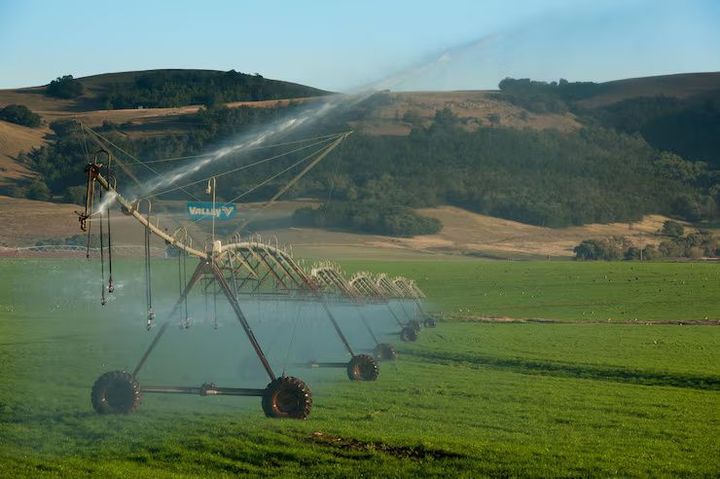
Center pivot irrigation systems rotate around a central point, watering large circular areas efficiently.
These systems are commonly found in large-scale agricultural operations where broad coverage and automation are important.
Advanced center pivot technologies often incorporate GPS guidance, remote monitoring, and variable rate irrigation capabilities.
Micro Irrigation Systems
Micro irrigation applies water slowly through low-pressure devices positioned near plants.
This method offers excellent control over water application and is particularly effective in water-scarce regions.
Micro irrigation supports sustainable agriculture by reducing unnecessary water consumption while maintaining healthy plant growth.
Smart Irrigation Technology and Automation
The rise of digital agriculture has significantly improved irrigation management. Smart irrigation technology uses data and automation to make real-time watering decisions.
Modern systems often include:
- Soil moisture sensors
- Weather monitoring stations
- Remote management dashboards
- Automated irrigation controllers
- Cloud-based analytics platforms
- Precision agriculture software
These technologies help determine exactly when and how much water should be applied.
For example, if rainfall is detected, the system can automatically adjust irrigation schedules to avoid unnecessary watering. This level of precision supports both water conservation and crop performance.
The Role of Precision Agriculture
Precision agriculture is transforming water management across the agricultural sector.
Using technologies such as satellite imagery, drone monitoring, GPS mapping, and field sensors, farmers can identify variations in soil moisture and crop health across different areas of a field.
Instead of applying the same amount of water everywhere, irrigation can be customized based on actual needs.
Benefits of precision irrigation include:
- Increased agricultural efficiency
- Improved resource utilization
- Better yield potential
- Reduced environmental impact
- Enhanced decision-making capabilities
As digital farming technologies continue to advance, precision irrigation is expected to become even more important.
Environmental Benefits of Modern Irrigation
Water conservation remains one of the most significant advantages of advanced irrigation systems.
Efficient irrigation practices contribute to:
- Reduced groundwater depletion
- Lower energy consumption
- Improved soil health
- Reduced fertilizer runoff
- Better ecosystem protection
- Enhanced climate resilience
Many sustainability initiatives now encourage the adoption of modern irrigation technologies as part of broader environmental management strategies.
By using water more responsibly, agricultural operations can support both productivity and long-term resource preservation.
Current Trends in Irrigation Innovation
Several emerging trends are shaping the future of irrigation and water management.
Artificial Intelligence in Irrigation
AI-powered systems analyze weather forecasts, soil conditions, and crop requirements to optimize irrigation schedules automatically.
Internet of Things (IoT) Connectivity
Connected irrigation devices enable real-time monitoring and remote management through smartphones and cloud-based platforms.
Data-Driven Water Management
Advanced analytics help identify inefficiencies and provide recommendations for improved water allocation.
Climate-Adaptive Irrigation
New technologies are being developed to help farmers respond more effectively to droughts, extreme temperatures, and changing weather patterns.
These innovations are making irrigation systems more intelligent, responsive, and sustainable.
Practical Considerations for Effective Irrigation Management
Successful irrigation involves more than simply delivering water.
Important factors include:
- Soil characteristics
- Crop water requirements
- Climate conditions
- Irrigation scheduling
- Equipment maintenance
- Water quality monitoring
- System performance evaluation
Regular monitoring and adjustments help maximize irrigation efficiency while preventing water waste.
Combining modern equipment with data-driven decision-making often produces the best long-term results.
Conclusion
Modern irrigation systems have become essential tools for effective water management in agriculture and landscaping. From drip irrigation and sprinkler systems to smart sensors and precision agriculture technologies, these solutions help conserve water while supporting healthy plant growth.
As global water challenges continue to grow, the adoption of advanced irrigation practices will play a vital role in improving agricultural sustainability, environmental protection, and resource efficiency. By embracing modern irrigation technology, land managers and agricultural professionals can create more resilient and productive operations while safeguarding valuable water resources for future generations.