Jump to a Chapter

CNC Industrial Equipment Explained: Machines, Automation, Precision Manufacturing, and Smart Factory Insights

CNC Industrial Equipment Explained: Machines, Automation, Precision Manufacturing, and Smart Factory Insights

Computer Numerical Control (CNC) industrial equipment forms the backbone of modern manufacturing by enabling highly accurate, repeatable, and automated machining operations. These computer-controlled machines are widely used to manufacture components for industries such as automotive, aerospace, medical devices, electronics, energy, construction, and industrial machinery.

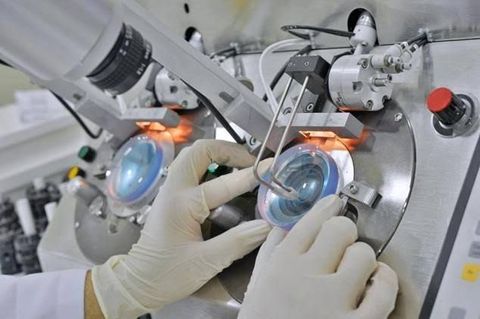
Unlike conventional machine tools that rely heavily on manual operation, CNC equipment executes programmed machining instructions with high precision. Modern CNC systems are increasingly integrated with robotics, artificial intelligence (AI), Industrial Internet of Things (IIoT), cloud monitoring, and smart factory technologies to improve productivity and manufacturing efficiency.

This guide explains CNC industrial equipment, machine types, automation technologies, precision manufacturing processes, and smart factory concepts from an educational perspective. It does not provide engineering, machining, purchasing, regulatory, or professional manufacturing advice.

What Is CNC Industrial Equipment?

CNC industrial equipment refers to computer-controlled manufacturing machines that perform machining operations according to programmed digital instructions.

These machines are commonly used for:

  • Metal machining
  • Plastic component manufacturing
  • Composite material processing
  • Precision engineering
  • Industrial tooling
  • Prototype development
  • Mass production

Computerized controls improve machining accuracy and process consistency.

How CNC Technology Works

CNC systems translate digital machining instructions into machine movements.

A simplified process includes:

  1. A component is designed using Computer-Aided Design (CAD) software.
  2. Manufacturing instructions are created using Computer-Aided Manufacturing (CAM) software.
  3. The CNC controller interprets the machining program.
  4. Servo motors move machine axes with precision.
  5. Cutting tools remove material according to programmed tool paths.
  6. Finished components are inspected for dimensional accuracy and surface quality.

This automated workflow supports consistent production outcomes.

Main Components of CNC Equipment

A typical CNC machine includes:

  • Machine frame
  • CNC controller
  • Servo motors
  • Ball screws
  • Linear guideways
  • Cutting tools
  • Tool holders
  • Automatic tool changer (ATC)
  • Workholding system
  • Operator control panel
  • Coolant system
  • Lubrication system

Each component contributes to machine performance and reliability.

Common Types of CNC Industrial Equipment

Different CNC machines are designed for specific manufacturing tasks.

CNC Milling Machines

CNC milling machines remove material using rotating cutting tools.

Typical applications include:

  • Engine components
  • Machine parts
  • Molds
  • Precision housings
  • Industrial tooling

CNC Lathes

CNC lathes rotate the workpiece while cutting tools shape cylindrical components.

Common products include:

  • Shafts
  • Bushings
  • Threaded components
  • Rollers
  • Couplings

CNC Grinding Machines

Grinding machines use abrasive wheels to achieve high dimensional accuracy and fine surface finishes.

Applications include:

  • Precision shafts
  • Bearings
  • Tool sharpening
  • Aerospace components

CNC Drilling Machines

These machines automate precise hole-making operations.

They are commonly used for:

  • Metal fabrication
  • Structural components
  • Industrial assemblies
  • Manufacturing fixtures

CNC Laser Cutting Machines

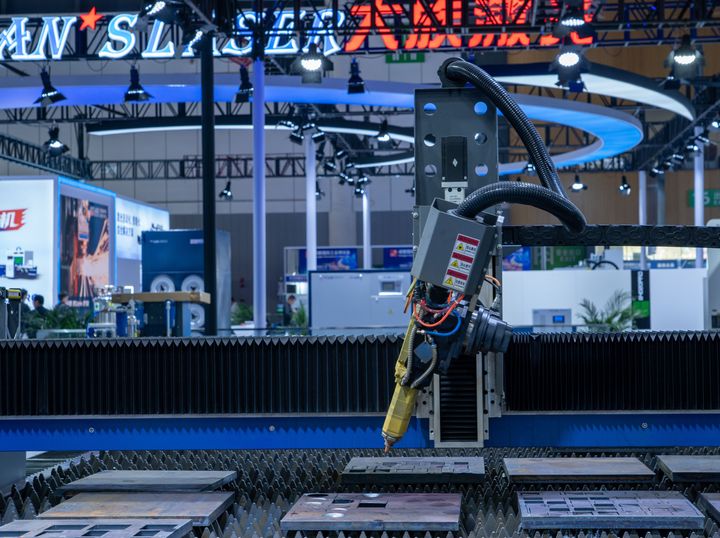
Laser cutting systems use focused laser beams for accurate material cutting.

Typical materials include:

  • Steel
  • Stainless steel
  • Aluminum
  • Acrylic
  • Wood
  • Plastics

CNC Plasma Cutting Machines

Plasma systems cut electrically conductive metals using high-temperature plasma.

Industries include:

  • Heavy fabrication
  • Shipbuilding
  • Structural steel
  • Manufacturing

CNC Waterjet Cutting Machines

Waterjet systems use high-pressure water, sometimes combined with abrasive particles, to cut materials with minimal heat generation.

Applications include:

  • Stone
  • Glass
  • Composite materials
  • Metals
  • Ceramics

CNC Electrical Discharge Machines (EDM)

EDM machines remove material using controlled electrical discharges.

Typical applications include:

  • Mold manufacturing
  • Die production
  • Precision tooling
  • Complex internal features

Precision Manufacturing

CNC equipment supports precision manufacturing through:

  • Tight dimensional tolerances
  • Repeatable machining
  • Smooth surface finishes
  • Complex geometry production
  • Reduced manual variation

These characteristics are essential in high-precision industries.

Automation in CNC Manufacturing

Modern CNC equipment frequently incorporates automation technologies.

Examples include:

  • Robotic material loading
  • Automatic tool changers
  • Automatic pallet systems
  • Workpiece measurement
  • In-process inspection
  • Automated production scheduling

Automation helps improve efficiency while reducing repetitive manual tasks.

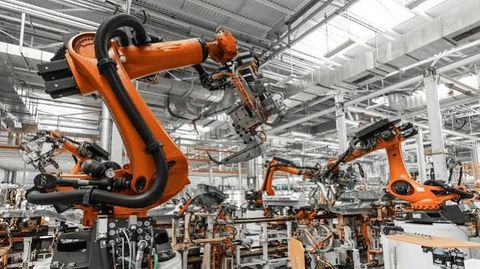
Robotics Integration

Industrial robots are increasingly integrated with CNC systems.

Typical robotic functions include:

  • Material handling
  • Machine tending
  • Component transfer
  • Inspection support
  • Packaging assistance

Robotics improves workflow efficiency in automated production environments.

Artificial Intelligence in CNC Equipment

AI technologies are becoming more common in modern manufacturing.

Potential applications include:

  • Predictive maintenance
  • Process optimization
  • Tool wear monitoring
  • Quality analysis
  • Energy management
  • Production scheduling

AI supports operational decision-making while skilled personnel oversee manufacturing processes.

Industry 4.0 and Smart Factories

Many CNC systems now support Industry 4.0 technologies.

Smart factory capabilities may include:

  • Machine connectivity
  • Cloud monitoring
  • Digital production tracking
  • Industrial Internet of Things (IIoT)
  • Manufacturing Execution Systems (MES)
  • Enterprise Resource Planning (ERP) integration
  • Remote diagnostics
  • Real-time production analytics

Connected manufacturing improves visibility across production operations.

CNC Programming

CNC machines operate using digital machining instructions.

Programming methods include:

  • Manual programming
  • Conversational programming
  • CAD/CAM-generated toolpaths
  • Simulation software

Programming approaches vary depending on machine complexity and production requirements.

Quality Control

Quality assurance is an important part of CNC manufacturing.

Inspection methods may include:

  • Coordinate Measuring Machines (CMM)
  • Laser measurement systems
  • Digital probes
  • Optical inspection
  • Surface finish analysis

Measurement systems help verify that components meet design specifications.

Industries Using CNC Equipment

CNC industrial equipment is widely used across many sectors.

Examples include:

  • Automotive manufacturing
  • Aerospace engineering
  • Medical device production
  • Electronics manufacturing
  • Energy equipment
  • Industrial machinery
  • Defense manufacturing
  • Consumer product manufacturing

Each industry uses different machining processes based on component requirements.

Factors Influencing Equipment Selection

Manufacturers consider several factors when selecting CNC equipment.

These include:

  • Material type
  • Component size
  • Required tolerances
  • Production volume
  • Machine configuration
  • Automation level
  • Software compatibility
  • Maintenance requirements
  • Facility infrastructure

Machine selection depends on operational and manufacturing goals.

Industrial Technology Trends in 2026

Several innovations continue shaping CNC manufacturing.

Current developments include:

  • AI-assisted machining optimization
  • Digital twin technology
  • Collaborative robotics (cobots)
  • Smart sensors
  • Cloud-connected CNC systems
  • Predictive maintenance platforms
  • Energy-efficient machine designs
  • Autonomous production monitoring

These technologies continue advancing precision manufacturing and industrial automation.

Frequently Asked Questions

What is CNC industrial equipment?

CNC industrial equipment refers to computer-controlled manufacturing machines that automate machining processes using digital programming.

What industries use CNC machines?

CNC equipment is widely used in automotive, aerospace, medical, electronics, industrial machinery, energy, and precision engineering industries.

What is the advantage of CNC automation?

Automation improves machining consistency, production efficiency, repeatability, and precision while reducing manual intervention.

How does AI support CNC manufacturing?

AI can assist with predictive maintenance, process optimization, quality analysis, machine monitoring, and production planning.

What is a smart factory?

A smart factory is a manufacturing environment where connected machines, sensors, software, robotics, and data analytics work together to improve production efficiency and operational visibility.

Conclusion

CNC industrial equipment has transformed modern manufacturing by combining precision machining, computer automation, robotics, and digital technologies into highly efficient production systems. From milling and turning to laser cutting and grinding, CNC machines enable manufacturers to produce complex components with exceptional accuracy and consistency.

As Industry 4.0 technologies continue to evolve, CNC equipment is becoming increasingly intelligent through AI-assisted optimization, cloud connectivity, predictive maintenance, and smart factory integration. These innovations are shaping the future of manufacturing by improving productivity, quality, and operational efficiency across industries.

Disclaimer

This article is intended solely for informational and educational purposes. It does not provide engineering, machining, manufacturing, industrial automation, regulatory, purchasing, or professional technical advice. It does not endorse, recommend, compare, rank, review, market, or promote any machine manufacturer, CNC control system, software platform, industrial equipment supplier, or automation provider. Machine specifications, tooling, safety requirements, operational procedures, and performance characteristics vary by manufacturer, application, and jurisdiction. Readers should consult qualified engineering professionals and official equipment documentation for technical guidance and safe operating practices.


author-image

Ravi Shankar Maurya

We create purposeful content that speaks, resonates, and drives action.

July 17, 2026 . 10 min read