CNC Machine Technology Explained
CNC machine technology has transformed modern manufacturing by making production faster, more accurate, and highly efficient. CNC stands for Computer Numerical Control, a system that uses programmed software to control machine tools automatically.
Before CNC systems became common, machine operators manually controlled equipment such as lathes, drills, and milling machines. Today, CNC technology allows computers to manage these operations with exceptional precision, reducing human error and improving consistency.
Industries ranging from aerospace and automotive to electronics and medical equipment rely heavily on CNC machining to create complex parts that meet strict quality standards.
How CNC Machines Work
At its core, CNC technology converts digital designs into machine instructions. Engineers create a product design using CAD (Computer-Aided Design) software. This design is then converted into machine-readable code through CAM (Computer-Aided Manufacturing) software.
The CNC machine reads the instructions and controls movements along multiple axes. Cutting tools remove material from a workpiece to produce the desired shape.
The process generally follows these steps:
- Create a digital design.
- Convert the design into CNC code.
- Load material into the machine.
- Execute automated machining operations.
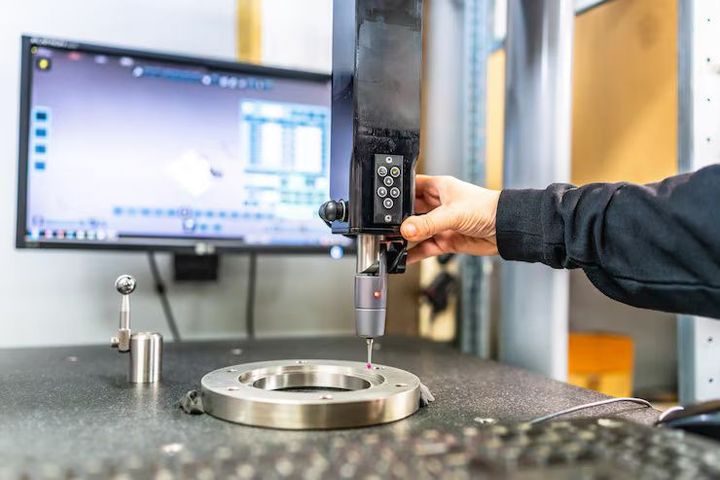
- Inspect the finished component.
This automated workflow helps manufacturers achieve consistent results even when producing thousands of identical parts.
Common Types of CNC Machines
CNC Milling Machines
CNC milling machines use rotating cutting tools to remove material from a workpiece. They are widely used for producing components with detailed shapes, slots, and holes.
These machines are popular in industries that require high-precision metal fabrication and complex part manufacturing.
CNC Turning Machines
CNC turning machines rotate the workpiece while stationary cutting tools shape the material. They are commonly used for creating cylindrical parts such as shafts, bushings, and connectors.
Modern CNC lathes can perform multiple operations within a single setup, improving productivity and accuracy.
CNC Laser Cutting Machines
Laser cutting systems use focused beams of light to cut materials with remarkable precision. They are frequently used in sheet metal processing, electronics manufacturing, and industrial fabrication.
CNC Grinding Machines
Grinding machines provide extremely fine surface finishes and tight tolerances. These machines are essential in applications where precision engineering is critical.
Why CNC Technology Is Important
Manufacturing companies face increasing pressure to improve quality, reduce waste, and enhance productivity. CNC machine technology addresses these challenges effectively.
Some key advantages include:
- High precision and repeatability
- Faster production cycles
- Reduced material waste
- Improved product consistency
- Enhanced workplace safety
- Better scalability for large production volumes
A modern CNC machine can often maintain tolerances measured in microns, making it suitable for industries that require exceptional accuracy.
The Role of Automation in CNC Machining
Industrial automation is one of the biggest trends shaping CNC technology. Advanced manufacturing facilities increasingly integrate CNC systems with robotics, sensors, and intelligent monitoring platforms.
Automated material handling systems can load and unload parts without human intervention. Smart sensors continuously monitor machine performance and identify potential issues before they lead to downtime.
This approach supports predictive maintenance strategies, helping manufacturers improve equipment reliability and operational efficiency.
CNC Programming and Software Integration
CAD and CAM Systems
Modern CNC machining relies heavily on CAD and CAM software solutions. These tools allow engineers to design parts, simulate machining operations, and optimize production workflows before manufacturing begins.
The integration of digital design and production reduces errors and shortens development cycles.
Multi-Axis Machining
Advanced CNC systems often operate on 4-axis, 5-axis, or even higher-axis configurations. These machines can manufacture highly complex components in a single setup.
Multi-axis machining improves accuracy while reducing the need for multiple production stages.
Industries That Depend on CNC Technology
CNC machining supports many sectors across the global economy.
Aerospace Manufacturing
Aircraft components require extremely tight tolerances and high-performance materials. CNC technology enables manufacturers to meet these demanding requirements consistently.
Automotive Production
Automotive manufacturers use CNC machines to produce engine components, transmission parts, and precision assemblies.
Medical Device Manufacturing
Medical equipment often requires intricate designs and strict quality control. CNC systems help create surgical instruments, implants, and diagnostic equipment with exceptional precision.
Electronics Industry
The electronics sector relies on CNC machining for enclosures, connectors, and specialized components used in modern devices.
Emerging Trends in CNC Machine Technology
The CNC industry continues to evolve as digital manufacturing technologies become more advanced.
Artificial intelligence is increasingly being used to optimize machining parameters and improve production efficiency. Machine learning algorithms can analyze operational data and recommend performance improvements.
Digital twin technology is another growing trend. Manufacturers create virtual replicas of machines and production systems to simulate operations and identify opportunities for optimization.
Cloud-connected manufacturing platforms also allow production teams to monitor equipment performance remotely and make data-driven decisions.
Industry analysts predict continued growth in smart manufacturing initiatives as businesses invest in automation, industrial analytics, and connected production environments.
Challenges and Considerations
Although CNC technology offers many benefits, manufacturers must carefully manage several factors.
Skilled programming knowledge remains important for achieving optimal machining results. Tool selection, material properties, and machining parameters all influence final product quality.
Regular maintenance is equally important. Proper calibration and inspection help ensure machines continue operating at peak performance levels.
Companies that combine advanced CNC equipment with strong technical expertise typically achieve the best long-term results.
The Future of CNC Manufacturing
The future of CNC machine technology is closely linked to digital transformation and industrial innovation. Smart factories, connected machinery, and data-driven manufacturing systems are becoming increasingly common worldwide.
As automation, artificial intelligence, and advanced manufacturing techniques continue to develop, CNC machines will play an even greater role in producing high-quality components efficiently and accurately.