Discover Bulldozer Applications: Modern Construction Guide
Bulldozers are among the most important pieces of heavy equipment used in construction and infrastructure development. Known for their strength, durability, and versatility, these machines are designed to move large amounts of soil, debris, sand, rock, and other materials across challenging terrain.
Modern bulldozer applications extend far beyond simple earthmoving. Today, they play a critical role in construction projects, mining operations, road development, land management, and large-scale infrastructure projects worldwide.
As urban development and infrastructure investments continue to grow globally, bulldozers remain a key part of the construction equipment industry, helping organizations complete projects more efficiently and safely.
How Bulldozers Work
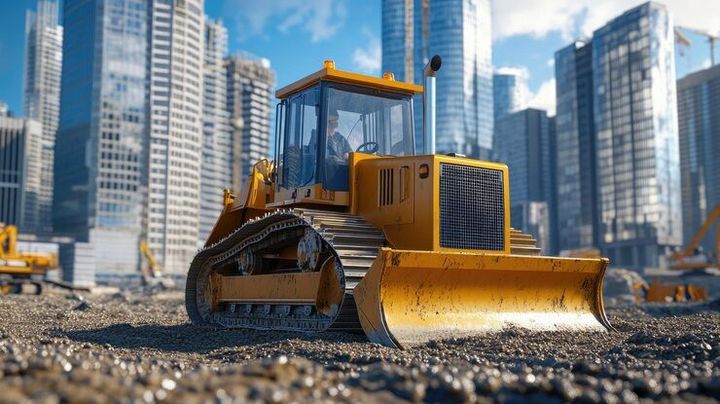
A bulldozer is equipped with a large metal blade mounted on the front of the machine. This blade pushes materials across a site while the machine moves forward using either tracks or wheels.
Tracked bulldozers are especially popular because they provide excellent traction on uneven, muddy, or rocky surfaces. Advanced hydraulic systems allow operators to precisely control blade movement, making modern bulldozers highly effective for grading and site preparation.
Recent innovations include GPS-guided controls, automated grading systems, telematics monitoring, and fuel-efficiency technologies that improve productivity while reducing operational downtime.
Common Bulldozer Applications in Modern Construction
Site Preparation
One of the most common bulldozer applications is preparing construction sites before building begins.
Bulldozers help remove vegetation, rocks, debris, and uneven terrain, creating a stable foundation for residential, commercial, and industrial projects. Proper site preparation improves safety and ensures smoother construction processes later in the project lifecycle.
Land Clearing
Large-scale land clearing projects often rely on bulldozers to remove trees, shrubs, stumps, and surface obstacles.
This application is essential for:
- Infrastructure development
- Utility installations
- Industrial facilities
- Renewable energy projects
- Transportation corridors
The machine's powerful blade enables rapid clearing of large areas compared to manual methods.
Road Construction
Road construction remains one of the largest sectors utilizing bulldozer technology.
Bulldozers assist with:
- Terrain leveling
- Soil distribution
- Embankment creation
- Road base preparation
- Surface grading
Accurate grading is critical because it directly affects road durability, drainage performance, and long-term maintenance requirements.
Bulldozers in Infrastructure Development
Highway Projects
Governments worldwide continue investing heavily in transportation infrastructure. Bulldozers are frequently used during highway expansion and development projects to move earth, create roadbeds, and shape landscapes.
Modern machine-control systems improve grading accuracy, helping teams achieve project specifications more efficiently.
Airport Construction
Airport development requires extensive earthmoving and site preparation.
Bulldozers help create level surfaces for:
- Runways
- Taxiways
- Terminal expansions
- Cargo facilities
Large infrastructure projects often require multiple bulldozers operating simultaneously to manage significant volumes of material.
Dam and Water Management Projects
Water infrastructure projects depend heavily on earthmoving machinery.
Bulldozers contribute to:
- Reservoir construction
- Flood control systems
- Canal development
- Embankment formation
Their ability to move large quantities of material makes them highly valuable in projects involving extensive terrain modification.
Bulldozer Applications in Mining Operations
Mining is another major industry where bulldozers play a vital role.
Mining companies use bulldozers for:
- Overburden removal
- Access road creation
- Waste material management
- Site maintenance
- Ground stabilization
Mining environments often involve challenging terrain and harsh operating conditions. Heavy-duty bulldozers are specifically engineered to withstand these demanding situations while maintaining reliable performance.
Industry reports indicate that global demand for mining equipment continues to grow as resource extraction projects expand across developing and developed economies.
The Impact of Technology on Modern Bulldozers
GPS Machine Control
One of the most significant advancements in construction machinery is GPS-based machine guidance.
These systems help operators achieve precise grading and excavation targets while reducing rework. Improved accuracy contributes to better project outcomes and more efficient resource utilization.
Telematics and Fleet Monitoring
Telematics technology allows project managers to monitor equipment performance remotely.
Key data includes:
- Fuel consumption
- Machine utilization
- Maintenance schedules
- Operating hours
- Performance metrics
These insights support better decision-making and equipment management strategies.
Semi-Autonomous Features
Many modern bulldozers now include automation capabilities that assist operators during repetitive grading tasks.
Benefits include:
- Improved consistency
- Enhanced productivity
- Reduced operator fatigue
- Better site efficiency
Automation continues to be a growing trend within the heavy equipment and construction technology sectors.
Environmental and Sustainability Considerations
Sustainability has become an important focus within the construction industry.
Manufacturers are developing bulldozers with:
- Lower emissions
- Improved fuel efficiency
- Reduced environmental impact
- Advanced engine management systems
These innovations help support environmental goals while maintaining the performance required for large-scale projects.
In addition, precise grading technology minimizes material waste and improves overall resource management during construction activities.
Choosing the Right Bulldozer for the Application
Different projects require different bulldozer configurations.
Small Bulldozers
Smaller models are ideal for:
- Residential developments
- Landscaping projects
- Utility work
- Limited-access construction sites
Medium Bulldozers
These machines provide a balance between power and maneuverability, making them suitable for many commercial construction applications.
Large Bulldozers
Large bulldozers are commonly used in:
- Mining operations
- Highway construction
- Major infrastructure projects
- Industrial site development
Selecting the appropriate machine helps maximize efficiency and project performance.
Future Trends in Bulldozer Applications
The future of bulldozer technology is closely linked to digital transformation in construction.
Key trends include:
- Artificial intelligence integration
- Advanced automation systems
- Real-time project analytics
- Predictive maintenance solutions
- Enhanced machine connectivity
As smart construction practices continue to evolve, bulldozers will become even more efficient and data-driven.
Industry analysts expect increasing adoption of intelligent earthmoving machinery as organizations seek higher productivity, improved safety, and better project outcomes.
Conclusion
Bulldozer applications continue to shape the modern construction, mining, and infrastructure industries. From site preparation and land clearing to highway development and mining operations, these powerful machines remain essential for large-scale projects around the world.
Advancements in GPS guidance, telematics, automation, and sustainability technologies are transforming how bulldozers operate, enabling greater precision and efficiency than ever before. As infrastructure investment and construction activity continue to expand globally, modern bulldozers will remain a cornerstone of successful earthmoving and development projects.