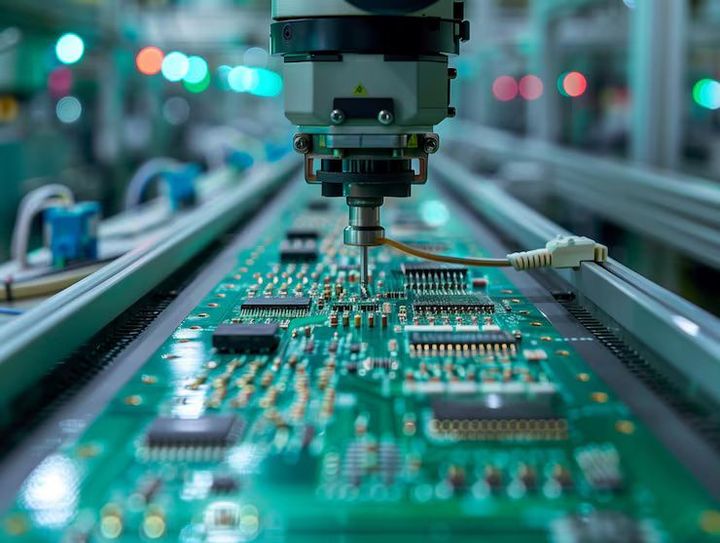
Industrial Chip Fabrication Systems: Digital Transformation in Semiconductor Manufacturing
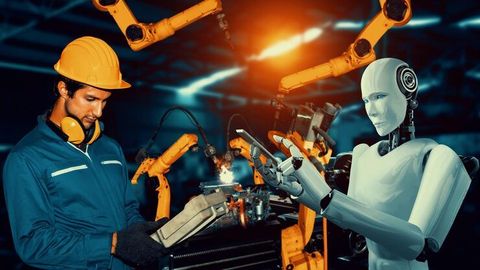
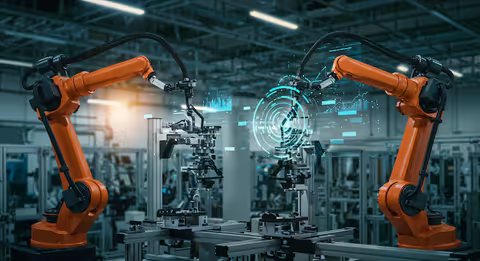
Industrial chip fabrication systems are the advanced manufacturing environments used to create semiconductor chips for modern electronic devices. These systems combine highly specialized machinery, software platforms, robotics, precision materials handling, and automated monitoring tools to manufacture chips at extremely small scales. Semiconductor manufacturing is no longer limited to isolated factory equipment. Instead, it has evolved into an interconnected digital ecosystem where machines, sensors, engineers, and analytics platforms work together in real time to improve quality, efficiency, and production consistency.
This comparison matters globally because semiconductor technology now supports nearly every major industry. Consumer electronics, transportation systems, healthcare devices, industrial automation, telecommunications, and cloud computing all rely on advanced chips. According to global research, demand for faster processing power, lower energy consumption, and more reliable digital infrastructure has accelerated investment in modern fabrication systems over the past several years. As industries increasingly depend on artificial intelligence, connected devices, and automation, chip manufacturing facilities face growing pressure to produce more complex components while maintaining operational stability and supply continuity.
The real-world impact of industrial chip fabrication systems reaches far beyond factories. More efficient semiconductor production influences device availability, technology affordability, and innovation across many sectors worldwide. Businesses depend on stable chip supplies to maintain operations, while consumers rely on semiconductor-powered products in daily life. As digital transformation continues across industries, understanding how fabrication systems operate and evolve becomes increasingly important for manufacturers, technology professionals, investors, and organizations planning future infrastructure strategies. That broader influence naturally leads to examining who is most affected by these systems and the challenges they aim to solve.
Who It Affects & Problems It Solves
Industrial chip fabrication systems affect a wide range of global industries and professional groups. Semiconductor manufacturers rely on these systems to improve production accuracy and maintain competitive output levels. Technology companies depend on stable fabrication processes to support product development timelines and device performance expectations. Engineers, supply chain specialists, industrial software developers, automation experts, and data analysts all work within environments influenced by semiconductor manufacturing technology. Even students and professionals entering technical careers increasingly encounter fabrication-related concepts because semiconductor infrastructure now supports many digital industries.
Without clear understanding of fabrication systems, organizations often struggle with operational inefficiencies, production delays, and rising manufacturing costs. Semiconductor manufacturing involves highly controlled processes where even minor environmental or calibration errors can reduce product yield. Traditional manufacturing approaches frequently lacked the flexibility and predictive capabilities needed for modern chip complexity. Digital transformation addresses these challenges by integrating machine learning, automated inspections, real-time analytics, and predictive maintenance into fabrication environments. These systems help manufacturers identify defects earlier, optimize energy usage, improve workflow coordination, and reduce downtime that could otherwise interrupt global supply chains.
A common global challenge occurs when manufacturers expand production capacity without modernizing their digital infrastructure. In many cases, factories continue relying on disconnected monitoring systems that provide limited visibility into operational performance. This can lead to delayed maintenance decisions, inconsistent production quality, and slower adaptation to changing market demand. Organizations that adopt integrated fabrication systems generally gain better visibility into manufacturing conditions and resource allocation. As these operational improvements continue shaping industry priorities, recent developments in semiconductor manufacturing provide valuable context for understanding the direction of digital transformation.
Recent Updates
Over the past year, semiconductor manufacturers have accelerated the adoption of artificial intelligence within fabrication facilities. AI-driven analytics platforms are increasingly used to monitor equipment performance, identify irregular production patterns, and improve defect detection accuracy. In early 2025, industry observers noted that predictive maintenance systems became more widely integrated into fabrication workflows because manufacturers sought to reduce unexpected interruptions and improve long-term equipment reliability.
Another important development has been the growing use of digital twin technology in semiconductor production. Digital twins create virtual models of fabrication environments, allowing engineers to simulate operational adjustments before implementing them in physical facilities. This approach helps manufacturers evaluate production scenarios, improve efficiency planning, and reduce the risks associated with equipment changes or process modifications. Industry data suggests that simulation-based manufacturing strategies are becoming more common as chip designs increase in complexity.
Sustainability has also become a larger focus across semiconductor manufacturing operations. Fabrication systems require substantial energy, water management, and environmental control resources. Over the past year, manufacturers have increased investment in smart energy monitoring systems, automated resource optimization, and waste reduction technologies. Many organizations are balancing performance improvements with broader operational sustainability goals, particularly as global industries pay closer attention to resource efficiency and environmental impact.
Cybersecurity concerns have expanded alongside increased digital integration. Modern fabrication systems rely heavily on connected devices, cloud-based analytics, and centralized data platforms. As a result, manufacturers are strengthening security protocols, access controls, and network monitoring systems to protect sensitive operational data and maintain production continuity. These developments highlight how semiconductor manufacturing now combines industrial engineering with advanced digital infrastructure, making direct comparisons between fabrication system capabilities increasingly important.
Comparison Table
The following comparison highlights major characteristics of traditional fabrication environments and digitally transformed semiconductor manufacturing systems. These parameters matter globally because they directly influence production quality, operational resilience, scalability, and long-term manufacturing efficiency.
| Parameter | Traditional Fabrication Systems | Digitally Transformed Fabrication Systems |
|---|---|---|
| Equipment Monitoring | Manual or isolated monitoring | Real-time connected monitoring |
| Maintenance Approach | Reactive maintenance | Predictive maintenance |
| Data Usage | Limited historical analysis | Continuous analytics integration |
| Production Visibility | Partial operational visibility | Centralized process transparency |
| Defect Detection | Human-dependent inspections | AI-assisted inspection systems |
| Workflow Coordination | Separate operational systems | Integrated automation platforms |
| Energy Management | Fixed resource usage | Dynamic optimization tools |
| Scalability | Slower expansion capability | Flexible digital scalability |
| Decision Speed | Delayed reporting cycles | Real-time operational insights |
| Cybersecurity Structure | Basic network protection | Advanced security monitoring |
| Simulation Capability | Limited testing environments | Digital twin simulation models |
| Supply Chain Integration | Fragmented coordination | Connected supply visibility |
The comparison shows a consistent shift toward automation, connectivity, and predictive decision-making. Traditional systems often depend on manual oversight and delayed analysis, while digitally transformed facilities prioritize real-time intelligence and operational integration. These differences also influence how semiconductor manufacturing is governed and how organizations evaluate suitable operational strategies.
Regulations & Practical Guidance
Industrial chip fabrication systems are generally governed by international manufacturing standards, operational safety expectations, environmental controls, and digital security frameworks. In most countries, regulators require semiconductor facilities to maintain strict quality assurance procedures because fabrication environments involve highly sensitive production conditions. Manufacturers are typically expected to monitor contamination levels, equipment calibration, chemical handling processes, and worker safety measures to maintain consistent operational standards.
Globally, authorities and industry organizations increasingly emphasize cybersecurity and data protection within manufacturing environments. As fabrication systems become more connected, operators are expected to secure industrial networks against unauthorized access and operational disruptions. Most jurisdictions also encourage transparent reporting around environmental management, particularly regarding resource efficiency and waste handling. While regulations differ across regions, the overall direction internationally supports safer, more resilient, and digitally accountable manufacturing operations.
Which Option Suits Your Situation?
Organizations operating older fabrication facilities may benefit from gradual digital integration rather than complete infrastructure replacement. Facilities with stable production volumes often prioritize predictive maintenance and automated monitoring first because these upgrades can improve operational visibility without requiring immediate large-scale restructuring. This approach allows manufacturers to modernize workflows while controlling implementation complexity.
Technology companies developing advanced semiconductor products may require highly connected fabrication environments capable of supporting rapid design adjustments and precision manufacturing. For these organizations, digital twins, AI-assisted inspections, and centralized analytics platforms can improve production flexibility and reduce delays associated with complex chip architectures. Such environments are often better suited for industries requiring continuous innovation and shorter product development cycles.
Smaller manufacturing firms or specialized suppliers may focus on selective automation rather than full digital transformation. In many cases, resource limitations make phased implementation more practical. Prioritizing equipment monitoring, cybersecurity improvements, and workflow integration can still provide meaningful operational benefits while preserving financial flexibility.
Organizations entering semiconductor manufacturing for the first time typically benefit from evaluating scalability, workforce training requirements, and long-term technology compatibility before investing in fabrication systems. Choosing adaptable infrastructure often helps businesses respond more effectively to changing industry demands. These practical considerations naturally connect to the tools and resources commonly used to support semiconductor manufacturing strategies.
Tools & Resources
Several globally accessible tools and resources help professionals better understand semiconductor manufacturing and digital fabrication systems. Industry Research Journals provide technical analysis and manufacturing trend insights that support long-term planning and operational awareness. Semiconductor Simulation Platforms help engineers model production workflows and evaluate process efficiency before implementing facility changes.
Manufacturing Analytics Dashboards support real-time monitoring of production performance, equipment status, and operational consistency across fabrication environments. Industrial Cybersecurity Frameworks help organizations assess network protection strategies and strengthen digital infrastructure resilience. Automation Training Libraries offer educational material covering robotics integration, predictive maintenance, and smart manufacturing principles relevant to semiconductor operations.
Digital Twin Modeling Tools assist manufacturers in creating virtual production environments for testing and optimization purposes. Environmental Monitoring Systems help fabrication facilities track energy usage, resource efficiency, and contamination control conditions. Together, these resources support informed decision-making and operational improvement, leading naturally into the most common questions people ask about fabrication systems and digital transformation.
Frequently Asked Questions
What are industrial chip fabrication systems?
Industrial chip fabrication systems are the integrated manufacturing environments used to produce semiconductor chips for electronic devices and industrial technologies. They combine precision machinery, automation software, environmental controls, and monitoring systems to manage highly sensitive production processes. Modern fabrication systems increasingly include artificial intelligence, predictive analytics, and connected infrastructure to improve efficiency, reduce defects, and support large-scale semiconductor manufacturing operations.
Who should choose digitally transformed fabrication systems?
Digitally transformed fabrication systems are generally most suitable for organizations requiring high production precision, scalable operations, and faster decision-making capabilities. Manufacturers producing advanced semiconductor designs often benefit from connected analytics and automated inspections. Companies focused on long-term operational efficiency may also prefer digitally integrated environments because they support predictive maintenance, workflow optimization, and more flexible adaptation to changing production requirements.
Are semiconductor fabrication systems heavily regulated?
Yes, semiconductor fabrication systems are commonly subject to operational, environmental, and safety oversight in many parts of the world. Manufacturers are typically expected to maintain quality control procedures, contamination management standards, and secure operational infrastructure. As digital integration increases, cybersecurity expectations have also become more important. Regulations vary internationally, but most frameworks emphasize reliability, worker safety, and responsible manufacturing practices.
What is a common misconception about digital transformation in manufacturing?
A common misconception is that digital transformation only involves adding automation to existing factories. In reality, effective transformation usually requires broader integration between equipment, software, analytics, cybersecurity, and workforce training. Simply installing advanced machines does not guarantee efficiency improvements. Successful modernization typically depends on coordinated operational planning, data visibility, and ongoing system optimization across the entire manufacturing environment.
Is there a minimum scale required for digital fabrication upgrades?
There is no universal threshold for adopting digital fabrication technologies. Smaller manufacturers can implement selective improvements such as predictive maintenance systems or connected monitoring tools without fully redesigning operations. Larger facilities may pursue more comprehensive digital integration because they manage higher production volumes and more complex workflows. The appropriate scale generally depends on operational goals, technical requirements, and long-term manufacturing strategy.
Conclusion
Industrial chip fabrication systems have evolved into highly connected manufacturing ecosystems that combine precision engineering with advanced digital technologies. The comparison between traditional and digitally transformed environments shows clear differences in monitoring capabilities, operational visibility, maintenance strategies, and production flexibility. As semiconductor demand continues expanding globally, manufacturers increasingly rely on automation, predictive analytics, and integrated infrastructure to maintain efficiency and supply reliability.
For most organizations, the most suitable approach depends on production complexity, scalability needs, and long-term operational priorities. Facilities focused on stability may benefit from gradual modernization, while manufacturers supporting advanced semiconductor applications often require deeper digital integration. Careful evaluation of workflow requirements, cybersecurity readiness, and infrastructure adaptability remains essential before making major implementation decisions.