Industrial Automation Robots Overview: Systems & Uses
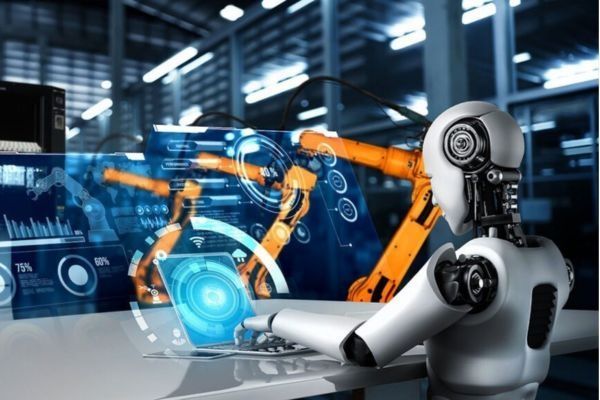
Industrial automation robots are transforming modern manufacturing by performing repetitive, precise, and complex production tasks with consistent results.
These programmable machines are commonly used for robotic welding, automated assembly, material handling, machine tending, packaging, palletizing, and quality inspection.
Modern industrial robotics combines robotic automation systems, machine vision, motion control, industrial sensors, programmable controllers, and smart manufacturing technology. As factories become increasingly connected, industrial automation robots are playing a greater role in flexible production environments and automated manufacturing systems.
Industrial Automation Robot Systems
Industrial automation robots are programmable mechanical systems designed to complete specific manufacturing operations. Depending on the configuration, a robot may move components, operate production equipment, manipulate tools, inspect products, or assemble parts.
A complete robotic automation system usually consists of several interconnected elements. These include the robotic arm, controller, end-of-arm tooling, sensors, safety equipment, and communication interfaces.
The controller manages programmed movements while sensors provide information about position, force, proximity, and operating conditions. Together, these technologies allow robots to perform repeatable tasks within automated production lines.
Major Types of Industrial Robots
Different industrial robots are designed for different applications. Important selection factors include payload, reach, operating speed, positioning requirements, workspace, and production process.
Articulated Robots
Articulated robots have multiple rotary joints that provide flexible movement. Six-axis industrial robots are widely used because their movement resembles that of a human arm.
Common applications include:
- Robotic welding
- Automated assembly
- Material handling
- Machine tending
- Painting
- Palletizing
Their flexible movement makes articulated robots suitable for many industrial automation applications.
SCARA Robots
SCARA robots are designed for rapid horizontal movements with controlled vertical positioning. They are frequently used in electronics manufacturing and high-speed automated assembly.
Typical applications include component insertion, sorting, pick-and-place operations, and small-part handling.
Cartesian Robots
Cartesian robots move along linear X, Y, and Z axes. Their predictable linear movement makes them suitable for applications requiring controlled positioning.
They are commonly associated with dispensing, component transfer, machine loading, packaging, and automated handling.
Delta Robots
Delta robots use lightweight parallel arms that enable rapid movement. They are often found in packaging, food processing, pharmaceutical production, and other high-speed environments.
Combining delta robots with machine vision can support automated product identification and sorting.
Collaborative Robots
Collaborative robots are designed for applications where appropriately assessed interaction between people and robotic equipment is required.
Cobots may support assembly, inspection, machine tending, and material handling. Their use still requires appropriate risk assessment, tooling, operating parameters, and safety controls.
Components Behind Robotic Automation
Industrial robot performance depends on the entire automation system rather than the robotic arm alone.
Robot Controller
The controller processes programmed instructions and manages robot movements, positioning, speed, operating sequences, and communication with surrounding machinery.
End-of-Arm Tooling
End-of-arm tooling allows the robot to perform a particular operation. Tooling can include mechanical grippers, vacuum systems, welding equipment, dispensing devices, inspection sensors, and other specialized attachments.
Industrial Sensors
Sensors provide information about operating conditions. They can detect position, proximity, pressure, force, temperature, movement, and other process variables.
Servo Motors and Motion Control
Servo motors move individual robot joints. Advanced motion control coordinates these motors to create accurate and repeatable trajectories.
Industrial Control Systems
Programmable logic controllers can coordinate robots with conveyors, manufacturing machinery, sensors, and other automation equipment.
Machine Vision and Intelligent Robot Guidance
Machine vision has expanded the capabilities of industrial automation robots by allowing robotic systems to interpret visual information.
A typical machine vision system uses cameras, lighting, sensors, and image-processing technology. The resulting information can guide robotic movements or support automated inspection.
Machine vision applications include:
- Part identification
- Component positioning
- Pick-and-place guidance
- Surface inspection
- Dimensional verification
- Barcode recognition
- Assembly verification
- Defect detection
Vision-guided robotics can be especially useful when components arrive in varying positions or orientations.
Industrial Robot Integration
Industrial robot integration connects robotic equipment with the wider manufacturing environment. A successful robotic work cell must coordinate the robot with tooling, production machinery, conveyors, industrial sensors, safety equipment, and control systems.
A typical integration process includes:
- Analyze the manufacturing operation.
- Determine payload, reach, speed, and precision requirements.
- Select the appropriate robot configuration.
- Design suitable end-of-arm tooling.
- Plan the robotic work cell.
- Integrate sensors and industrial controls.
- Program robotic movements.
- Establish safety measures.
- Test production sequences.
- Monitor and optimize performance.
Careful integration allows robotic automation systems to function efficiently as part of larger automated production lines.
Manufacturing Applications
Industrial automation robots can perform many different operations across modern factories.
Robotic Welding
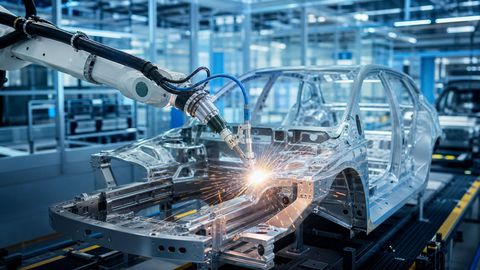
Robotic welding systems follow programmed paths to produce repeatable welding movements. They are widely used in automotive manufacturing, metal fabrication, machinery production, and other industrial environments.
Automated Assembly
Assembly robots can position, insert, fasten, and join components. Sensors and machine vision can provide additional feedback when precise alignment is required.
Material Handling
Material handling robots transfer components between workstations, conveyors, machinery, and storage locations.
Robotic material handling is particularly useful for repetitive operations and the movement of heavy components.
Machine Tending
Machine tending robots interact with CNC machines, presses, molding machinery, and other production equipment.
A robot may load a component into a machine, wait for the production cycle, and then remove the completed part.
Packaging and Palletizing
Packaging automation can use robots for sorting, product handling, case packing, palletizing, and related end-of-line processes.
Automated Quality Inspection
Robots equipped with cameras, scanners, or measurement technology can perform repeatable inspection routines.
Automated quality inspection helps production teams identify visual or dimensional variations during manufacturing.
Smart Manufacturing and Connected Robotics
Smart manufacturing connects industrial equipment with sensors, data platforms, monitoring systems, and digital control technology.
Connected industrial robots can provide operational information about:
- Production cycle times
- Robot utilization
- Equipment condition
- System alarms
- Process variations
- Production output
- Maintenance indicators
- Inspection results
This information provides greater visibility into automated manufacturing systems.
Industrial robots may also communicate with programmable logic controllers, machine vision systems, manufacturing execution platforms, conveyors, and other connected factory technologies.
Industrial Robot Safety
Safety is an essential consideration when designing robotic automation systems.
The appropriate safeguards depend on robot configuration, movement, tooling, payload, operating environment, and potential human interaction.
Common safety measures can include:
- Physical guarding
- Interlocked access points
- Emergency stop systems
- Light curtains
- Safety scanners
- Presence detection
- Controlled operating zones
- Safety-rated monitoring
- Operator training
- Documented risk assessments
Safety should be evaluated for the complete robotic application rather than only the robot itself.
Maintenance and Performance Monitoring
Preventive maintenance helps industrial automation robots maintain reliable operation and positioning performance.
Maintenance may involve inspecting cables, joints, motors, lubrication systems, end-of-arm tooling, sensors, and safety equipment. Robot diagnostics and system alarms should also be reviewed regularly.
Connected manufacturing systems can support condition monitoring by collecting operating information from robotic equipment. Changes in vibration, motor behavior, cycle times, or other performance indicators may reveal developing maintenance requirements.
Maintaining detailed inspection records also supports long-term equipment management.
Benefits of Industrial Automation Robots
Industrial automation robots can provide several manufacturing advantages when properly selected, configured, and integrated.
- Improve repeatability of production operations
- Support precise component positioning
- Automate repetitive manufacturing processes
- Support robotic welding and assembly
- Simplify repetitive material handling
- Integrate with machine vision systems
- Support automated quality inspection
- Handle demanding production environments
- Connect with smart manufacturing technology
- Support flexible production configurations
- Improve production process consistency
- Provide useful operational monitoring data
The actual results depend on the application, robot configuration, production environment, and integration strategy.
Developments in Industrial Robotics
Industrial robotics continues to advance through artificial intelligence, machine vision, advanced sensors, connected manufacturing, and flexible automation.
AI-assisted vision systems are improving the ability of robots to interpret objects and changing production environments. Advanced sensing technology can provide more detailed information about position, force, equipment condition, and process variables.
Autonomous mobile robots are also expanding automation beyond fixed robotic work cells. These systems can transport components and materials between different production areas.
Digital twins, predictive maintenance, flexible robotic cells, and intelligent production monitoring are further contributing to the development of industrial automation technology.
Frequently Asked Questions
What are industrial automation robots?
Industrial automation robots are programmable machines used for manufacturing processes such as welding, assembly, machine tending, material handling, packaging, and inspection.
What types of industrial robots are commonly used?
Articulated, SCARA, Cartesian, delta, and collaborative robots are commonly used across different manufacturing applications.
What is industrial robot integration?
Industrial robot integration connects robots with tooling, controllers, sensors, safety systems, conveyors, and surrounding production equipment.
How does machine vision help industrial robots?
Machine vision enables robotic systems to identify, locate, orient, measure, or inspect components using cameras and image-processing technology.
Where are industrial robots commonly used?
Industrial robotics is used in automotive manufacturing, electronics, metal fabrication, packaging, logistics, food processing, machinery production, and many other sectors.
What is robotic machine tending?
Robotic machine tending involves using robots to load and unload production equipment such as CNC machines, presses, and molding machinery.
Why is preventive maintenance important?
Preventive maintenance helps identify mechanical wear, tooling issues, electrical problems, and other conditions that may affect robot performance.
How do industrial robots support smart manufacturing?
Connected robots can exchange operational information with controllers, sensors, monitoring systems, and other factory technologies to support integrated manufacturing operations.
Conclusion
Industrial automation robots have become an important part of modern manufacturing, supporting robotic welding, automated assembly, machine tending, material handling, packaging, palletizing, and quality inspection. Different robot configurations provide manufacturers with options for handling diverse movement, payload, speed, and precision requirements.
The combination of industrial robotics, robotic automation systems, machine vision, motion control, industrial sensors, and smart manufacturing technology continues to expand the capabilities of automated production. Understanding robot types, components, integration, safety, applications, and maintenance provides valuable knowledge for evaluating the role of robotics in modern manufacturing.