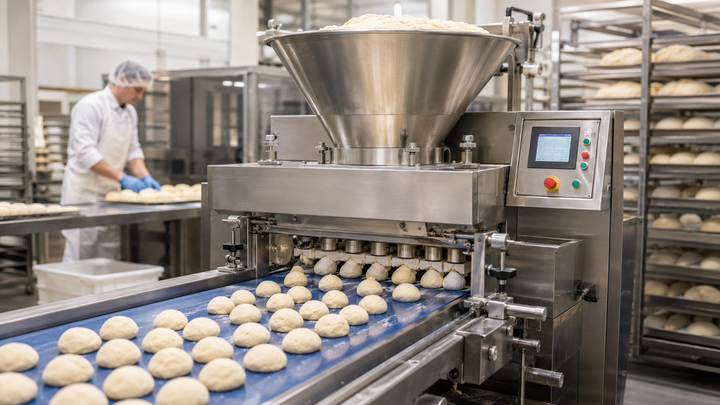
Dough Dividing Machines Guide: Basics, Uses, Information, Facts, and Resources
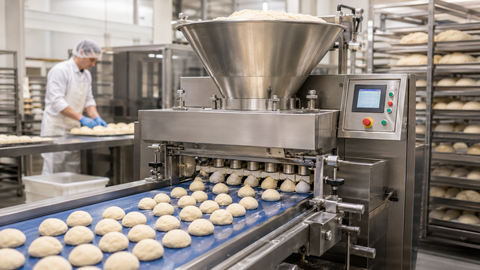
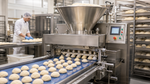
Dough dividing machines are used in bakery production to separate a large mass of dough into smaller, consistent portions. These portions may later become bread loaves, buns, rolls, pizza bases, pav, burger buns, or other bakery products.
The main purpose of a dough divider is accuracy. In manual dough handling, each portion may vary in size because human measurement can change from batch to batch. A dough dividing machine reduces this variation by portioning dough through a controlled mechanical process.
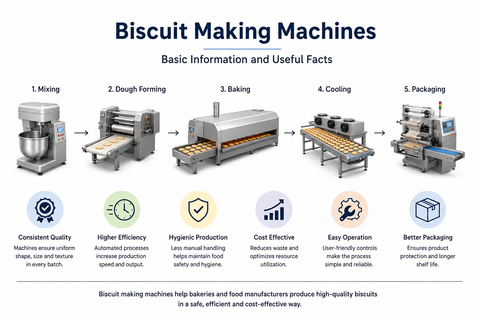
A typical bakery process starts with mixing. After mixing, dough rests for fermentation or proofing depending on the recipe. Then it is divided into portions before rounding, shaping, final proofing, baking, cooling, and packaging. The dough divider sits at a critical stage because portion accuracy affects shape, baking consistency, texture, and final product uniformity.
Dough dividing machines exist because bakeries need repeatable results. In small bakeries, manual scaling may work for limited production. In larger bakery environments, manual portioning can slow down workflow and create inconsistency. A dough divider supports structured bakery production by making portion control more predictable.
There are different types of dough dividers. Some machines use volumetric division, where dough is measured by volume. Others use weighing systems to improve portion control. Some are semi-automatic, while others are part of a fully connected bakery production line. The right type depends on dough texture, hydration level, product type, production volume, and hygiene requirements.
Why Dough Dividing Machines Matter Today
Dough dividing machines matter because bakery production is increasingly focused on consistency, hygiene, efficiency, and controlled processing. Modern consumers expect bakery products to look and taste the same across batches. A bun that is too small, a bread loaf that is uneven, or a pizza base with irregular weight can affect both quality and process control.
These machines affect many groups:
- Bakery owners and managers
- Food technologists
- Production supervisors
- Quality teams
- Maintenance teams
- Bakery workers
- Food safety auditors
- Consumers who expect consistent products
The main problems solved by dough dividing machines include:
- Uneven dough portions
- Slow manual scaling
- Variation in baked product size
- Higher physical strain during repetitive handling
- Inconsistent proofing and baking results
- Poor line balancing in bakery production
- Difficulty maintaining production records
- Higher chance of human handling errors
In bakery automation, dough dividing is not only about cutting dough. It is about controlling the entire portioning stage. When portion size is consistent, the next steps also become more stable. Rounding becomes easier. Proofing becomes more uniform. Baking time becomes more predictable.
| Bakery Stage | Role of Dough Dividing | Why It Matters |
|---|---|---|
| After mixing | Separates bulk dough into portions | Creates uniform starting pieces |
| Before rounding | Keeps portion size controlled | Improves shape consistency |
| Before proofing | Supports equal fermentation behavior | Helps product uniformity |
| Before baking | Reduces size variation | Improves baking consistency |
| Quality review | Supports measurement records | Helps process traceability |
Automation is also becoming important because bakery operations often deal with repetitive tasks. Robots and automation are used in bakery production to support productivity, quality consistency, and reduced manual strain in repetitive stages. This trend is especially relevant in dough handling, portioning, packaging, and inspection.
Recent Updates and Trends
The past year has shown stronger attention toward bakery automation, food inspection, digital monitoring, and process reliability.
In 2025, the International Baking Industry Exposition highlighted newer advances in ingredients, equipment, packaging, and safety-related products. Its Innovation Showcase described baking technology developments displayed in a state-of-the-art environment, including equipment and safety innovations for the baking sector.
One visible trend is the use of digital controls in dough processing machinery. Modern dough dividers may include programmable settings, touch panels, portion memory, safety interlocks, and easier cleaning designs. These features help teams manage different dough types and product sizes with less manual adjustment.
Another trend is better integration with bakery production lines. A dough divider may now work with dough rounders, intermediate proofers, moulders, conveyors, and checkweighers. This supports smoother production flow and improved traceability.
Food inspection technology is also advancing. The 2025 baking innovation showcase included photon-counting X-ray technology for baking applications and inspection analytics for rejected product verification. While this is not specific to dough dividing, it shows that bakery production is moving toward stronger process visibility and quality control.
In India, food processing policy discussions also moved toward technology-led transformation. In January 2026, the Ministry of Food Processing Industries held a Chintan Shivir in Udaipur focused on strengthening India’s food processing ecosystem through policy, innovation, entrepreneurship, and stakeholder collaboration. The event also highlighted technology-led transformation in food processing.
A simple trend view:
Manual portioning             ███
Semi-automatic dividing       ██████
Digital control panels        ███████
Line integration              ████████
Hygiene-focused design        █████████
Inspection and traceability   ██████████
This chart is illustrative. It shows the direction of bakery production attention rather than a measured market ranking.
| Trend | Meaning for Dough Dividing Machines | Practical Impact |
|---|---|---|
| Digital controls | Saved settings and repeatable adjustment | Easier product changeover |
| Hygiene-focused design | Smoother surfaces and easier cleaning access | Better sanitation discipline |
| Line integration | Connection with rounders and conveyors | Smoother workflow |
| Inspection systems | Weight and quality verification | Better process records |
| Automation | Less repetitive manual work | More stable production rhythm |
Laws, Policies, and Government Context in India
In India, bakery production is mainly affected by food safety, hygiene, labeling, and food processing policies. Dough dividing machines themselves are part of the production environment, so their use must align with clean handling, sanitation, and safe production practices.
The Food Safety and Standards Authority of India provides Food Safety Management System guidance documents for food businesses. These documents are based on Schedule 4 of the Food Safety and Standards Licensing and Registration Regulations, 2011, and include good hygienic practices, HACCP-related guidance, inspection checklists, and record templates. FSSAI also lists a guidance document for the bakery sector.
For bakeries, this means the equipment environment should support:
- Clean contact surfaces
- Proper sanitation routines
- Controlled handling of ingredients and dough
- Prevention of contamination
- Staff hygiene
- Maintenance records
- Process monitoring
- Pest-control discipline
- Safe storage and movement of materials
FSSAI’s guidance page also notes that these documents include templates and forms that help food businesses maintain records for food safety processes.
The Ministry of Food Processing Industries is also relevant because it runs schemes and programs for the food processing sector. Its official website lists the Pradhan Mantri Kisan SAMPADA Yojana, PMFME, and other food processing initiatives.
In November 2025, the ministry published new guidelines dated 12 November 2025 for food testing laboratories with NABL accreditation under the Food Safety and Quality Assurance Infrastructure component of PMKSY. This shows continuing attention toward food safety infrastructure and quality systems.
For dough dividing machines, the policy connection is indirect but important. A bakery using such machinery should think about food-contact safety, cleaning access, material suitability, worker protection, electrical safety, and documentation. These machines are not only production tools; they are part of the hygiene and quality-control environment.
| Policy Area | Relevance to Dough Dividing |
|---|---|
| Food hygiene | Machine surfaces and cleaning routines matter |
| Food safety records | Maintenance and sanitation logs support traceability |
| HACCP thinking | Dough dividing can be reviewed as a process step |
| Worker safety | Moving parts require guards and safe procedures |
| Quality assurance | Portion accuracy supports product consistency |
| Labelling rules | Final bakery products need accurate product information |
Helpful Tools and Resources
The following tools and resources can help learners, bakery teams, and food processing students understand dough dividing machines better.
Production planning tools
- Dough batch calculation spreadsheet
- Dough yield calculator
- Portion weight calculator
- Fermentation time planner
- Bakery production flow chart
- Batch tracking template
- Product specification sheet
- Daily production checklist
Quality and hygiene resources
- FSSAI FSMS guidance documents
- Bakery sanitation checklist
- HACCP worksheet
- Cleaning schedule template
- Maintenance record sheet
- Calibration log
- Allergen control checklist
- Food-contact surface inspection checklist
Technical learning tools
- Bakery process diagrams
- Dough hydration calculator
- Flour absorption worksheet
- Proofing temperature and humidity chart
- Equipment layout planner
- Conveyor line balancing worksheet
- Standard operating procedure template
Useful monitoring points
- Dough weight per piece
- Dough temperature
- Dough rest time
- Portion variation
- Machine speed
- Conveyor alignment
- Cleaning completion
- Blade or chamber condition
- Operator safety checks
- Final product weight range
A simple dough portion planning table may look like this:
| Product Type | Target Portion | Key Control Point |
|---|---|---|
| Bread loaf | 400–500 g | Weight consistency |
| Burger bun | 60–90 g | Shape and proofing |
| Pav | 35–50 g | Uniform batch size |
| Pizza base | 150–250 g | Thickness control |
| Dinner roll | 30–60 g | Rounding quality |
A dough divider should be reviewed not only by output speed, but by how gently it handles dough. Dough is a living material during fermentation. Over-compression, rough handling, or uneven cutting can affect gas structure and final texture.
Common Questions
What is a dough dividing machine?
A dough dividing machine is bakery equipment used to separate bulk dough into equal portions. It helps maintain consistent dough weight and supports uniform production in bread, bun, roll, and similar bakery processes.
How does a dough divider work?
Most dough dividers portion dough using a mechanical chamber, piston, cutting system, or weighing mechanism. The exact process depends on the machine type. The goal is to create portions with consistent size while keeping the dough structure as stable as possible.
Why is portion accuracy important in bakery production?
Portion accuracy affects proofing, baking, appearance, texture, and final product uniformity. If dough pieces vary widely, some products may bake faster while others may remain underdeveloped or oversized.
Can one dough divider handle every dough type?
Not always. Dough behavior changes with hydration, flour type, fat content, fermentation level, and stickiness. Soft dough, stiff dough, and highly hydrated dough may need different handling settings or different divider designs.
What should be checked before using a dough dividing machine?
Important checks include cleanliness, guards, portion setting, dough condition, moving parts, contact surfaces, lubrication points where applicable, and safe operating procedures. Teams should also record sanitation and maintenance activity.
Conclusion
Dough dividing machines play an important role in modern bakery production. They help convert bulk dough into consistent portions, making later stages such as rounding, proofing, baking, and packaging more predictable. Their value is not limited to speed; they also support product uniformity, process control, hygiene discipline, and better workflow planning.
Recent trends show that bakery equipment is moving toward digital controls, line integration, hygiene-focused design, inspection systems, and traceability. In India, FSSAI guidance and Ministry of Food Processing Industries programs create a broader food safety and processing framework that affects how bakery operations are managed.
For general understanding, the key idea is simple: dough dividing machines help bakeries control one of the most sensitive stages in production. When dough portions are consistent, the entire bakery process becomes easier to monitor and manage. A well-planned dough dividing process supports cleaner operations, better records, safer handling, and more consistent bakery products.