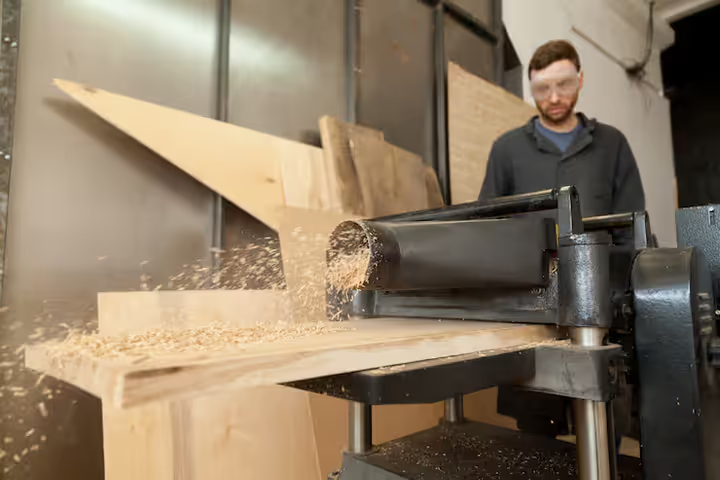
Wood Dust Collector: Overview of Industrial and Workshop Dust Management
Wood dust collectors are specialized systems designed to capture, filter, and remove airborne wood particles generated during woodworking, furniture manufacturing, cabinet production, sawmills, and other wood-processing operations. Their primary purpose is to improve air quality, maintain cleaner workspaces, protect equipment, and reduce health and safety risks associated with fine wood dust.
Woodworking processes such as cutting, sanding, routing, drilling, shaping, and polishing create large amounts of dust. Without proper dust collection, these particles remain suspended in the air, accumulate on machinery, and settle across work areas. Modern wood dust collectors help remove these particles before they spread throughout a facility.
These systems are commonly used in small workshops, commercial woodworking facilities, educational institutions, and large industrial manufacturing plants.
How Wood Dust Collectors Work
A wood dust collector operates by creating airflow through a network of ducts connected to woodworking machines.
Dust generated during machining is drawn into the ductwork by powerful fans or blowers. The contaminated air travels through filtration equipment where wood particles are separated from the air stream. Clean air is then either returned to the workspace or safely exhausted outside depending on system design and local environmental requirements.
The dust collection process generally includes:
Air Intake
- Dust is captured directly at the source.
- Hoods or collection ports connect machines to ductwork.
- High-efficiency blowers create continuous airflow.
- Duct systems transport dust to the collector.
Dust Separation
- Cyclones separate larger particles.
- Filters capture fine airborne dust.
- Dust is collected in bins, drums, or hoppers.
- Storage containers are emptied periodically.
Clean Air Release
- Filtered air is safely discharged.
- Many systems recycle cleaned air after filtration.
Common Types of Wood Dust Collectors
Different woodworking environments require different dust collection technologies.
| Type | Best Application | Main Advantages |
|---|---|---|
| Single-Stage Collector | Small workshops | Simple installation and compact design |
| Two-Stage Collector | Medium woodworking facilities | Better separation of large particles |
| Cyclone Dust Collector | Furniture factories | High collection efficiency and longer filter life |
| Baghouse Dust Collector | Large industrial plants | Handles high dust volumes effectively |
| Cartridge Dust Collector | Precision woodworking | Excellent fine particle filtration |
| Portable Dust Collector | Mobile workstations | Flexible movement between machines |
Why Wood Dust Collection Is Important
Wood dust collection supports worker safety, operational efficiency, equipment protection, and environmental compliance.
Fine wood particles may affect respiratory health after prolonged exposure. Dust accumulation can also reduce machine performance, increase maintenance requirements, and create fire hazards.
Proper dust collection helps organizations:
Improve Indoor Air Quality
- Removes airborne particles.
- Creates healthier workplaces.
- Reduces visible dust.
- Lowers inhalation exposure.
- Supports workplace safety programs.
- Improves overall comfort.
Extend Equipment Life
- Reduces dust entering motors.
- Minimizes wear on moving parts.
- Supports consistent machine performance.
- Cleaner workspaces reduce contamination.
- Better finishing results.
- Less dust settling on products.
Support Regulatory Compliance
- Meets workplace safety expectations.
- Helps control emissions.
- Supports environmental management practices.
Major Components of a Wood Dust Collection System
Several components work together to create an efficient dust collection system.
Collection Hood
- Positioned close to dust sources.
- Captures particles immediately.
- Carries contaminated air.
- Designed to maintain airflow efficiency.
Industrial Blower
- Generates airflow throughout the system.
- Selected according to airflow requirements.
- Removes heavier wood chips before filtration.
- Reduces filter loading.
Filtration Unit
- Captures fine wood dust.
- Includes cartridge or bag filters.
- Stores collected material.
- Simplifies disposal.
Control System
- Monitors system performance.
- Controls fan operation and cleaning cycles.
Key Features to Consider
Modern wood dust collectors incorporate technologies that improve efficiency and simplify maintenance.
High-Efficiency Filtration
- Captures microscopic particles.
- Improves air cleanliness.
- Extends filter lifespan.
- Maintains airflow.
Variable Speed Fans
- Adjust airflow according to demand.
- Improve energy efficiency.
- Allows future expansion.
- Supports facility upgrades.
Smart Monitoring
- Tracks pressure levels.
- Detects maintenance requirements.
- Monitors airflow performance.
- Lower electricity consumption.
- Improve long-term operational efficiency.
Industries That Use Wood Dust Collectors
Wood dust collection systems support many industries beyond traditional woodworking.
Common Applications
- Furniture manufacturing
- Cabinet production
- Wood flooring manufacturing
- Door and window production
- Lumber mills
- Plywood manufacturing
- MDF production
- Educational woodworking laboratories
- Musical instrument manufacturing
- Interior construction workshops
Problems Wood Dust Collectors Help Solve
Wood dust collectors address several operational challenges.
Cleaner Facilities
- Less dust accumulation.
- Easier housekeeping.
- Prevents dust buildup inside machinery.
- Supports consistent production.
Better Visibility
- Improves operator visibility around machines.
- Supports safer working conditions.
- Reduces combustible dust accumulation.
- Supports fire prevention programs.
Consistent Production Quality
- Minimizes dust contamination during finishing processes.
- Supports higher manufacturing consistency.
Recent Trends and Developments (2025–2026)
Wood dust collection technology continues to evolve as manufacturers focus on efficiency, automation, and sustainability.
Recent developments include:
Smart Dust Collection Systems
- Cloud-connected monitoring.
- Real-time airflow analytics.
- Predictive maintenance alerts.
- Variable-frequency drives reduce power consumption.
- Intelligent airflow control based on machine usage.
Improved HEPA-Level Filtration
- Better removal of ultrafine wood particles.
- Enhanced indoor air quality.
- Remote monitoring through industrial automation platforms.
- Performance dashboards for maintenance teams.
Automated Maintenance
- Self-cleaning filter systems.
- Sensor-based maintenance scheduling.
Throughout 2025 and early 2026, manufacturers have also focused on quieter operation, compact system designs, and improved filter materials to increase overall efficiency while reducing maintenance intervals.
Regulations and Safety Standards
Woodworking facilities should follow applicable occupational safety and environmental regulations.
Important standards include:
Workplace Safety
- OSHA regulations for occupational dust exposure.
- Respiratory protection guidance where required.
- NFPA standards addressing combustible wood dust management.
- Fire and explosion prevention practices.
- Air quality regulations established by local environmental authorities.
- Proper dust disposal according to regional requirements.
Organizations should always verify the regulations applicable within their country, state, or local jurisdiction.
Useful Tools, Platforms, and Learning Resources
Professionals can improve knowledge through technical publications, manufacturer documentation, and safety organizations.
Learning Resources
- OSHA woodworking safety publications
- NFPA combustible dust guidance
- Industrial ventilation manuals
- Manufacturing engineering publications
- Woodworking association technical resources
- Environmental protection agency guidance
- Industrial air filtration handbooks
- Occupational health training materials
Frequently Asked Questions
What is the main purpose of a wood dust collector?
A wood dust collector removes airborne wood particles generated during machining, helping improve air quality, workplace cleanliness, equipment protection, and operational safety.
Which type of wood dust collector is best for industrial facilities?
Large manufacturing facilities commonly use cyclone collectors, baghouse collectors, or cartridge dust collectors because they handle high airflow volumes and provide efficient filtration.
How often should filters be maintained?
Maintenance intervals depend on dust volume, operating hours, and filter type. Many modern systems include automatic cleaning features and pressure monitoring to indicate when maintenance is needed.
Can wood dust collectors improve equipment performance?
Yes. Removing dust from machinery reduces contamination, minimizes wear, and helps maintain reliable machine operation over extended periods.
Are modern wood dust collectors energy efficient?
Many current systems include variable-speed motors, automated airflow control, intelligent monitoring, and advanced filter technology that improve energy efficiency while maintaining effective dust collection.
Conclusion
Wood dust collectors play an essential role in maintaining cleaner, healthier, and more efficient woodworking environments. By capturing dust directly at its source, these systems improve indoor air quality, protect machinery, support consistent product quality, and contribute to workplace safety. Modern technologies such as smart monitoring, automated filter cleaning, energy-efficient motors, and Industrial IoT connectivity continue to improve system performance across workshops and large manufacturing facilities.
Selecting an appropriate dust collection system depends on production requirements, workspace size, dust volume, filtration needs, and applicable regulations. As woodworking operations continue to modernize, efficient dust collection remains a fundamental component of sustainable, safe, and productive manufacturing.