Sachet Filling Machines: Detailed Overview of Automated Packaging
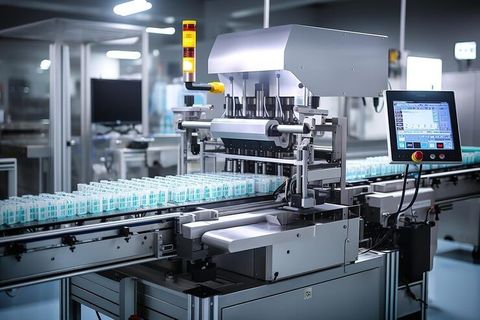
Sachet filling machines are specialized industrial packaging systems designed to automatically create, fill, seal, and separate small packets known as sachets. These machines are widely used across manufacturing industries because they provide accurate filling, consistent sealing quality, and efficient packaging for products in compact, single-use, or measured quantities.
Modern sachet filling machines support a wide variety of products, including powders, liquids, granules, gels, creams, pastes, and small solid items. Industries such as food processing, pharmaceuticals, cosmetics, agriculture, chemicals, and personal care depend on these machines to improve packaging consistency while reducing manual handling.
As manufacturing facilities continue adopting automation, sachet filling machines have become an important part of efficient production lines that prioritize productivity, hygiene, traceability, and quality.
How Sachet Filling Machines Work
The operating process follows a continuous sequence of automated steps that transform packaging film into finished sachets.
Key Operating Steps
- Packaging film is loaded into the machine.
- The film is shaped into sachet form.
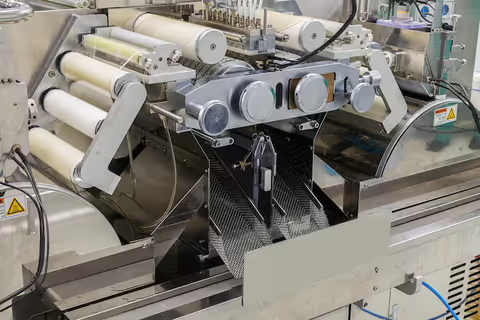
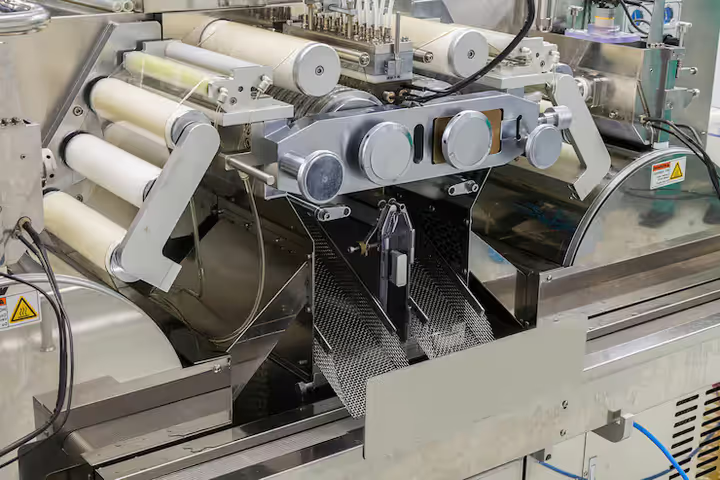
- The sealing system creates vertical and horizontal seals.
- The filling mechanism dispenses a precise quantity of product.
- Heat sealing closes the sachet securely.
- Cutting blades separate individual sachets.
- Finished sachets move to inspection or collection systems.
The entire process is controlled through programmable controllers and touchscreen interfaces that allow operators to adjust filling volume, sealing temperature, production speed, and package dimensions.
Main Components of Sachet Filling Machines
Every sachet filling machine consists of multiple integrated systems that work together.
Major Components
- Film unwinding system
- Film alignment mechanism
- Forming collar
- Filling unit
- Measuring system
- Heat sealing jaws
- Temperature controllers
- Servo motors
- Pneumatic components
- PLC control system
- Human Machine Interface (HMI)
- Cutting mechanism
- Product hopper
- Conveyor system
- Safety sensors
These components ensure reliable operation while maintaining packaging quality throughout production.
Types of Sachet Filling Machines
Different industries require different filling technologies depending on product characteristics.
| Machine Type | Suitable Products | Common Industries |
|---|---|---|
| Powder Sachet Filling Machine | Flour, spices, milk powder, protein powder | Food, Chemicals |
| Liquid Sachet Filling Machine | Sauces, oils, beverages, detergents | Food, Personal Care |
| Paste Sachet Filling Machine | Creams, gels, toothpaste | Cosmetics, Pharmaceuticals |
| Granule Sachet Filling Machine | Sugar, seeds, coffee, rice | Food, Agriculture |
| Multi-Lane Sachet Filling Machine | High-volume production | Large Manufacturing Plants |
| Vertical Form Fill Seal (VFFS) Machine | Multiple product categories | Industrial Packaging |
Important Features
Modern industrial packaging equipment includes advanced automation capabilities that improve operational efficiency.
Common Features
- High-speed automated production
- Accurate filling systems
- Servo-driven operation
- Digital touchscreen controls
- Multiple sachet size compatibility
- Adjustable sealing temperature
- Leak-resistant sealing
- Stainless steel construction
- Hygienic design
- Easy cleaning procedures
- Batch coding compatibility
- Low material waste
- Energy-efficient operation
- Automatic fault detection
- Production monitoring capabilities
These features help manufacturers maintain consistent packaging quality while reducing production interruptions.
Importance in Modern Manufacturing
Packaging quality directly affects product protection, transportation, storage, and customer satisfaction. Sachet filling machines support manufacturers by producing uniform packages with reliable sealing and accurate filling.
Automation also minimizes manual errors, improves production consistency, and helps manufacturers comply with industry quality standards.
For products that require exact dosage, such as pharmaceuticals or nutritional supplements, filling precision becomes especially important.
Real-World Applications
Many industries depend on sachet packaging because it provides convenient single-use or measured portions.
Food Industry
- Sugar
- Salt
- Instant coffee
- Beverage powders
- Sauces
- Spices
- Seasonings
- Milk powder
Pharmaceutical Industry
- Oral powders
- Medical granules
- Nutritional supplements
- Electrolyte mixtures
Cosmetics Industry
- Shampoo
- Conditioner
- Face cream
- Hair serum
- Skin lotion
- Facial gel
Chemical Industry
- Cleaning powder
- Industrial additives
- Laboratory chemicals
- Water treatment compounds
Agricultural Industry
- Seeds
- Fertilizer samples
- Crop nutrients
- Plant protection formulations
These applications demonstrate the flexibility of sachet packaging across multiple industrial sectors.
Problems Sachet Filling Machines Solve
Manufacturing environments face several packaging challenges that automated filling equipment helps address.
Common Challenges Solved
- Inconsistent filling quantities
- Packaging material waste
- Product contamination risks
- Low production efficiency
- Manual packaging errors
- Poor sealing quality
- High labor dependency
- Inconsistent product presentation
Automated machinery provides repeatable performance that improves overall production reliability.
Recent Industry Trends and Developments
The packaging machinery industry has continued evolving throughout 2025 and 2026, with manufacturers introducing more intelligent automation and sustainable packaging capabilities.
Recent Developments
- Increased adoption of Industry 4.0 connectivity for production monitoring.
- AI-assisted inspection systems improving defect detection.
- Servo-driven machines replacing conventional mechanical drives.
- Greater compatibility with recyclable and mono-material packaging films.
- Remote equipment diagnostics through cloud-connected platforms.
- Improved energy-efficient heating systems.
- Smart predictive maintenance using machine sensors.
- Faster changeover designs for multi-product manufacturing.
- Enhanced touchscreen interfaces with production analytics.
- Integration with Manufacturing Execution Systems (MES).
These developments support higher productivity while helping manufacturers improve operational efficiency and sustainability.
Industry Standards and Regulations
Packaging equipment used in regulated industries should comply with applicable safety and hygiene requirements.
Common Standards
- ISO 9001 Quality Management Systems
- Good Manufacturing Practices (GMP)
- HACCP requirements for food manufacturing
- Food-contact material regulations where applicable
- CE machinery safety requirements in applicable markets
- Occupational workplace safety regulations
- Electrical safety standards
- Industrial machine guarding requirements
Manufacturers should always verify local regulatory requirements based on their operating region and product category.
Useful Tools, Platforms, and Learning Resources
Professionals working with packaging machinery can benefit from various technical resources.
Helpful Resources
- Packaging engineering textbooks
- Manufacturing automation courses
- PLC programming training
- Industrial robotics learning platforms
- CAD software for packaging equipment design
- Manufacturing process simulation software
- Preventive maintenance management systems
- Packaging industry trade exhibitions
- Technical standards documentation
- Industrial automation webinars
Continuous learning helps engineers and operators remain updated with new packaging technologies.
Selecting the Right Sachet Filling Machine
Choosing appropriate equipment depends on production requirements rather than a single machine specification.
Factors to Consider
- Product characteristics
- Required filling accuracy
- Packaging material compatibility
- Production capacity
- Automation level
- Available installation space
- Cleaning requirements
- Future production expansion
- Maintenance accessibility
- Integration with existing production lines
A careful evaluation of these factors helps improve long-term manufacturing efficiency.
Maintenance Best Practices
Routine maintenance supports consistent machine performance and extends equipment lifespan.
Recommended Practices
- Clean filling systems regularly.
- Inspect sealing jaws.
- Verify temperature settings.
- Lubricate moving components.
- Replace worn cutting blades.
- Inspect pneumatic connections.
- Calibrate filling mechanisms.
- Monitor sensor performance.
- Check electrical connections.
- Maintain production records.
Preventive maintenance reduces unexpected downtime and improves equipment reliability.
Future Outlook
Automation continues transforming industrial packaging. Future sachet filling machines are expected to include even more intelligent monitoring, machine learning, predictive maintenance, digital twins, and robotic integration.
Sustainability will remain an important priority as manufacturers continue adopting recyclable packaging materials, energy-efficient equipment, and waste reduction technologies.
Digital manufacturing ecosystems will likely allow packaging equipment to communicate directly with upstream and downstream production systems for greater operational visibility.
What industries commonly use sachet filling machines?
Food processing, pharmaceuticals, cosmetics, chemicals, agriculture, personal care, and nutraceutical manufacturing commonly use sachet filling machines for precise and hygienic packaging.
Can one machine package different product types?
Many modern machines support different product categories through interchangeable filling systems, although configuration depends on the product's physical characteristics.
Why is filling accuracy important?
Accurate filling improves product consistency, reduces material waste, supports quality control, and helps maintain compliance with manufacturing standards.
What packaging materials can these machines handle?
Many machines work with laminated films, plastic films, aluminum foil laminates, paper-based packaging materials, and recyclable packaging films designed for automated sealing.
How has packaging technology changed recently?
Recent developments during 2025–2026 include smarter automation, AI-assisted quality inspection, predictive maintenance, cloud connectivity, energy-efficient systems, and improved compatibility with sustainable packaging materials.
Conclusion
Sachet filling machines play a significant role in modern industrial packaging by combining automation, precision, and consistent production performance. Their ability to package powders, liquids, granules, gels, and pastes makes them valuable across numerous manufacturing industries.
Continuous improvements in automation, intelligent monitoring, and sustainable packaging technologies are further enhancing their capabilities. By understanding machine types, components, operating principles, maintenance practices, regulatory considerations, and emerging industry trends, manufacturers can make informed decisions that support efficient, reliable, and high-quality packaging operations.