Turret Punch Press Machine: Explore Modern Sheet Metal Processing
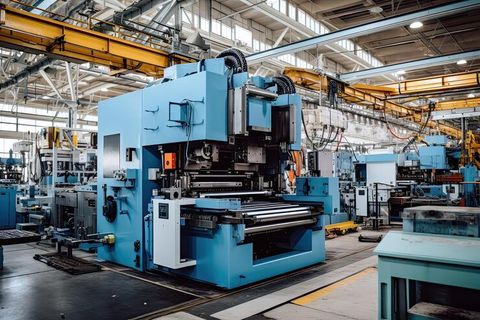
A turret punch press machine is an advanced metal fabrication system designed to create holes, shapes, slots, and patterns in sheet metal. It combines mechanical or hydraulic punching technology with computerized control systems to perform highly accurate operations on metal sheets.
The machine is widely used in manufacturing industries where precision sheet metal processing is essential. By using multiple punch and die tools mounted within a rotating turret, the machine can perform various punching operations without requiring frequent manual tool changes.
Modern CNC turret punch press machines have become an important part of industrial automation because they improve production efficiency, consistency, and material utilization.
How a Turret Punch Press Machine Works
The machine operates by positioning a sheet of metal beneath a punch and die set. A controlled punching force drives the punch through the material, creating the desired shape or opening.
The turret contains numerous punch and die stations that can rotate automatically to select the required tool.
Key Working Steps
- Sheet metal is loaded onto the worktable
- CNC software receives the programmed design
- The turret rotates to select the appropriate tool
- The punch applies force to the sheet
- Holes, slots, or custom shapes are created
- The sheet moves automatically to the next position
- Finished components are unloaded for further processing
This automated process allows manufacturers to produce complex sheet metal parts with minimal manual intervention.
Main Components
Several integrated components work together to ensure efficient and accurate punching operations.
| Component | Function |
|---|---|
| Turret | Holds multiple punch and die tools |
| Punch Tool | Creates holes and shapes in the material |
| Die Tool | Supports material during punching |
| CNC Controller | Manages machine movement and operations |
| Worktable | Supports sheet metal during processing |
| Servo System | Controls positioning accuracy |
| Clamps | Secure the sheet during punching |
| Hydraulic or Mechanical Drive | Generates punching force |
| Safety System | Protects operators and equipment |
These components contribute to high-speed production and repeatable precision.
Important Features
Modern machines include advanced capabilities that enhance productivity and manufacturing flexibility.
Common Features
- CNC-controlled operation
- Automatic tool changing
- High punching accuracy
- Multi-tool turret system
- Programmable production sequences
- Material handling integration
- Reduced setup time
- High repeatability
- Production data monitoring
- Advanced safety controls
These features help manufacturers achieve consistent quality across large production volumes.
Types of Turret Punch Press Machines
Different machine configurations are available to meet varying production requirements.
Mechanical Turret Punch Press
- Uses a flywheel-driven mechanism
- Suitable for high-speed production
- Common in large manufacturing facilities
- Effective for repetitive punching tasks
Hydraulic Turret Punch Press
- Uses hydraulic pressure to generate punching force
- Provides greater flexibility
- Suitable for diverse material thicknesses
- Delivers smooth punching performance
Servo-Electric Turret Punch Press
- Powered by servo motors
- Improved energy efficiency
- Reduced maintenance requirements
- Enhanced operational control
CNC Turret Punch Press
- Fully automated and computer-controlled
- Supports complex part designs
- High precision and productivity
- Compatible with modern manufacturing software
Importance in Modern Manufacturing
Turret punch press machines play a crucial role in industrial production environments.
Manufacturers increasingly rely on automated sheet metal fabrication equipment to improve efficiency while maintaining quality standards. The ability to produce large quantities of parts with consistent accuracy makes these machines valuable across many industries.
Major Benefits
- Faster production cycles
- Improved dimensional accuracy
- Reduced material waste
- Lower manual handling requirements
- Enhanced manufacturing consistency
- Greater production flexibility
- Support for automated workflows
- Better utilization of production resources
These advantages contribute to improved manufacturing performance and operational reliability.
Industrial Applications
Turret punch press machines are used across numerous sectors where sheet metal components are required.
Common Industries
- Automotive manufacturing
- Aerospace engineering
- Electrical enclosure production
- Telecommunications equipment
- Industrial machinery manufacturing
- Renewable energy systems
- Construction materials production
- Consumer electronics manufacturing
- Agricultural equipment fabrication
- HVAC equipment production
Many products used in daily life contain components that have been manufactured using turret punching technology.
Problems Solved
Traditional fabrication methods often involve lengthy setup procedures and multiple processing stages. Turret punch press machines address many of these challenges.
Key Manufacturing Challenges Addressed
- Slow manual punching processes
- Inconsistent hole positioning
- Excessive setup times
- Frequent tool replacement interruptions
- Production bottlenecks
- Material utilization inefficiencies
- High labor dependency
- Limited production flexibility
By automating critical fabrication tasks, manufacturers can achieve higher productivity and more predictable outcomes.
Recent Developments and Trends (2025–2026)
The sheet metal fabrication industry continues to adopt advanced technologies that improve performance and operational intelligence.
Emerging Trends
- Increased adoption of servo-electric punching systems
- AI-assisted production optimization
- Predictive maintenance technologies
- Digital twin manufacturing solutions
- Smart factory integration
- Cloud-based machine monitoring
- Automated loading and unloading systems
- Energy-efficient production technologies
- Enhanced CNC programming software
- Real-time production analytics
During 2025 and early 2026, many manufacturers expanded investments in Industry 4.0 technologies, integrating turret punch press machines into connected production environments to improve visibility and operational efficiency.
Regulations and Safety Considerations
Industrial machinery must operate in compliance with workplace safety and manufacturing standards.
Common Regulatory Areas
- Machine guarding requirements
- Emergency stop systems
- Operator training procedures
- Lockout and tagout practices
- Electrical safety standards
- Workplace hazard assessments
- Noise exposure management
- Preventive maintenance programs
Organizations typically follow national and regional workplace safety regulations to ensure safe machine operation and employee protection.
Useful Tools and Learning Resources
Professionals working with turret punch press machines often use specialized software and educational resources.
Common Software Tools
- CAD design software
- CAM programming systems
- CNC simulation platforms
- Manufacturing execution systems
- Production monitoring software
- Industrial automation platforms
Learning Resources
- Manufacturing technology institutes
- CNC machining training programs
- Industrial engineering publications
- Sheet metal fabrication guides
- Equipment manufacturer documentation
- Technical standards organizations
Continuous learning helps operators and engineers remain updated on evolving manufacturing technologies.
Maintenance Best Practices
Proper maintenance is essential for achieving reliable machine performance and extended equipment life.
Recommended Practices
- Inspect punch and die tools regularly
- Monitor lubrication systems
- Verify alignment accuracy
- Clean worktables and tool stations
- Check clamp performance
- Review CNC system diagnostics
- Replace worn tooling promptly
- Maintain hydraulic components when applicable
- Inspect electrical connections
- Record maintenance activities
Regular maintenance reduces downtime and helps preserve production quality.
Frequently Asked Questions
What is a turret punch press machine used for?
A turret punch press machine is used to create holes, slots, forms, and custom shapes in sheet metal for industrial manufacturing applications.
How does a CNC turret punch press improve production?
A CNC turret punch press automates tool selection and positioning, improving accuracy, consistency, and production speed while reducing manual intervention.
Which materials can be processed on a turret punch press machine?
The machine commonly processes steel, stainless steel, aluminum, copper, brass, and other sheet metal materials depending on machine specifications.
What is the advantage of a rotating turret?
The rotating turret stores multiple tools, allowing quick tool changes without stopping production, which improves efficiency and flexibility.
Is a turret punch press suitable for automated manufacturing environments?
Yes. Modern turret punch press machines integrate with automated material handling systems, production monitoring platforms, and smart factory technologies.
Conclusion
The turret punch press machine is a vital technology in modern sheet metal fabrication. By combining precision punching capabilities with advanced CNC control, it enables manufacturers to produce complex components efficiently and consistently. Its ability to reduce setup time, improve accuracy, and support automated production makes it an essential asset across industries such as automotive, aerospace, electronics, construction, and industrial equipment manufacturing.
As manufacturing continues to embrace digital transformation, servo-electric systems, predictive maintenance, and smart factory integration are further enhancing the capabilities of turret punch press machines. Organizations that understand and effectively utilize this technology can achieve greater operational efficiency, improved product quality, and more streamlined production processes.