Industrial Cutting Machines: Explore Modern Manufacturing Technologies
Industrial cutting machines are specialized manufacturing systems designed to cut, shape, and process various materials with accuracy and efficiency. These machines play a critical role in modern industries by transforming raw materials into components used in construction, automotive production, aerospace engineering, electronics manufacturing, and many other sectors.
As manufacturing technologies continue to advance, industrial cutting machines have evolved from manually operated equipment into highly automated systems powered by computer numerical control (CNC), advanced sensors, and digital monitoring technologies. Their ability to deliver consistent results while reducing material waste makes them an essential part of industrial production environments.
Understanding Industrial Cutting Machines
Industrial cutting machines are engineered to remove material from a workpiece according to predefined specifications. They utilize different cutting methods depending on the material type, thickness, required precision, and production volume.
The primary objective of these machines is to achieve clean, accurate cuts while maintaining production efficiency. Modern systems can process metals, plastics, composites, textiles, wood, glass, and other industrial materials.
Many cutting machines operate through integrated software platforms that convert digital designs into machine instructions, allowing precise execution of complex cutting patterns.
How Industrial Cutting Machines Work
Most industrial cutting machines follow a structured workflow:
Key Operational Steps
- Design creation using CAD software
- Conversion of design files into machine-readable formats
- Material positioning on the cutting platform
- Automated cutting path generation
- Execution of cutting operations
- Quality inspection and finishing
The machine's control system continuously monitors movement, cutting speed, and tool performance to maintain precision throughout the process.
Major Types of Industrial Cutting Machines
Different industries require different cutting technologies. The following table highlights common industrial cutting machine types and their applications.
| Machine Type | Cutting Method | Common Materials | Typical Applications |
|---|---|---|---|
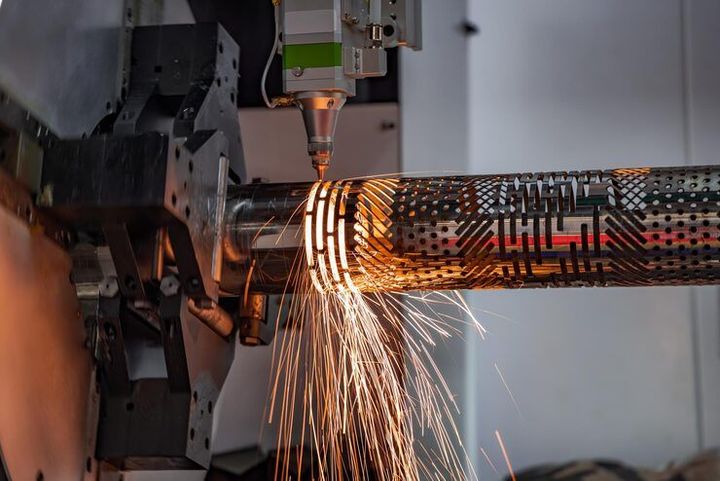
| CNC Laser Cutting Machine | Focused laser beam | Metal, plastic, composites | Automotive, electronics, aerospace |
| Plasma Cutting Machine | Ionized gas arc | Conductive metals | Heavy fabrication, construction |
| Waterjet Cutting Machine | High-pressure water stream | Metal, stone, glass, ceramics | Precision manufacturing |
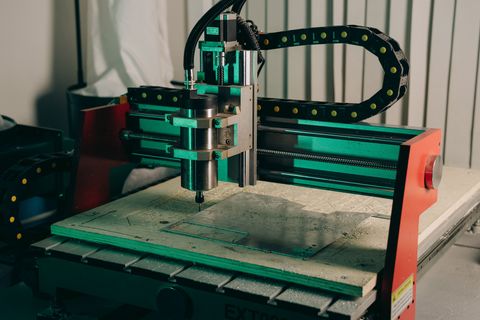
| CNC Router | Rotating cutting tool | Wood, plastics, composites | Furniture, signage |
| Flame Cutting Machine | Oxygen-fuel combustion | Thick steel plates | Shipbuilding, structural fabrication |
| Die Cutting Machine | Mechanical pressure | Paper, packaging materials, textiles | Packaging and printing industries |
Why Industrial Cutting Machines Are Important
Industrial cutting technology contributes significantly to manufacturing productivity and product quality.
Major Benefits
- Improved cutting precision
- Reduced material waste
- Increased production efficiency
- Enhanced workplace safety
- Consistent product quality
- Support for automated manufacturing
- Reduced manual intervention
- Faster processing of complex designs
These advantages help manufacturers maintain quality standards while meeting production demands.
Industries That Use Industrial Cutting Machines
Industrial cutting systems are used across a wide range of sectors.
Common Industry Applications
- Automotive component manufacturing
- Aerospace part production
- Metal fabrication facilities
- Construction material processing
- Shipbuilding operations
- Electrical equipment manufacturing
- Textile and garment production
- Packaging and printing industries
- Renewable energy equipment manufacturing
- Medical device production
Each sector utilizes cutting technology to achieve specific production objectives and quality requirements.
Key Features
Recent advancements have introduced intelligent features that improve performance and operational efficiency.
Important Features
- CNC automation systems
- Real-time monitoring capabilities
- Precision motion control
- High-speed processing
- Material optimization software
- Automated tool calibration
- Digital production integration
- Remote diagnostics capabilities
- Energy-efficient operation
- Advanced safety mechanisms
These features help organizations improve manufacturing accuracy while minimizing downtime.
Components Found
Although designs vary by machine type, most systems include several core components.
Essential Components
- Machine frame and structure
- Motion control system
- Cutting head or cutting tool
- CNC controller
- Drive motors
- Material handling platform
- Cooling system
- Safety enclosure
- Sensor systems
- Human-machine interface (HMI)
Each component contributes to overall machine performance and reliability.
Problems Solved
Manufacturers face numerous production challenges that industrial cutting technology helps address.
Common Manufacturing Challenges
- Inconsistent manual cutting results
- High material wastage
- Production bottlenecks
- Complex geometry requirements
- Labor-intensive operations
- Quality control difficulties
- Tight production schedules
- Repeatability concerns
By automating cutting operations, manufacturers can improve consistency while reducing operational inefficiencies.
Recent Industry Trends and Developments
The industrial cutting machine sector has experienced significant innovation during 2025 and 2026.
Emerging Trends
- Increased adoption of AI-assisted manufacturing systems
- Greater use of predictive maintenance technologies
- Expansion of Industry 4.0 integration
- Enhanced machine connectivity through Industrial IoT
- Growth in energy-efficient cutting solutions
- Advanced laser cutting technology improvements
- Automated material handling integration
- Cloud-based production monitoring
Notable Developments (2025–2026)
- Manufacturers have expanded AI-powered process optimization features throughout 2025.
- Industrial IoT connectivity solutions became increasingly common in smart factories during 2025 and early 2026.
- High-power fiber laser systems continued improving cutting speed and efficiency across metal processing facilities.
- Digital twin technologies gained wider adoption for production planning and machine performance analysis.
- Sustainability initiatives encouraged greater focus on energy-efficient manufacturing equipment.
These developments reflect the broader movement toward intelligent and connected manufacturing environments.
Regulations and Safety Considerations
Industrial cutting machines operate within regulatory frameworks designed to promote workplace safety and equipment reliability.
Important Regulatory Areas
- Occupational safety requirements
- Machine guarding standards
- Electrical safety regulations
- Laser safety guidelines
- Industrial automation compliance requirements
- Environmental protection standards
- Workplace hazard management procedures
Organizations must ensure proper training, maintenance, and operational practices to comply with applicable regulations in their jurisdictions.
Useful Tools and Learning Resources
Professionals working with industrial cutting technology often rely on specialized tools and educational resources.
Common Software Tools
- CAD design platforms
- CAM programming software
- CNC simulation tools
- Manufacturing execution systems (MES)
- Industrial automation software
- Predictive maintenance platforms
- Production monitoring systems
Learning Resources
- Manufacturing engineering publications
- Technical training institutes
- Industry association materials
- Equipment manufacturer documentation
- Industrial automation courses
- CNC programming education programs
These resources help professionals stay informed about technological advancements and operational best practices.
Industrial Cutting Machines and Smart Manufacturing
Smart manufacturing has become closely connected with modern cutting equipment.
Smart Factory Capabilities
- Real-time machine monitoring
- Automated production scheduling
- Data-driven decision making
- Predictive maintenance analytics
- Remote equipment management
- Digital quality control systems
- Integrated production reporting
These capabilities improve operational visibility and support continuous improvement initiatives.
FAQs
What is an industrial cutting machine?
An industrial cutting machine is specialized manufacturing equipment used to cut, shape, or process materials such as metal, plastic, wood, composites, glass, and textiles with precision and consistency.
Which industries commonly use CNC cutting machines?
CNC cutting machines are widely used in automotive manufacturing, aerospace production, construction, metal fabrication, electronics manufacturing, renewable energy production, and medical device manufacturing.
What is the difference between laser cutting and plasma cutting?
Laser cutting uses a concentrated laser beam to achieve highly precise cuts, while plasma cutting uses an electrically charged gas stream and is commonly used for cutting conductive metals, especially thicker materials.
How does industrial automation improve cutting machine performance?
Industrial automation improves accuracy, repeatability, production speed, monitoring capabilities, and operational efficiency while reducing manual intervention and material waste.
What are the latest trends in industrial cutting technology?
Recent trends include AI-assisted manufacturing, Industrial IoT integration, predictive maintenance systems, cloud-based monitoring, digital twin technology, and energy-efficient cutting solutions.
Conclusion
Industrial cutting machines are fundamental components of modern manufacturing systems. Their ability to deliver precise, repeatable, and efficient material processing supports industries ranging from automotive and aerospace to construction and electronics production. Advances in CNC automation, laser cutting technology, Industrial IoT connectivity, and AI-powered manufacturing continue to enhance machine capabilities and operational performance.
As smart manufacturing expands throughout 2025 and 2026, industrial cutting equipment is becoming increasingly intelligent, connected, and efficient. Organizations that understand these technologies and their applications are better positioned to improve productivity, maintain quality standards, and adapt to evolving manufacturing requirements.