Smart Sensors and Actuators Guide: Basics, Uses, Facts, and Information
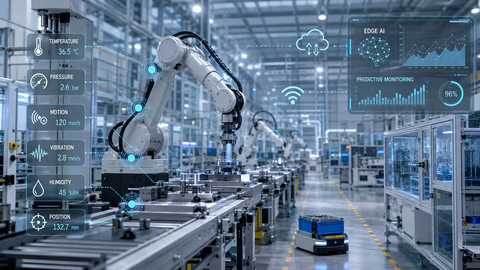
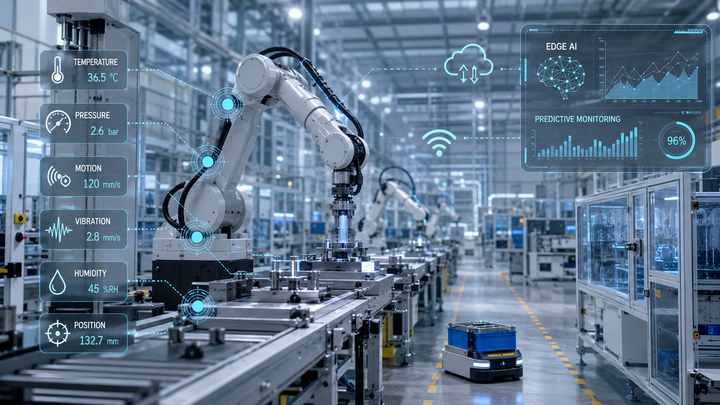
Smart sensors and actuators are important parts of modern automation systems. A sensor observes a physical condition, such as temperature, pressure, motion, vibration, humidity, light, gas level, or position. An actuator takes action based on a signal, such as opening a valve, moving a robotic arm, adjusting airflow, switching a relay, or controlling a motor.
A traditional sensor may only detect and send raw data. A smart sensor usually includes extra functions such as signal processing, calibration, communication, diagnostics, and sometimes local decision-making. Similarly, a smart actuator may include feedback, embedded control, position tracking, condition monitoring, and digital communication.
These components exist because machines need a way to understand and interact with the physical world. In simple terms, sensors are the “eyes and ears” of a system, while actuators are the “hands and muscles.” Together, they allow a system to observe, analyze, and respond.
Smart sensors and actuators are widely used in:
- Industrial automation
- Smart manufacturing
- Smart homes and buildings
- Electric vehicles and connected vehicles
- Agriculture technology
- Healthcare devices
- Energy management systems
- Robotics
- Warehouses and logistics
- Environmental monitoring
In Industry 4.0 systems, sensors, actuators, artificial intelligence, cloud platforms, edge computing, and data analytics work together to create connected and adaptive production environments. India’s Telecom Engineering Centre describes Industry 4.0 as a convergence of cyber-physical systems, Internet of Things, artificial intelligence, and advanced data analytics.
Why Smart Sensors and Actuators Matter Today
Smart sensors and actuators matter because many industries now depend on real-time data and automated responses. Older systems often worked on fixed schedules or manual checks. Modern systems are moving toward live monitoring, predictive maintenance, and automatic control.
For example, a factory machine can use vibration sensors to detect abnormal movement before a breakdown. A smart actuator can then adjust speed, pressure, or alignment. This helps reduce downtime and improves safety. In buildings, occupancy sensors and smart actuators can adjust lighting, air conditioning, and ventilation based on actual usage.
These technologies affect:
- Factory operators
- Engineers and technicians
- Building managers
- Farmers
- Transport operators
- Energy planners
- Healthcare equipment designers
- Safety teams
- Consumers using connected devices
The problems they solve include:
- Delayed fault detection
- Wasted energy
- Manual monitoring gaps
- Unplanned machine stoppage
- Inconsistent product quality
- Poor environmental control
- Limited visibility into remote equipment
- Safety risks in hazardous areas
The IoT sensors market has been projected to grow strongly as connected systems expand across industries. One 2025 market estimate placed the global IoT sensors market at USD 20.68 billion in 2025 and projected it to reach USD 70.12 billion by 2029, driven by connected devices, automation, and data-based monitoring.
| Area | Sensor Role | Actuator Role | Example |
|---|---|---|---|
| Smart factory | Measures vibration, heat, pressure | Adjusts motor, valve, robotic movement | Predictive maintenance |
| Smart building | Detects occupancy, air quality, temperature | Controls HVAC, lights, vents | Energy optimization |
| Agriculture | Measures soil moisture, weather, crop conditions | Controls irrigation, pumps, shading | Precision farming |
| Transport | Tracks speed, distance, battery, tire pressure | Controls braking, steering, cooling | Connected mobility |
| Healthcare device | Tracks body signals or equipment status | Controls dosage, movement, airflow | Patient monitoring equipment |
Recent Updates and Trends
Over the past year, smart sensors and actuators have become more closely linked with edge AI, smart manufacturing, digital twins, and cybersecurity. The focus is shifting from simple data collection to local decision-making and secure connected operation.
In July 2025, McKinsey’s Technology Trends Outlook discussed advanced sensor fusion, edge AI processors, and fail-safe architectures in the context of future mobility. These trends are relevant because advanced vehicles need multiple sensors and actuator systems to perceive surroundings and respond safely.
In June 2025, IIT-BHU launched a six-month AICTE-supported certification programme on IoT and manufacturing. The programme included hands-on training in an IoT lab and aimed to improve knowledge of smart and digital manufacturing technologies. This shows how academic and industrial training around IoT, sensors, and automation is expanding in India.
In September 2025, NIST published a draft update on foundational cybersecurity activities for IoT product manufacturers. The document focuses on helping manufacturers reduce cybersecurity-related effort for users by improving device design and lifecycle practices. This matters because many smart sensors and actuators are now connected to networks.
In October 2025, a CII manufacturing and technology conclave in Mysuru included sessions on smart factories, AI, IoT, precision manufacturing, and workforce transformation. This indicates that Indian manufacturing discussions are increasingly centered on automation and connected production systems.
A useful way to understand the trend is through this simple maturity path:
| Stage | Description | Main Technology Focus |
|---|---|---|
| Basic monitoring | Sensor reads a condition | Temperature, pressure, motion |
| Connected monitoring | Data moves to dashboard | IoT gateway, cloud dashboard |
| Smart response | Actuator responds automatically | Control logic, PLC, embedded system |
| Predictive system | System forecasts failure | AI analytics, vibration data |
| Autonomous optimization | System improves decisions over time | Edge AI, digital twin, feedback control |
Simple trend view:
Manual checks          ███
Connected sensors      ██████
Predictive systems     ████████
Edge AI control        █████████
Digital twin adoption  ███████
Cybersecurity focus    ██████████
This graph is illustrative, not a market measurement. It shows the direction of industry attention: cybersecurity, edge AI, and predictive monitoring are now central themes.
Laws, Policies, and Government Context in India
The country context used here is India, with additional global references where relevant.
India’s manufacturing and electronics goals are closely connected to automation, smart factories, robotics, and IoT. NITI Aayog’s 2025 advanced manufacturing roadmap highlights robotics, digital twins, real-time monitoring, predictive decision-making, and smarter lifecycle management as important for advanced manufacturing.
India’s Industry 4.0 discussions also include smart manufacturing, cyber-physical systems, AI, IoT, and data analytics. These areas create a policy environment where smart sensors and actuators become important enabling technologies.
Government-linked learning resources also show the practical direction. NIELIT’s IoT course material mentions microcontroller-based experiments, onboard sensors, communication interfaces, STM32CubeMX, Keil IDE, Wireshark, Mosquitto Broker, Visual Studio Code, and simulation tools.
Globally, regulation is increasingly focused on cybersecurity for connected devices. The European Union’s Cyber Resilience Act introduces cybersecurity requirements for digital products and connected devices, including secure design, updates, and vulnerability handling.
For organizations working with smart sensors and actuators, the main policy themes are:
- Device security
- Data protection
- Network safety
- Secure firmware updates
- Traceability of connected equipment
- Electrical and electromagnetic safety
- Industrial safety requirements
- Product documentation
- Interoperability standards
Important technical standards and frameworks often considered in this field include:
| Area | Relevant Framework or Standard Type | Why It Matters |
|---|---|---|
| Industrial automation | IEC 61131, IEC 61499, ISA-95 | Control logic and system integration |
| Industrial cybersecurity | IEC 62443 | Security for industrial control systems |
| IoT cybersecurity | NIST IoT guidance | Secure connected device development |
| Wireless communication | Wi-Fi, Bluetooth, Zigbee, LoRaWAN, 5G | Device connectivity |
| Data exchange | MQTT, OPC UA, Modbus TCP | Machine-to-machine communication |
| Functional safety | IEC 61508 | Safety-related control systems |
Helpful Tools and Resources
Smart sensors and actuators are easier to understand with practical tools. The following resources are commonly used for learning, prototyping, simulation, and system planning.
Microcontroller and development platforms
- Arduino IDE
- Raspberry Pi platform
- ESP32 development boards
- STM32CubeMX
- ARM-MBED environment
- PlatformIO
- Visual Studio Code
Communication and IoT tools
- MQTT Explorer
- Mosquitto Broker
- Node-RED
- Postman
- Wireshark
- OPC UA tools
- Modbus testing tools
Simulation and design tools
- MATLAB and Simulink
- Proteus
- Tinkercad Circuits
- LTspice
- Cooja Simulator
- NS3 network simulator
- Digital twin platforms
Industrial and automation tools
- PLC programming platforms
- SCADA dashboards
- HMI design tools
- Industrial IoT gateways
- Predictive maintenance dashboards
- Edge computing devices
Documentation templates
- Sensor selection checklist
- Actuator selection checklist
- Wiring diagram template
- Risk assessment template
- Maintenance log template
- Calibration record template
- Cybersecurity checklist
- Data flow diagram template
A basic sensor selection checklist may include:
- What condition must be measured?
- What range is required?
- What accuracy is required?
- What environment will the device face?
- Is wired or wireless communication better?
- How often should data be captured?
- Is calibration required?
- What power source will be used?
- Does the device need local processing?
- What safety or cybersecurity requirements apply?
A basic actuator selection checklist may include:
- What physical action is required?
- What force, torque, or movement range is needed?
- What response speed is needed?
- What control signal is supported?
- Is feedback required?
- What duty cycle is expected?
- What environmental rating is needed?
- What failure mode is safest?
- What maintenance interval is practical?
Common Questions
What is the difference between a sensor and an actuator?
A sensor detects a physical condition and converts it into data. An actuator receives a control signal and creates physical action. For example, a temperature sensor measures heat, while an actuator may open a cooling valve.
What makes a sensor “smart”?
A smart sensor usually includes processing, communication, calibration, diagnostics, or embedded logic. It does more than send raw data. It can filter readings, detect faults, communicate digitally, and support remote monitoring.
Why are smart sensors important in industrial automation?
They help machines provide real-time data on condition, performance, and safety. This supports predictive maintenance, process control, energy management, and quality monitoring.
Are smart sensors and actuators only used in factories?
No. They are used in homes, vehicles, farms, hospitals, warehouses, public infrastructure, and environmental systems. Any system that needs measurement and automatic response can use them.
What is the main risk with connected sensors and actuators?
The main risk is insecure connectivity. A connected device may expose data or control functions if it is not designed securely. This is why cybersecurity, secure updates, authentication, and device monitoring are important.
Conclusion
Smart sensors and actuators are core components of modern automation. Sensors collect information from the physical world, while actuators perform controlled actions. When combined with IoT, edge AI, digital twins, and secure communication, they support smarter and more responsive systems.
Their importance is growing across smart manufacturing, buildings, transport, agriculture, healthcare, and energy systems. Recent trends show stronger interest in predictive maintenance, edge processing, sensor fusion, cybersecurity, and smart factory development.
In India, the growth of advanced manufacturing, Industry 4.0 education, digital manufacturing discussions, and IoT learning programs creates a relevant environment for these technologies. Globally, connected device rules and cybersecurity frameworks are also becoming more important.
For general learners, the best starting point is simple: understand what needs to be measured, what action is required, how data will move, and how the system will remain safe and reliable. Smart sensors and actuators are not just electronic components; they are the foundation of intelligent, connected, and automated systems.