Industrial Robots Explained: Basics, Benefits and Uses
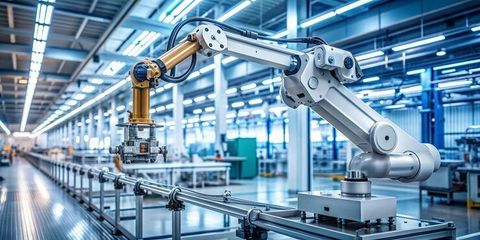
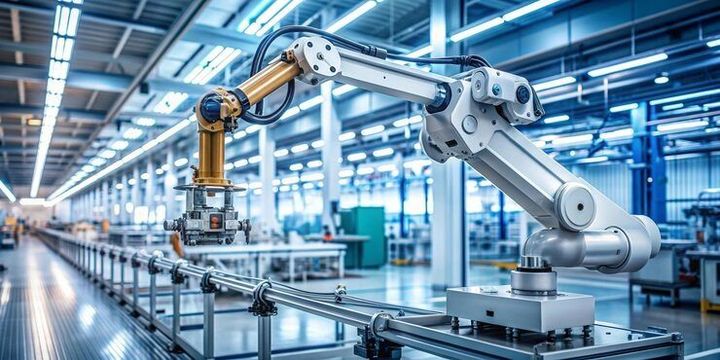
Industrial robots have become an important part of modern manufacturing and production. These programmable machines are designed to perform repetitive, precise, and physically demanding tasks that help improve efficiency and consistency. Today, industrial robots are used across many industries, including automotive, electronics, food processing, pharmaceuticals, logistics, and metal fabrication.
As automation continues to expand, industrial robots are becoming more advanced through the use of artificial intelligence, machine vision, and smart sensors. Understanding the basics, benefits, and uses of industrial robots helps businesses, students, and technology enthusiasts recognize how automation is transforming industrial operations while supporting productivity and workplace safety.
Context – What Are Industrial Robots?
Industrial robots are automated machines that perform programmed tasks with speed, accuracy, and repeatability. Unlike general-purpose robots, they are specifically designed for industrial environments where repetitive work and precision are essential.
The first industrial robots appeared in manufacturing during the early 1960s. Since then, technological improvements have enabled robots to perform increasingly complex operations with minimal human intervention. Modern systems often work alongside digital manufacturing technologies such as Industrial Internet of Things (IIoT), machine vision, and predictive maintenance software.
The main purpose of industrial robots is to:
- Improve manufacturing efficiency
- Increase production consistency
- Reduce repetitive manual work
- Support workplace safety
- Handle hazardous or high-precision operations
Common Types of Industrial Robots
| Robot Type | Typical Application | Main Advantage |
|---|---|---|
| Articulated Robot | Welding, assembly | High flexibility |
| SCARA Robot | Electronics assembly | Fast horizontal movement |
| Cartesian Robot | CNC machining, packaging | High positioning accuracy |
| Delta Robot | Food packaging, sorting | Very high operating speed |
| Collaborative Robot (Cobot) | Human-robot collaboration | Safe interaction with operators |
Importance – Why It Matters and Who It Affects
Industrial robots play a significant role in modern production by helping manufacturers maintain consistent quality while improving operational efficiency. They perform repetitive tasks with high precision, reducing variations that may occur during manual production.
The adoption of industrial robots also supports safer workplaces. Dangerous tasks involving heavy lifting, toxic materials, extreme temperatures, or repetitive motion can often be handled by automated systems instead of workers.
Industries that commonly use industrial robots include:
- Automotive manufacturing
- Electronics production
- Pharmaceutical manufacturing
- Food and beverage processing
- Warehousing and logistics
- Aerospace manufacturing
- Metal fabrication
- Plastic processing
The growing use of robotics also affects engineers, technicians, software developers, educators, manufacturers, researchers, and policymakers who work with automation technologies.
Benefits of Industrial Robots
Industrial robots provide several advantages:
- Higher production accuracy
- Consistent product quality
- Continuous operation with minimal downtime
- Better workplace safety
- Reduced production errors
- Improved material handling
- Efficient use of manufacturing space
- Greater flexibility through programmable automation
Although robots automate many repetitive processes, skilled workers continue to play an important role in programming, maintenance, supervision, quality control, and system integration.
Recent Updates – Trends and Developments from 2024–2026
Between 2024 and 2026, industrial robotics has continued to evolve through advances in digital manufacturing, artificial intelligence, and connected automation systems.
One major trend is the increased use of collaborative robots, often called cobots. These robots are designed to operate safely alongside human workers in shared workspaces, making automation more accessible for small and medium-sized manufacturers.
Artificial intelligence has also expanded robot capabilities. AI-powered vision systems allow robots to recognize objects, inspect products, and adjust movements in real time. This improves flexibility for production lines that manufacture different product types.
Machine learning algorithms are helping manufacturers improve predictive maintenance. Connected robots continuously monitor operating conditions, allowing maintenance teams to identify potential issues before equipment failure occurs.
Cloud computing and Industrial Internet of Things (IIoT) platforms have further improved robotics by enabling remote monitoring, production analytics, and centralized system management across multiple facilities.
Additional developments include:
- Improved energy-efficient robot designs
- Faster motion control systems
- Enhanced safety sensors
- Digital twin technology for simulation
- Easier robot programming interfaces
- Greater integration with smart factories
These advancements continue to make industrial robots more adaptable across different manufacturing environments.
Laws or Policies – Relevant Rules, Regulations, or Government Policies
Industrial robots operate within established safety and technical standards that help protect workers and maintain reliable manufacturing practices.
Several internationally recognized standards provide guidance for industrial robot design, installation, operation, and maintenance.
Important standards include:
- ISO 10218 for industrial robot safety
- ISO/TS 15066 for collaborative robot applications
- IEC safety standards for electrical equipment
- Machinery safety regulations adopted by national governments
Employers are generally responsible for:
- Conducting workplace risk assessments
- Installing appropriate safety barriers where needed
- Training personnel
- Performing routine inspections
- Following equipment operating instructions
- Maintaining emergency stop systems
Many countries also encourage automation through national manufacturing initiatives, digital transformation programs, and Industry 4.0 strategies that support responsible technology adoption while emphasizing worker safety and compliance.
Organizations should always review the latest regulations issued by their national workplace safety authorities because requirements may vary by country and industry.
Tools and Resources – Useful Websites, Calculators, Templates, or Platforms
Several educational and technical resources help individuals learn more about industrial robots and automation technologies.
Useful resources include:
- International Organization for Standardization (ISO) documentation
- Industrial automation learning platforms
- Robot manufacturer documentation libraries
- Engineering simulation software
- CAD software for robotic cell design
- Digital twin simulation platforms
- Robotics programming tutorials
- Industrial automation research publications
Helpful planning resources include:
| Resource | Purpose |
| Robot Reach Calculator | Estimate robot working range |
| Cycle Time Calculator | Measure production efficiency |
| Payload Calculator | Verify lifting capacity |
| Risk Assessment Template | Evaluate workplace hazards |
| Preventive Maintenance Checklist | Schedule equipment inspections |
| Simulation Software | Test robot movements before deployment |
These tools support planning, education, safety evaluation, and production optimization while improving understanding of industrial robotics.
FAQs
What is an industrial robot?
An industrial robot is a programmable automated machine designed to perform manufacturing or production tasks with high precision, consistency, and repeatability.
Where are industrial robots commonly used?
Industrial robots are widely used in automotive manufacturing, electronics assembly, food processing, pharmaceutical production, logistics, aerospace, and metal fabrication.
What are the main benefits of industrial robots?
They improve production accuracy, increase consistency, enhance workplace safety, reduce repetitive manual tasks, and support efficient manufacturing operations.
What is the difference between a traditional industrial robot and a collaborative robot?
Traditional industrial robots usually operate within protected work areas, while collaborative robots are designed with additional safety features that allow them to work more closely with human operators under appropriate conditions.
Are industrial robots replacing human workers completely?
Industrial robots primarily automate repetitive, hazardous, or highly precise tasks. Human workers continue to perform essential roles involving supervision, programming, maintenance, engineering, quality assurance, and decision-making.
Conclusion
Industrial robots have become an essential technology in modern manufacturing by improving efficiency, accuracy, and workplace safety. Advances in artificial intelligence, smart sensors, and connected automation continue to expand their capabilities across a wide range of industries.
As manufacturing evolves between 2024 and 2026, industrial robots are expected to become more intelligent, flexible, and easier to integrate into production environments. Understanding their basics, benefits, and practical applications provides valuable knowledge for anyone interested in industrial automation and modern manufacturing technologies.
Continued innovation, supported by international safety standards and responsible implementation, will help industrial robots contribute to productive, reliable, and sustainable industrial operations in the years ahead.