Video Door Phones: Features, Benefits & Installation Guide
Video Door Phones have become an important part of modern home and building security.
They allow occupants to see and communicate with visitors before granting access, adding an extra layer of convenience and awareness. With advancements in smart technology, many video door phone systems now integrate with mobile devices, access control systems, and home automation platforms, making visitor management more efficient.
Whether installed in homes, apartments, offices, or commercial buildings, Video Door Phones help improve entry monitoring while supporting safer access management. This guide explains how these systems work, their main features, common applications, installation considerations, and future developments.
What Are Video Door Phones?
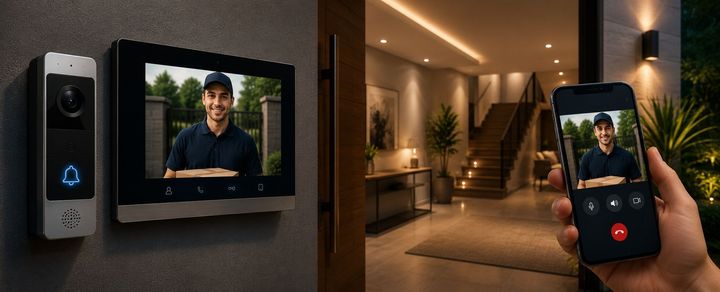
Video Door Phones are electronic communication systems that combine a doorbell, camera, microphone, speaker, and display unit to enable two-way audio and video communication between visitors and occupants.
When someone presses the doorbell, the outdoor unit captures live video and audio, allowing the occupant to identify the visitor before deciding whether to open the door. Many modern systems also support smartphone connectivity, enabling remote communication even when the user is away from the property.
Why Video Door Phones Are Important
Security has become a priority for residential and commercial properties. Traditional doorbells only notify occupants that someone is outside, while Video Door Phones provide visual verification before access is granted.
These systems also improve convenience by allowing communication with delivery personnel, guests, and maintenance staff without opening the door immediately. For apartment complexes and office buildings, they help manage visitor access more efficiently while reducing unauthorized entry.
How Video Door Phones Work
A Video Door Phone system operates through coordinated hardware and communication technologies.
Visitor Detection
When a visitor presses the doorbell or approaches the entrance, the outdoor unit activates the camera and microphone.
Audio and Video Transmission
The captured video and audio are transmitted to the indoor monitor or a connected mobile application, allowing occupants to see and speak with the visitor in real time.
Access Decision
After confirming the visitor's identity, the occupant can decide whether to allow entry. In integrated systems, doors or gates can be unlocked remotely through the indoor monitor or mobile application.
Key Features
Modern Video Door Phones include a wide range of functions designed to improve security and convenience.
Common features include:
- High-definition video camera
- Two-way audio communication
- Night vision capability
- Motion detection
- Remote mobile access
- Touchscreen indoor monitor
- Visitor image recording
- Door release integration
- Wide-angle camera lens
- Weather-resistant outdoor unit
The available features vary depending on the system and installation requirements.
Common Applications
Video Door Phones are used across many types of properties.
Residential homes use them to monitor visitors and enhance front-door security.
Apartment buildings integrate video door phones with access control systems to simplify visitor management.
Office buildings use these systems to verify visitors before granting access to reception areas or secure departments.
Educational institutions, healthcare facilities, hotels, and commercial complexes also use video door phones to improve access control and monitor entry points.
Benefits of Video Door Phones
One of the main advantages of Video Door Phones is improved security through visual identification of visitors. Occupants can verify who is outside before opening the door, reducing uncertainty during unexpected visits.
These systems also improve convenience by enabling communication without requiring someone to approach the entrance. Mobile connectivity further extends this capability by allowing users to respond to visitors remotely.
Video recording features support incident review by capturing visitor activity, while integration with smart home systems allows centralized management of security devices.
For multi-unit buildings, video door phones contribute to more organized visitor management and controlled property access.
Installation Considerations
Proper installation helps ensure reliable performance.
Before selecting a system, consider:
- Property type
- Camera resolution
- Lighting conditions
- Internet connectivity
- Mobile application compatibility
- Door lock integration
- Power requirements
- Weather protection for outdoor units
Professional planning helps ensure the equipment is positioned for clear visibility and dependable communication.
Future Trends
Video Door Phones continue to evolve with advancements in artificial intelligence, cloud connectivity, and smart home technology.
Modern systems increasingly feature facial recognition, package detection, cloud-based video storage, voice assistant compatibility, and enhanced motion analytics. Integration with smart security ecosystems allows users to manage cameras, alarms, lighting, and access control through a single platform.
As connected homes and intelligent buildings continue to expand, video door phones are expected to become even more capable and user-friendly.
Frequently Asked Questions
What are Video Door Phones used for?
They allow occupants to see, communicate with, and verify visitors before granting access to a property.
Can Video Door Phones connect to smartphones?
Many modern systems support mobile applications that allow remote viewing, communication, and visitor notifications.
Where are Video Door Phones commonly installed?
They are widely used in homes, apartments, offices, commercial buildings, healthcare facilities, hotels, and educational institutions.
Do Video Door Phones work at night?
Many models include infrared or low-light cameras that provide clear visibility during nighttime conditions.
Can Video Door Phones integrate with smart home systems?
Yes. Many systems support integration with smart locks, home automation platforms, access control systems, and other connected security devices.
Conclusion
Video Door Phones combine video communication, visitor verification, and access management into a practical security solution for modern properties. Their ability to provide real-time visual communication, remote monitoring, and smart integration makes them valuable for both residential and commercial environments.
As technology continues to advance, Video Door Phones will play an increasingly important role in intelligent building security, offering greater convenience, improved monitoring, and enhanced access control for a wide range of applications.