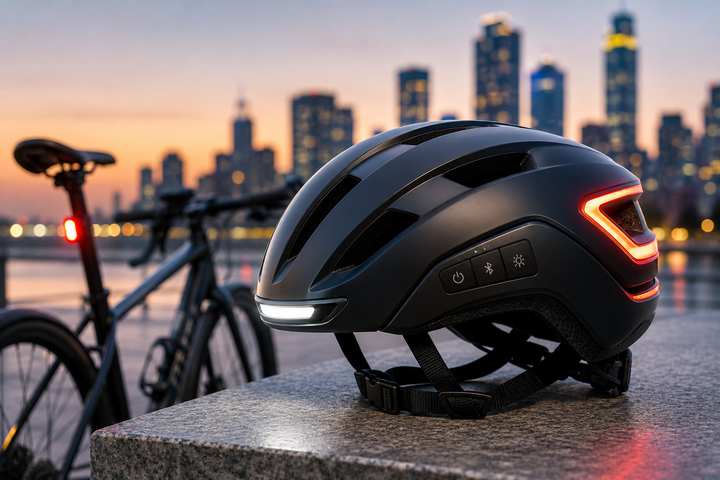
Smart Bike Helmets: Overview of Tech, Safety & Uses
Cycling has evolved significantly with the introduction of connected devices and intelligent safety equipment.
One of the most notable innovations is the smart bike helmet, which combines traditional head protection with advanced technologies designed to improve rider awareness, visibility, communication, and safety.
Unlike conventional helmets that focus primarily on impact protection, smart bike helmets incorporate features such as integrated lighting, crash detection, GPS tracking, Bluetooth connectivity, and intelligent sensors. These technologies help riders navigate roads more confidently while improving visibility and emergency response capabilities.
As urban cycling, recreational riding, and electric bike usage continue to grow, smart bike helmets are becoming an increasingly important part of modern cycling safety.
Quick Facts Table
| Topic | Purpose | Key Features | Main Benefits | Common Applications |
|---|---|---|---|---|
| Smart Bike Helmets | Improve rider safety and awareness | Sensors, LED lights, GPS, crash detection, Bluetooth, communication systems | Enhanced visibility, emergency alerts, navigation support, rider awareness | Urban commuting, recreational cycling, e-bike riding, sports cycling |
What Is a Smart Bike Helmet?
A smart bike helmet is a protective cycling helmet equipped with electronic components, sensors, communication technologies, and intelligent safety features.
These helmets provide traditional impact protection while adding capabilities such as accident detection, navigation assistance, integrated lighting, rider communication, and location tracking. The goal is to create a safer and more connected riding experience.
Why Are Smart Bike Helmets Important?
Road environments are becoming increasingly complex due to higher traffic volumes, faster mobility options, and greater numbers of cyclists sharing transportation networks.
Smart bike helmets help address several challenges by improving:
- Rider visibility
- Situational awareness
- Emergency response
- Navigation assistance
- Communication capabilities
- Accident reporting
- Traffic awareness
- Cycling safety
Smart Bike Helmet Facts
- Integrated LED lighting is among the most common smart helmet features.
- Crash detection technologies can automatically identify severe impacts.
- GPS tracking capabilities help support location sharing and navigation.
- Bluetooth connectivity enables hands-free communication.
- Smart sensors continuously monitor movement and riding conditions.
- E-bike riders increasingly utilize connected helmet technologies.
- Modern smart helmets combine physical protection with digital safety features.
Understanding the Concept
A smart bike helmet functions as both protective equipment and a connected wearable device. It incorporates sensors, wireless communication technologies, microprocessors, and intelligent safety systems within the helmet structure.
The helmet collects and processes information about movement, location, impacts, and rider activity. When unusual events occur, such as sudden deceleration or a collision, the helmet can trigger alerts or communicate with connected devices.
This combination of physical protection and digital awareness helps create a more comprehensive cycling safety system.
Major Smart Bike Helmet Technologies
- Integrated LED Lighting
- Crash Detection Systems
- GPS Tracking
- Bluetooth Connectivity
- Emergency Alert Systems
- Motion Sensors
- Accelerometers
- Smart Audio Systems
- Voice Control Features
- Navigation Assistance
- Rider Communication Systems
- Mobile App Integration
- Battery Management Systems
- Wireless Connectivity Technologies
- Intelligent Monitoring Systems
Smart Helmet Technology Comparison
| Technology | Purpose | Response Speed | Safety Impact |
|---|---|---|---|
| LED Lighting | Visibility | Instant | High |
| Crash Detection | Accident Identification | Fast | High |
| GPS Tracking | Location Sharing | Fast | Medium |
| Bluetooth Communication | Rider Connectivity | Instant | Medium |
| Smart Sensors | Motion Monitoring | Instant | High |
| Emergency Alerts | Incident Reporting | Fast | High |
Key Features and Core Components
Modern smart bike helmets often include:
- Impact-resistant outer shell
- Energy-absorbing inner liner
- Accelerometers
- Motion sensors
- GPS modules
- Bluetooth communication
- LED lighting systems
- Battery systems
- Wireless communication modules
- Emergency notification systems
- Mobile app connectivity
- Audio communication components
Main Types of Smart Bike Helmets
Commuter Smart Helmets
Designed for urban riders, these helmets focus on visibility, navigation, and traffic awareness.
Sports and Performance Helmets
These helmets emphasize lightweight construction, aerodynamics, and advanced safety technologies.
E-Bike Smart Helmets
E-bike helmets often include enhanced lighting, communication systems, and crash detection technologies due to higher riding speeds.
What Is Crash Detection?
Crash detection uses accelerometers and motion sensors to identify sudden impacts or abnormal movement patterns.
When a significant impact is detected, the helmet may initiate an emergency notification process through a connected device.
What Is GPS Tracking in Smart Helmets?
GPS tracking helps determine the rider's location and supports navigation, route tracking, and location-sharing capabilities.
Location information can also assist during emergencies.
What Is Bluetooth Connectivity?
Bluetooth technology allows the helmet to communicate with smartphones and other connected devices.
This enables hands-free communication, navigation guidance, and safety notifications.
What Is Integrated LED Lighting?
Integrated lighting systems improve rider visibility, particularly during low-light conditions, evening rides, and urban commuting situations.
Some systems include automatic brake light functionality.
How Smart Bike Helmets Work
- The rider wears the smart helmet and connects it to a compatible device.
- Built-in sensors begin monitoring movement and riding activity.
- GPS systems track location and navigation data.
- Bluetooth communication enables connectivity with mobile devices.
- LED lighting systems improve rider visibility.
- Crash detection systems analyze motion patterns continuously.
- Emergency alerts activate when significant incidents are detected.
- Safety information is transmitted to connected platforms when necessary.
Benefits and Advantages
Smart bike helmets provide several practical benefits:
- Improved rider visibility
- Enhanced cycling safety
- Better traffic awareness
- Faster emergency notification
- Hands-free communication
- Navigation assistance
- Ride tracking capabilities
- Increased situational awareness
- Better support for urban commuting
- Enhanced night-riding visibility
- Connected safety monitoring
- Greater rider confidence
Industry Applications
Urban Cycling
Smart helmets help commuters navigate busy transportation environments more safely.
Recreational Cycling
Recreational riders benefit from navigation support and enhanced visibility.
E-Bike Transportation
Connected safety technologies complement the growing popularity of electric bicycles.
Sports Cycling
Athletes utilize advanced monitoring and communication features during training and events.
Bike-Sharing Programs
Smart safety equipment supports organized cycling initiatives.
Tourism and Adventure Cycling
Navigation and location-sharing technologies enhance long-distance riding experiences.
Real-World Examples and Applications
Example: Daily City Commute
A commuter uses integrated lighting and navigation guidance while traveling through congested urban streets.
Example: Long-Distance Cycling Route
A cyclist utilizes GPS tracking and route guidance during an extended recreational ride.
Example: Emergency Incident Detection
After a significant collision, crash detection sensors identify the impact and initiate an emergency alert process.
Example: Group Cycling Event
Riders use communication technologies to stay connected and coordinate during group rides.
Important Factors to Consider
When evaluating smart bike helmet technologies, several factors are important:
- Safety certifications
- Helmet fit and comfort
- Battery life
- Water resistance
- Sensor accuracy
- Connectivity reliability
- Lighting visibility
- Navigation capabilities
- Weight distribution
- Charging requirements
Common Challenges and Solutions
| Challenge | Impact | Solution |
|---|---|---|
| Battery Limitations | Reduced Functionality | Efficient Power Management |
| Connectivity Interruptions | Communication Issues | Improved Wireless Integration |
| Sensor Accuracy | Incorrect Alerts | Advanced Motion Analytics |
| Weather Exposure | Equipment Stress | Weather-Resistant Design |
| Charging Requirements | Operational Downtime | Enhanced Battery Technologies |
Smart Bike Helmet Best Practices
- Ensure proper helmet fit before every ride.
- Maintain battery charge levels regularly.
- Keep firmware and connected apps updated.
- Test lighting systems before riding.
- Review emergency contact settings periodically.
- Use navigation features responsibly.
- Inspect the helmet for physical damage.
- Follow manufacturer safety recommendations.
- Verify communication functions before group rides.
- Replace damaged helmets when necessary.
Future Trends and Industry Insights
Smart helmet technologies continue to evolve rapidly.
Artificial Intelligence Integration
AI-powered systems may improve accident detection and rider safety analysis.
Advanced Sensor Technologies
Future helmets are expected to incorporate more sophisticated motion and environmental sensors.
Augmented Reality Displays
Some emerging designs explore visor-based information displays for navigation and safety alerts.
Enhanced Emergency Response
Future systems may improve communication with emergency contacts and response networks.
Vehicle Connectivity
Connected transportation systems could enable direct communication between cyclists and surrounding vehicles.
Health and Activity Monitoring
Future smart helmets may include wellness tracking and physiological monitoring capabilities.
Intelligent Safety Ecosystems
Smart helmets are expected to become part of larger connected cycling safety networks.
Expert Insights
Smart bike helmets represent an important advancement in cycling safety technology. By combining traditional impact protection with intelligent monitoring, communication systems, and emergency response capabilities, these helmets extend safety beyond physical protection alone.
As sensor technology, wireless communication, and intelligent analytics continue to advance, smart helmets are expected to become increasingly capable of supporting safer and more connected cycling experiences.
Key Takeaways
- Smart bike helmets combine protective equipment with connected technologies.
- Integrated lighting improves rider visibility.
- Crash detection helps identify significant impacts.
- GPS systems support navigation and location tracking.
- Bluetooth enables hands-free communication.
- Smart sensors improve situational awareness.
- Emergency alerts support faster response capabilities.
- E-bike adoption is increasing interest in smart helmet technologies.
- Future helmets may include AI-powered safety features.
- Intelligent cycling ecosystems are expected to expand.
Frequently Asked Questions (FAQ)
What is a smart bike helmet?
A smart bike helmet is a cycling helmet equipped with sensors, communication technologies, and intelligent safety features.
How does a smart bike helmet work?
It uses sensors, GPS, communication technologies, and onboard electronics to monitor riding conditions and provide safety functions.
What is crash detection?
Crash detection identifies significant impacts using motion sensors and accelerometers.
Why are integrated lights important?
Integrated lights improve rider visibility, especially during low-light conditions.
What is GPS tracking used for?
GPS tracking supports navigation, route recording, and location sharing.
Can smart helmets connect to phones?
Yes, many smart helmets use Bluetooth connectivity to communicate with mobile devices.
Are smart bike helmets useful for e-bike riders?
Many smart helmet features are particularly valuable for e-bike riders because of higher average travel speeds.
What sensors are commonly used?
Accelerometers, motion sensors, GPS modules, and environmental sensors are commonly integrated into smart helmets.
What is emergency alert functionality?
Emergency alert systems can notify designated contacts when a significant incident is detected.
Do smart helmets improve cycling safety?
Smart technologies can improve visibility, awareness, communication, and emergency response capabilities.
What is a connected cycling ecosystem?
A connected cycling ecosystem combines helmets, bicycles, mobile devices, and transportation infrastructure through communication technologies.
What future technologies may appear in smart helmets?
Future developments may include artificial intelligence, augmented reality displays, advanced health monitoring, and vehicle connectivity.
Conclusion
Smart bike helmets combine traditional head protection with advanced technologies that improve visibility, communication, navigation, and emergency response capabilities. Features such as integrated lighting, GPS tracking, Bluetooth connectivity, crash detection, and intelligent sensors are helping create safer and more connected cycling experiences.
As cycling continues to grow in popularity and transportation systems become increasingly connected, smart bike helmets are expected to play a larger role in modern rider safety. Understanding their technologies, benefits, and applications provides valuable insight into the future of intelligent cycling equipment.