Basics of AI Hardware Co-Processors and Their Real-World Applications
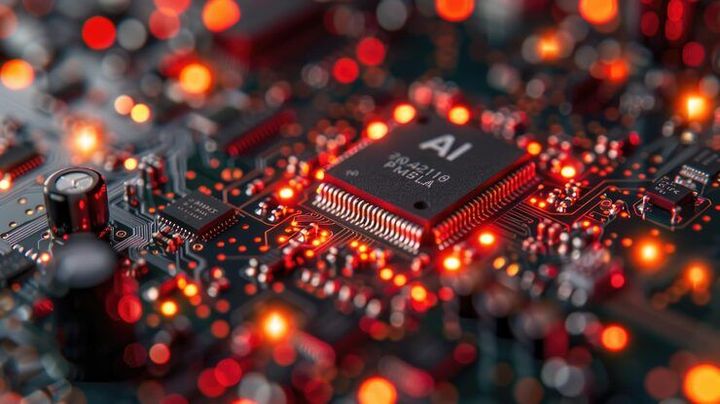
AI hardware co-processors are specialized computing units designed to support central processing units (CPUs) by handling artificial intelligence and machine learning workloads. Their purpose is to improve processing efficiency by performing complex mathematical operations required for tasks such as neural network execution, image analysis, language processing, and intelligent automation.
Traditional CPUs are designed for general computing tasks, but many AI workloads require large-scale parallel calculations. AI hardware co-processors are built with specialized architectures that allow faster execution of these operations while reducing the workload placed on the main processor.
These components are becoming important in areas such as cloud computing, autonomous systems, robotics, healthcare technology, cybersecurity, mobile devices, and industrial automation. They help organizations process AI models more efficiently and enable advanced applications that require rapid data analysis.
How AI Hardware Co-Processors Work
AI hardware co-processors operate alongside CPUs and other computing components. Instead of replacing the main processor, they work as dedicated acceleration units that manage specific AI-related tasks.
The process generally involves several steps:
- Data preparation: Input data such as images, audio, text, or sensor information is collected and prepared for processing.
- Model execution: The AI co-processor performs mathematical operations required by machine learning models.
- Parallel computation: Specialized processing cores handle multiple calculations simultaneously.
- Result integration: The processed information is returned to the main system for further actions or decisions.
Most AI co-processors are optimized for operations such as matrix multiplication and tensor calculations, which are fundamental to deep learning algorithms.
Structure and Architecture of AI Hardware Co-Processors
AI hardware co-processors contain multiple specialized components designed to improve AI workload performance.
Key Components
- AI Processing Cores: Dedicated units designed for neural network calculations and machine learning tasks.
- Memory Systems: High-speed memory structures that store model data and intermediate results.
- Data Transfer Interfaces: Communication pathways that allow efficient interaction with CPUs, GPUs, and other hardware.
- Power Management Units: Components that optimize energy usage during intensive AI operations.
- Software Compatibility Layers: Frameworks that allow developers to run AI models on specific hardware architectures.
The architecture differs depending on the intended application. Some processors focus on large-scale data center workloads, while others are designed for smaller edge devices with limited power requirements.
Major Types of AI Hardware Co-Processors
| Type | Main Purpose | Common Applications |
|---|---|---|
| Neural Processing Units (NPUs) | Accelerate neural network operations | Smartphones, edge devices, AI-enabled electronics |
| Graphics Processing Units (GPUs) | Perform parallel AI computations | Machine learning research, cloud AI platforms |
| Tensor Processing Units (TPUs) | Optimize tensor-based calculations | Large-scale AI model training and inference |
| Vision Processing Units (VPUs) | Process visual information efficiently | Cameras, robotics, computer vision systems |
Importance of AI Hardware Co-Processors
AI applications require significant computational resources. AI hardware co-processors help solve several technical challenges by improving processing speed, reducing energy consumption, and enabling real-time intelligence.
Problems Addressed by AI Co-Processors
- High computational requirements of modern AI models
- Delays in processing large volumes of data
- Limited processing capacity in edge devices
- Increased energy demands from complex algorithms
- Need for faster AI decision-making systems
These processors allow AI workloads to be distributed more effectively, improving overall system performance.
Real-World Applications of AI Hardware Co-Processors
AI hardware co-processors are used across many industries where intelligent processing is required.
Common Application Areas
- Healthcare Technology: AI acceleration supports medical image analysis, research systems, and diagnostic assistance tools.
- Automotive Systems: AI processors help manage perception systems, driver assistance technologies, and autonomous vehicle research.
- Industrial Automation: Manufacturing environments use AI acceleration for predictive monitoring, quality inspection, and robotics.
- Cybersecurity: AI processors support rapid analysis of network patterns and unusual activity detection.
- Consumer Electronics: Smartphones, laptops, and smart devices use AI accelerators for voice recognition, image enhancement, and personalization features.
- Cloud Computing: Data centers use specialized processors to improve AI model training and inference performance.
Key Benefits and Features
AI hardware co-processors provide several technical advantages when integrated into computing systems.
Important Features
- Parallel Processing Capability: Multiple AI calculations can be completed simultaneously.
- Improved AI Performance: Specialized architectures accelerate machine learning operations.
- Energy Efficiency: Hardware optimization helps reduce unnecessary computational workload.
- Real-Time Processing: Faster calculations support applications requiring immediate responses.
- Scalability: Different processor designs support small devices and large computing environments.
Recent Developments in AI Hardware Co-Processors
AI hardware development has advanced rapidly during 2025 and 2026, with increased focus on efficiency, specialized architectures, and edge intelligence.
Recent trends include:
- In 2025, semiconductor manufacturers continued developing advanced AI acceleration chips designed for generative AI workloads and large neural network models.
- In 2025 and 2026, edge AI processors gained attention because organizations increasingly process data closer to where it is generated rather than relying entirely on remote computing systems.
- New AI chip designs have focused on improving performance per watt, helping devices perform complex AI tasks with lower energy requirements.
- Hardware platforms have increasingly supported mixed AI workloads, including language models, computer vision, and sensor-based intelligence.
The growth of generative AI has increased demand for specialized hardware capable of handling large-scale model inference and efficient data processing.
Regulations and Responsible AI Hardware Development
AI hardware development is influenced by regulations and policies related to artificial intelligence, semiconductor technology, data protection, and responsible computing.
Relevant Policies and Standards
- The European Union Artificial Intelligence Act, adopted in 2024, establishes requirements for responsible AI development and risk management.
- Data protection regulations such as the General Data Protection Regulation (GDPR) influence how AI systems handle personal information.
- Semiconductor export control policies in various regions affect the movement and development of advanced computing technologies.
- Energy efficiency standards encourage more sustainable hardware design.
Organizations developing AI systems must consider transparency, security, privacy protection, and responsible use principles.
Useful Tools and Learning Resources
Developers and researchers use various platforms to understand, develop, and optimize AI hardware applications.
Popular Tools and Platforms
- NVIDIA CUDA and TensorRT for GPU-based AI acceleration
- Google TensorFlow and PyTorch frameworks for AI model development
- Open Neural Network Exchange (ONNX) for model interoperability
- Intel OpenVINO Toolkit for AI optimization across supported hardware
- Edge AI development platforms for testing intelligent devices
- Semiconductor documentation and technical research papers for architecture studies
Learning areas such as computer architecture, machine learning algorithms, embedded systems, and semiconductor design can help users understand AI hardware technologies.
Future Direction of AI Hardware Co-Processors
AI hardware co-processors are expected to continue evolving as artificial intelligence applications become more complex.
Future developments may include:
- More specialized chips designed for specific AI workloads
- Greater integration of AI acceleration into everyday computing devices
- Improved energy efficiency through advanced semiconductor designs
- Increased adoption of edge AI systems
- New architectures supporting large AI models with reduced computational requirements
The combination of hardware innovation and optimized AI algorithms will influence how intelligent systems are developed across industries.
Frequently Asked Questions
What is an AI hardware co-processor?
An AI hardware co-processor is a specialized computing unit that assists a CPU by performing artificial intelligence and machine learning calculations more efficiently.
How is an AI co-processor different from a CPU?
A CPU handles general computing tasks, while an AI co-processor is optimized for specific AI operations such as neural network calculations and parallel processing.
Are GPUs considered AI hardware co-processors?
Yes, GPUs can function as AI co-processors because they provide powerful parallel processing capabilities for many machine learning workloads.
Where are AI hardware co-processors used?
They are used in areas such as healthcare technology, robotics, automotive systems, cloud computing, cybersecurity, and smart electronics.
Why are AI co-processors important for edge computing?
AI co-processors allow devices to process information locally, reducing response delays and improving efficiency for applications that require rapid decisions.
Conclusion
AI hardware co-processors play an important role in modern computing by providing specialized acceleration for artificial intelligence workloads. Their ability to perform complex calculations efficiently helps improve applications ranging from industrial automation to intelligent consumer devices.
As AI models continue to grow in complexity, hardware innovation will remain essential for improving performance, energy efficiency, and accessibility. Understanding AI co-processor architecture, applications, and future developments helps organizations and technology professionals make informed decisions about emerging computing systems.